
Coin Encyclopedia
Search and identify coins from around the world — with country, denomination, metal, mint, history, and how to tell them apart.
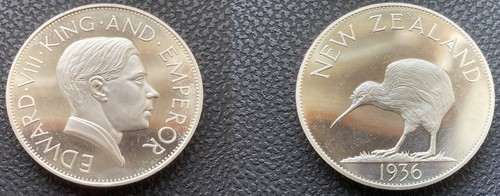
Edward VIII New Zealand Crown
A 1936-dated crown-sized piece pairing an Edward VIII profile with a New Zealand kiwi; a fantasy/novelty issue, not an officially circulated coin.
World Coins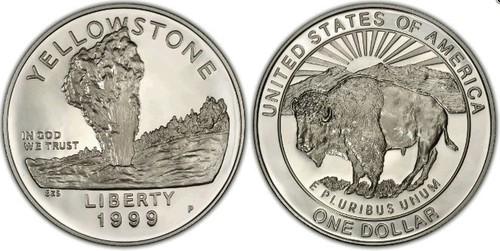
Yellowstone National Park Silver Dollar
A 1999 U.S. 90% silver commemorative dollar honoring Yellowstone National Park, with Old Faithful erupting on the obverse and an American bison on the reverse.
Modern Commemorative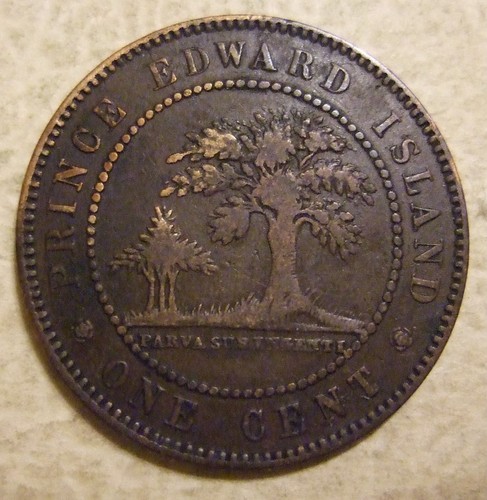
Prince Edward Island One Cent
Bronze one-cent coin struck in 1871 for the colony of Prince Edward Island, with Queen Victoria on the obverse and the island's name and date on the reverse.
Canadian & Provincial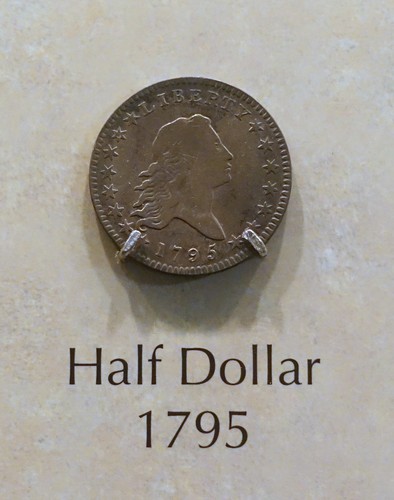
Flowing Hair Half Dollar
The first U.S. half dollar, struck 1794–1795 in silver, with a flowing-hair Liberty facing right and a small eagle within a wreath on the reverse.
Half Dollar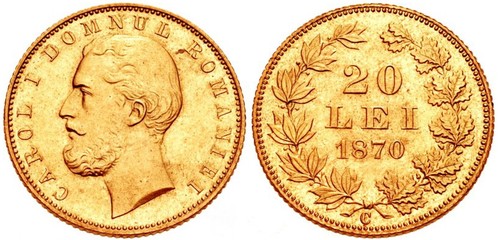
20 Lei
Romania's first gold coin, the 1870 20 Lei of Prince Carol I, pairing his left-facing portrait with the national coat of arms.
Modern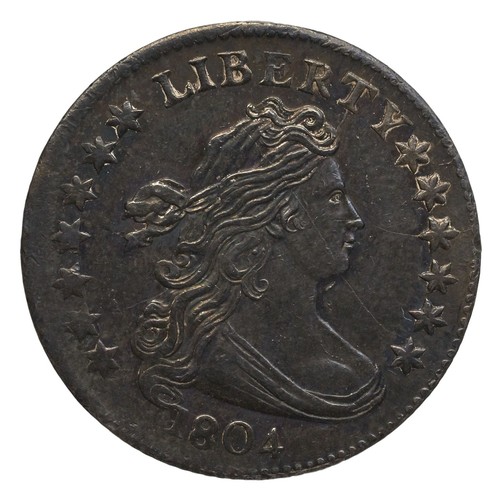
Draped Bust Dime
The first United States dime, struck in silver 1796–1807, with a draped Liberty and border stars on the obverse and an eagle on the reverse.
United States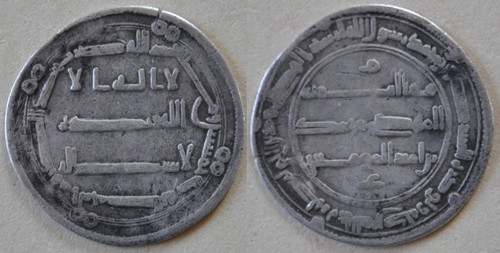
Dirham of Caliph al-Mansur
An Abbasid silver dirham dated AH 150 (767 CE), from the reign of Caliph al-Mansur, bearing purely Arabic religious inscriptions and a named mint.
Islamic (Medieval)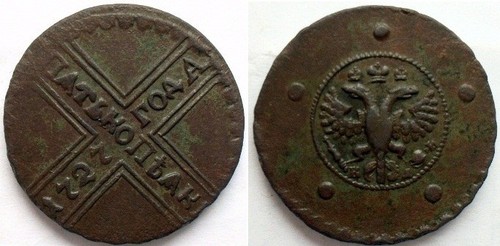
5 Kopecks (Catherine II)
Large copper 5 Kopecks of Catherine the Great, dated 1790 with the EM mint mark, showing a crowned monogram and the imperial double-headed eagle.
Early Modern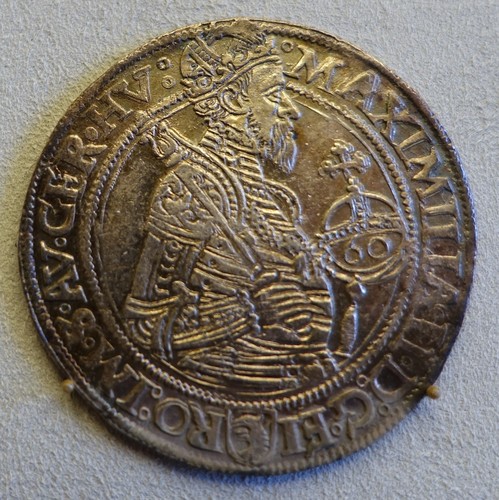
60 Kreuzer Guldiner
A gold 60 Kreuzer Guldiner of the Holy Roman Empire dated 1568, showing Emperor Maximilian II in plumed armor in right profile.
German States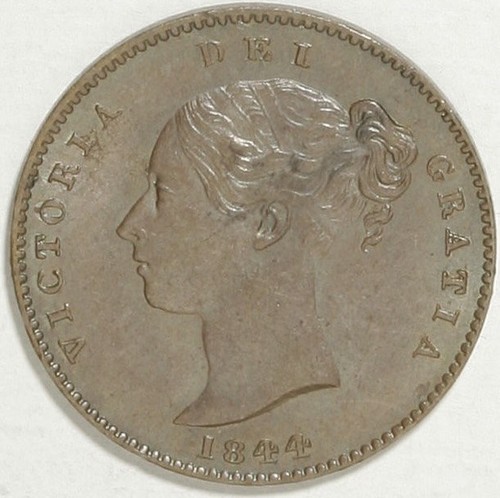
British Third Farthing
A tiny 1844 Victoria copper coin: young left-facing queen's bust obverse, crowned value reverse. One of Britain's smallest denominations, struck for Malta.
Circulation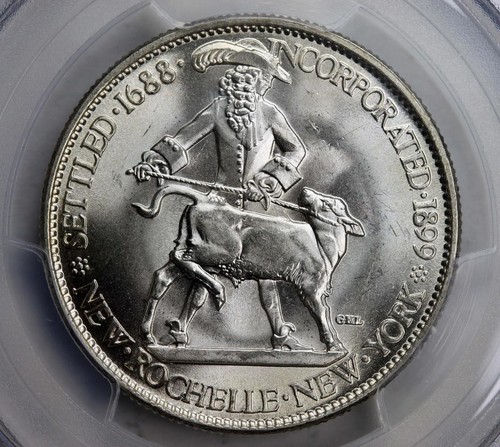
New Rochelle Half Dollar
A 1938 U.S. silver half dollar marking the 250th anniversary of New Rochelle, New York, with a Huguenot founder leading a fatted calf and a fleur-de-lis reverse.
Classic Commemorative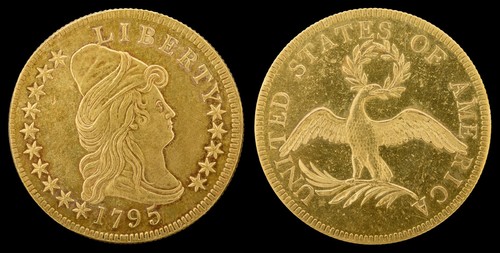
Turban Head Eagle
The first U.S. ten-dollar gold coin, struck 1795–1804, with a right-facing Liberty in a soft cap and an eagle reverse.
Eagle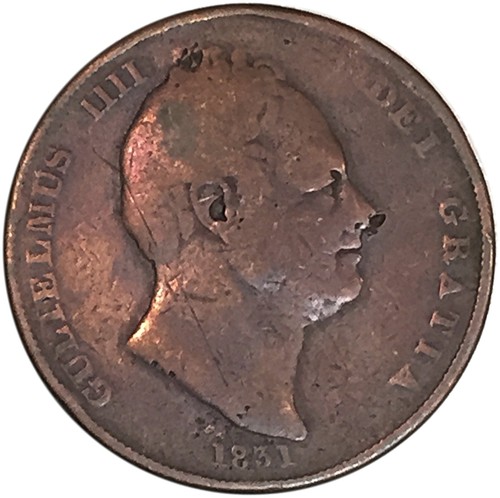
Penny of William IV
A large copper penny of King William IV, struck in the 1830s, with the king's right-facing head and the Latin legend GULIELMUS IIII D:G.
Milled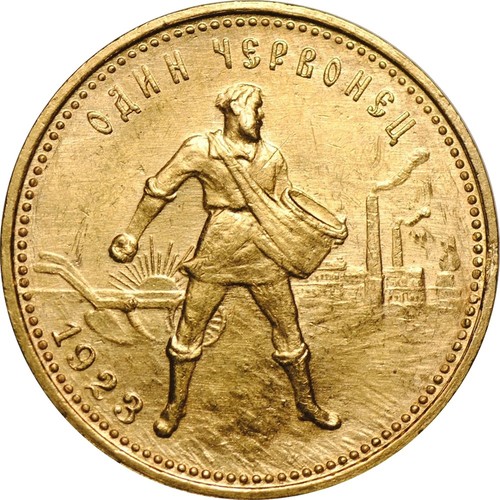
Gold Chervonets
Soviet gold coin of 1923 worth one chervonets (10 rubles), showing a peasant sowing before a rising sun and factories, with the Soviet state emblem.
World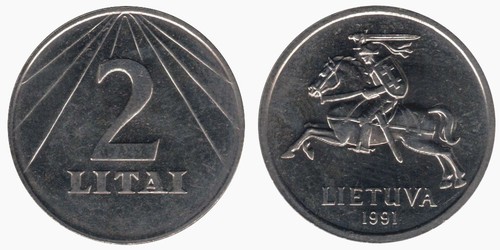
2 Litai
A white base-metal 2 litai of newly independent Lithuania, dated 1991, showing the value in a radiating sunburst on one side and the Vytis mounted knight on the other.
Modern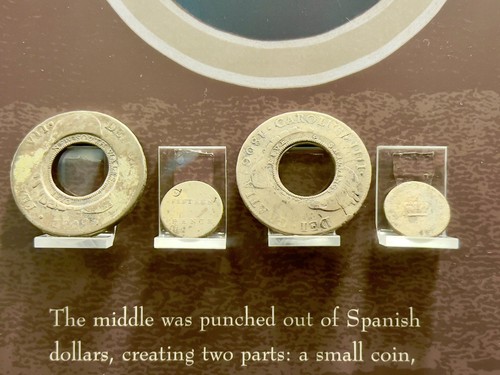
Holey Dollar
Australia's first struck coin: a Spanish silver dollar with its centre punched out, counterstamped NEW SOUTH WALES 1813 and revalued at five shillings.
Australian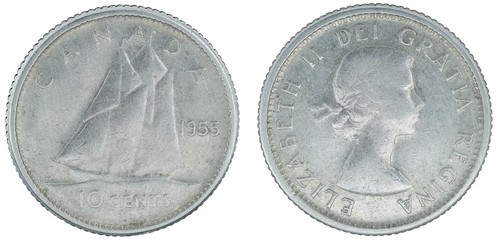
Canadian Ten Cents
Small silver Canadian dime with the Bluenose schooner reverse and an early Queen Elizabeth II portrait; the pictured coin is dated 1955.
Canadian & Provincial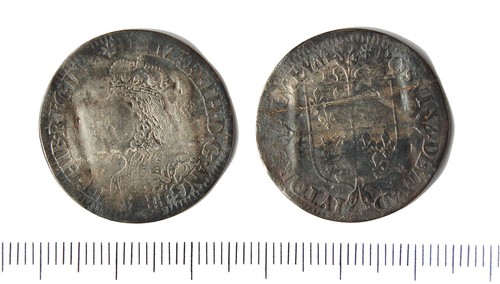
Milled Sixpence of Elizabeth I
An early machine-struck English silver sixpence of Elizabeth I, showing her crowned draped bust with a rose and the royal shield above a date.
Milled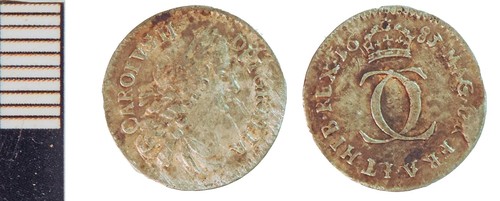
Charles II Twopence
A small milled twopence of Charles II, showing the king's profile bust on the obverse and a crowned mark of value on the reverse.
Milled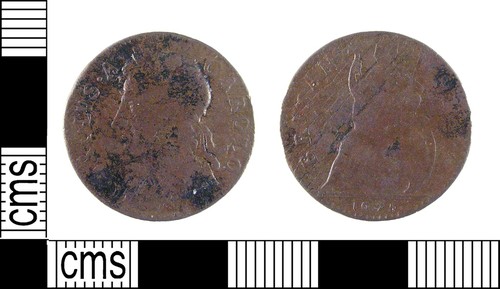
Charles II Halfpenny
A milled copper halfpenny of Charles II showing his laureate bust and a seated Britannia, part of the first regal copper coinage of England, dated 1675.
Milled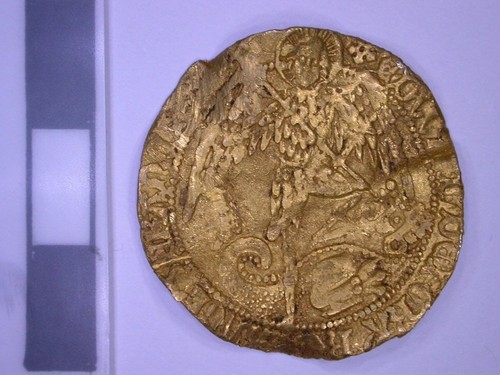
Edward V Angel
Gold angel struck in the brief 1483 reign of Edward V, showing Saint Michael the archangel spearing a demon, with a royal shield of arms on the reverse.
Medieval Coins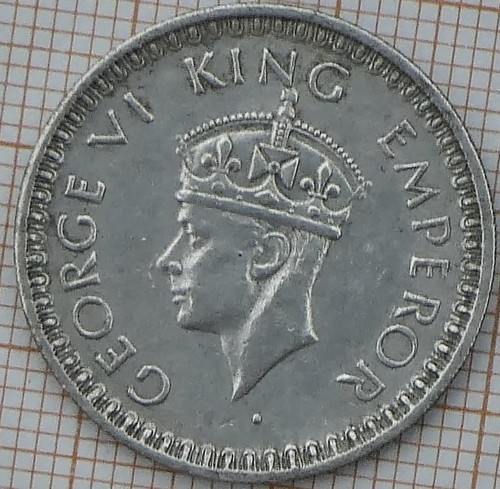
India 50 Paise
A George VI half-rupee of British India dated 1946 — the pale nickel-brass ancestor of the modern 50 paise, with a crowned royal bust and a rampant lion reverse.
Modern India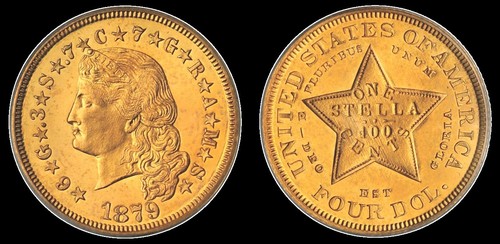
Flowing Hair Stella
An 1879 U.S. $4 gold pattern coin with a flowing-hair Liberty obverse and a large-star "ONE STELLA" reverse; famous rarity, never circulated.
Stella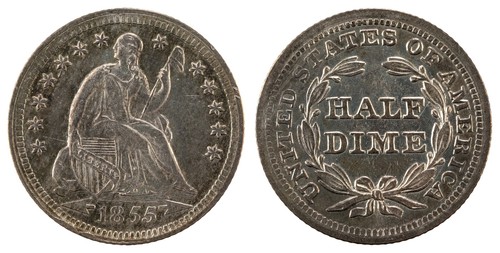
Seated Liberty Half Dime with Arrows
A tiny silver five-cent piece: Liberty seated with a shield, small arrows flanking the date to mark a reduced weight, over a wreath reverse.
Half Dime