
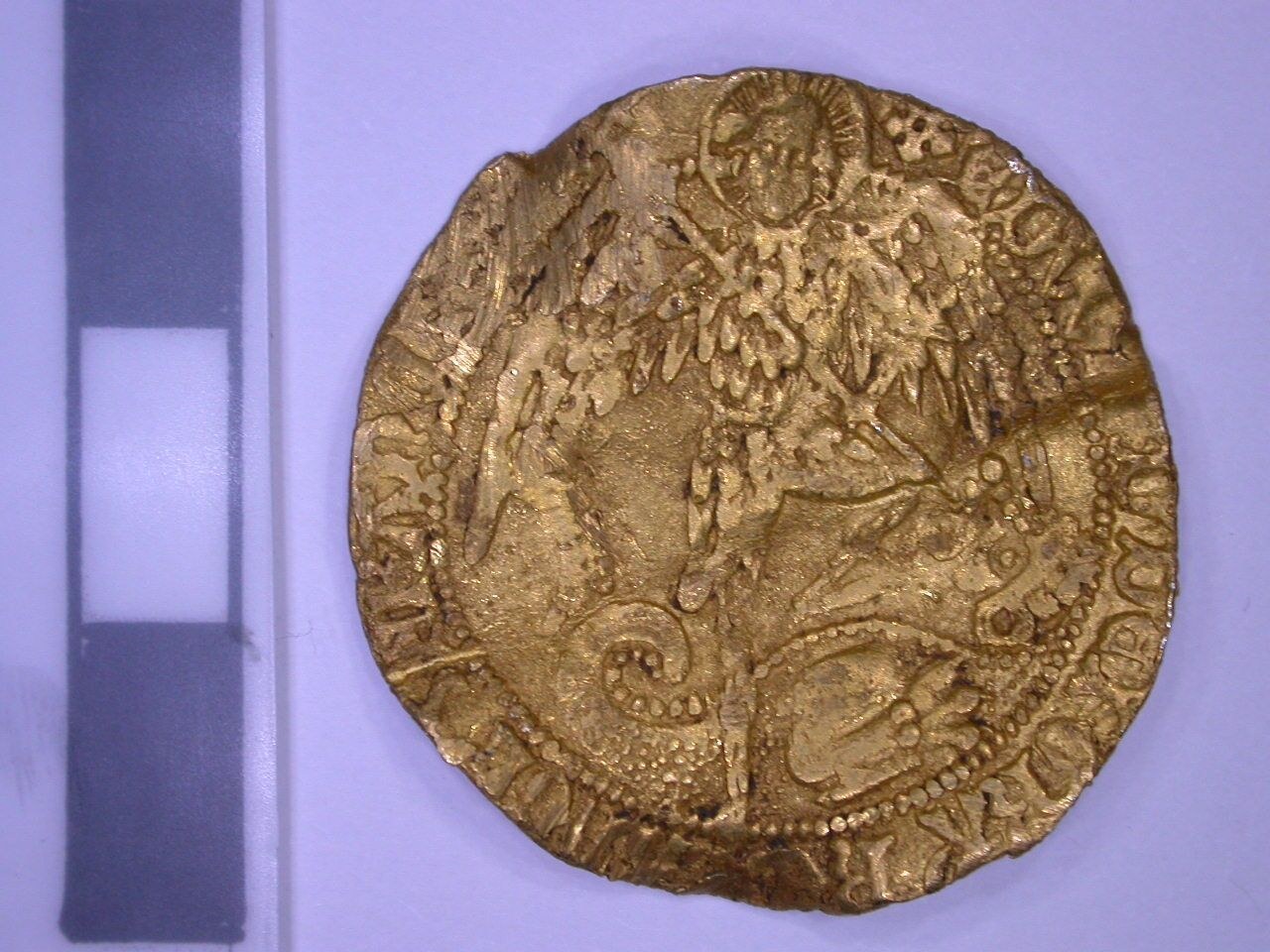
Edward V Angel
Gold angel struck in the brief 1483 reign of Edward V, showing Saint Michael the archangel spearing a demon, with a royal shield of arms on the reverse.
- Country
- England
- Denomination
- Angel
- Metal
- Gold
Got a coin like this?
Identify any coin from a photo, free.
Overview
The Edward V Angel is an English gold coin associated with the very short reign of Edward V in 1483, one of the boy-king "Princes in the Tower." The angel was a high-value gold denomination worth six shillings and eight pence, and it takes its name from the figure of Saint Michael the Archangel shown on the obverse. The example here follows that pattern, with Saint Michael in armor thrusting a spear into a demon at his feet, and a royal shield of arms set within an ornamental frame on the reverse.
Because Edward V ruled for only about eleven weeks and was never crowned, coinage struck in his name is exceptionally scarce. No new coin type was designed for him; pieces attributed to his reign are essentially the continuing gold and silver of the period, distinguished by the mint marks in use during the spring of 1483. As a result the Edward V angel is one of the great rarities of the English series and a coin whose attribution rests heavily on small punctuation-like details rather than on any change of design.
History & Background
Edward V became king on 9 April 1483 on the death of his father, Edward IV, at just twelve years old. His uncle Richard, Duke of Gloucester, acted as Lord Protector, and within weeks Edward and his younger brother were placed in the Tower of London. Edward was declared illegitimate and deposed, and Richard took the throne as Richard III at the end of June 1483. The two boys disappeared from view and are remembered as the Princes in the Tower.
The angel itself was introduced under Edward IV in 1465 as part of a reform of the English gold coinage, replacing the older noble. It carried the popular image of Saint Michael defeating the devil, a design borrowed from a French coin type, and it quickly became a prestige gold piece often kept for ceremonial use, including the later custom of "touch-pieces" given to the sick. The denomination continued with little change in design across the reigns on either side of Edward V.
Because Edward V's rule was so brief and produced no distinct coin type, numismatists attribute coins to him by the mint marks that were introduced or in use during the protectorate of spring 1483, most notably the boar's head associated with Richard of Gloucester, sometimes combined with a halved sun and rose. Coins bearing these marks in Edward's name are the physical trace of a reign that left almost no other minted record.
How to Identify
Identify the coin first by its central figures. The obverse shows Saint Michael the Archangel, a winged figure in armor, standing over and spearing a demon or dragon beneath his feet. The reverse carries a shield bearing the royal coat of arms, here set within an ornamental frame. A surrounding Latin legend names the king and typically includes a pious motto of the angel series. On genuine angels the reverse design is normally built around a ship carrying the shield, so the exact framing and legends should be checked carefully against reference plates.
The angel is a gold coin of roughly 25 to 28 mm in diameter and about 5 grams in weight, struck in high-purity gold by hand, so slight irregularity of flan and centering is expected. The value of six shillings and eight pence, or one third of a pound, was standard for the denomination in this period.
Attribution to Edward V specifically depends on the mint mark, the small symbol placed at the start of the legend. Coins given to his reign generally show a boar's head mark, the badge of Richard of Gloucester as Protector, sometimes paired with a halved sun and rose. Because the design was otherwise unchanged from Edward IV, the mark and the precise wording of the legends are what separate an Edward V piece from the far commoner angels of his father and successors.
Value & Collectibility
Genuine gold angels attributed to Edward V are among the rarest coins in the entire English series and are museum-level pieces. Verified examples appear on the market only very occasionally, and when they do they command large sums, typically well into five figures and potentially higher depending on condition, the clarity of the mint mark, and the strength of the documented history. There is no ordinary retail price for such a coin; each sale is essentially its own event.
Because the reign left so little coinage, and because far commoner angels of Edward IV and Richard III can be mistaken for or misrepresented as Edward V pieces, attribution and authenticity are everything. The difference between a common angel and an Edward V rarity can come down to a single mint mark, which makes this denomination a frequent target for altered or misattributed coins.
Any coin presented as an Edward V angel should be examined by a specialist in medieval English gold and, ideally, certified by a recognized grading service. Documented provenance and expert confirmation of the mint mark matter far more here than surface appeal, and no valuation should rest on the design alone.
Frequently asked questions
What is an angel coin?
The angel was an English gold coin introduced under Edward IV in 1465, worth six shillings and eight pence. It is named for its obverse image of Saint Michael the Archangel defeating the devil, and it remained a prestige gold denomination for well over a century.
Why are Edward V coins so rare?
Edward V reigned for only about eleven weeks in 1483 and was never crowned before being deposed by Richard III. That brief reign produced very little coinage, and no new coin type was made for him, so any coin attributed to Edward V is a great rarity.
How is an Edward V angel told apart from other angels?
The design is essentially unchanged from Edward IV, so attribution rests on the mint mark at the start of the legend. Coins given to Edward V generally carry a boar's head mark, the badge of Richard as Lord Protector, sometimes with a halved sun and rose.
What is shown on the coin?
The obverse shows Saint Michael the Archangel in armor spearing a demon at his feet. The reverse shows a shield with the royal coat of arms, here within an ornamental frame, encircled by a Latin legend naming the king.
How much is an Edward V angel worth?
Genuine examples are museum-level rarities with no ordinary market price. When verified pieces sell they reach large sums, commonly well into five figures or more, driven entirely by authenticity, the clarity of the mint mark, condition, and documented history.
Edward V Angel guides
In-depth guides for identifying, valuing, and collecting Edward V Angel.
Other coins you may enjoy
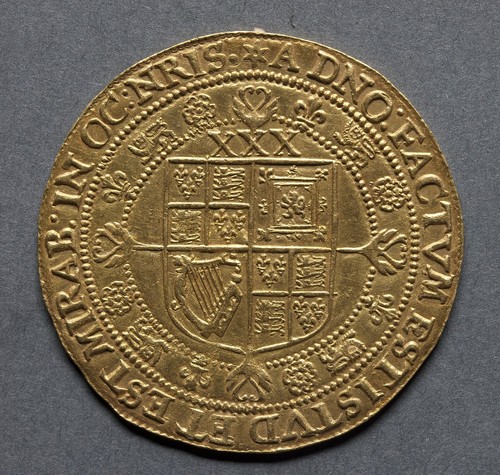
Edward IV Ryal
c. 1465-1470
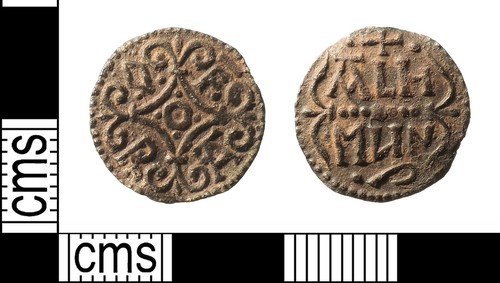
Penny of Offa
c. 757-796 (8th century)
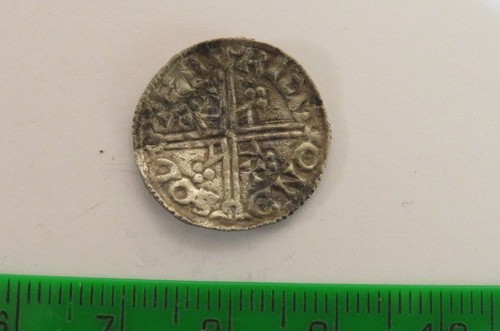
Medieval Penny
c. 8th-15th century
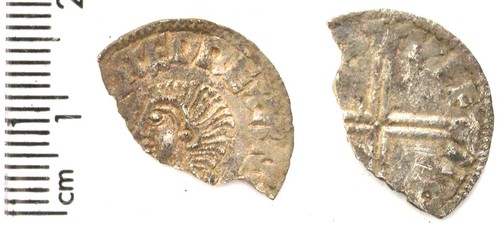
Penny of Aethelred II
978-1013
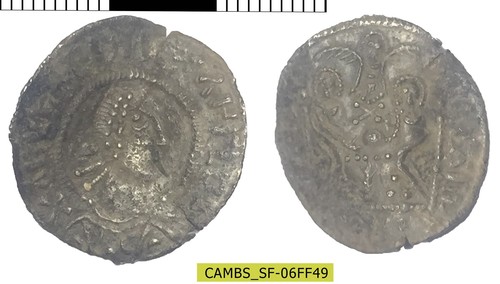
Penny of Alfred the Great
c. 871-899 (late 9th century)
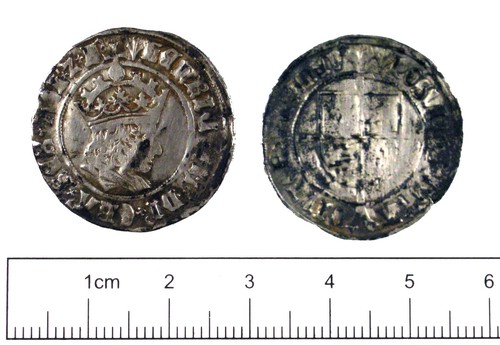
Henry VII Groat
1485-1509
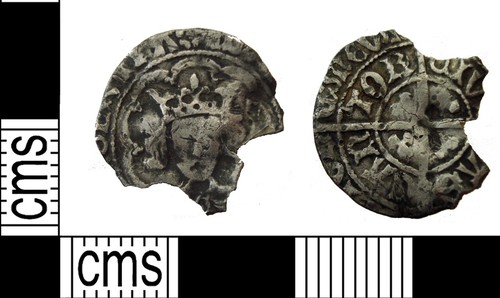
Edward IV Half Groat
1461-1483
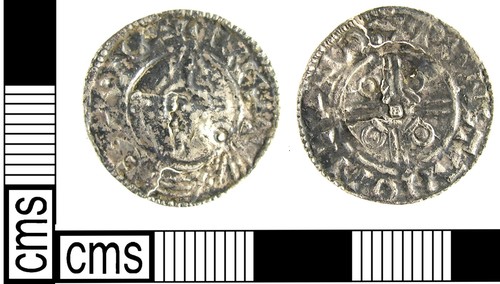
Penny of Cnut
1024-1030
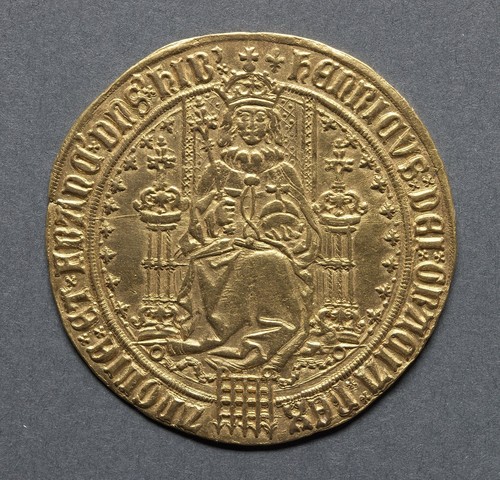
Henry VII Sovereign
1485-1509
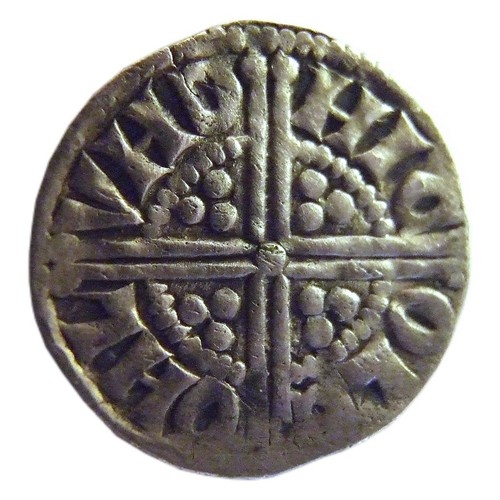
Long Cross Penny
1247-1279 (13th century)
Anglo-Saxon Styca
8th-9th century
Anglo-Saxon Sceatta
7th-8th century