
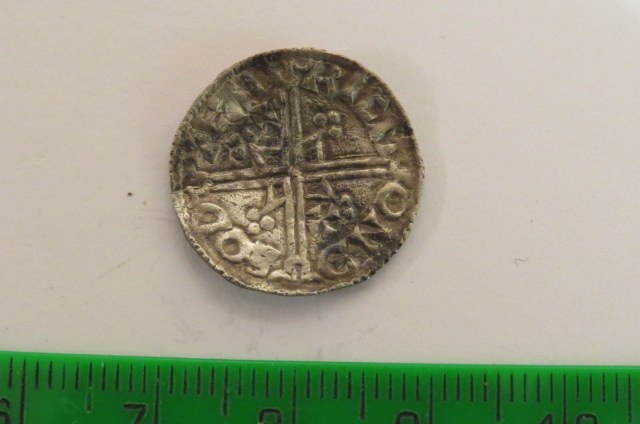
Medieval Penny
England's standard medieval coin: a small hammered silver penny with a crowned royal head on one side and a cross on the other, struck by hand across many reigns.
- Country
- England
- Denomination
- Penny
- Metal
- Silver
Got a coin like this?
Identify any coin from a photo, free.
Overview
The medieval penny was the workhorse coin of England for centuries, and for long stretches it was effectively the only denomination in everyday use. The example shown follows the classic pattern: a facing or profile royal head with a Latin legend around the rim on the obverse, and a cross design filling the reverse, also ringed by lettering. Both sides were struck by hand from engraved dies, so no two are perfectly alike.
These pennies are small, thin discs of silver, typically well under two grams, and they circulated so heavily that many survive worn and slightly irregular in shape. The cross on the reverse was not merely decorative: on many issues it ran to the edge of the coin so that a penny could be physically cut along its arms into halves (halfpennies) or quarters (farthings) to make small change. The legends usually name the reigning king together with the mint town and, on earlier issues, the moneyer responsible for striking.
History & Background
The silver penny emerged in Anglo-Saxon England in the later 8th century, modelled on continental reform coinage, and quickly became the backbone of the English currency. For roughly five hundred years it dominated circulation; larger and smaller denominations were rare or absent, so the penny and its cut fractions did most of the work of daily trade. The Latin word for the coin was denarius, which is why the penny was abbreviated 'd' in British money long afterwards.
Successive dynasties kept the basic formula of royal head and cross while changing the details. Well-known series include the pennies of the late Anglo-Saxon and Norman kings, the widely struck 'short cross' and 'long cross' pennies of the Angevin and early Plantagenet period, and the reformed 'long cross' pennies introduced under Edward I in the late 13th century, whose facing-bust-and-cross design set the standard for the rest of the medieval period. Coins were produced at numerous regional mints, and earlier issues also named the individual moneyer, a practice that faded as striking became more centralized. Because minting spanned so many reigns and mints, the surviving medieval pennies form an enormous and varied body of coinage.
How to Identify
Look first at the overall recipe: a small silver coin, commonly around 15-20 mm across and roughly 1.0-1.5 grams, with a royal head on one face and a cross on the other, each surrounded by a Latin legend. Hand striking means the flan is often slightly oval, off-center, or unevenly struck, and the lettering may run off the edge. This irregularity is normal and helps separate genuine hammered coins from machine-made modern pieces.
The obverse legend typically begins with the king's name and a title, and the reverse legend usually gives the mint town and, on earlier coins, the moneyer. The exact bust style (facing crowned head versus profile), the form of the cross (short cross ending within the legend, or long cross extending to the rim), the shape of the letters, and small marks or pellets in the cross quarters are the diagnostics used to place a penny in a specific reign and issue. Silver color, a light weight, and genuinely hand-cut relief are the baseline signs of an authentic medieval English penny.
Value & Collectibility
Medieval English pennies were struck in vast numbers over many centuries, so common types in worn condition are among the more affordable medieval coins and are widely available to collectors. Value depends heavily on the specific king and issue, the mint, the sharpness of the strike, how much of the legend is legible, and overall preservation. A fully round, well-centered, sharply struck example with clear legends is worth considerably more than a clipped, worn, or weakly struck one.
Scarcer reigns, rare mints or moneyers, unusual varieties, and coins in exceptional condition can command substantial premiums, while heavily circulated common issues remain inexpensive. Because the series is so large and varied, precise attribution matters: identify the king, mint, and issue before comparing prices, and consult recent dealer listings and auction results for that exact type rather than relying on a single headline figure.
Frequently asked questions
What is a medieval penny made of?
It is struck in silver. Medieval English pennies were the standard silver denomination, small and thin, usually weighing only around one to one and a half grams.
Why is there a cross on the back?
The cross was both a religious symbol and a practical guide: on many issues it ran to the edge so the penny could be cut along its arms into halfpennies and farthings for small change.
Who is the head on the front?
It is the reigning king, shown crowned. The surrounding Latin legend names the monarch and title, though on worn coins it can be hard to read in full.
How can I tell which king or date it is?
Read the legends and study the bust and cross style. The obverse names the king, the reverse usually gives the mint and sometimes the moneyer, and these details place the coin in a specific reign and issue.
Why is the coin not perfectly round?
It was struck by hand between engraved dies on a hand-cut blank, so slightly oval, off-center, or unevenly struck coins are entirely normal for the period.
Medieval Penny guides
In-depth guides for identifying, valuing, and collecting Medieval Penny.
Other coins you may enjoy
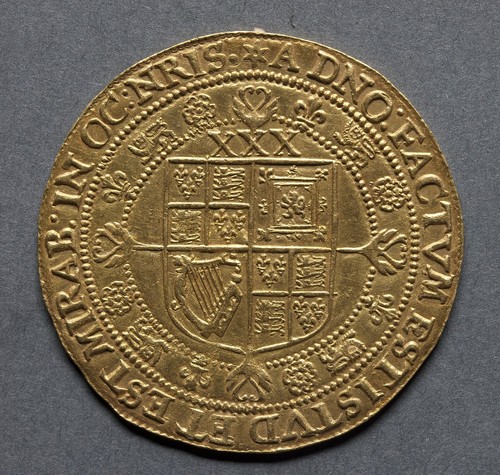
Edward IV Ryal
c. 1465-1470
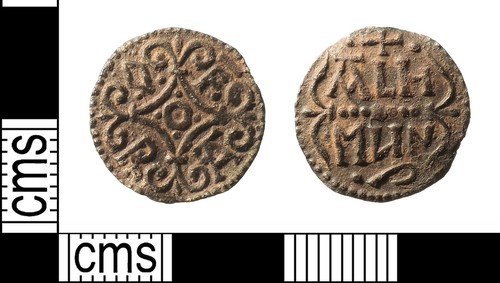
Penny of Offa
c. 757-796 (8th century)
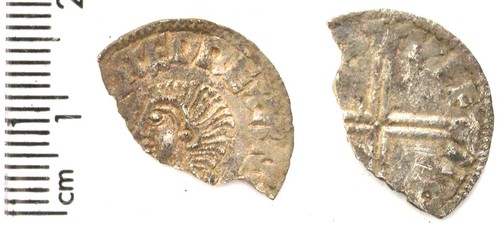
Penny of Aethelred II
978-1013
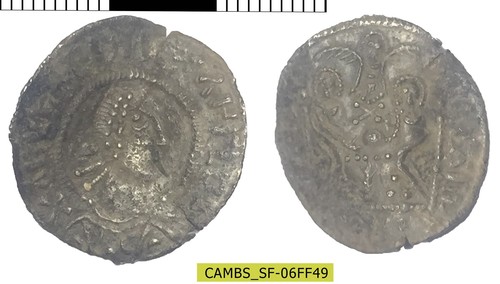
Penny of Alfred the Great
c. 871-899 (late 9th century)
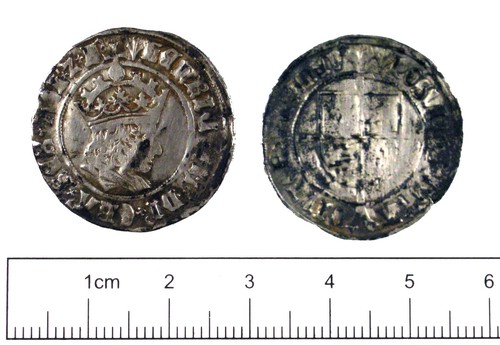
Henry VII Groat
1485-1509
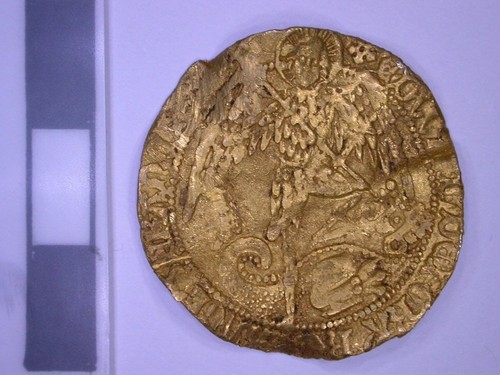
Edward V Angel
1483
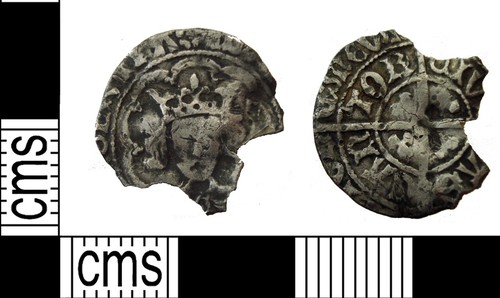
Edward IV Half Groat
1461-1483
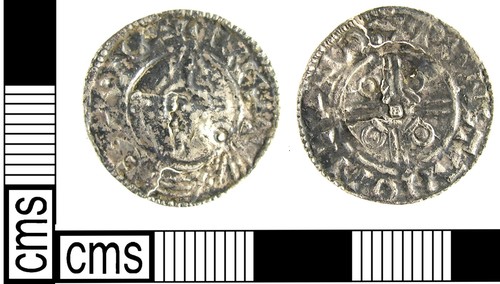
Penny of Cnut
1024-1030
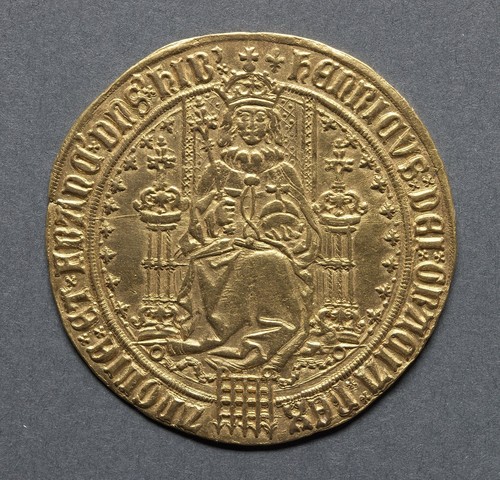
Henry VII Sovereign
1485-1509
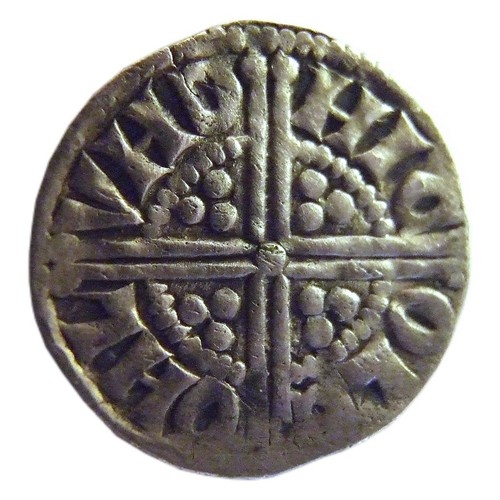
Long Cross Penny
1247-1279 (13th century)
Anglo-Saxon Styca
8th-9th century
Anglo-Saxon Sceatta
7th-8th century