
How to Identify the Medieval Penny
Collector checks for the English silver penny: size and metal, the head-and-cross layout, legends naming king and mint, cross types, and authentication cautions.
Read the full Medieval Penny encyclopedia entry →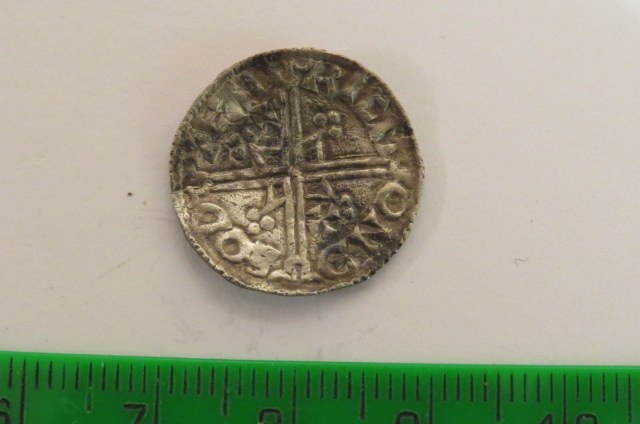
Start with the physical basics. A medieval English penny is a small, thin silver disc, generally about 15-20 mm across and roughly 1.0-1.5 grams. The metal should read as silver, often toned gray from age, and the coin is typically light in the hand. Because each piece was struck by hand, expect a slightly irregular, sometimes oval flan with uneven edges; a perfectly round, machine-crisp coin of this design is a warning sign rather than a good sign.
Confirm the two-sided formula. The obverse carries a royal head, usually a crowned king shown either facing or in profile, and the reverse carries a cross. This head-and-cross pairing is the core signature of the type. Note which style of cross is present: a 'short cross' that ends within the surrounding legend, or a 'long cross' whose arms extend all the way to the rim. The cross form, along with any pellets or symbols in its quarters, is one of the main clues used to assign the coin to a period.
Read the legends. Both sides are ringed with Latin lettering. The obverse legend names the king and a title; the reverse legend generally gives the mint town, and on earlier issues also the moneyer who struck the coin. Even a partial legend helps: recovering the king's name narrows the reign, and a mint or moneyer name can pin down the issue. Letter shapes themselves are diagnostic, since engraving styles changed over time.
Use the fine details to attribute the issue. Beyond the king and mint, collectors distinguish issues by bust style, crown and hair treatment, the exact arrangement of the cross and any marks in its angles, punctuation, and small privy marks. Matching these against a standard reference for English hammered coinage lets you separate, for example, an early short-cross penny from a later Edwardian long-cross penny. Take your time reading worn legends under raking light before deciding.
Watch for look-alikes and authentication issues. Cut halfpennies and farthings (pennies deliberately cut along the cross) can be mistaken for damaged coins, and clipped coins, whose edges were pared for silver, will be undersized and off-weight. Cast copies show a soft, grainy surface and possible seams rather than the sharp, hand-engraved relief of a struck coin, and modern replicas and 'tourist' pieces exist. For scarcer reigns, high-grade examples, or any purchase of consequence, check weight, silver content, strike character, and provenance, and seek expert opinion when in doubt.
Frequently asked questions
What is the quickest way to recognize a medieval English penny?
A small, thin, hand-struck silver coin with a crowned royal head on one side and a cross on the other, each ringed by a Latin legend, is the classic medieval penny.
What is the difference between a short cross and a long cross penny?
On a short cross the arms end within the legend ring; on a long cross they extend to the rim. The long cross form made the coin easier to cut cleanly into fractions.
How do I read the legends?
The obverse names the king and title, the reverse usually gives the mint and sometimes the moneyer. Use raking light on worn coins and compare letter forms to a hammered-coinage reference.
Should I worry about fakes?
For common worn types fakes are less of a concern, but cast copies and modern replicas exist. Look for sharp hand-engraved detail, correct weight, and genuine silver, and get expert help on valuable pieces.