
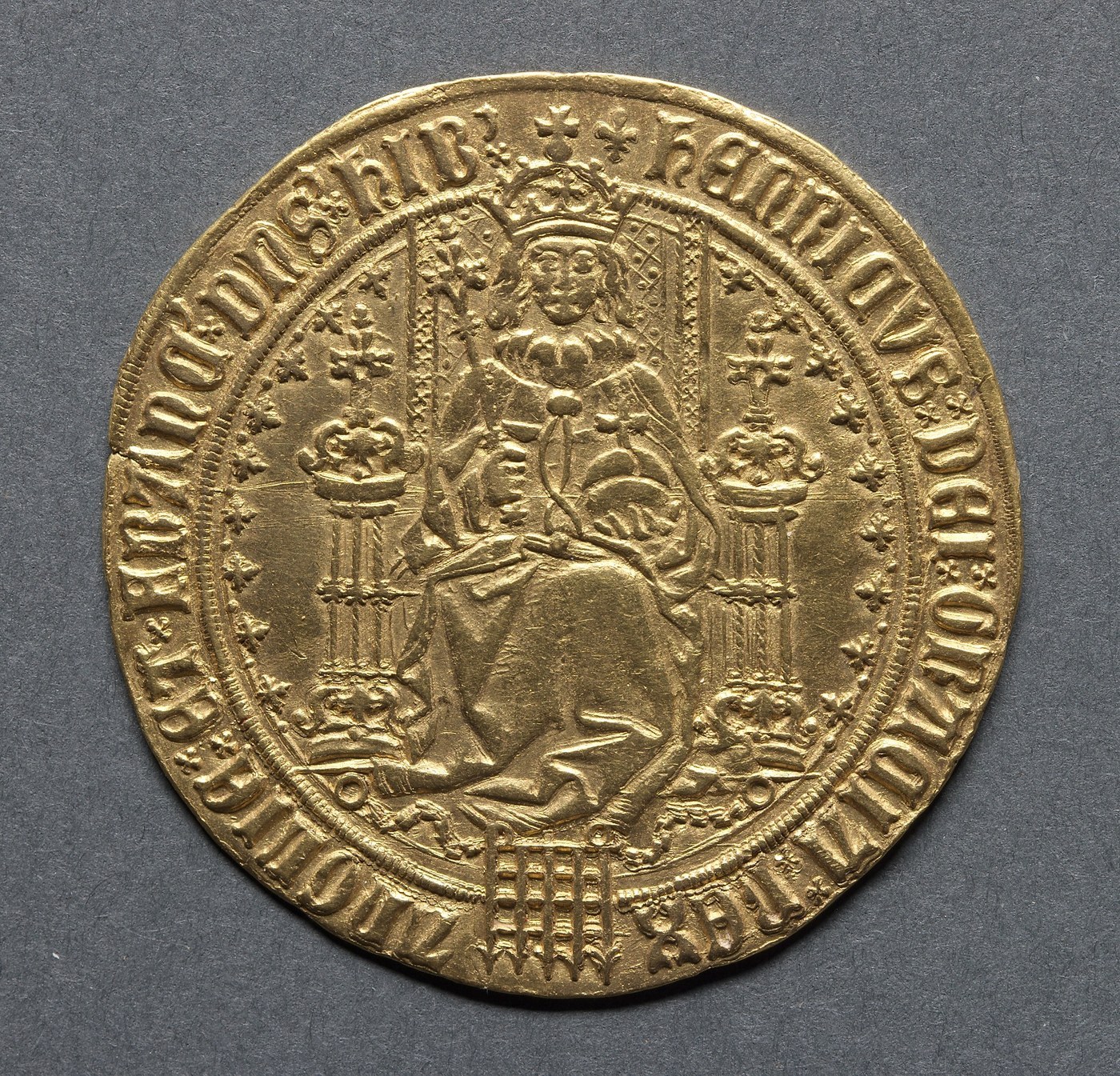
Henry VII Sovereign
The first English gold sovereign, struck under Henry VII, showing the crowned king enthroned in majesty on an elaborate Gothic throne.
- Country
- England
- Denomination
- Sovereign
- Metal
- Gold
Got a coin like this?
Identify any coin from a photo, free.
Overview
The Henry VII Sovereign is a large gold coin struck in England during the reign of Henry VII (1485-1509), the first monarch of the Tudor dynasty. Its obverse presents the king enthroned in majesty: crowned and robed, seated facing forward on an ornate high-backed throne, holding a scepter and orb, framed by a Latin legend. The design is deliberately grand, emphasizing royal power at the outset of Tudor rule.
This coin is historically significant as the first English 'sovereign,' a new and unusually large gold denomination introduced during the reign. Its enthroned-king imagery and imposing size set it apart from earlier medieval English gold such as the noble and the ryal, and it established a coin type whose name and prestige would echo through later English and British coinage.
History & Background
Henry VII authorized the sovereign in the closing years of the 15th century as a new high-value gold coin, valued at twenty shillings (one pound). It was a showpiece denomination as much as a practical one, projecting the wealth and legitimacy of a new dynasty that had come to power at the end of the Wars of the Roses. The enthroned-majesty portrait drew on continental European models of large presentation gold coins, adapting them to an English royal message.
The sovereign was struck at the Royal Mint in London and produced in several design phases across the reign, with variations in the throne, the king's figure, the surrounding tressure, and the arrangement of the legends. Because it was a large and costly coin, it was made in limited numbers compared with everyday silver, and it circulated among the wealthy and in high-value transactions rather than in ordinary daily commerce. The type continued and evolved under Henry's successors.
How to Identify
The defining feature is the obverse: a crowned king shown seated in full majesty on a large, elaborately decorated throne, facing forward, holding a scepter and an orb, surrounded by a Latin legend. The throne is tall and detailed with Gothic ornament, and the whole design fills a broad gold flan. This enthroned-king image is the signature of the Henry VII sovereign.
Although not shown in an obverse-only photograph, the reverse of the type characteristically carries the royal coat of arms on a shield set upon a large Tudor double rose, within a decorative tressure. The coin is struck in high-purity gold, is notably large and heavy for a hand-struck piece, and bears medieval-style Latin legends. Mint marks placed at the start of the legends, along with differences in the throne and figure, help assign a specimen to a particular issue phase of the reign.
Value & Collectibility
The Henry VII Sovereign is a rare and highly prized coin, and genuine examples command very high prices that reflect their status as the first English sovereign and their historic importance rather than merely their gold content. Well-preserved and sharply struck specimens are especially valued, and prices span a broad range depending on issue, strike quality, centering, and overall condition.
Because these coins are scarce and valuable, they are frequently the subject of reproductions and forgeries, and even genuine pieces vary widely in eye appeal and grade. Any figure should be treated as approximate: consult recent auction records and seek expert authentication before buying or selling, as condition and authenticity have an outsized effect on price for a coin of this rarity.
Frequently asked questions
What is shown on the Henry VII Sovereign?
The obverse shows Henry VII enthroned in majesty: crowned and robed, seated facing forward on an elaborate throne, holding a scepter and orb. The reverse of the type typically shows the royal arms on a shield over a large Tudor rose.
Why is this coin historically important?
It is the first English gold sovereign, a large new denomination introduced under Henry VII. It marked the start of the Tudor dynasty's coinage and established a coin name and type carried on by later English and British monarchs.
Is the Henry VII Sovereign made of real gold?
Yes. It is a high-purity medieval gold coin, and it was one of the largest and most valuable English coins of its day, valued at twenty shillings, or one pound.
How rare is the Henry VII Sovereign?
It is rare. As a large, costly coin made in limited numbers and surviving from the late 15th and early 16th centuries, genuine examples are scarce and are prized by collectors and museums.
Are Henry VII Sovereigns valuable?
Yes, genuine examples are very valuable, worth far more than their gold content because of their rarity and historic status. Prices depend heavily on issue, strike, and condition, and authentication is essential.
Henry VII Sovereign guides
In-depth guides for identifying, valuing, and collecting Henry VII Sovereign.
Other coins you may enjoy
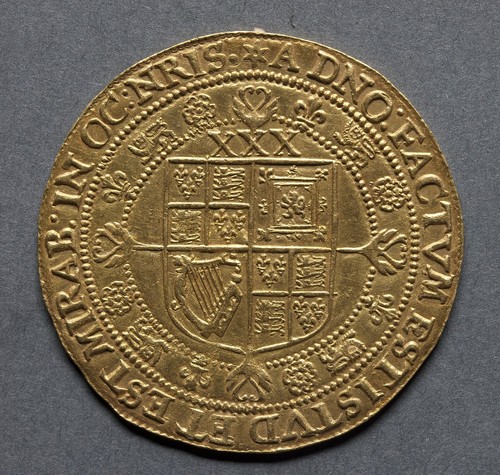
Edward IV Ryal
c. 1465-1470
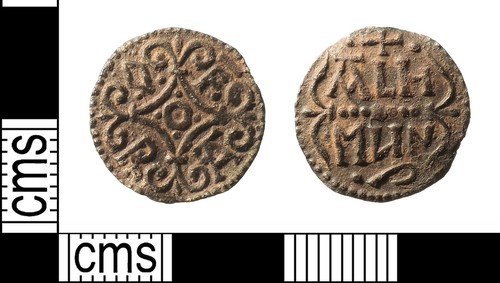
Penny of Offa
c. 757-796 (8th century)
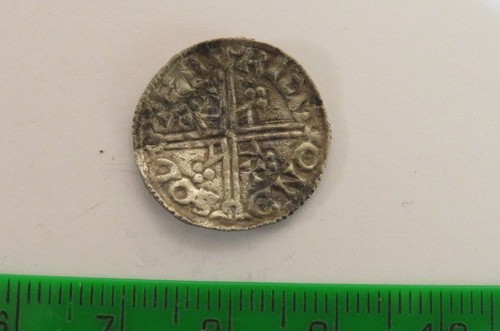
Medieval Penny
c. 8th-15th century
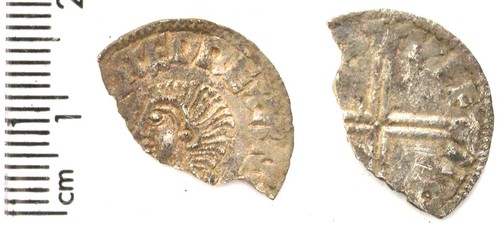
Penny of Aethelred II
978-1013
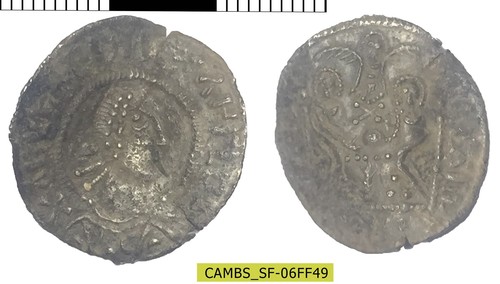
Penny of Alfred the Great
c. 871-899 (late 9th century)
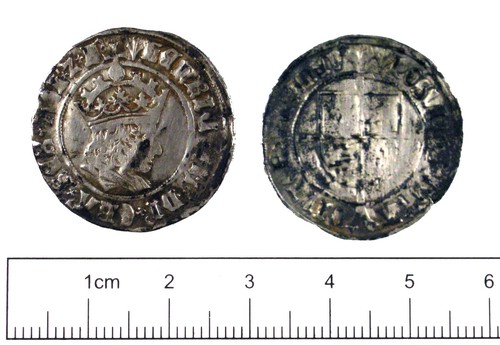
Henry VII Groat
1485-1509
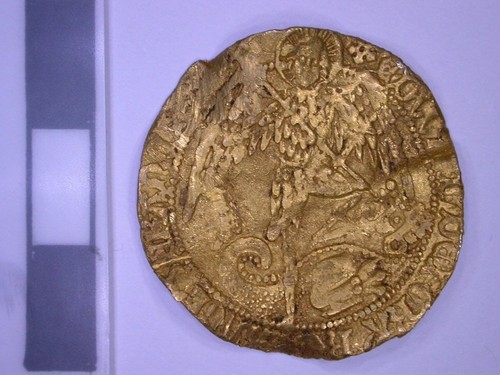
Edward V Angel
1483
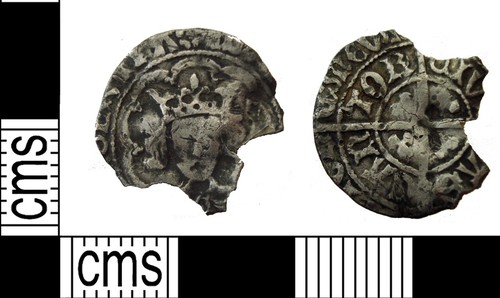
Edward IV Half Groat
1461-1483
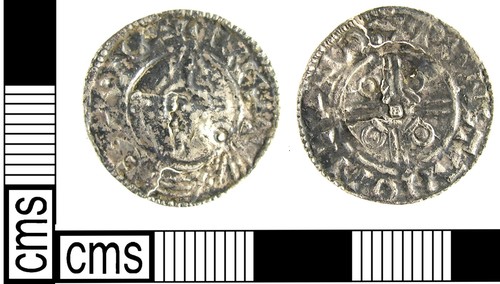
Penny of Cnut
1024-1030
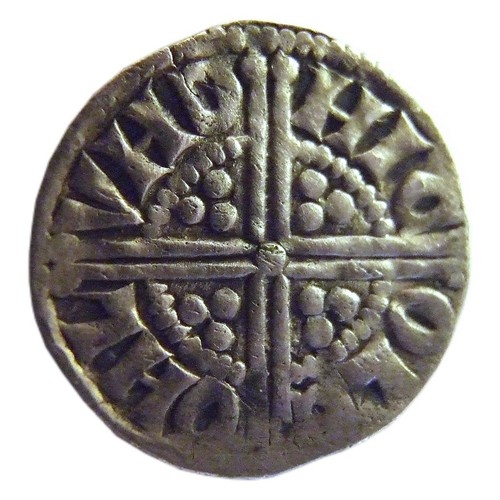
Long Cross Penny
1247-1279 (13th century)
Anglo-Saxon Styca
8th-9th century
Anglo-Saxon Sceatta
7th-8th century