
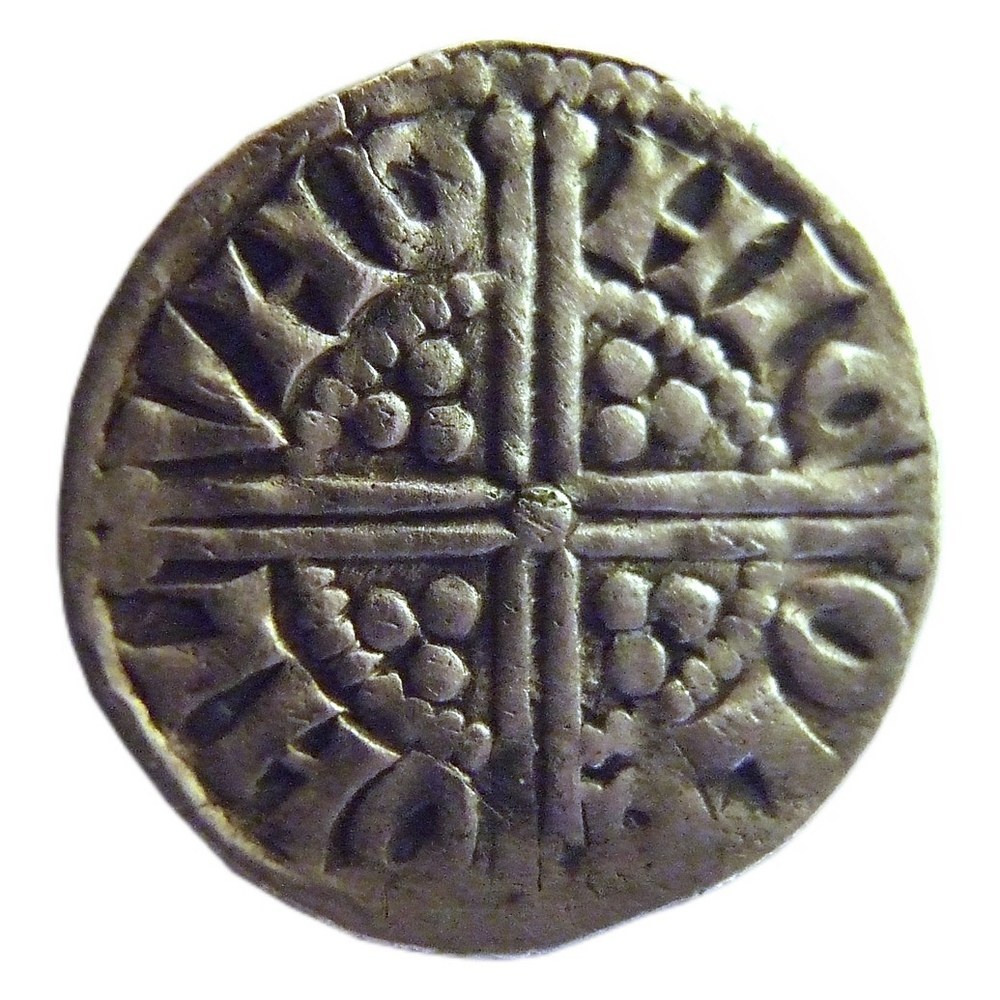
Long Cross Penny
Hand-struck medieval English silver penny with a crowned royal bust and a long voided cross reaching the rim, dividing the reverse legend.
- Country
- England
- Denomination
- Penny
- Metal
- Silver
Got a coin like this?
Identify any coin from a photo, free.
Overview
The Long Cross Penny is a hammered medieval English silver penny of the 13th century. The example shown has a crowned facing or profile royal bust with a Latin inscription around the rim on the obverse, and on the reverse a long voided cross whose arms extend all the way to the edge of the coin, dividing the legend and each arm ending in ornamental pellets or rosette-like groups.
The design gets its name from that reverse cross, which reaches the rim rather than stopping inside a border as on the earlier "short cross" coinage. Struck by hand on a small, thin, irregular silver flan, the penny was the workhorse coin of medieval England and one of the most commonly encountered hammered English coins today.
History & Background
The long cross type was introduced in England in 1247 under King Henry III as a reform of the coinage. Earlier pennies used a "short cross" that stopped within the inner circle, which made it easy for people to clip silver from the plain outer edge. Extending the cross fully to the rim was a deliberate anti-clipping measure: any missing metal would break the cross and reveal that the coin had been tampered with.
Pennies of this general design continued through the reign and into that of Edward I, until the coinage was overhauled again in 1279. Throughout this period the penny was effectively the only regularly struck denomination, cut into halves and quarters when smaller change was needed. Coins were produced at numerous mints across the kingdom by named moneyers, whose names and mint towns appear in the reverse legend.
How to Identify
Look for a small, thin silver coin, roughly 18 mm across and light in the hand, struck by hand so the flan is often slightly irregular or off-center. The obverse shows a crowned royal head with a sceptre in some issues, ringed by a Latin inscription naming the king. The lettering and portrait are stylized and medieval in character rather than finely modeled.
The defining feature is the reverse: a long voided cross (a cross drawn as double outlines with an open center) whose four arms run out to the very edge of the coin, splitting the surrounding legend into four groups. That legend typically records the moneyer's name and the mint town. Pellets in the angles of the cross and rosette-like terminals are normal. Because the cross reaches the rim, this type is easy to separate from the earlier short cross pennies, whose cross stops inside a beaded circle.
Value & Collectibility
Long cross pennies survive in large numbers, so most collectible value comes from condition, completeness of the flan and legend, the specific king and class, and the mint and moneyer rather than outright rarity. Well-worn, chipped, or clipped examples of common mints are among the more affordable medieval hammered coins, while full, round, well-centered coins with clear portraits and readable legends command higher prices.
Scarcer mints, unusual moneyers, and sharply struck coins on a complete flan bring premiums, and cut halfpennies and farthings (pennies deliberately cut into fractions) are collected in their own right. Because the type spans several reigns and many mints, values vary widely; treat any single figure as approximate and compare against recent sales of the same king, class, and grade.
Frequently asked questions
Why is it called a "long cross" penny?
The name comes from the reverse cross, whose arms extend all the way to the edge of the coin. Earlier English pennies used a "short cross" that stopped inside a border circle.
Why does the cross reach the rim?
It was an anti-clipping measure. Extending the cross to the edge meant anyone shaving silver from the rim would cut into the cross and reveal the tampering.
Is it made of real silver?
Yes. Long cross pennies were struck in silver of high medieval standard. They are small and thin, so they weigh very little despite being genuine silver.
What do the words around the edge mean?
The obverse names the king in Latin, and the reverse gives the name of the moneyer who struck the coin and the mint town where it was made, split into four groups by the cross.
Why are some of these coins cut into pieces?
The penny was the smallest struck coin, so people cut it in half or into quarters to make halfpennies and farthings for small change. Cut fractions are commonly found and collected.
Long Cross Penny guides
In-depth guides for identifying, valuing, and collecting Long Cross Penny.
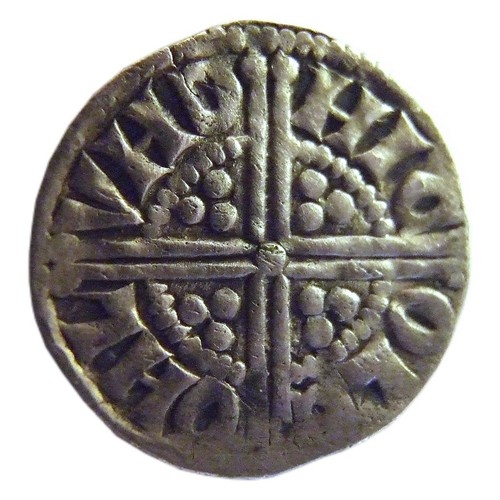
Other coins you may enjoy
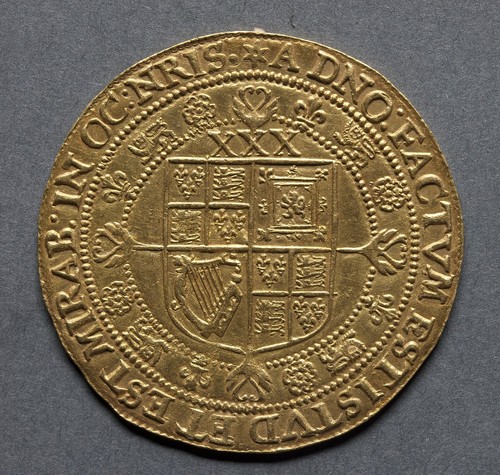
Edward IV Ryal
c. 1465-1470
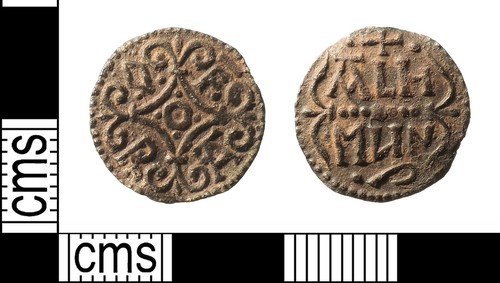
Penny of Offa
c. 757-796 (8th century)
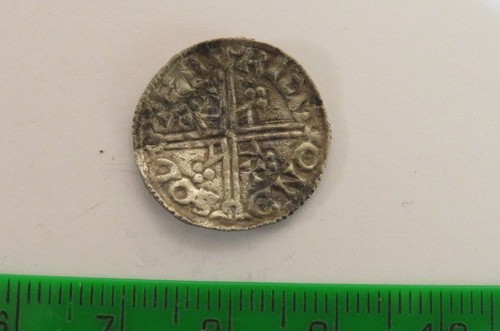
Medieval Penny
c. 8th-15th century
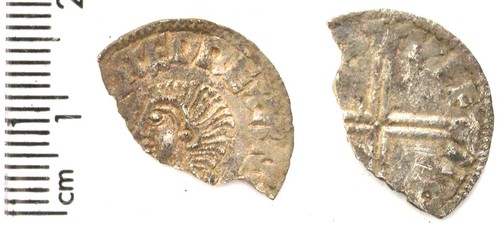
Penny of Aethelred II
978-1013
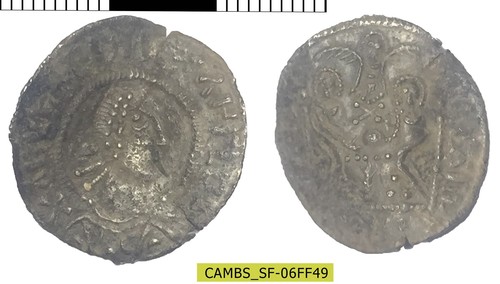
Penny of Alfred the Great
c. 871-899 (late 9th century)
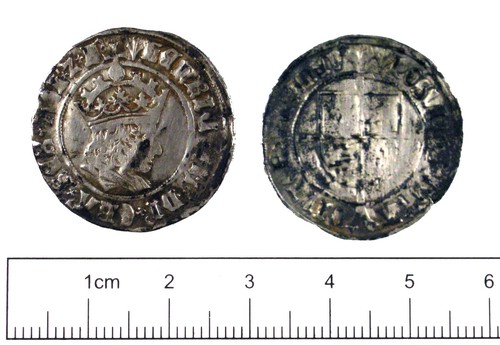
Henry VII Groat
1485-1509
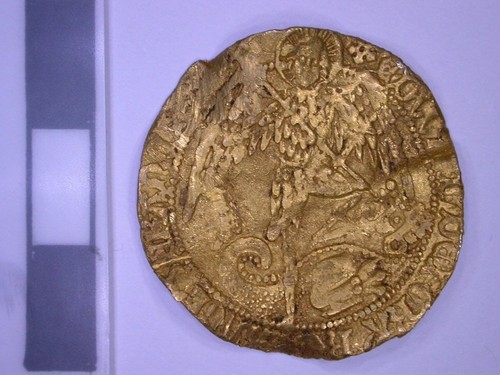
Edward V Angel
1483
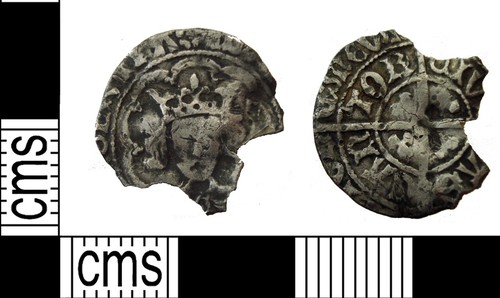
Edward IV Half Groat
1461-1483
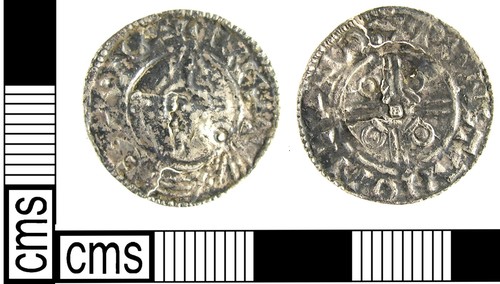
Penny of Cnut
1024-1030
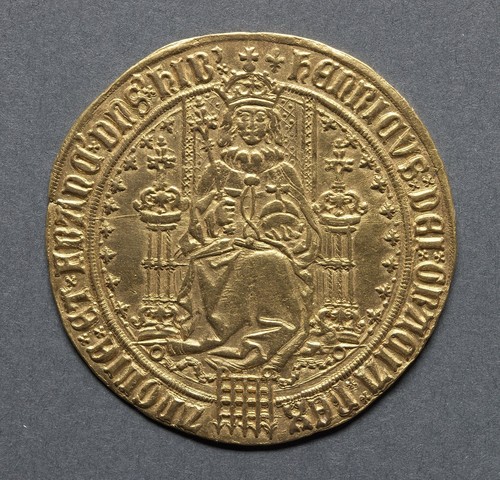
Henry VII Sovereign
1485-1509
Anglo-Saxon Styca
8th-9th century
Anglo-Saxon Sceatta
7th-8th century