
How to Identify the Long Cross Penny
Collector checks for the medieval English penny: the rim-reaching voided cross, crowned bust, small silver flan, mint and moneyer legends, and fakes to watch.
Read the full Long Cross Penny encyclopedia entry →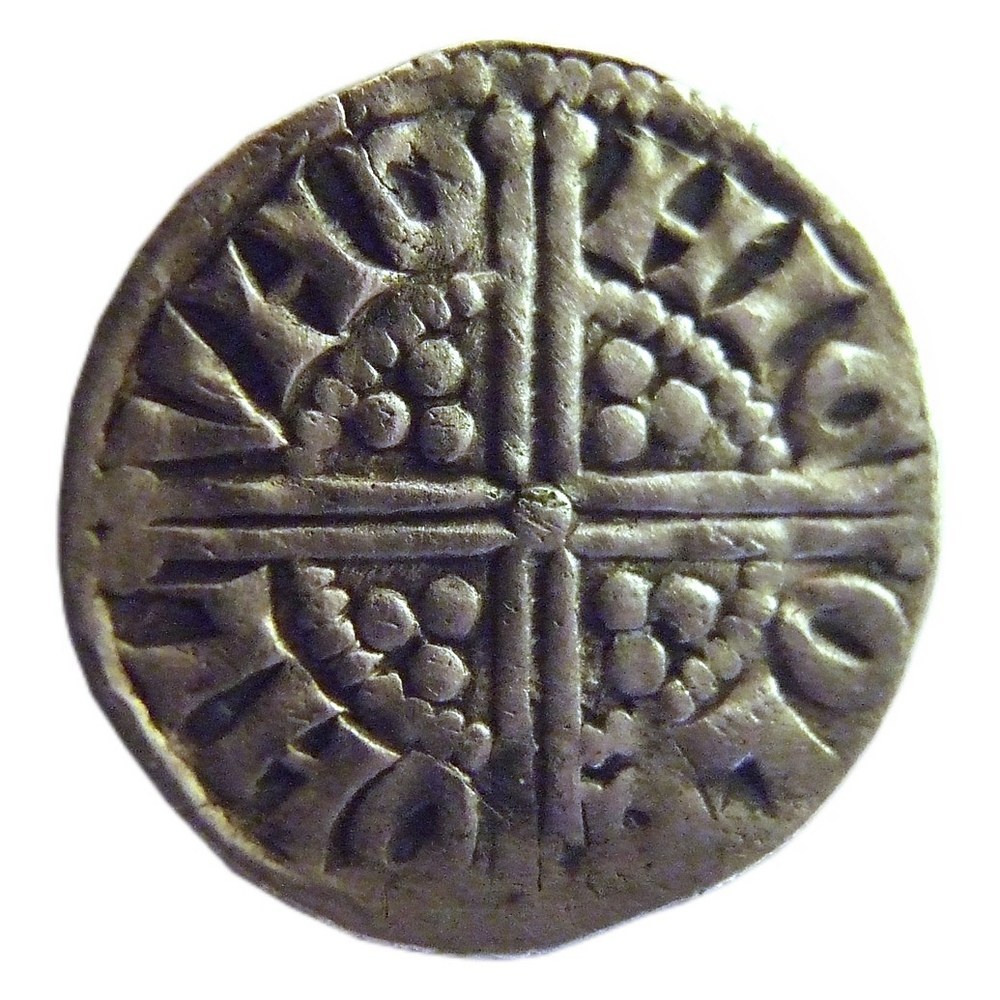
Start with size and metal. A long cross penny is small and thin, about 18 mm across and only a gram or so in weight, struck in silver. Because it was hammered by hand, expect an irregular, sometimes off-center or slightly cracked flan rather than the perfectly round edge of a machine-made coin. A large, heavy, or perfectly circular "penny" is not this medieval type.
Check the reverse first, because it is diagnostic. You want a long voided cross, drawn as two parallel lines with an open channel between them, whose four arms run out to the very rim and divide the legend into four groups. Pellets sit in the angles of the cross and the terminals may look like small rosettes. If the cross stops inside a beaded inner circle instead of touching the edge, you are looking at the earlier short cross penny, not a long cross.
Read the obverse. There should be a crowned royal head, facing or in profile depending on the issue, surrounded by a Latin legend naming the king. Then read the reverse legend around the cross: it records the moneyer's name and the mint town. Identifying those two words is how collectors attribute the coin to a specific mint and often narrow its date, so it is worth working out the letters even where wear has softened them.
Separate the look-alikes. Beyond the short cross type, later Edwardian "long cross" sterling pennies from 1279 onward look similar but generally have neater, rounder flans, a single-line (non-voided) cross, and different portrait and legend conventions. Continental "sterling" imitations copying the English design also exist. Matching the king's name, the cross style (voided vs. single line), and the mint/moneyer helps place the coin correctly.
Authenticate with care. Genuine coins show honest, uneven wear, a portrait and lettering in a convincing medieval style, and toned silver rather than bright or coppery metal. Be wary of cast copies (look for a soft, grainy surface, seams on the edge, or bubbles), modern replicas, and coins that have been heavily cleaned or artificially aged. Weigh and measure the piece, and when value is significant have it checked by a dealer or grading service experienced in hammered English coins before buying or selling.
Frequently asked questions
How do I tell a long cross penny from a short cross penny?
Look at where the reverse cross ends. On the long cross type the arms reach the rim and split the legend; on the short cross type the cross stops inside a beaded circle within the coin.
What does "voided" cross mean?
The cross is drawn as two parallel outlines with an open channel down the middle rather than as a solid bar. That voided, double-line look is typical of the earlier long cross pennies.
How can I find the mint and moneyer?
Read the reverse legend around the cross. It is divided into four groups and records the moneyer's name and the mint town, which together let you attribute the coin to a specific place.
Is a rough, off-center coin a fake?
Not necessarily. These were struck by hand, so irregular, off-center, and slightly cracked flans are normal and expected. Cast surfaces, edge seams, or bubbles are the warning signs of a copy.