
How to Identify the Henry VII Sovereign
Collector checks for the first English gold sovereign: the enthroned-king obverse, Tudor rose reverse, large gold flan, mint marks, look-alikes, and authentication cautions.
Read the full Henry VII Sovereign encyclopedia entry →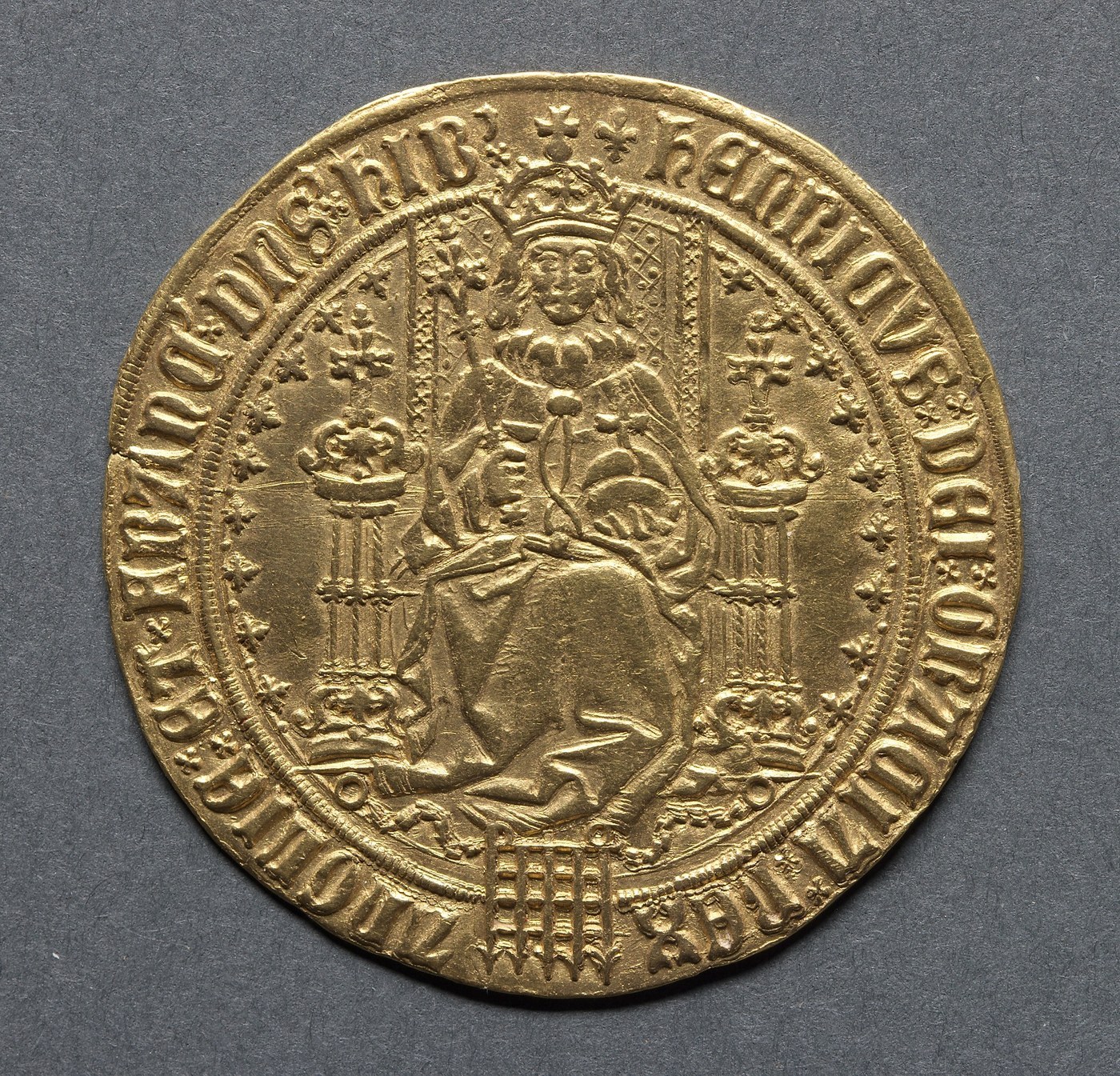
Begin with the obverse, which is the sovereign's clearest fingerprint. You should see the king shown in full majesty: crowned and robed, seated facing forward on a tall, elaborately decorated throne, holding a scepter and an orb, all encircled by a Latin legend. The throne's Gothic ornament and the frontal, seated pose distinguish the sovereign from earlier English gold coins that show the king standing in a ship (the noble and ryal) or a facing bust alone.
Check the reverse where possible. The Henry VII sovereign type characteristically carries the royal coat of arms on a shield placed over a large Tudor double rose, set within a decorative tressure. This shield-on-rose reverse, paired with the enthroned obverse, is the combination that defines the type. An obverse-only image can still be identified from the throne scene alone, but confirming the rose-and-shield reverse strengthens the attribution.
Assess size and metal. The sovereign is a large, heavy hand-struck gold coin on a broad flan, and it should be struck in high-purity gold with a rich, warm color rather than a pale or brassy tone. Its impressive diameter and weight are part of its identity as a showpiece denomination; a much smaller or notably underweight piece with similar imagery is unlikely to be a genuine full sovereign.
Use mint marks and design details to narrow the issue. The type was produced in several phases across the reign, and small differences in the throne, the king's figure, the tressure, the lettering, and the mint mark at the start of the legend help place a coin within Henry VII's issues. These fine points are best confirmed against a specialist catalogue or reference rather than judged by eye alone.
Authenticate with care. Because the Henry VII sovereign is rare and extremely valuable, it is a frequent target for cast copies, modern reproductions, altered coins, and outright forgeries. Watch for casting seams, soft or blurred detail, incorrect weight or diameter, wrong letter forms, and unnaturally perfect surfaces. Given the stakes, obtain expert authentication or third-party grading before any significant purchase or sale.
Frequently asked questions
What is the single most distinctive feature to look for?
The enthroned king in majesty on the obverse: crowned and robed, seated facing forward on an elaborate throne, holding a scepter and orb. This seated-majesty scene is the sovereign's defining image and separates it from ship-type and bust-type English gold coins.
How is the sovereign different from the earlier noble or ryal?
The noble and ryal show the king standing in a ship, while the sovereign shows him seated in majesty on a throne. The sovereign is also a larger, higher-value denomination introduced later, under Henry VII.
Where was the Henry VII Sovereign minted?
It was struck at the Royal Mint in London. Mint marks placed at the start of the legends, along with differences in the throne and figure, help identify the specific issue phase within the reign.
How can I spot a fake Henry VII Sovereign?
Check weight, diameter, and gold color, and look for casting seams, soft detail, or incorrect lettering. Because this rare coin is often faked, expert authentication or third-party grading is strongly advised before buying.