
How to Identify the Edward V Angel
A collector's walkthrough for an angel attributed to Edward V: reading Saint Michael and the shield, checking size and gold, and confirming the crucial mint mark.
Read the full Edward V Angel encyclopedia entry →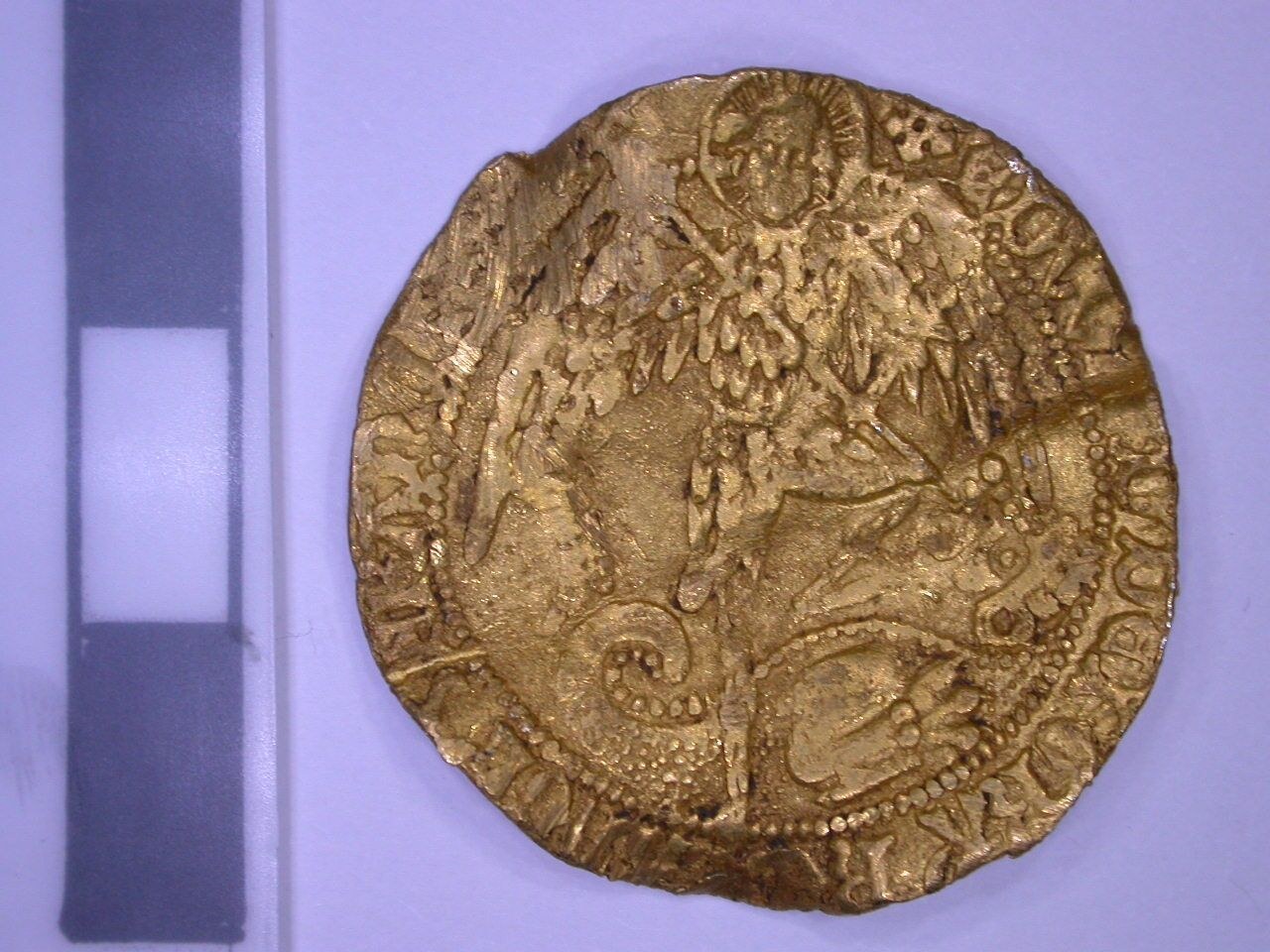
Start with the obverse image, since it names the denomination. An angel shows Saint Michael the Archangel, a winged figure in armor, standing over a demon or dragon and driving a spear into it. This scene should be clear and detailed, with the archangel dominant and the beast beneath his feet. A Latin legend runs around the edge naming the king, so read that inscription carefully before going further.
Turn to the reverse and study both the shield and its setting. The example here shows a royal shield of arms within an ornamental frame. Be aware that the classic angel reverse is built around a ship carrying the shield, with a cross above it, so the precise arrangement, the legend, and any motto should be matched against catalogued angels of the 1480s rather than assumed. Differences in the reverse layout are an important clue to which reign and issue a coin belongs to.
Check the physical coin against the standard for the denomination. An angel is high-purity gold, roughly 25 to 28 mm across and about 5 grams in weight, hand-struck so that a slightly uneven flan or off-center strike is normal. A piece that is markedly light, undersized, or of clearly base color for its type should be treated with caution, as should one whose relief looks soft or grainy.
The decisive step is the mint mark, the small symbol at the beginning of the legend. Attribution to Edward V hinges on it: coins given to his reign generally carry a boar's head, the badge of Richard of Gloucester as Lord Protector, sometimes combined with a halved sun and rose. Because the design was otherwise carried over unchanged from Edward IV, this mark, together with the exact wording of the legends, is what distinguishes a genuine Edward V angel from the far commoner issues of his father and of Richard III.
Finally, treat authentication as essential rather than optional. Angels of Edward IV and Richard III can be confused with, or deliberately passed off as, the much rarer Edward V, and a single altered mint mark can transform a common coin into a supposed rarity. Look for casting seams, bubbled surfaces, or tampering around the mark, and do not rely on the design alone. For any coin presented as an Edward V angel, seek examination by a specialist in medieval English gold and certification from a recognized grading service before accepting the attribution.
Frequently asked questions
What is the single most important feature to check?
The mint mark at the start of the legend. Because the angel design was carried over unchanged from Edward IV, the mark, generally a boar's head sometimes paired with a halved sun and rose, is what allows a coin to be attributed to Edward V at all.
What size and weight should a genuine angel be?
Roughly 25 to 28 mm in diameter and about 5 grams, struck in high-purity gold. The coin is hand-made, so minor flan irregularity and off-center striking are normal, but a markedly light or base-looking piece is suspect.
How do I avoid buying a misattributed angel?
Confirm the mint mark independently and match the legends and reverse layout to catalogued Edward V references, not just to the Saint Michael design. Common angels of Edward IV and Richard III are frequently confused with the rarer Edward V, so expert verification is essential.
Should I have it authenticated?
Yes. Given the rarity and value, and the ease of altering a mint mark, any coin presented as an Edward V angel should be examined by a specialist in medieval English gold and certified by a recognized grading service before you rely on the attribution.