Holey Dollar
Australia's first struck coin: a Spanish silver dollar with its centre punched out, counterstamped NEW SOUTH WALES 1813 and revalued at five shillings.
- Country
- Australia
- Denomination
- 5 Shillings
- Metal
- Silver
Got a coin like this?
Identify any coin from a photo, free.
Overview
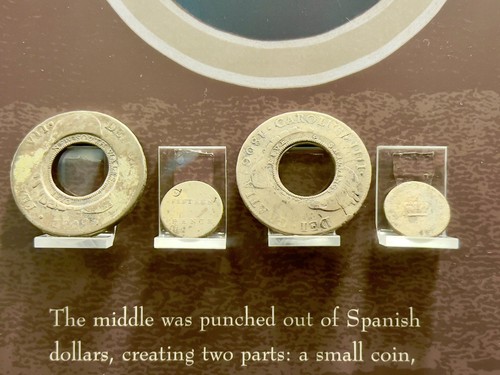
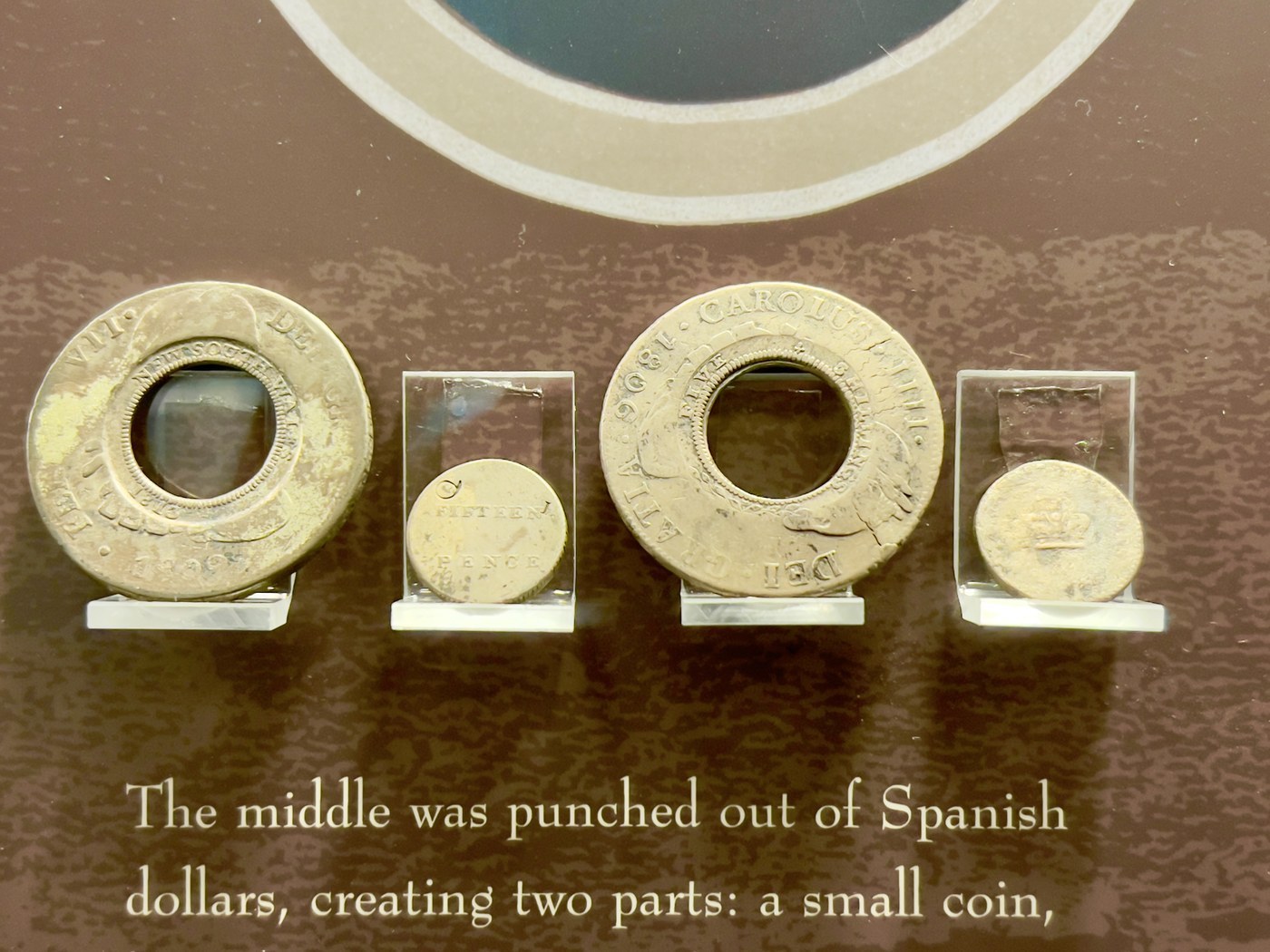
The Holey Dollar is a ring-shaped silver coin made by punching the centre out of a Spanish silver dollar (eight reales) and counterstamping the outer ring for use in the colony of New South Wales. The example shown here is the 1813 issue, the only year of production, and is widely regarded as Australia's first distinctive coin.
The counterstamped side, treated as the obverse, carries the curved inscription NEW SOUTH WALES above and the date 1813 below, framing the large central hole left where the plug was removed. The opposite side retains the original design of the host Spanish dollar: a crowned coat of arms and heraldic detail, which the photograph describes as the royal-arms reverse.
Because each Holey Dollar was cut and stamped over a pre-existing silver coin, it is silver throughout, and every surviving piece still shows traces of the underlying Spanish or Spanish-colonial dollar beneath the New South Wales stamping. The removed centre became a separate small coin, the "dump," valued at fifteen pence.
History & Background
In 1812 Governor Lachlan Macquarie received a shipment of about 40,000 Spanish silver dollars to relieve a chronic coin shortage in New South Wales. To stop the dollars simply flowing out of the colony in trade, he had their centres punched out so the coins could not easily be spent elsewhere. The work was carried out in 1813 by William Henshall, a convict with a background in metalworking (and forgery).
The operation created two coins from one. The outer ring became the Holey Dollar, revalued at five shillings, while the punched-out centre became the dump, worth fifteen pence. Together they were worth more than the original dollar, which discouraged their export. The coins circulated in the colony from 1814 and were officially demonetised in the 1820s, after which most were redeemed and melted.
Only a small fraction survived. Because so few of the original run remain intact today, the Holey Dollar is among the rarest and most historically important of all Australian coins, prized as a tangible relic of the colony's earliest official coinage.
How to Identify
The single most diagnostic feature is the form itself: a silver ring with a large, deliberately punched central hole. On the counterstamped side, look for the arc of letters reading NEW SOUTH WALES with the date 1813 curving around the rim of the hole. That legend, on a holed silver ring, identifies the type on its own.
The other face shows the host Spanish dollar's design, typically a crowned coat of arms with surrounding heraldic and legend elements. Genuine pieces almost always reveal parts of the original Spanish or Spanish-American dollar around and beneath the New South Wales stamping, since the Holey Dollar was struck over an existing coin rather than made from a blank.
The coin is silver and ring-shaped, roughly the diameter of the original eight-reales dollar (about 38-40 mm across the outer edge) but noticeably lighter than a whole dollar because the centre was removed. Any "Holey Dollar" without an authentic underlying Spanish coin, or with crisp, blank surfaces where the host design should be, should be treated with strong suspicion.
Value & Collectibility
The Holey Dollar is one of Australia's most valuable and sought-after coins. Only a couple of hundred genuine examples are believed to survive from the original issue, and authenticated pieces trade in the range of very high five figures to several hundred thousand dollars, with the finest and best-provenanced examples reaching the top of that range at auction.
Value depends heavily on the identity and condition of the underlying host dollar, the clarity of the New South Wales counterstamp, overall wear, and documented provenance. Pieces struck over scarcer or well-preserved Spanish-colonial dollars, and those with unbroken ownership history, command the strongest premiums.
Because the type is so valuable, it is also a target for reproduction and forgery, so figures should be treated as broad context only. Any coin presented as a genuine 1813 Holey Dollar should be independently authenticated by a specialist in early Australian coinage before any purchase, sale, or insurance valuation.
Frequently asked questions
What is a Holey Dollar?
It is a Spanish silver dollar with its centre punched out, counterstamped NEW SOUTH WALES 1813 and revalued at five shillings for use in colonial New South Wales. It is regarded as Australia's first coin.
Why does it have a hole in the middle?
Governor Macquarie had the centres punched out of imported Spanish dollars so the coins could not easily be spent outside the colony, easing a severe coin shortage. The removed centre became a separate coin called the dump.
What year was the Holey Dollar made?
The counterstamped date is 1813, the only year of production. The coins entered circulation from 1814 and were later demonetised in the 1820s.
Is the Holey Dollar made of real silver?
Yes. It was cut from a genuine Spanish silver dollar (eight reales), so it is silver throughout, with the original coin's design still visible beneath the New South Wales stamping.
How rare is the Holey Dollar?
Very rare. Only around a couple of hundred genuine examples are thought to survive, making it one of the rarest and most valuable of all Australian coins.
Holey Dollar guides
In-depth guides for identifying, valuing, and collecting Holey Dollar.