Australian Fifty Cents
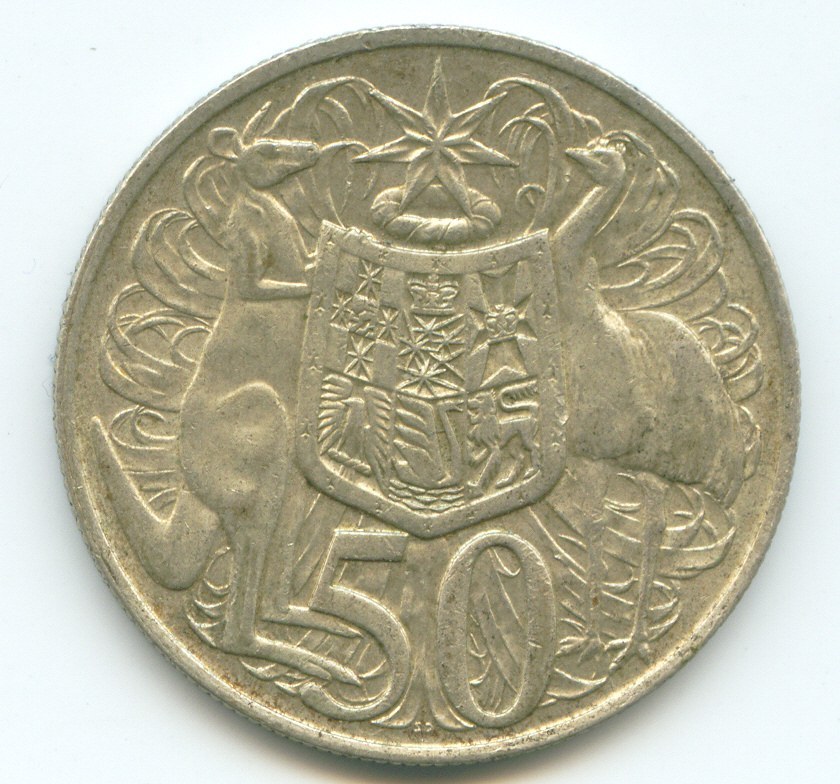
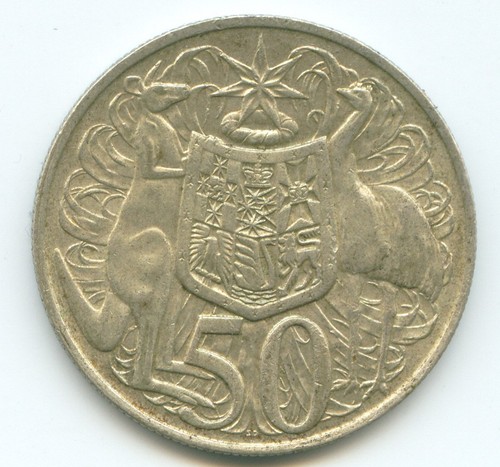
Australia's 50 cent coin bearing the national coat of arms. The 1966 round issue shown here was struck in silver; later 12-sided coins are cupronickel.
- Country
- Australia
- Denomination
- 50 Cents
- Metal
- Cupronickel
Got a coin like this?
Identify any coin from a photo, free.
Overview
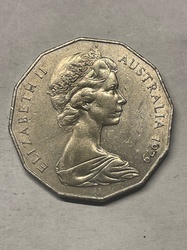
The Australian Fifty Cents is the largest-denomination base coin of Australia's decimal currency, introduced with decimalisation in 1966. The example shown is the first-year round 1966 issue, carrying the Australian coat of arms on the reverse together with the wording COMMONWEALTH OF AUSTRALIA and the denomination 50 CENTS, dated 1966. The obverse bears the portrait of Queen Elizabeth II.
The coat-of-arms reverse depicts the shield of the six states supported by a kangaroo and an emu, with a Commonwealth Star and a wreath of golden wattle. This design, by Stuart Devlin, was carried over onto the redesigned coin and remains the standard reverse of the circulating 50 cent piece today.
A key point of identity: while the 50 cent denomination as a type is normally cupronickel, the round 1966 coin in the photo is the silver exception. It was struck in 80% silver and 20% copper, which sets it apart from every later 50 cent coin.
History & Background
The 50 cent coin arrived on 14 February 1966 as part of Australia's switch from pounds, shillings and pence to dollars and cents. The new coin replaced the old ten-shilling value and was, for a single year, struck as a large round piece in 80% silver.
The silver content quickly became a problem. As the world silver price rose, the bullion in each coin approached and then threatened to exceed its 50 cent face value, encouraging hoarding and melting. Production of the round silver coin was halted, and no round 50 cent coins were struck for circulation after 1966.
When the denomination returned in 1969, it did so in a new form: a twelve-sided (dodecagonal) coin in cupronickel (75% copper, 25% nickel), keeping Stuart Devlin's coat-of-arms reverse. This 12-sided cupronickel format has continued to the present day, alongside a long series of commemorative reverse designs. The obverse portrait of Queen Elizabeth II was updated several times over the decades.
How to Identify
Start with the reverse. The Australian coat of arms — a shield borne by a kangaroo and emu beneath a Commonwealth Star, with COMMONWEALTH OF AUSTRALIA and 50 CENTS — identifies the denomination. A date of 1966 on this design marks the sought-after first-year issue.
Shape is the fastest sorting tool. The 1966 coin is round; every later standard 50 cent coin is twelve-sided. So a round coat-of-arms 50 cent piece can only be the 1966 silver issue. The round coin measures about 31.5 mm in diameter and weighs roughly 13.3 grams in 80% silver.
The obverse shows Queen Elizabeth II facing right (the young Arnold Machin portrait on 1966 coins). There is no mint mark in the field on the ordinary circulating coin. If a coat-of-arms 50 cent coin is twelve-sided, it is a cupronickel piece of 1969 or later, weighing about 15.55 grams, not the silver round type.
Value & Collectibility
The round 1966 coin has a firm floor of silver value from its roughly 0.34 troy ounce of fine silver, so even well-worn examples are worth several times face value at prevailing bullion prices. Because many millions were struck and many were saved, circulated pieces remain common and affordable; crisp uncirculated and proof examples command higher premiums.
The later twelve-sided cupronickel 50 cent coins are ordinary circulating money and generally carry little premium beyond face value, apart from scarce dates, low-mintage commemoratives, and error coins such as the well-known doubled or upset-die varieties, which collectors do pursue.
Values move with the silver market and with condition, so treat any figure as indicative only. For a specific coin, especially a high-grade 1966 or a suspected error, seek an opinion from a reputable dealer or grading service before buying, selling, or insuring.
Frequently asked questions
Is the 1966 Australian 50 cent coin silver?
Yes. The round 1966 issue was struck in 80% silver and 20% copper, weighing about 13.3 grams. It is the only Australian 50 cent coin made in silver; all later 12-sided coins are cupronickel.
Why was the round 50 cent coin discontinued?
Rising silver prices meant the metal in each coin approached its face value, prompting hoarding and melting. The round silver coin was struck only in 1966 and replaced from 1969 by a 12-sided cupronickel version.
What is on the reverse of the 50 cent coin?
The Australian coat of arms: a shield of the six states supported by a kangaroo and an emu, with a Commonwealth Star and golden wattle, designed by Stuart Devlin, plus the wording COMMONWEALTH OF AUSTRALIA and 50 CENTS.
How can I tell a 1966 coin from a later 50 cent piece?
Shape. The 1966 coin is round; standard 50 cent coins from 1969 onward are twelve-sided. A round coat-of-arms 50 cent coin is the 1966 silver type.
How much is a 1966 round 50 cent coin worth?
Circulated examples trade at several times face value, tracking their silver content, while uncirculated and proof coins bring more. Values shift with the silver price and grade, so have a specific coin appraised.
Australian Fifty Cents guides
In-depth guides for identifying, valuing, and collecting Australian Fifty Cents.
Australian Fifty Cents identified by the community
Real coins identified with Coin Identifier.