How to Identify the Australian Fifty Cents
Collector checks for the coat-of-arms 50 cent coin: round vs 12-sided shape, 1966 silver test, weight, reverse wording, and error cautions.
Read the full Australian Fifty Cents encyclopedia entry →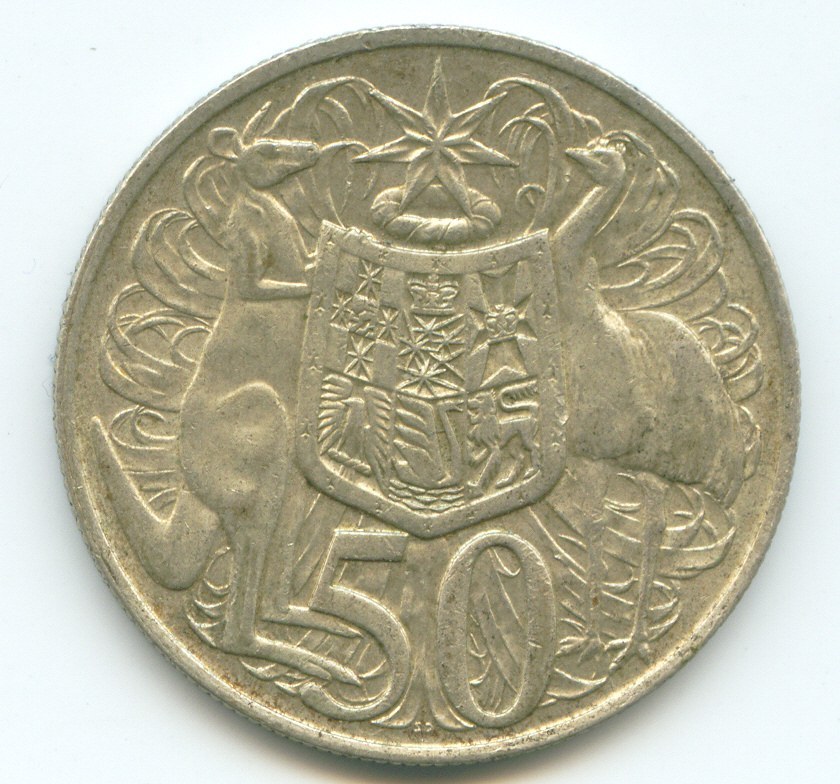
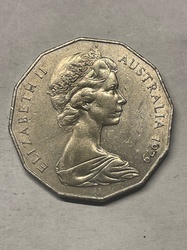
Begin with shape, because it does most of the work. The round coat-of-arms 50 cent coin is the 1966 issue and nothing else; every standard 50 cent coin struck from 1969 onward is twelve-sided (dodecagonal). So if you have a round 50 cent piece with the Australian coat of arms, you are almost certainly holding the first-year silver coin.
Confirm the reverse design and wording. Look for the Australian coat of arms — the six-state shield flanked by a kangaroo and emu, topped by the Commonwealth Star and framed in golden wattle — with COMMONWEALTH OF AUSTRALIA and 50 CENTS around it. The obverse should show a right-facing portrait of Queen Elizabeth II; on a 1966 coin this is the youthful Arnold Machin effigy. A date of 1966 on the round coin is the identification you are checking for.
Use weight and diameter to verify the silver round coin. A genuine 1966 piece is about 31.5 mm across and weighs roughly 13.3 grams in 80% silver. It is non-magnetic. A small scale and caliper will separate it from the later cupronickel 12-sided coin, which is heavier at about 15.55 grams and made of 75% copper, 25% nickel. If a coat-of-arms coin is 12-sided, it is not the silver type regardless of any claimed date.
There is no mint mark in the field on ordinary circulating coins, so do not hunt for a letter to date the piece; the date on the reverse and the coin's shape and metal are your diagnostics. Proof and mint-set coins exist for many years and show sharper strikes and mirrored fields, but they carry the same designs.
Mind the pitfalls. The main authentication concerns on the 1966 coin are cleaned or polished surfaces on high-grade examples. On the later cupronickel coins, the collector interest is in error and variety pieces — doubled dies, off-centre strikes, and upset (rotated) dies — which are easy to misjudge; have any claimed error and any high-value 1966 coin confirmed by a reputable dealer or grading service before relying on it.
Frequently asked questions
Is a round 50 cent coin always the 1966 silver one?
Yes. Australia struck the round 50 cent coin only in 1966, in 80% silver. Every later standard 50 cent coin is twelve-sided. Shape alone distinguishes the silver type from the cupronickel coins.
What should a genuine 1966 coin weigh?
About 13.3 grams and roughly 31.5 mm in diameter, in 80% silver, non-magnetic. The later 12-sided cupronickel coin weighs about 15.55 grams, so weight and shape together confirm the type.
Does the 50 cent coin have a mint mark?
Ordinary circulating coins carry no mint mark in the field. Identify the coin by its reverse design, date, shape, and metal rather than a mint letter.
Which 50 cent coins are worth checking for errors?
The 12-sided cupronickel coins are where collectors look for doubled dies, off-centre strikes, and rotated (upset) dies. Suspected errors should be confirmed by a specialist before you assign value.
Australian Fifty Cents identified by the community
Recent Australian Fifty Cents coins identified with Coin Identifier.