Australian Threepence
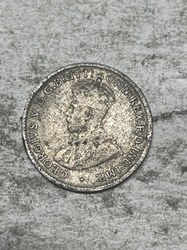
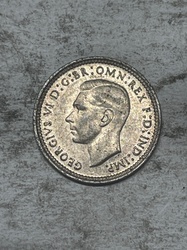
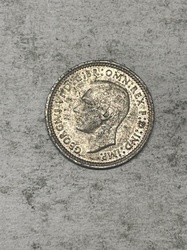
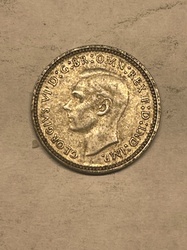
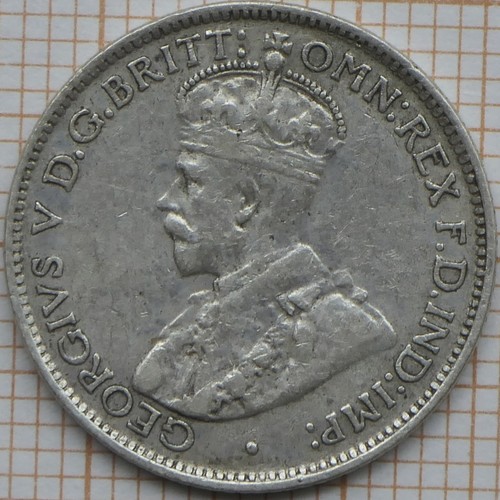
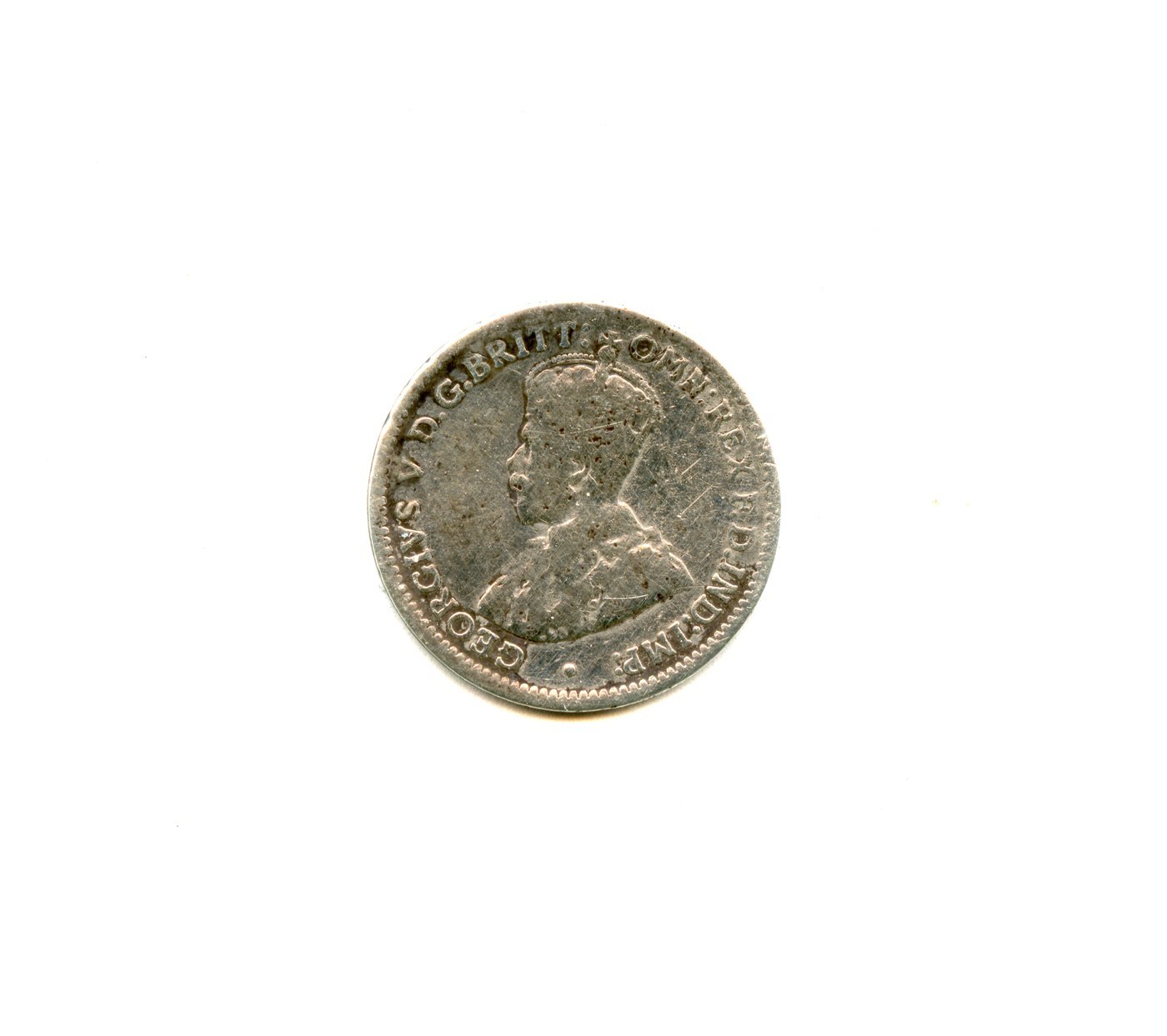
Australia's small pre-decimal silver threepence (3d), the country's tiniest coin, struck 1910-1964. The example shown carries a George V portrait.
- Country
- Australia
- Denomination
- Threepence
- Metal
- Silver
Got a coin like this?
Identify any coin from a photo, free.
Overview
The Australian Threepence is a small silver three-pence coin from Australia's pre-decimal (pounds, shillings and pence) era. It is the smallest coin the country issued, measuring only about 16 mm across and weighing roughly 1.4 grams. The example shown here has an obverse portrait of King George V with the legend beginning GEORGIVS V and the royal titles D:G: BRITT: OMN: REX around the bust.
Threepences were struck in silver for most of their run. Coins from 1910 through 1945 were sterling silver (92.5% fine), while later issues from 1946 to 1964 were struck in a debased 50% silver alloy. Despite its tiny size, the coin was a workhorse of everyday change and is one of the most familiar pre-decimal Australian coins.
The reverse is not visible in the photograph shown. On George V threepences the reverse carries the Commonwealth of Australia coat of arms; later George VI and Elizabeth II issues instead show a stylised design of three stalks of wheat.
History & Background
Australia's own silver coinage began in 1910, shortly after Federation, replacing the British coins that had circulated in the colonies. The very first threepence of 1910 bore a portrait of King Edward VII. From 1911 the obverse changed to King George V, whose bare-headed portrait by Bertram Mackennal appears on the coin shown here, and this reign supplied threepences into the mid-1930s.
After George V the series continued under George VI (from the late 1930s) and then Queen Elizabeth II (from the early 1950s). Threepences were produced at various times by the Melbourne, Sydney, Perth, and overseas mints, and demand for the little coin fluctuated year to year, so some dates were struck in large numbers while others were not made at all.
The threepence was struck until 1964. Australia converted to decimal currency in 1966, when the pound, shilling and pence system was retired and the threepence had no direct decimal successor, ending the denomination.
How to Identify
The obverse of the coin shown identifies the reign: a portrait of King George V facing left, encircled by the Latin legend opening GEORGIVS V with the abbreviated titles D:G: BRITT: OMN: REX ("by the Grace of God, King of all the Britains"). The date sits with the reverse design on the other face.
Confirm the physical standard. The threepence is very small, about 16 mm in diameter and roughly 1.4 grams, with a reeded edge and no magnetic response. It is silver: sterling (0.925) on issues up to 1945 and 50% silver from 1946 onward, so it has a bright, ringing character quite unlike copper pennies.
Use the reverse to pin down the era. A Commonwealth coat of arms reverse indicates a George V (or Edward VII) issue; a three-wheat-stalk reverse indicates a George VI or Elizabeth II issue. Small mint-mark letters can appear near the base of the reverse on some dates and help attribute where a coin was struck.
Value & Collectibility
Most circulated Australian threepences are common and trade for modest sums, valued a little above the small amount of silver they contain. Because the coin is so tiny, its bullion content is low, but sterling-silver dates (1910-1945) carry more silver than the 50% issues that followed.
Value is driven mainly by date, mint, and condition. A handful of scarce dates and low-mintage years command strong premiums, and sharp, lustrous, uncirculated examples are worth far more than worn ones. Well-preserved George V coins with full detail in the portrait and coat of arms are the most sought after within that reign.
Silver prices and grade both move values, so treat any figure as indicative. For a specific coin, especially anything that looks scarce or high grade, get an opinion from a reputable dealer or a third-party grading service before buying, selling, or insuring.
Frequently asked questions
Is the Australian threepence made of silver?
Yes. Threepences from 1910 to 1945 are sterling silver (92.5%), and those from 1946 to 1964 are a debased 50% silver alloy. Both are genuine silver coins.
What years was the Australian threepence made?
It was struck from 1910 to 1964, spanning the reigns of Edward VII, George V, George VI, and Elizabeth II. The coin shown carries a George V portrait.
How big is an Australian threepence?
It is the smallest Australian coin, about 16 mm in diameter and roughly 1.4 grams, with a reeded edge. Its tiny size is one of its most recognisable features.
Why does the coin say GEORGIVS V?
That is the Latin form of King George V, who reigned from 1910 to 1936. His portrait and titles appear on threepences struck for most of that period.
What is an Australian threepence worth today?
Common circulated dates are worth a little above their silver value, while scarce dates and high-grade coins bring more. Date, mint, and condition all matter, so have a specific coin appraised.
Australian Threepence guides
In-depth guides for identifying, valuing, and collecting Australian Threepence.
Australian Threepence identified by the community
Real coins identified with Coin Identifier.