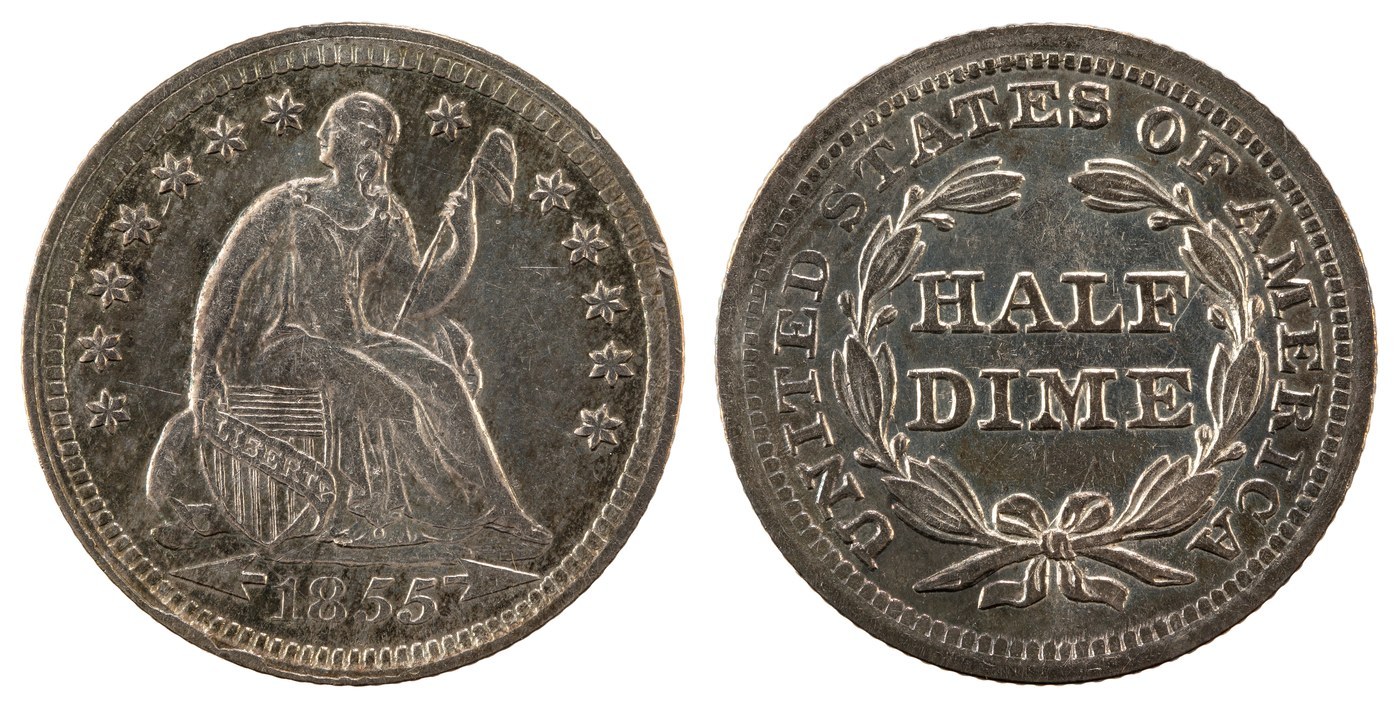
Seated Liberty Half Dime with Arrows
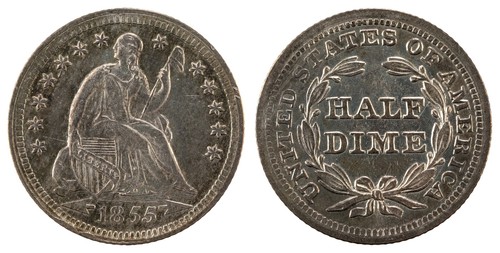
A tiny silver five-cent piece: Liberty seated with a shield, small arrows flanking the date to mark a reduced weight, over a wreath reverse.
- Country
- United States
- Denomination
- 5 Cents
- Metal
- Silver
Got a coin like this?
Identify any coin from a photo, free.
Overview
The Seated Liberty Half Dime with Arrows is a small silver five-cent coin struck by the United States for just three years, 1853 through 1855. The obverse shows the figure of Liberty seated on a rock, holding a striped shield with one hand and a liberty pole and cap with the other, ringed by thirteen stars, with the date at the bottom. The distinguishing feature is a pair of small arrowheads placed on either side of the date. The photographed example is dated 1855.
The arrows were added to signal that the coin's silver weight had been reduced. They mark a brief, well-defined subtype within the long-running Seated Liberty half dime series and make these three dates instantly recognizable to collectors.
Because it is a genuine silver coin from the mid-19th century, the half dime with arrows is collected both for its history and for its modest silver content. It is a separate denomination from the later copper-nickel five-cent nickel, and at roughly the size of a modern dime it is one of the smallest U.S. silver coins ever made.
History & Background
Half dimes were part of the U.S. coinage system from the 1790s, and the Seated Liberty design, engraved after work by Christian Gobrecht, appeared on the denomination beginning in 1837. For years the coins circulated at their original silver weight. By the early 1850s, a sharp rise in silver prices meant the coins were worth more as metal than as money, and many were melted or hoarded.
Congress responded with the Coinage Act of 1853, which slightly reduced the weight of the half dime and other small silver coins so they would stay in circulation. To flag the change for the public, the Mint added small arrowheads beside the date. These 'arrows' appear on half dimes of 1853, 1854, and 1855.
After 1855 the arrows were removed while the reduced weight continued, so the design reverted to the plain-date Seated Liberty half dime. The arrows subtype therefore covers only those three years. The coins were struck at the Philadelphia Mint and, for some dates, the New Orleans Mint, which used an 'O' mint mark. The half dime denomination was discontinued in 1873.
How to Identify
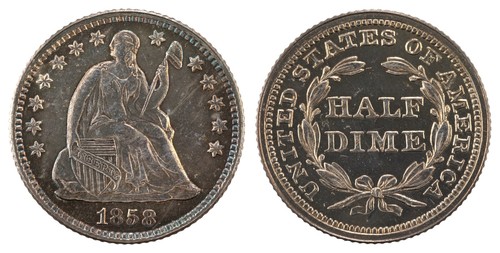
Confirm the obverse first: Liberty is seated facing left, holding an upright striped shield inscribed LIBERTY and a pole topped by a liberty cap, surrounded by thirteen stars with the date below. The defining detail is a small arrowhead on each side of the date. The reverse shows the words HALF DIME within an open wreath, encircled by UNITED STATES OF AMERICA. The pictured coin is dated 1855.
Although some references picture an eagle for other Seated Liberty denominations, the half dime reverse uses a wreath enclosing the denomination HALF DIME, not an eagle. Reading HALF DIME on the reverse is the surest way to confirm the denomination.
The coin is 90 percent silver, about 15.5 mm in diameter—smaller than a modern dime—with a reeded edge and a weight near 1.24 grams for the reduced-weight arrows issue. Look under the wreath on the reverse for a mint mark: coins from New Orleans show an 'O', while Philadelphia coins carry none. The presence of arrows at the date, combined with a date of 1853, 1854, or 1855, identifies this specific subtype.
Value & Collectibility
As common-date 19th-century silver, most circulated Seated Liberty half dimes with arrows are affordable, trading from a few dollars in worn grades up into higher tens of dollars for problem-free Fine to Extremely Fine examples. Because the coins are small and contain only a little silver, melt value is minor; collector demand and condition set the price.
Value climbs for sharply struck, lightly worn, and Mint State pieces, for scarcer dates and mint marks, and for coins with original surfaces and pleasing toning. New Orleans issues and better-preserved examples generally command premiums over common Philadelphia coins in low grade.
Cleaning, scratches, bent flans, and holes are common on these tiny old coins and sharply reduce value. Any specific price should be checked against a current price guide or recent auction results, and higher-value examples are best bought certified by a recognized grading service.
Frequently asked questions
What do the arrows next to the date mean?
They mark a reduction in the coin's silver weight made under the Coinage Act of 1853. The Mint added arrowheads beside the date on 1853, 1854, and 1855 half dimes to signal the lighter standard to the public.
Is a half dime the same as a nickel?
No. The half dime is a small silver five-cent coin made in the 1800s. The familiar copper-nickel five-cent 'nickel' is a different, later coin. The half dime denomination ended in 1873.
Is it made of real silver?
Yes. Seated Liberty half dimes are 90 percent silver. The arrows issue was struck to a slightly reduced weight, near 1.24 grams, but the metal is genuine silver.
Does my coin have a mint mark?
Check the reverse below the wreath. Coins struck at New Orleans show an 'O'; those from Philadelphia have no mint mark, which is normal for that mint.
Why only 1853 to 1855?
The arrows were a temporary marker for the new lighter weight. After 1855 the reduced weight stayed but the arrows were dropped, so only those three years carry arrows at the date.
Seated Liberty Half Dime with Arrows guides
In-depth guides for identifying, valuing, and collecting Seated Liberty Half Dime with Arrows.