
Coin Encyclopedia
Search and identify coins from around the world — with country, denomination, metal, mint, history, and how to tell them apart.
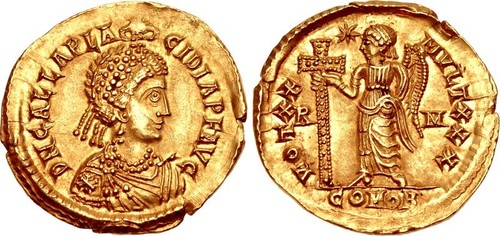
Solidus of Galla Placidia
A late Roman gold solidus struck in the name of Galla Placidia, empress and regent, showing her diademed bust and a Victory holding a long cross.
Ancient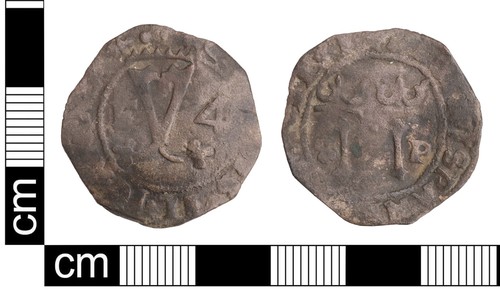
4 Maravedis
A copper Spanish coin struck in the names of Carlos and Joanna, worth four maravedis (one cuarto), carrying the crowned royal arms and Pillars of Hercules.
Circulation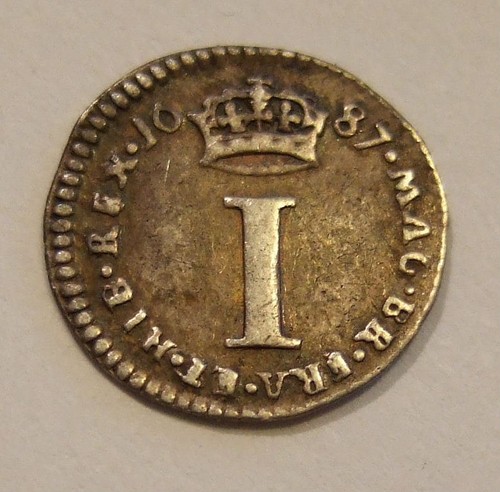
Maundy One Penny
The smallest British Maundy silver coin, bearing a crowned Roman numeral I; this example was struck in 1687 under James II.
Maundy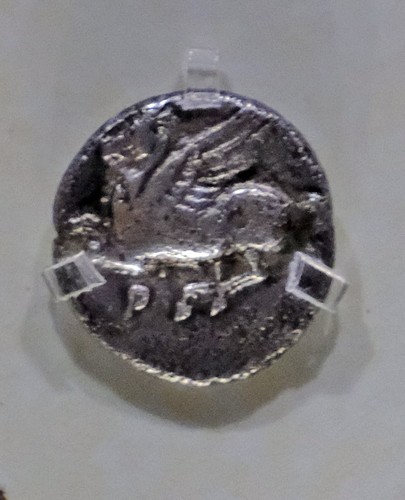
Corinthian Drachm
A silver drachm of ancient Corinth pairing a helmeted head of Athena with the city's emblem, the winged horse Pegasus, struck in the mid-4th century BC.
Ancient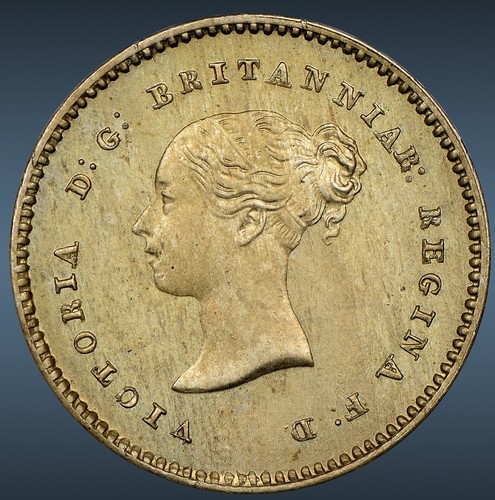
Quarter Farthing
Tiny copper coin of Queen Victoria worth one-sixteenth of a penny, struck for use in Ceylon; the smallest-value British denomination ever made.
British Isles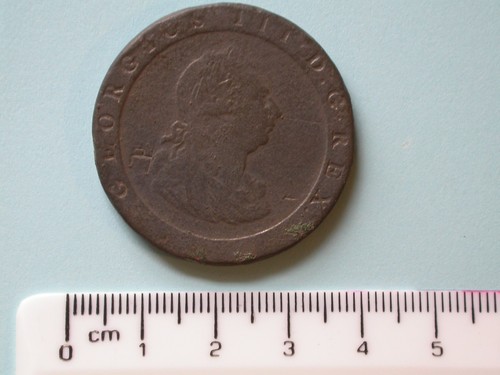
Cartwheel Penny
The heavy 1797 copper penny of George III, with a broad raised rim and sunken lettering, struck by steam power at Matthew Boulton's Soho Mint.
Milled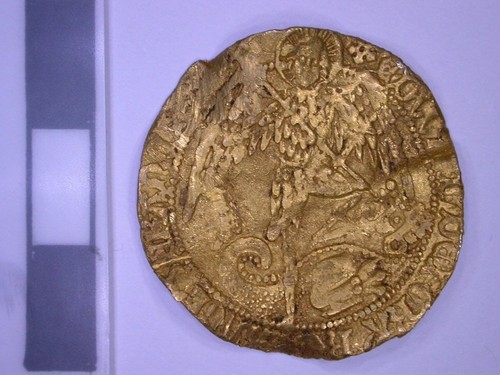
Edward V Angel
Gold angel struck in the brief 1483 reign of Edward V, showing Saint Michael the archangel spearing a demon, with a royal shield of arms on the reverse.
Medieval Coins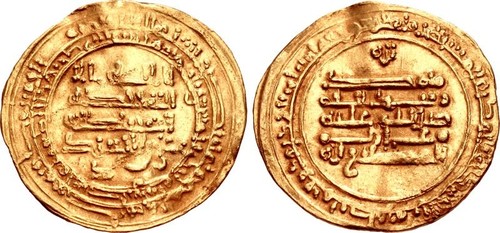
Gold Dinar of Abu'l-Hasan Ali
A high-purity Islamic gold dinar dated AH 351 (961-962 CE) in the name of the Ikhshidid ruler Abu'l-Hasan Ali, struck in fully calligraphic Kufic script.
Islamic (Medieval)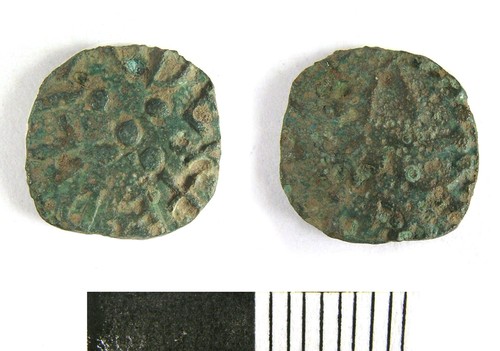
Anglo-Saxon Styca
A tiny base-metal coin of the Anglo-Saxon kingdom of Northumbria, struck in the 8th-9th century with a head and inscription on one side and a cross on the other.
Medieval Coins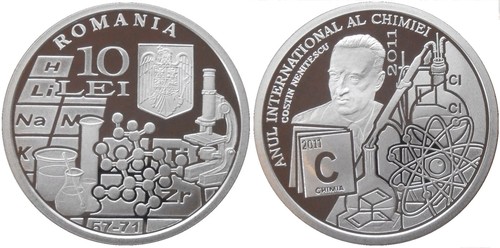
Romania International Year of Chemistry Commemorative
Romanian silver 10 lei commemorative dated 2011, issued for the International Year of Chemistry with molecular, laboratory and scientist imagery.
Commemorative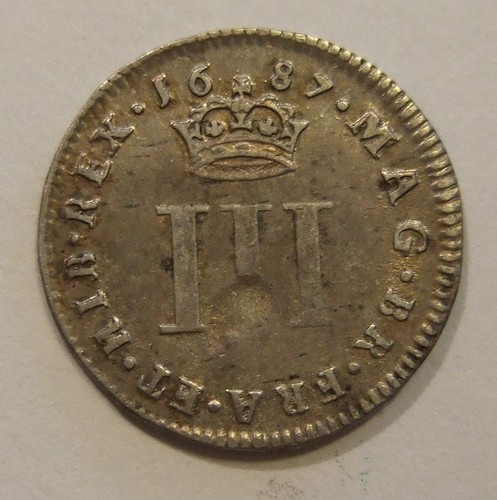
Maundy Three Pence
A tiny sterling-silver threepence tied to Britain's Royal Maundy tradition; the photographed 1687 coin shows James II's bust and a crowned Roman numeral III.
Maundy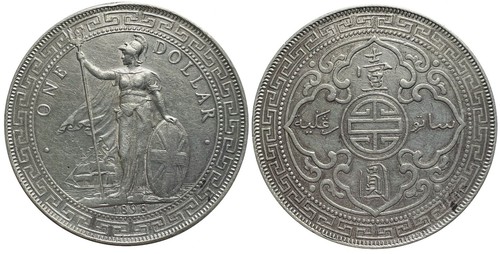
British Trade Dollar
British silver trade dollar for Far East commerce, with seated Britannia holding a trident and shield and a Chinese dragon reverse.
Dollar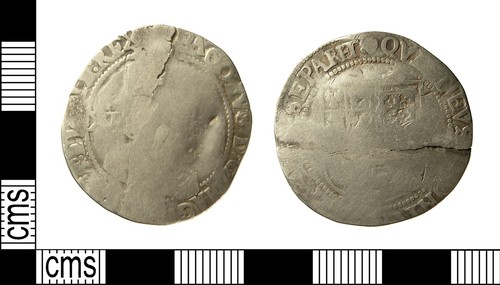
Shilling of James I
Hammered silver shilling of King James I, showing his crowned left-facing bust and a quartered heraldic shield of England, Scotland, Ireland and France.
World Coins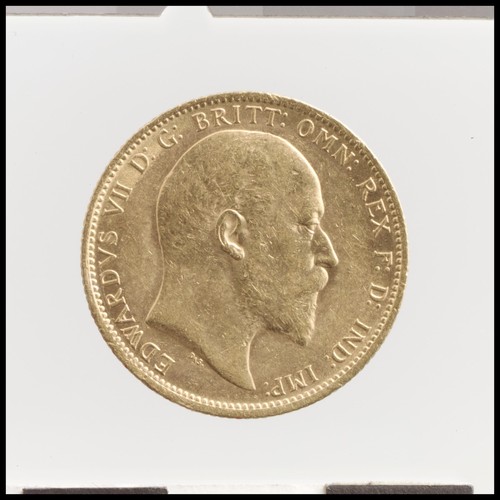
Gold Sovereign
The British gold sovereign: a one-pound gold coin. This 1817 George III example shows a laureate bust and a crowned heraldic shield of the royal arms.
World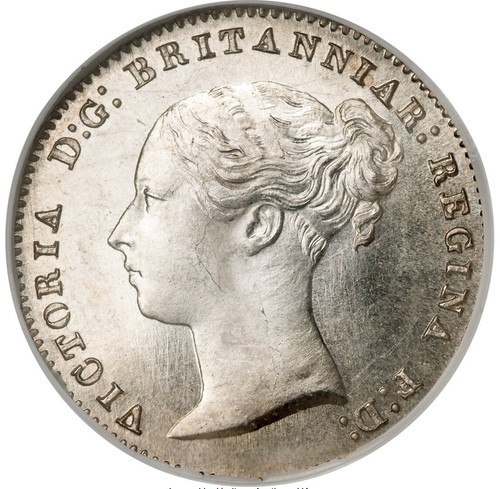
British Silver Threepence
Tiny sterling-silver threepence of Queen Victoria; the young-head type shown here dates to 1858 and is one of Britain's smallest circulating coins.
British Isles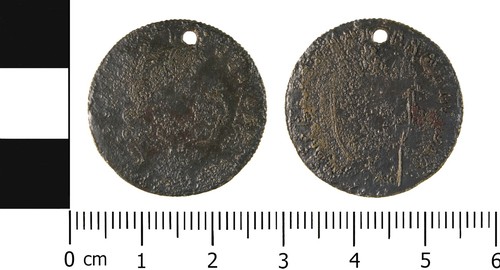
Imitation Guinea Gaming Piece
A brass or bronze token imitating a George III spade guinea, made for card games and gaming tables rather than as legal-tender money.
British Isles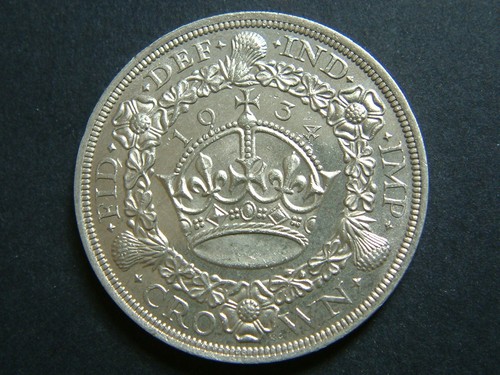
British Crown
A large George V silver crown of the 1927–1936 'wreath' type, showing the king's profile and a royal crown framed by an ornamental wreath.
British Isles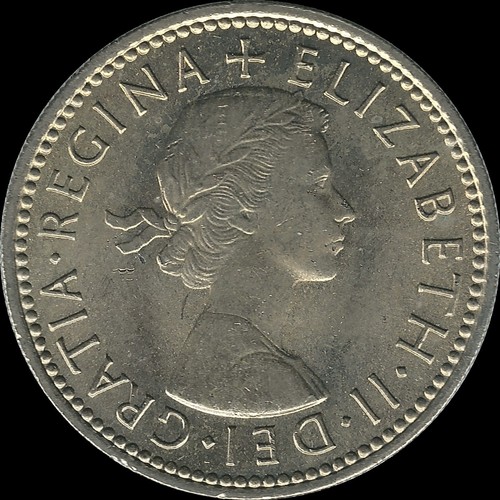
British Shilling
Small Victorian silver shilling showing Queen Victoria's crowned, veiled Jubilee portrait and a crowned heraldic shield reverse.
World Coins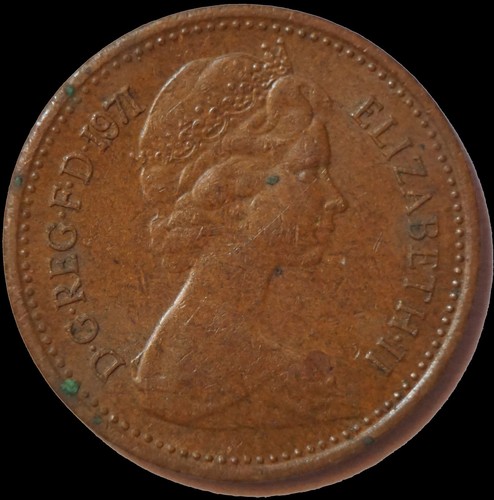
British Decimal Half Penny
The smallest UK decimal coin, a tiny bronze half-penny introduced with decimalisation in 1971, bearing a crown reverse and the Machin portrait of Elizabeth II.
British Isles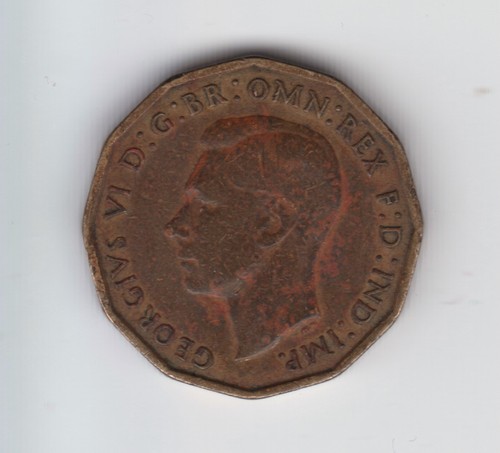
British Brass Threepence
Chunky twelve-sided nickel-brass threepence of George VI, showing his head and a thrift plant reverse; the example shown is dated 1942.
British Isles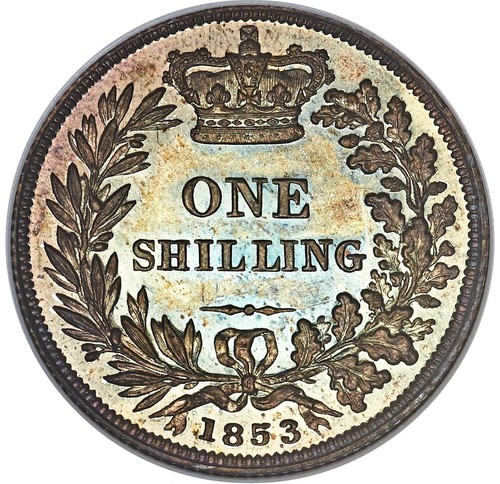
Shilling of Victoria
A milled sterling-silver British shilling of Queen Victoria, worth twelvepence, with the queen's head on the obverse and a crowned 'ONE SHILLING' reverse.
Milled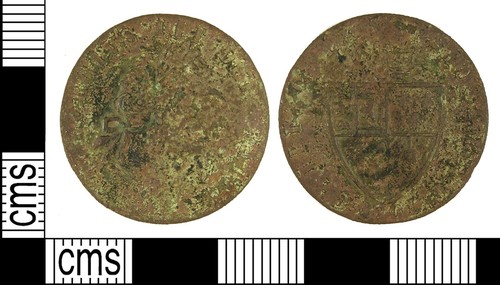
Spade Guinea Token
A base-metal imitation of the George III spade guinea, made as a gaming counter or advertising token, with a male profile obverse and a spade-shaped shield reverse.
Token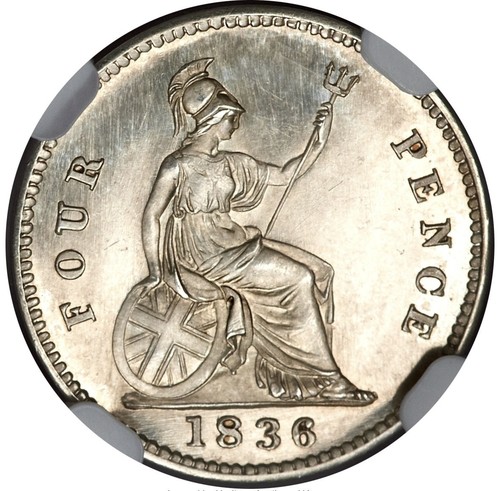
Groat of William IV
A small silver fourpenny piece of William IV (1836–1837), with a seated Britannia reverse; the coin that revived the modern British groat.
Milled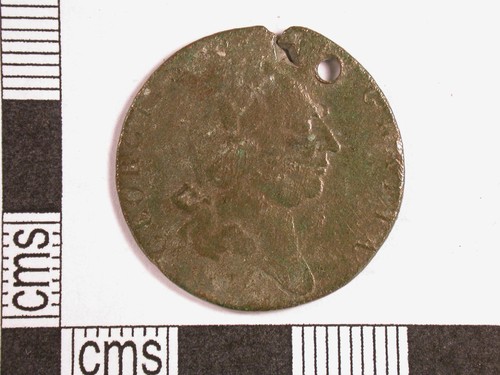
Guinea Counter (Imitation)
A brass or bronze gaming counter made to imitate a George III guinea, showing a faint male profile and a shield reverse; a token, not money.
Token