
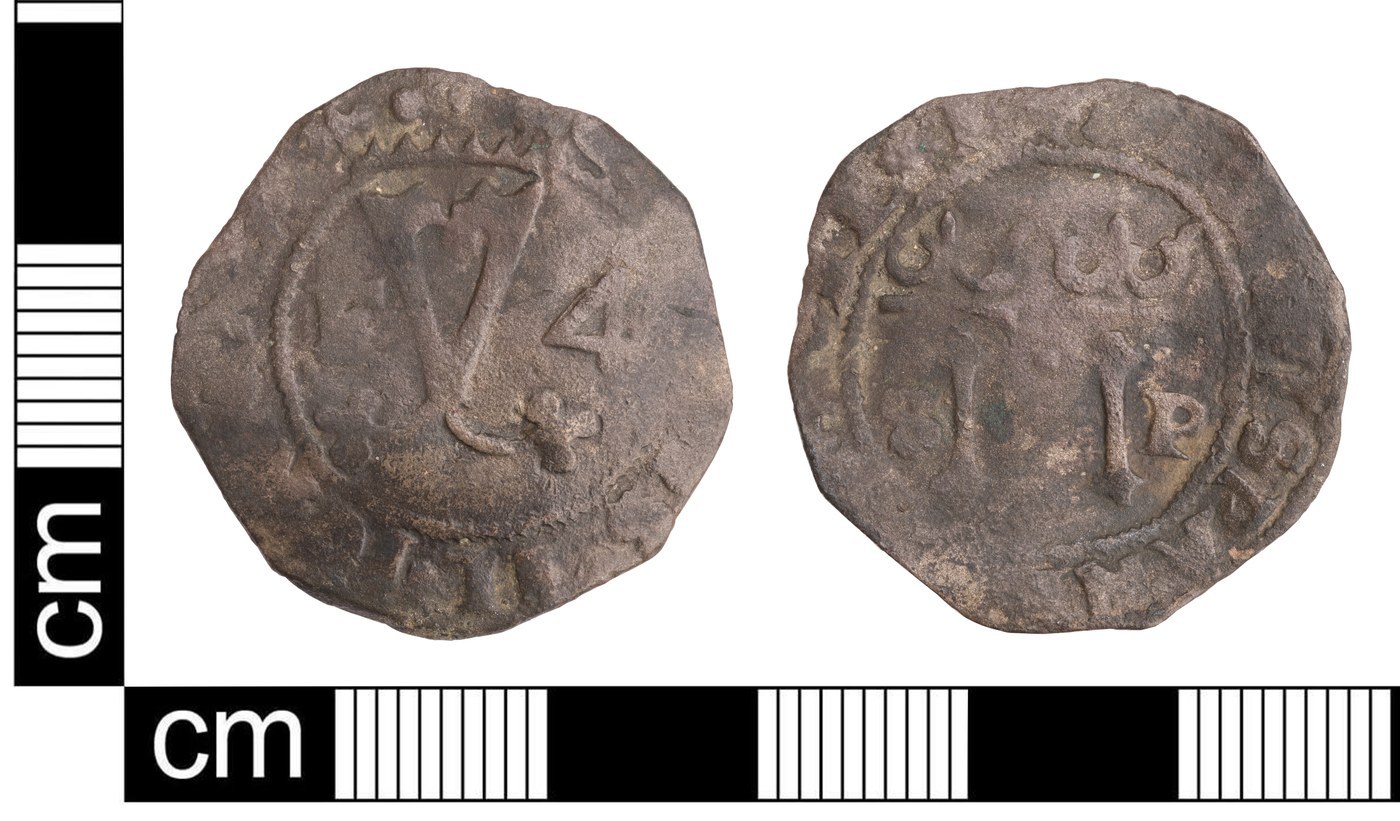
4 Maravedis
A copper Spanish coin struck in the names of Carlos and Joanna, worth four maravedis (one cuarto), carrying the crowned royal arms and Pillars of Hercules.
- Country
- Spain
- Denomination
- 4 Maravedis
- Metal
- Copper
Got a coin like this?
Identify any coin from a photo, free.
Overview
The 4 maravedis is a copper coin of the Spanish monarchy issued in the joint names of Carlos and Joanna, the mother-and-son sovereigns who ruled Spain in the first half of the sixteenth century. Worth four maravedis, it was one of the common small-change pieces of Habsburg Spain and is often called a cuarto ("a quarter"), because four maravedis made up that everyday unit.
Rather than a realistic facial likeness, the design is heraldic: the legend names Carlos and Joanna as joint rulers, while the fields carry the crowned royal coat of arms and the crowned Pillars of Hercules. Because these copper pieces circulated hard and were struck at several mints over more than two decades, surviving examples vary widely in strike quality, centering, and legibility.
Collectors value the type as an affordable, tangible link to the reign of Carlos I of Spain (better known internationally as Emperor Charles V) and his mother Joanna. It is a durable copper coin, not a precious-metal issue, so most of its appeal is historical rather than intrinsic.
History & Background
Carlos and Joanna were proclaimed joint monarchs of the Spanish kingdoms in 1516, and coinage was struck in both their names throughout the period even though Joanna lived in seclusion and Carlos governed. Carlos I was simultaneously Holy Roman Emperor Charles V, ruling one of the largest composite monarchies in Europe. Copper maravedis denominations, including the 4 maravedis, provided the low-value coinage ordinary people used for daily transactions, while silver reales and gold escudos served larger payments.
The maravedi itself was the base money of account in Castile, with 34 maravedis making one silver real. Copper pieces of 1, 2, and 4 maravedis were issued to supply small change, and the joint Carlos-and-Joanna legend continued in use on coinage for years after Carlos abdicated in 1556 and even after Joanna's death, reflecting the slow turnover of coin designs. The years associated with this issue, roughly 1542 to 1564, fall within that long span of continued use.
These coins were produced at multiple mints across the Spanish realms of the period. Because dies were cut by hand and mint practice varied, individual pieces differ in the exact arrangement of arms, pillars, mint marks, and legends.
How to Identify
Look for a round copper coin bearing a legend that names both Carlos and Joanna together, typically in a Latin form such as CAROLVS ET IOHANA REGES ("Carlos and Joanna, monarchs"). One side shows a crowned heraldic shield combining the quartered arms of the Spanish kingdoms; the other shows the crowned Pillars of Hercules, often with a motto reference to Plus Ultra. The value of four is usually indicated by markings in the field or by the denomination structure rather than a large numeral.
The coin is copper, generally brown or reddish where original surface survives, and is a small-change module rather than a large medal. Expect an irregular, hand-struck appearance with some flatness where the dies did not fully impress the design. Mint marks and assayer letters, where present, appear in the fields beside the arms or pillars and help attribute a piece to a particular mint.
Because strike and wear vary so much, identification rests on the combination of the joint royal legend, the crowned arms, and the Pillars of Hercules together, rather than on any single feature.
Value & Collectibility
As a widely struck copper small-change coin, the 4 maravedis of Carlos and Joanna is generally an affordable and accessible type for collectors. Heavily worn or corroded examples are common and inexpensive, while pieces with clear legends, sharp arms and pillars, and attractive original surfaces command higher premiums.
Value is driven mainly by condition, strike quality, and the desirability of the mint and variety rather than by metal content, since these are base-copper pieces. Well-preserved coins with a full, legible legend naming both monarchs and a clean, centered design are the most sought after.
Because many mints and die varieties exist, specialist attribution can add interest and value. As with any early hammered copper, condition and eye appeal matter more than the nominal denomination, and prices are best confirmed against recent sales of comparable examples.
Frequently asked questions
Who were Carlos and Joanna on this coin?
They were the joint sovereigns of the Spanish kingdoms in the early sixteenth century: Joanna and her son Carlos I of Spain, who was also Holy Roman Emperor Charles V. Coins were struck in both their names even though Carlos governed in practice.
How much was 4 maravedis worth?
Four maravedis made up one cuarto, a common unit of everyday small change. In Castile, 34 maravedis equaled one silver real, so the 4 maravedis was a low-value copper coin for daily purchases.
Is this coin made of silver or copper?
It is copper. The 4 maravedis was a base-metal small-change piece, not a precious-metal coin, so its appeal to collectors is historical rather than tied to bullion value.
What are the pillars on the coin?
They are the Pillars of Hercules, a device closely associated with Carlos I and the motto Plus Ultra. They appear crowned on one side of the coin, opposite the crowned Spanish royal arms.
Why do the dates span so many years?
The Carlos-and-Joanna coinage design stayed in use for a long time, continuing after Carlos abdicated in 1556. The associated range of roughly 1542 to 1564 reflects that extended period of production rather than a single year of issue.
4 Maravedis guides
In-depth guides for identifying, valuing, and collecting 4 Maravedis.
Other coins you may enjoy
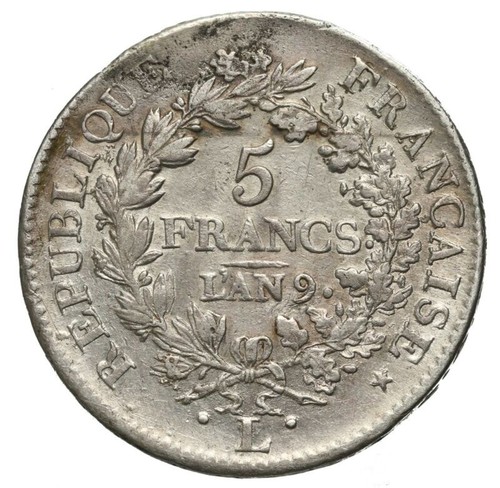
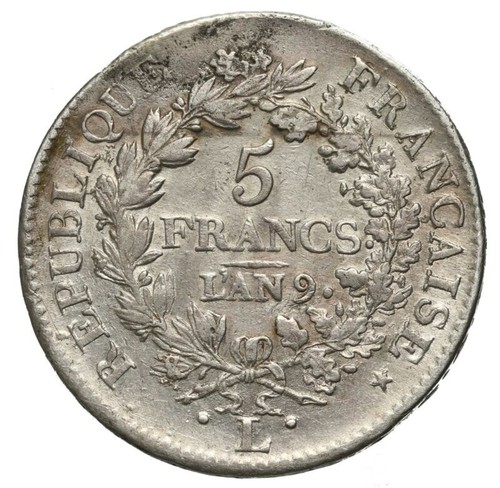
5 Francs (First Republic)
L'an 9 (1800–1801)
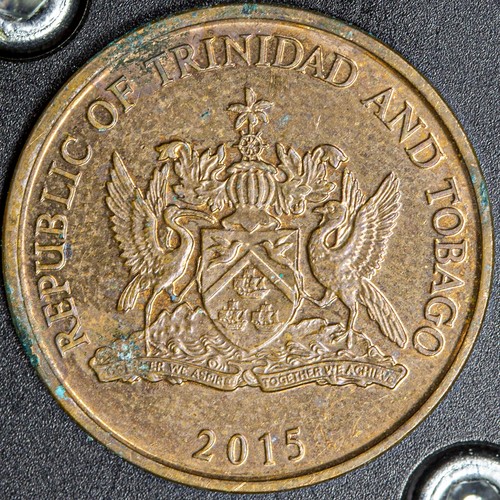
Trinidad and Tobago Dollar
2015
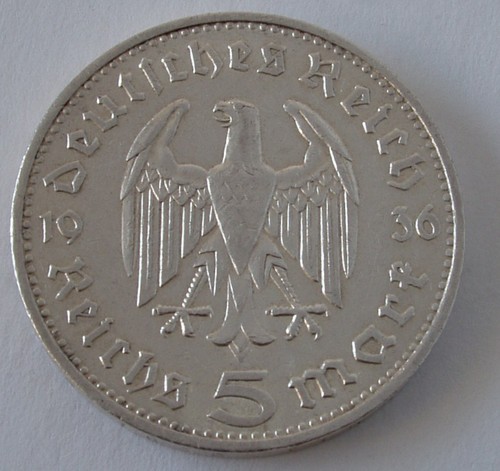
German 5 Reichsmark (Hindenburg)
1935–1936 (Hindenburg type with swastika)
5 Francs Semeuse
1960–1969
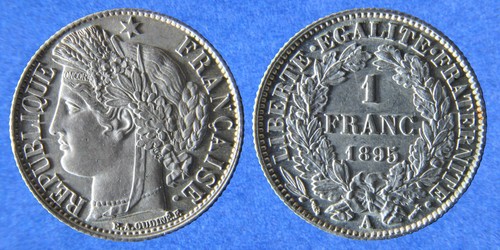
French Cérès 1 Franc
1849–1895
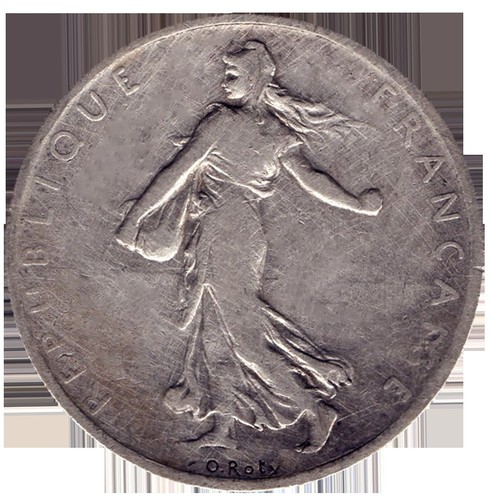
French Semeuse 2 Francs
1898–1920 (silver issues; pictured example dated 1899)
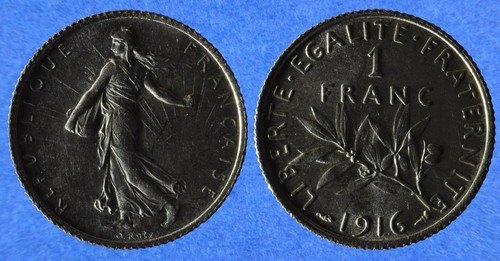
French Semeuse 1 Franc
1898–1920 (silver Semeuse 1 franc type)
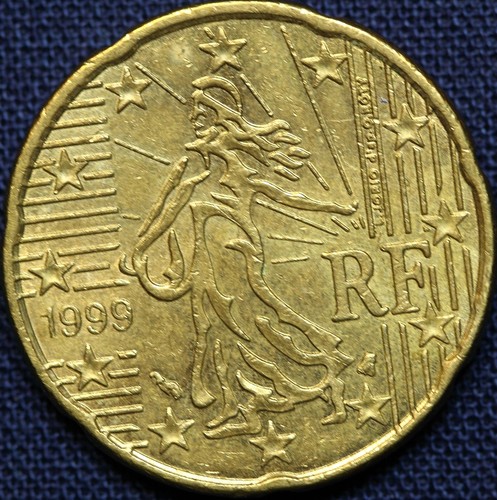
France 50 Cent Euro
1999–present
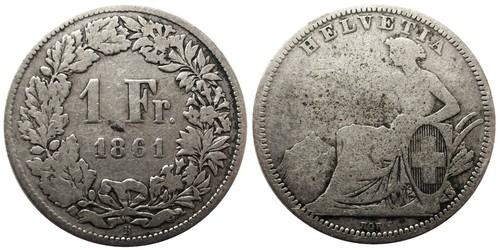
Swiss 1 Franc
1861
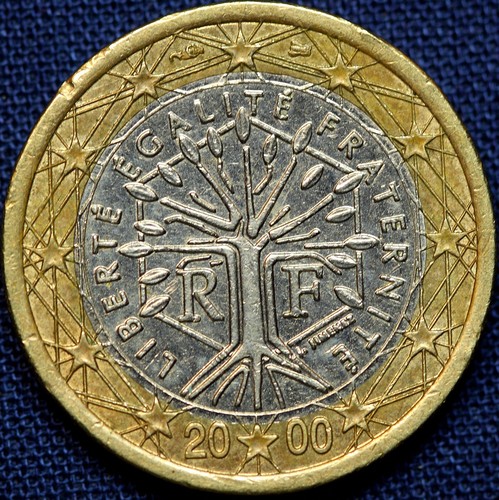
France 20 Centimes
1962–2001 (Fifth Republic, Marianne / Lagriffoul type)
Swiss 2 Francs
1860
Austria-Hungary 15 Kreuzer
1807