Maundy One Penny
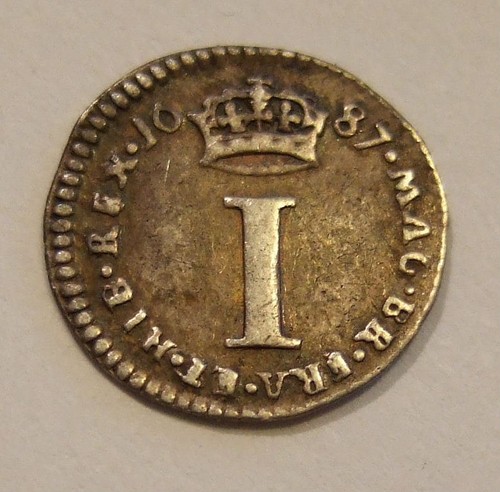
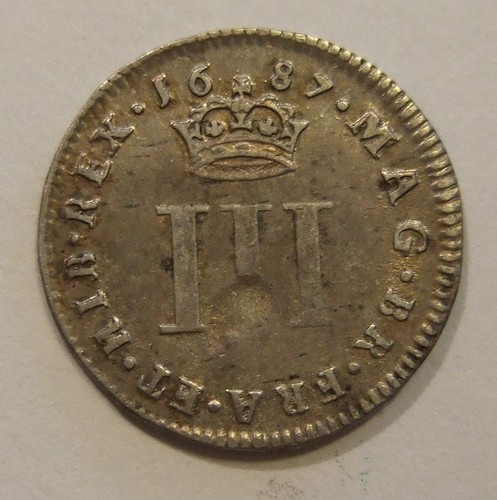
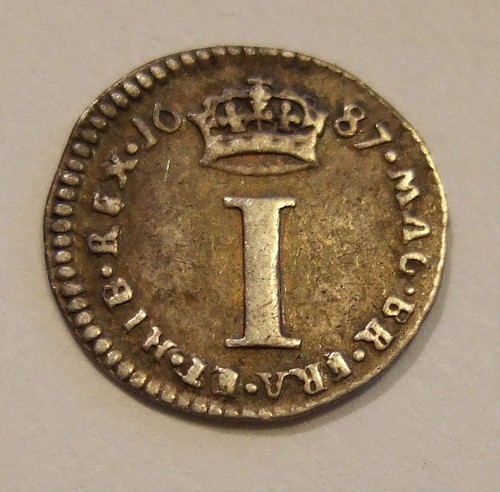
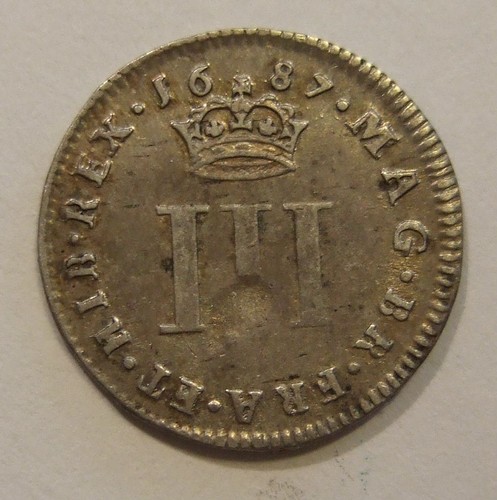
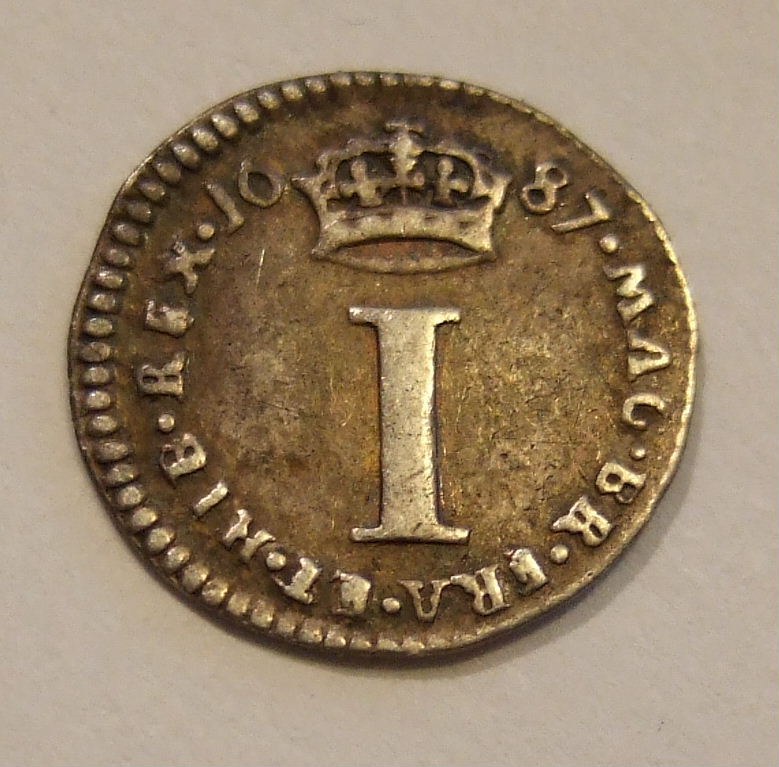
The smallest British Maundy silver coin, bearing a crowned Roman numeral I; this example was struck in 1687 under James II.
- Country
- United Kingdom
- Denomination
- 1 Penny
- Metal
- Silver
Got a coin like this?
Identify any coin from a photo, free.
Overview
The Maundy One Penny is the smallest denomination in Britain's small silver "Maundy" coinage, a matched family that also includes the twopence, threepence and fourpence. Each coin carries a crowned Roman numeral showing its value, and the penny is marked with a single I. The example shown here is a 1687 issue of King James II, whose laureate profile appears on the obverse.
These tiny silver coins are struck in sterling (or later lower-fineness) silver and measure only about 11–12 mm across. In the seventeenth century they served both as everyday small change and as the coins distributed by the sovereign at the annual Royal Maundy service, a distinction that grew sharper in later centuries.
Because James II reigned only from 1685 to 1688, his small silver pennies were produced in comparatively small numbers, making dated examples such as this 1687 piece a modest scarcity within the long-running Maundy penny series.
History & Background
The crowned-numeral reverse seen on this penny was introduced for the English small silver coins in 1670, during the reign of Charles II, and the same basic design was continued by his successors, including James II. The four values of the series are distinguished only by their numeral (I, II, III and IV), giving the set its uniform appearance.
James II came to the throne in 1685 and was deposed in the Glorious Revolution of 1688. Coins of his reign, this 1687 penny among them, therefore span only a few years. Under James II these small silver pieces continued the practice of doubling as ordinary petty coinage and as ceremonial Maundy money.
Over later reigns the small silver denominations gradually became reserved almost exclusively for the Royal Maundy ceremony, so that the term "Maundy penny" came to describe the whole continuing series. The James II issues sit near the early end of that tradition.
How to Identify
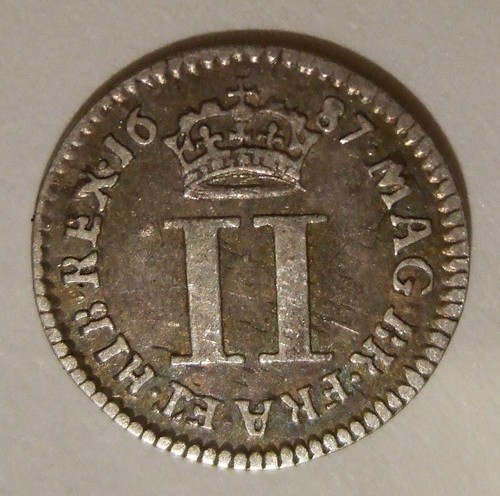
Reverse (shown): a large crowned Roman numeral I at the centre, with the date split on either side of the crown (16 — 87) and the Latin legend MAG BR FRA ET HIB REX ("King of Great Britain, France and Ireland") around the rim, framed by a beaded border.
Obverse: the laureate, draped bust of James II, with a legend beginning IACOBVS II DEI GRATIA. Size and metal: roughly 11–12 mm in diameter and about half a gram, struck in silver, giving a small, thin, bright coin.
The numeral is the quickest identifier: a single I marks the penny, while II, III and IV denote the twopence, threepence and fourpence of the same design. The surrounding legend and the ruler's portrait separate James II pieces from the visually similar crowned-numeral pennies of Charles II, William and Mary, William III, Anne and the later Hanoverian Maundy coinage.
Value & Collectibility
Values depend heavily on grade, eye appeal and the strength of the strike. As short-reign silver of the 1680s, James II pennies are scarcer than the abundant Victorian and modern Maundy pieces, but they are not among the great rarities of British numismatics.
Worn but clearly legible examples typically trade in the modest tens of pounds/dollars, while sharp, attractively toned pieces with full detail can reach the low hundreds. Cleaned, bent, holed or heavily worn coins sell for less.
Because figures vary with the market and with each coin's specific date and condition, treat any single quoted price as a guide only and compare recent sales of similar graded examples before buying or selling.
Frequently asked questions
What does the Roman numeral I on the reverse mean?
It is the coin's denomination. A single I marks the one penny; the matching twopence, threepence and fourpence of the same design carry II, III and IV respectively.
Who is shown on the 1687 example?
The obverse portrait is King James II, who reigned from 1685 to 1688. His Latin legend begins IACOBVS II DEI GRATIA.
Is a Maundy penny made of real silver?
Yes. Maundy pennies were struck in silver. Seventeenth-century issues such as this are sterling (about .925) fineness; the fineness of later issues changed over time.
Was this coin only given out at the Maundy ceremony?
Not strictly in the 1680s. At that time the small silver pennies served both as everyday small change and as Maundy money; the exclusive ceremonial role developed more fully in later reigns.
How big is a Maundy one penny?
It is very small, only about 11–12 mm across and roughly half a gram, so it is thinner and lighter than almost any modern circulating coin.
Maundy One Penny guides
In-depth guides for identifying, valuing, and collecting Maundy One Penny.