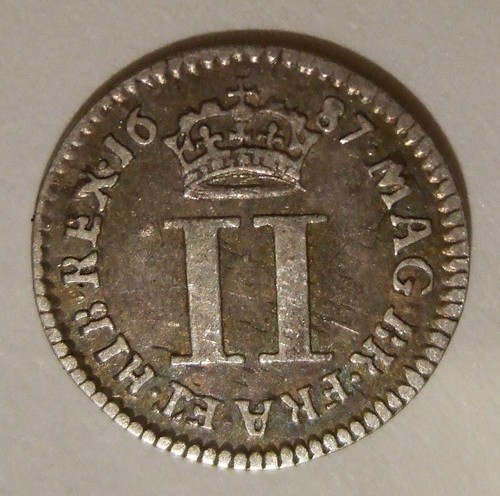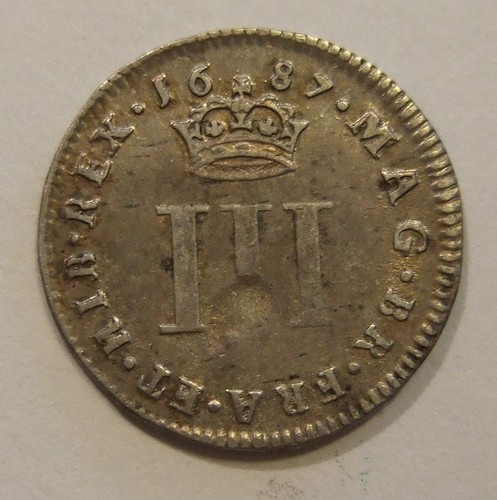
Maundy Money Twopence
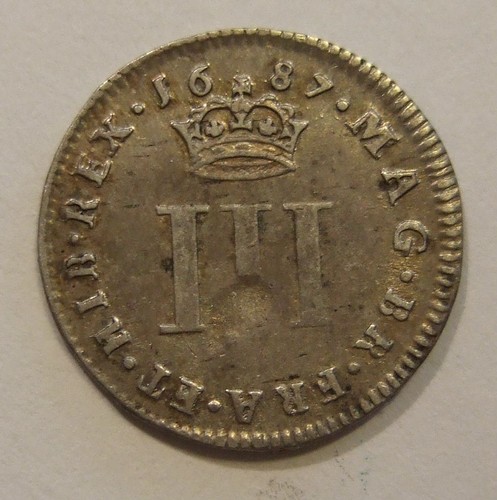
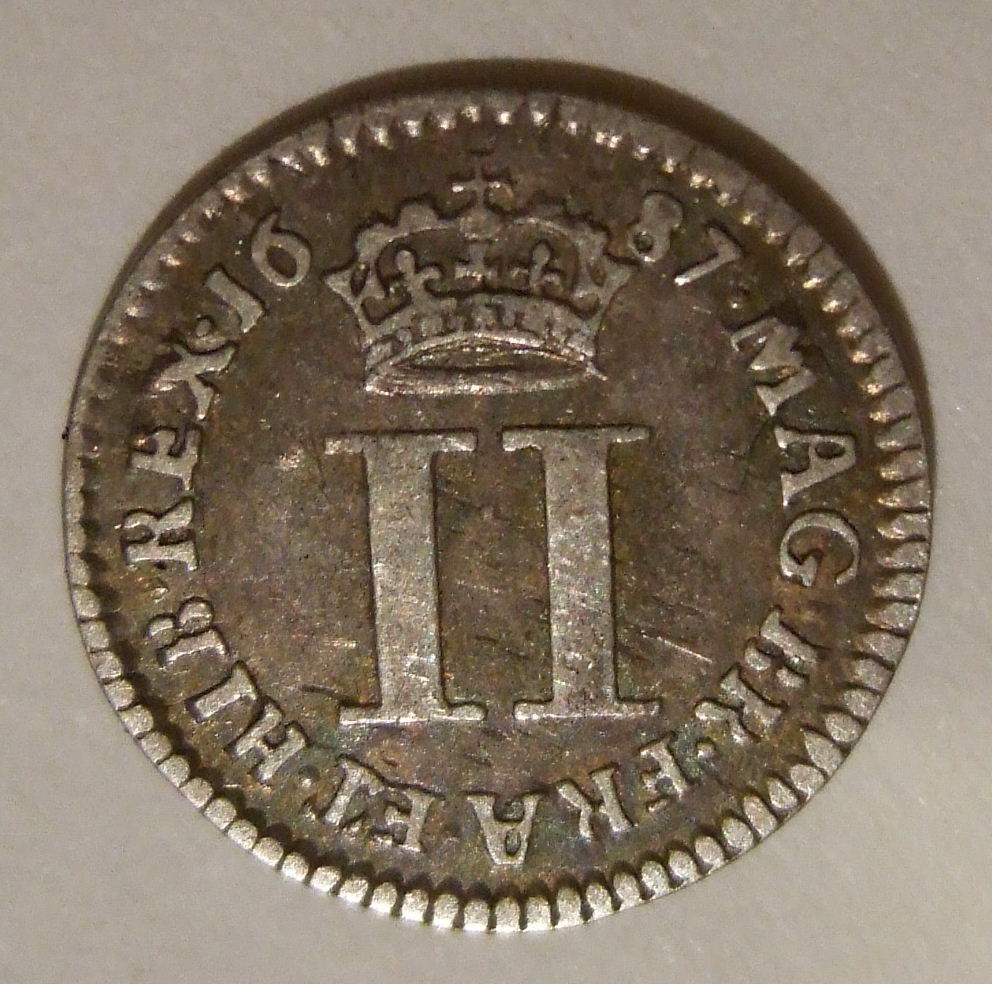
A tiny sterling-silver British twopence with a crowned Roman numeral II reverse; this example bears the profile of King James II, dated 1687.
- Country
- United Kingdom
- Denomination
- 2 Pence
- Metal
- Silver
Got a coin like this?
Identify any coin from a photo, free.
Overview
The Maundy Money Twopence is one of the smallest denominations in Britain's set of tiny silver coins traditionally associated with the royal Maundy ceremony. This example was struck under King James II (reigned 1685–1688) and is dated 1687. The obverse carries the king's profile portrait, while the reverse shows a crown above the Roman numeral II, the mark that identifies the two-pence value.
Struck in sterling silver on a very small flan, the coin is easily overlooked because of its size. In the 17th century these small silver pieces served both as everyday small change and as the pieces handed out by the sovereign as alms, and only later did the four-coin set (1d, 2d, 3d, 4d) become associated almost exclusively with the Maundy Thursday distribution.
History & Background
Small silver coins of one, two, three, and four pence had been struck in England for centuries, but the modern practice of issuing them as a matched, dated set took shape after the Restoration under Charles II, when the crowned-numeral reverse design was standardized. James II continued this pattern during his short reign, so twopences dated 1686 through 1688 exist, with 1687 being the year seen on this coin.
Because James II ruled for only about three years before the Glorious Revolution of 1688, the total output of his small silver was limited, which makes his Maundy-type coins scarcer than those of longer reigns. Over the following centuries the small silver denominations gradually stopped circulating as ordinary money and became reserved for the ceremonial Royal Maundy distribution, which is why the whole family of coins is now commonly called "Maundy money."
How to Identify
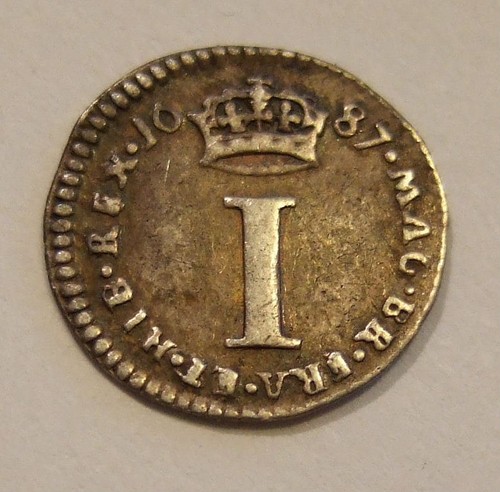
Look first at the reverse: a crown above the Roman numeral II is the defining feature of the twopence. The one-, three-, and four-pence coins of the same series carry I, III, and IV respectively, so the numeral is the fastest way to confirm the denomination. The surrounding legend gives the monarch's titles and the date, here 1687.
The obverse shows the profile bust of James II with a Latin legend naming him as king. The coin is very small — a two-pence silver flan of this era is only around a centimetre or so across and weighs roughly a gram — and it is milled (machine-struck), giving it neater edges and more even relief than older hammered coins.
Value & Collectibility
Value depends heavily on the monarch, date, and condition. Common later Maundy twopences from long reigns are affordable, but a 17th-century James II example benefits from age and the short reign that produced it, so it generally commands more than routine later pieces. Expect a broad range from modest sums for worn, damaged, or uncertain examples up to substantially higher figures for sharp, well-preserved, correctly attributed coins.
Because the coin is tiny and silver, wear, cleaning, mounting holes, and bent flans are common and all reduce value. Original color and crisp detail on both the portrait and the crowned II are what collectors pay premiums for. Treat any single price as context only, and consult recent auction results for the specific monarch, date, and grade rather than relying on a fixed figure.
Frequently asked questions
How do I know this is a twopence and not another Maundy coin?
Check the reverse numeral. A crown over the Roman numeral II means twopence. The penny shows I, the threepence III, and the fourpence IV.
Is this coin real silver?
Yes. British Maundy-type small coins of this era were struck in sterling silver. The tiny size and light weight are normal for the two-pence denomination.
Why is it linked to "Maundy money"?
The one-, two-, three-, and four-pence silver coins are the denominations the British sovereign traditionally distributes as alms on Maundy Thursday, so the whole group is called Maundy money.
Who was James II, shown on this 1687 coin?
James II ruled Britain from 1685 until the Glorious Revolution of 1688. His short reign means his small silver coins were produced in limited numbers.
Maundy Money Twopence guides
In-depth guides for identifying, valuing, and collecting Maundy Money Twopence.