Maundy Money Penny
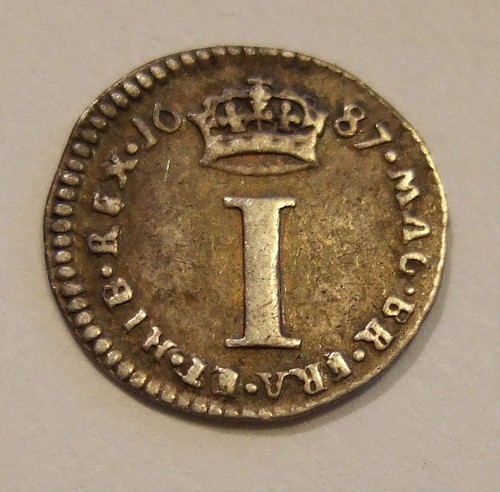
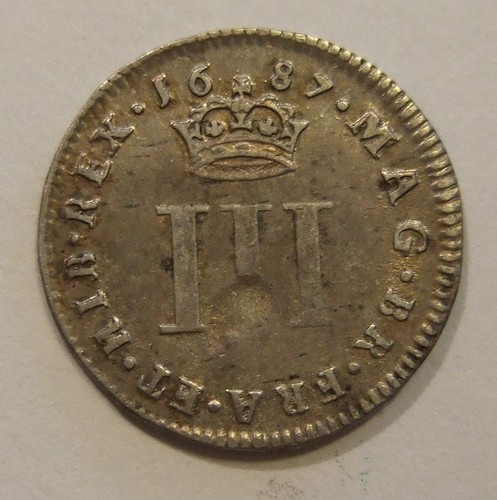
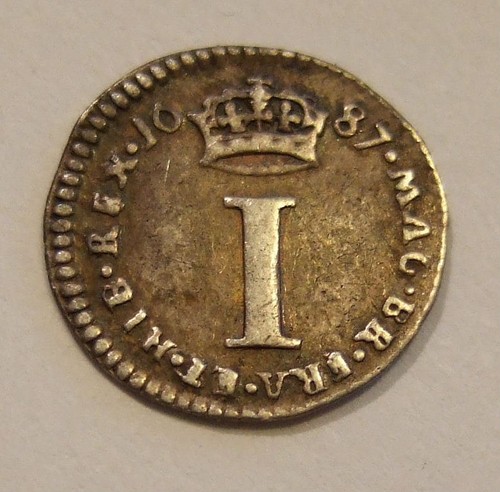
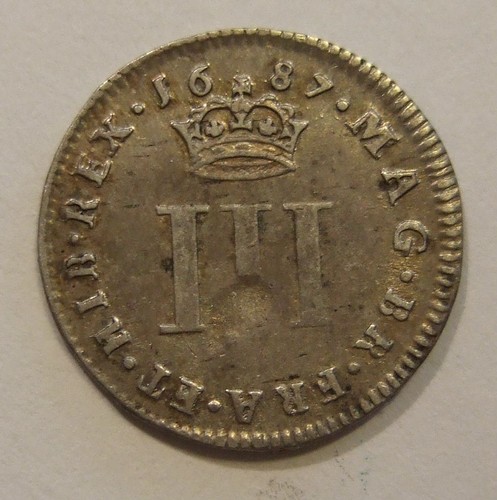
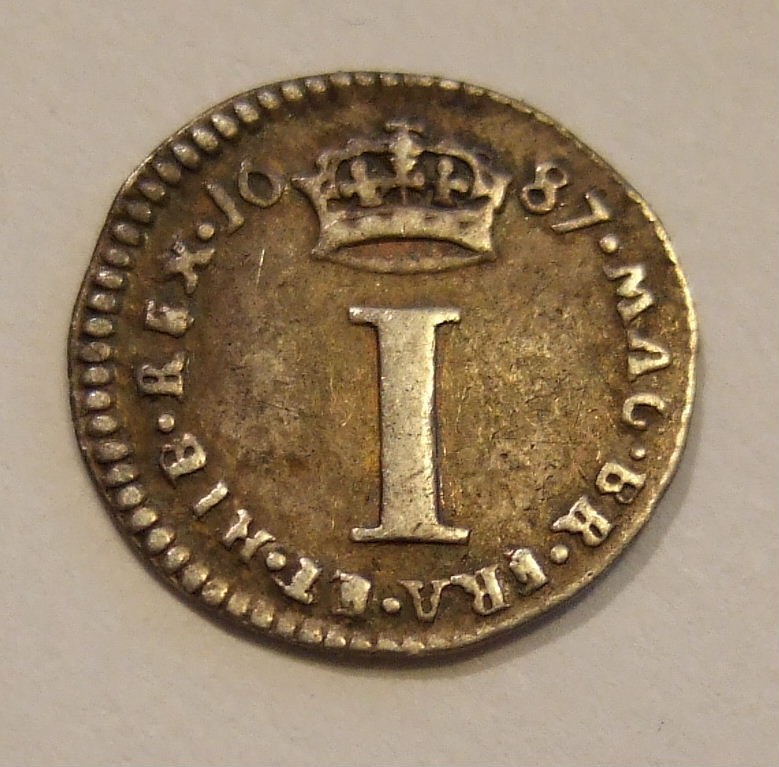
Tiny silver penny given as royal alms; this James II example (1687) shows a crowned bust and a crowned Roman numeral I reverse.
- Country
- United Kingdom
- Denomination
- 1 Penny
- Metal
- Silver
Got a coin like this?
Identify any coin from a photo, free.
Overview
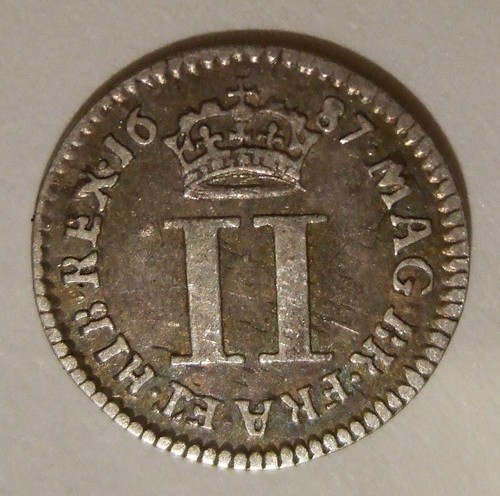
The Maundy Money Penny is the smallest of the small silver coins distributed by the British monarch at the annual Royal Maundy ceremony. The example pictured here is a penny of King James II, dated 1687, struck in silver. Its obverse carries the crowned profile bust of James II, while the reverse bears a large crowned Roman numeral I, the traditional mark of the one-penny denomination.
In the late 17th century the silver penny had already ceased to serve much everyday commerce, and coins of this size and fineness were closely tied to the Maundy tradition of royal almsgiving. As a result, surviving pennies of this era are collected today both as regal small silver and as part of the long-running Maundy series.
History & Background
The silver penny is one of the oldest English denominations, but by the reign of James II (1685–1688) its practical role in circulation had all but vanished. Coins of a penny, twopence, threepence and fourpence in silver were increasingly reserved for ceremonial and charitable use, most notably the Royal Maundy distributed by the sovereign on the Thursday before Easter.
The Royal Maundy custom, in which the monarch gives specially struck small silver coins to elderly recipients, traces back centuries and became formalised into distinct sets over time. A 1687-dated James II penny belongs to this transitional period, when these tiny silver pieces were being produced in small numbers and were understood chiefly as gift and alms money rather than as workaday change.
James II's reign was brief, ending with the Glorious Revolution of 1688, so his coinage — including these little pennies — was struck for only a few years, adding to the interest collectors take in the type.
How to Identify
Look first at the obverse: a right- or left-facing crowned profile bust of James II, surrounded by a Latin royal legend naming the king. On this 1687 piece the portrait is topped by a crown, a defining feature of the design.
The reverse is the key diagnostic: a large crowned Roman numeral I standing for one penny, with the date (here 1687) and a surrounding Latin legend citing the monarch's titles. The denomination is read from that numeral rather than from any word 'penny'.
The coin is very small and thin, struck in silver, and much lighter and tinier than a modern penny. Its size, silver colour and crowned-numeral reverse together separate it from ordinary copper or bronze pennies of later centuries.
Value & Collectibility
As an early Maundy-era silver penny of a short-reigned monarch, a James II 1687 penny is a genuinely scarce type, but exact prices vary enormously with condition, strike and eye appeal. Well-worn examples are far more affordable than sharp, high-grade pieces, which command a substantial premium.
Because values swing widely and the market for 17th-century British silver is specialised, treat any single figure with caution. For a real valuation, compare recent auction results for the same date and grade, and consider professional grading or a reputable dealer's opinion.
Condition factors that matter most include the sharpness of the king's portrait, the clarity of the crowned numeral and date, original surfaces versus cleaning, and the absence of bends, holes or mounting marks — small silver of this age was sometimes pierced for jewellery.
Frequently asked questions
Is a Maundy penny made of real silver?
Yes. Maundy pennies, including this James II 1687 piece, were struck in silver, which is one reason they were valued as ceremonial alms rather than everyday change.
What does the 'I' on the reverse mean?
It is the Roman numeral one, marking the coin as a penny (one pence). A crown sits above it, a long-standing feature of the small silver denominations.
Was this penny used as ordinary money?
By James II's reign the silver penny had largely dropped out of everyday commerce and was associated mainly with the Royal Maundy tradition of royal almsgiving.
Why is it dated 1687?
1687 falls within James II's short reign (1685–1688). Coins of his reign were struck for only a few years before the Glorious Revolution of 1688, making dated examples of interest to collectors.
Maundy Money Penny guides
In-depth guides for identifying, valuing, and collecting Maundy Money Penny.