
How to Identify the Maundy Money Penny
A collector's checklist for spotting a James II silver Maundy penny: crowned bust, crowned Roman numeral I reverse, tiny silver flan, and date.
Read the full Maundy Money Penny encyclopedia entry →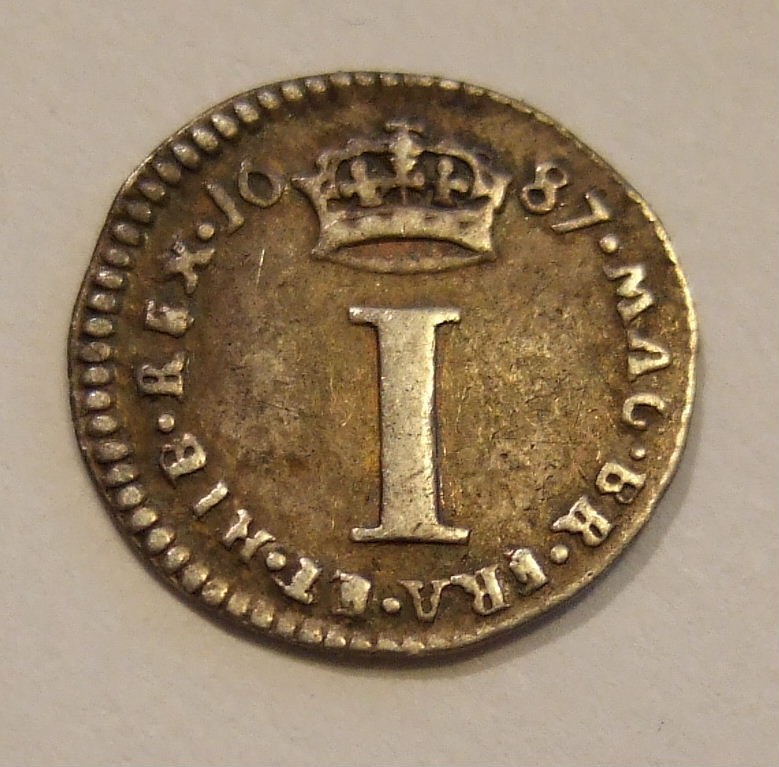
Start with the size and metal. A Maundy penny of this era is a very small, thin, silver coin — noticeably tinier and lighter than a modern penny. If the piece is copper, bronze, or the size of a circulating decimal penny, it is not this type.
Read the obverse portrait and legend. You should see a crowned profile bust of James II with a Latin legend naming him as king (a IACOBVS-style royal inscription). The crown over the bust on the 1687 example is an important cue; note the direction the bust faces and match it against reference images for the exact reign.
Confirm the reverse, which is the strongest diagnostic. A genuine penny shows a single large crowned Roman numeral I (not II, III or IIII, which denote twopence, threepence and fourpence in the Maundy family) plus the date and a Latin titles legend. Reading the numeral tells you the denomination directly.
Beware of look-alikes and altered pieces. The other small Maundy silver denominations share the same portrait and layout, so it is easy to mistake a twopence or threepence for a penny — always count the crowned numeral. Also watch for later restrikes, harshly cleaned surfaces, tooled portraits, and coins pierced or mounted for jewellery, all of which affect authenticity and value.
For final authentication, weigh and measure the coin against published specifications for James II silver pennies, examine the strike and lettering style under magnification, and when in doubt seek professional grading or a specialist dealer. Early hammered-to-milled-era silver is a niche field where expert eyes matter.
Frequently asked questions
How do I tell a Maundy penny from a twopence or threepence?
Count the crowned Roman numeral on the reverse: I is a penny, II a twopence, III a threepence and IIII a fourpence. The portraits and legends are otherwise very similar.
How can I be sure it is silver and not a fake?
Check size, weight and colour against published specs for James II silver pennies, look for crisp period lettering, and avoid pieces that are cleaned, tooled or pierced. Professional grading settles doubtful cases.
Does the date help identify it?
Yes. A date like 1687 places the coin firmly in James II's 1685–1688 reign, which narrows the portrait and legend style you should expect to see.
Are these pennies commonly found in circulation?
No. They are 17th-century ceremonial silver, long out of everyday use, and turn up through collectors, auctions and dealers rather than in pocket change.