
Coin Encyclopedia
Search and identify coins from around the world — with country, denomination, metal, mint, history, and how to tell them apart.
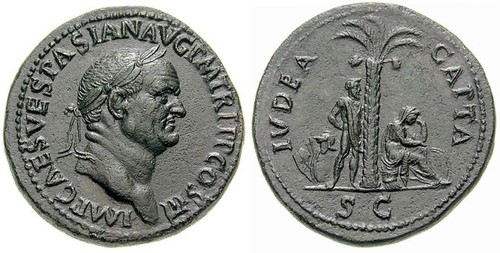
Sestertius of Vespasian (Iudaea Capta)
Large Roman bronze sestertius of Vespasian (AD 70–71) marking the conquest of Judaea, with a palm tree and mourning captives on the reverse.
Ancient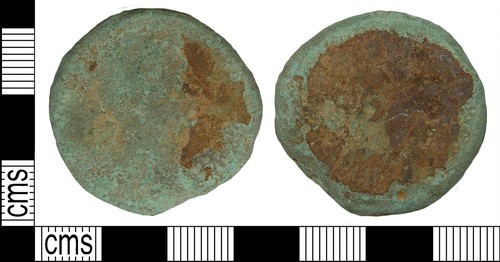
Sestertius of Commodus
A large Roman bronze sestertius of Emperor Commodus (180–192 AD), his laureate bearded head on one side and a standing figure on the other.
Ancient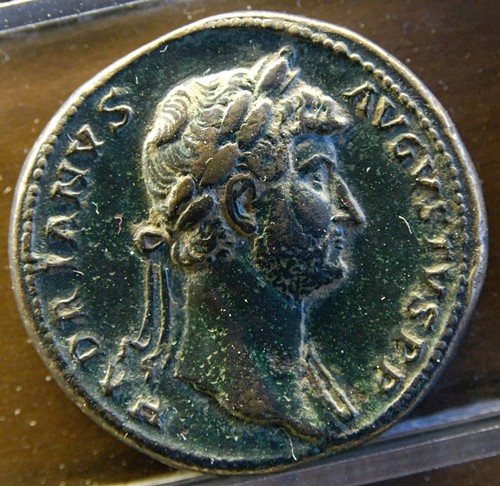
Sestertius of Hadrian
Large Roman bronze sestertius of Emperor Hadrian, showing his bearded curly-haired profile and a standing draped figure with a Latin legend on the reverse.
Ancient Coins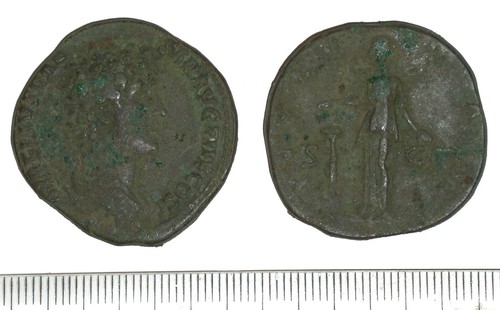
Sestertius of Marcus Aurelius
A large Roman bronze sestertius struck during the reign of Marcus Aurelius (161–180 CE), with his laureate portrait facing right and a Latin legend.
Ancient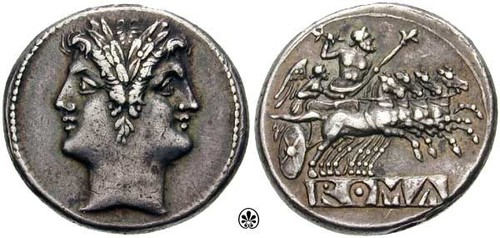
Roman As/Dupondius (Uncertain)
An uncertain Roman bronze As or Dupondius: a double-faced Janus head on one side and a ship (galley/prow) with ROMA below on the other.
Ancient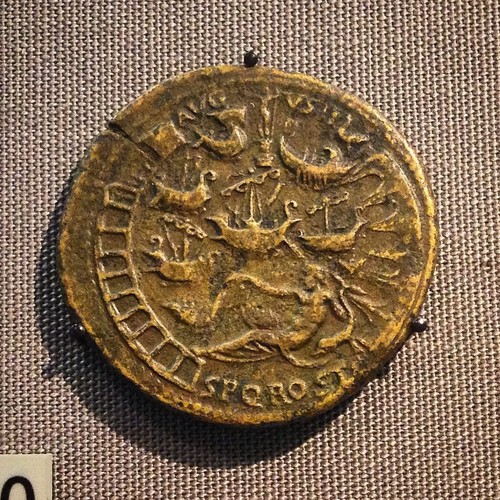
Sestertius of Nero (Port of Ostia)
A large brass sestertius of the emperor Nero (54–68 AD) showing his portrait on one side and a bird's-eye view of the harbour at Ostia on the other.
Ancient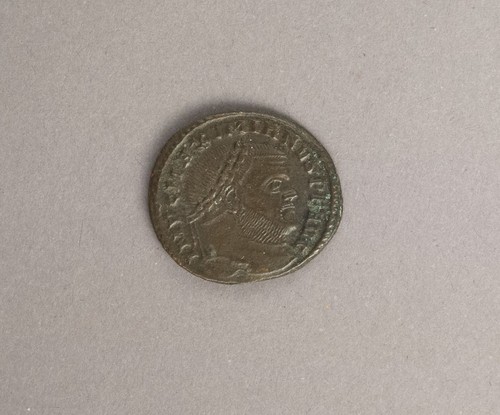
Nummus of Maximianus
A late-Roman bronze nummus (follis) of the emperor Maximianus, with his right-facing laureate portrait and a standing deity on the reverse.
Ancient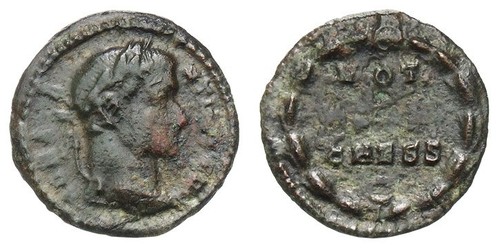
Nummus of Constantine I
Small late Roman bronze nummus (follis) of Constantine I the Great (306-337 CE), identified by his right-facing imperial portrait on the obverse.
Ancient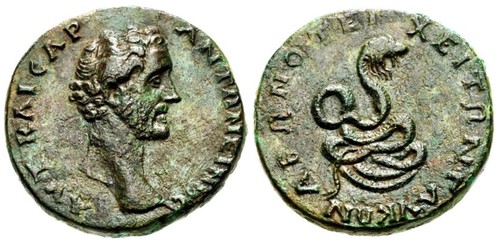
Glycon Bronze Coin
Roman provincial bronze of the 2nd century AD showing the snake-god Glycon: a bearded serpent head on one side and a coiled snake on the other.
Ancient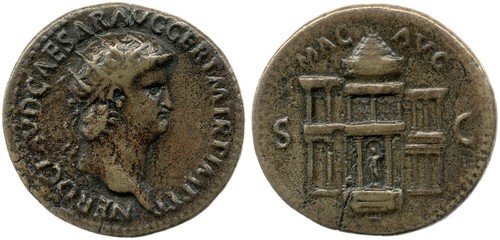
Bronze As of Nero
A Roman bronze as struck under the emperor Nero (54–68 AD), bearing his laureate portrait on the obverse and an imperial reverse type.
Ancient
Bronze Coin of Corinth (Augustan)
A Roman colonial bronze struck at Corinth during the reign of Augustus, showing a laureate imperial portrait; the example here has a badly corroded reverse.
Ancient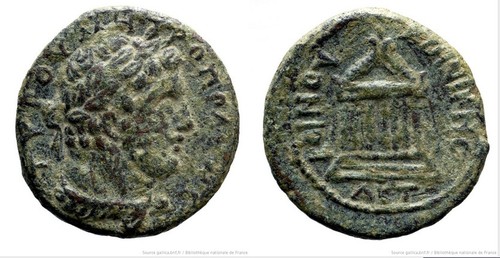
Bronze Coin of Septimius Severus (Tyre)
Roman provincial bronze struck at Tyre (Phoenicia) under Septimius Severus, 193-211 AD, with the emperor's bust on the obverse and a temple or deity reverse.
Ancient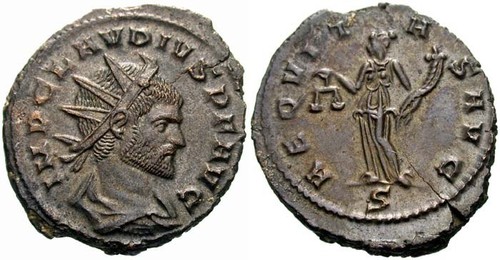
Antoninianus of Claudius II
A billon antoninianus of the Roman emperor Claudius II Gothicus (268–270 AD), showing his radiate bust on one side and a standing deity on the other.
Ancient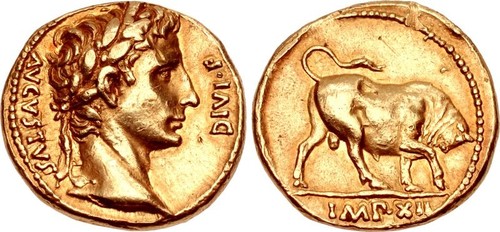
Aureus of Augustus
Roman imperial gold coin bearing the bare head of Augustus, first emperor of Rome, struck during his reign from 27 BC to 14 AD.
Ancient Coins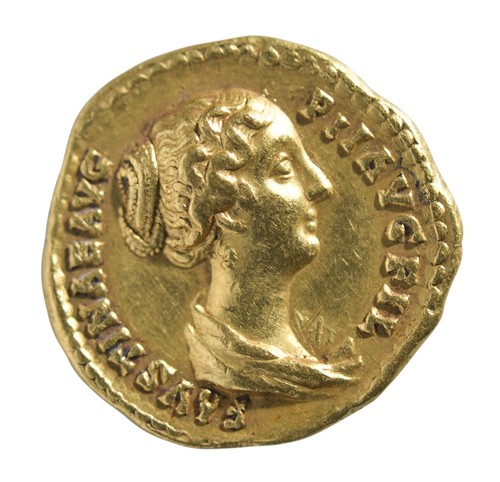
Aureus of Faustina II
Roman imperial gold coin with the draped bust of Faustina II, daughter of Antoninus Pius and wife of Marcus Aurelius, struck around 147-150 AD.
Ancient Coins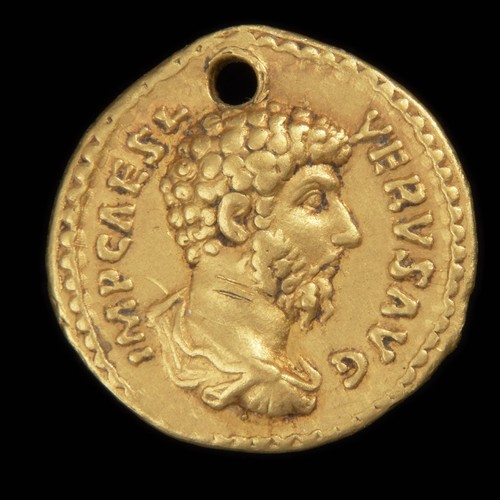
Aureus of Marcus Aurelius
Small Roman gold coin of the reign of Marcus Aurelius; this piece shows a diademed portrait and a standing deity or personification, dated to 163 AD.
Ancient Coins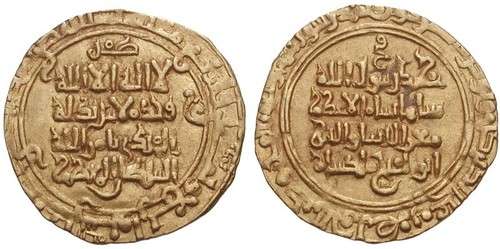
Gold Dinar of Malik Shah I
A hand-struck Seljuk gold dinar naming Malik Shah I (r. 1072–1092), covered in Arabic inscriptions with the ruler's titles and genealogy and an ornamental cartouche.
Islamic (Medieval)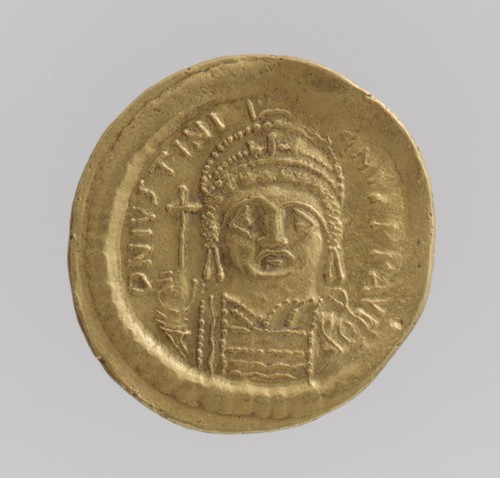
Solidus of Justinian I
Byzantine gold solidus of Emperor Justinian I (527-565 AD), showing his crowned imperial bust with a seated figure on the reverse.
Ancient Coins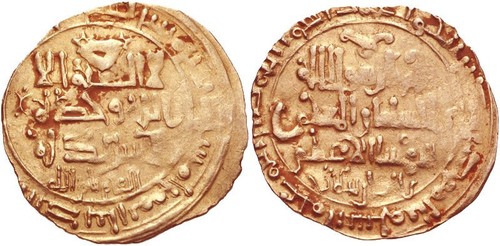
Gold Dinar of Alp Arslan
A hand-struck Islamic gold coin of the Great Seljuk sultan Alp Arslan, covered in concentric Arabic inscriptions naming the ruler and caliph, AH 455–465.
Islamic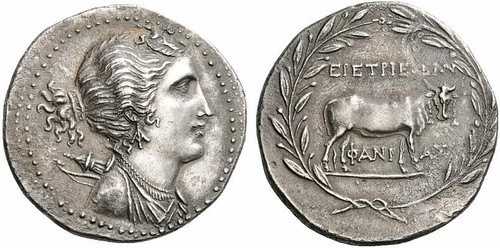
Tetradrachm of Eretria
A silver tetradrachm attributed to Eretria on Euboea, pairing the head of a female figure with a standing bull and the Greek legend EYBOIA.
Ancient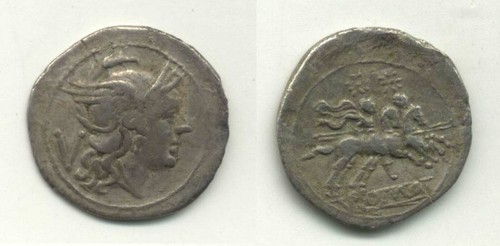
Roman Quinarius
A small Roman silver quinarius, half the value of a denarius, here with a helmeted head of Roma and a prancing horse on the reverse.
Ancient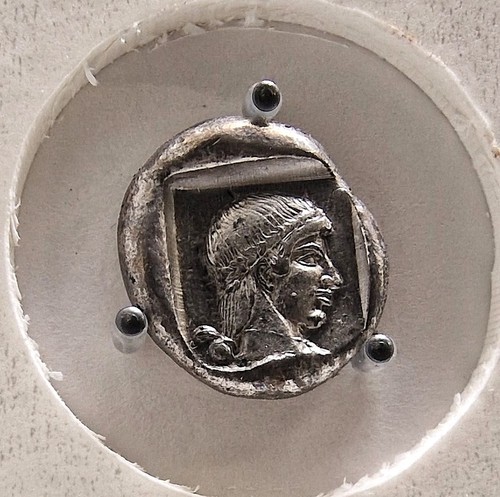
Cnidian Drachm
An archaic hand-struck silver drachm of the Greek city of Cnidus, showing the goddess Aphrodite on one side and an eagle on the other.
Ancient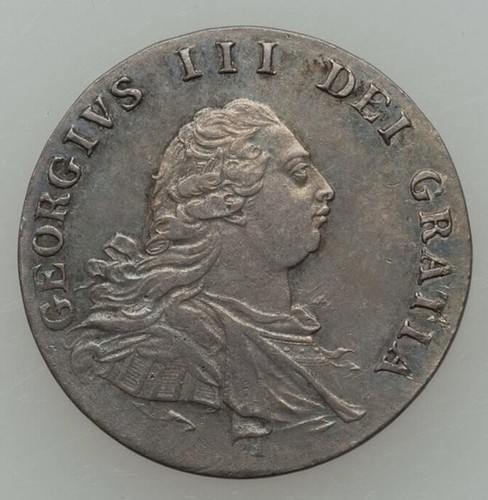
British Groat
A small George III silver fourpence of 1792, the British groat: laureate king's profile obverse, crowned shield and value reverse.
Circulation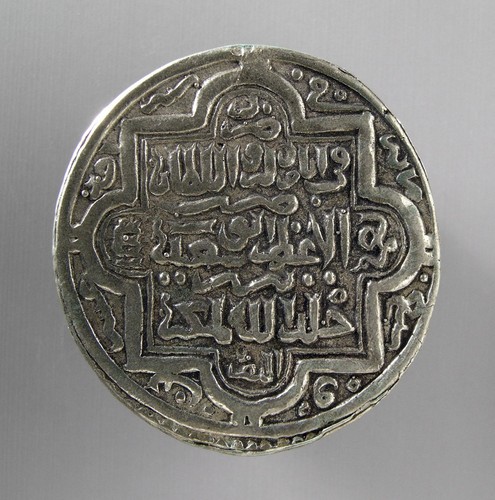
Ilkhanid Dirham
A hand-struck silver dirham of the Mongol Ilkhanate, covered in Arabic and Persian inscriptions arranged in a quatrefoil cartouche and concentric bands.
Islamic (Medieval)