
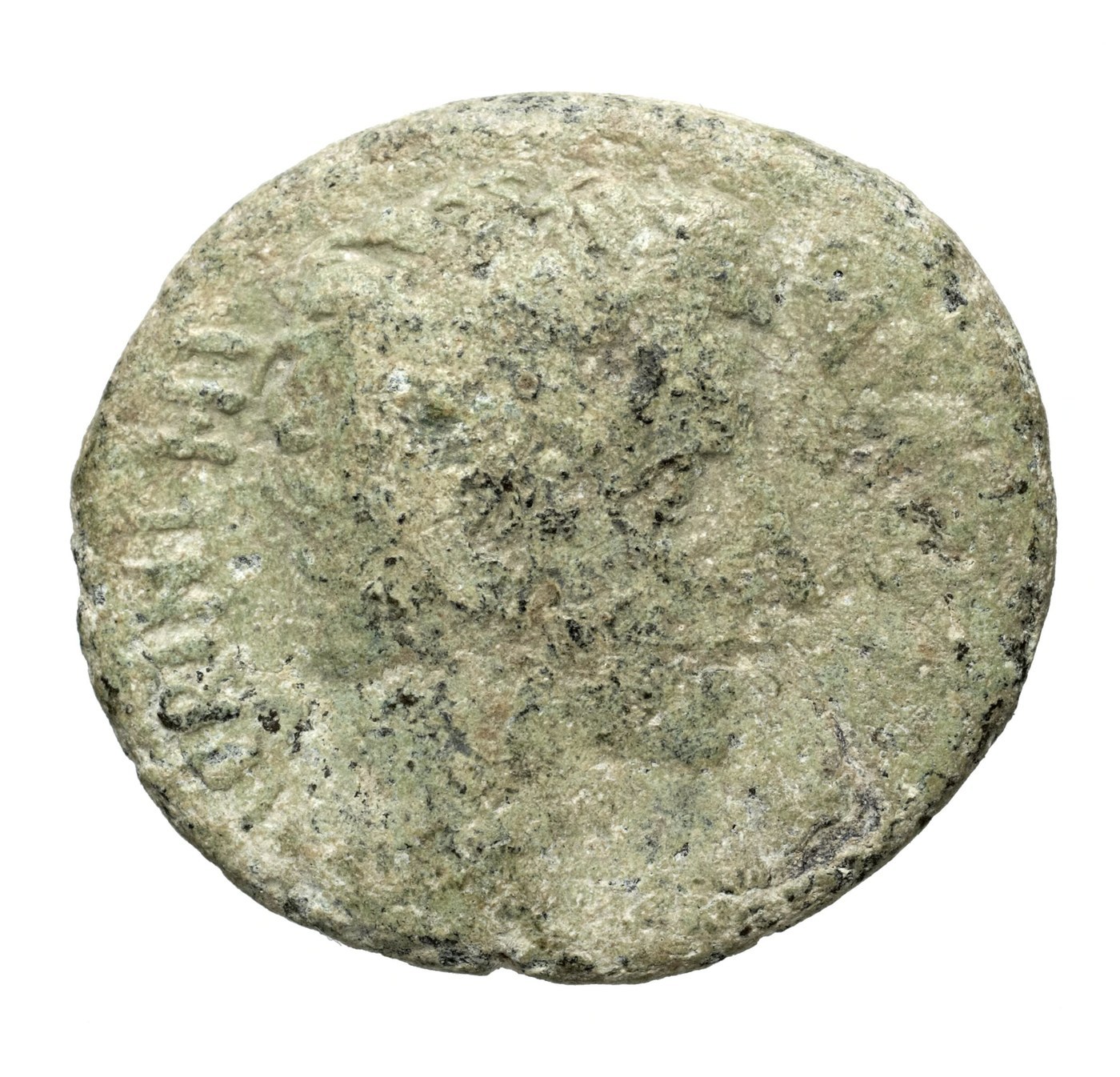
Bronze Coin of Corinth (Augustan)
A Roman colonial bronze struck at Corinth during the reign of Augustus, showing a laureate imperial portrait; the example here has a badly corroded reverse.
- Country
- Roman Empire
- Denomination
- Bronze
- Metal
- Bronze
Got a coin like this?
Identify any coin from a photo, free.
Overview
This is a small bronze coin issued by the Roman colony of Corinth during the reign of the first emperor, Augustus (27 BC–14 AD). After Julius Caesar refounded the city as Colonia Laus Iulia Corinthiensis, its magistrates struck their own base-metal coinage for local circulation rather than relying solely on imperial mints. Such pieces are described as Roman provincial or colonial bronzes.
The coin shown carries a laureate male portrait on the obverse, consistent with an Augustan-era imperial or honorific bust. Its reverse is heavily corroded, so the original design and legend cannot be read with confidence from the photographs. Corinthian colonial reverses of this period commonly depicted the winged horse Pegasus (the city's ancient badge), temples, or the names of the local duoviri (magistrates), but the specific type on this example is obscured by surface damage.
History & Background
Ancient Corinth was destroyed by Rome in 146 BC and lay largely abandoned until Julius Caesar re-established it as a Roman colony in 44 BC, settling it with freedmen and veterans. Under Augustus the rebuilt city became the capital of the province of Achaea and a thriving commercial hub straddling the isthmus between mainland Greece and the Peloponnese.
As a Roman colony, Corinth enjoyed the right to mint its own bronze coinage. These issues were the everyday small change of the marketplace, produced under the authority of annually elected magistrates (duoviri) whose names often appear in the reverse legends. Portraits could honor the emperor and members of the imperial family, tying local coinage to the wider Roman world.
Production of Corinthian colonial bronze continued through the Julio-Claudian period and beyond, making Augustan-era pieces the earliest tier of a long colonial series. Because they circulated heavily and were buried in Mediterranean soil, many surviving examples, like this one, show significant wear and corrosion.
How to Identify
Identify this as an ancient rather than a modern coin first: it is a struck bronze, irregular in shape and flan, with a hand-engraved laureate portrait and often uneven, off-center strike. The laurel-wreathed head on the obverse is the clearest feature on this example.
Attribution to Augustan Corinth relies on the portrait style, module (small AE bronze), and, when legible, Latin reverse legends naming the colony (forms of COR or CORINT) and its magistrates. On this coin the reverse is heavily corroded and its design and inscription are not readable, so a firm type identification would require comparison of the fabric, diameter, and any faint surviving detail with published Corinthian colonial issues (for example in RPC, Roman Provincial Coinage).
Expect a diameter and weight in the range typical of Julio-Claudian colonial bronzes rather than large imperial sestertii. Heavy green or brown patina, pitting, and encrustation are normal for buried bronze of this age and, on this piece, obscure much of the reverse.
Value & Collectibility
Roman colonial bronzes of Corinth are collectible but generally affordable, especially in worn or corroded grades. A small Augustan-era bronze with a badly damaged reverse, like this one, sits at the modest end of the market, since legibility and eye appeal strongly influence price.
Well-centered examples with a clear portrait and an identifiable reverse type (a recognizable Pegasus, temple, or readable magistrate legend) command higher prices, and scarcer types or rarer magistrate names can be worth substantially more to specialists. Corrosion and illegibility, as seen here, reduce value.
Because exact issues vary widely, any figure is best treated as a broad range: common corroded provincial bronzes are inexpensive, while attributed, well-preserved Augustan Corinthian pieces are valued higher. A specialist dealer or auction record for the specific type is the most reliable guide.
Frequently asked questions
Is this a Greek or a Roman coin?
Both, in a sense. It was struck in the Greek city of Corinth, but during the Roman period when Corinth was a Roman colony. Numismatists classify it as a Roman provincial or colonial bronze of the Augustan era.
Whose portrait is on the coin?
The obverse shows a laureate male head in the style of Augustan-era imperial or honorific portraits. On worn colonial bronzes the exact identity often depends on a legible legend, which is not preserved on this corroded example.
Why is the reverse so hard to read?
The reverse is heavily corroded. Ancient bronze buried in Mediterranean soil develops patina, pitting, and encrustation over two thousand years, which can obscure the original design and inscription.
What was usually shown on Corinthian colonial reverses?
Common reverse types included Pegasus, the winged horse long associated with Corinth, along with temples, deities, and the names of the local magistrates (duoviri). The specific type here cannot be confirmed due to corrosion.
How old is it?
It dates to the reign of Augustus, roughly 27 BC to 14 AD, making it about two thousand years old.
Bronze Coin of Corinth (Augustan) guides
In-depth guides for identifying, valuing, and collecting Bronze Coin of Corinth (Augustan).
Other coins you may enjoy
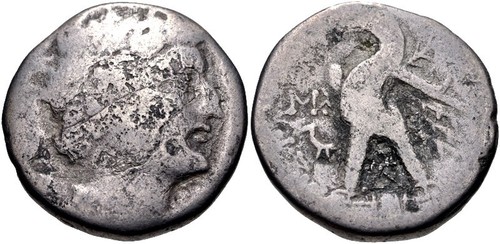
Tetradrachm of Ptolemy XII
80-51 BC
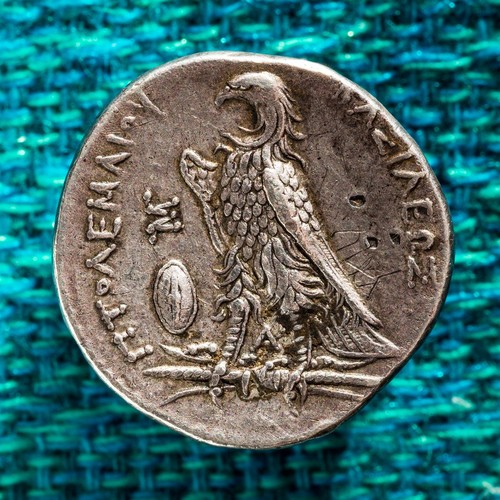
Tetradrachm of Ptolemy I
305-283 BC
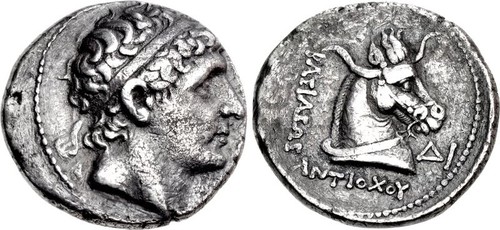
Tetradrachm of Antiochos I Soter
281-261 BC
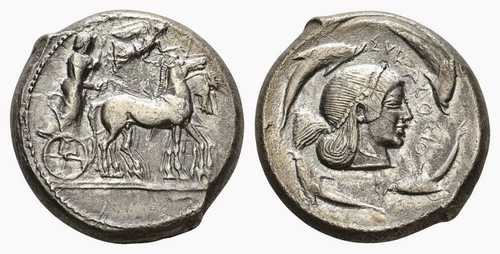
Syracuse Tetradrachm
c. 5th-4th century BC (Classical period)
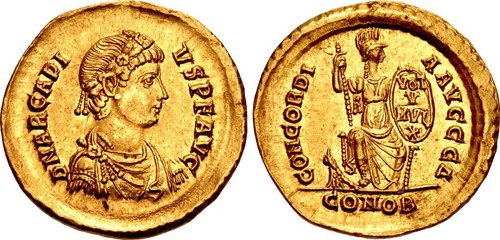
Solidus of Arcadius
AD 395-402
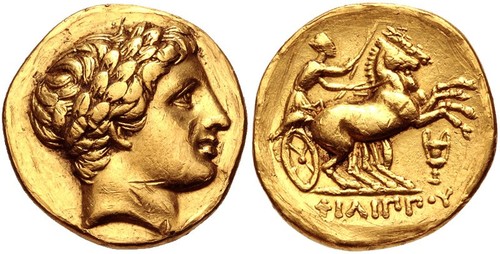
Philip III Gold Stater
323-317 BC
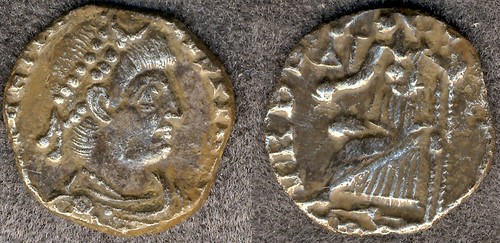
Siliqua of Gratian
AD 367-383
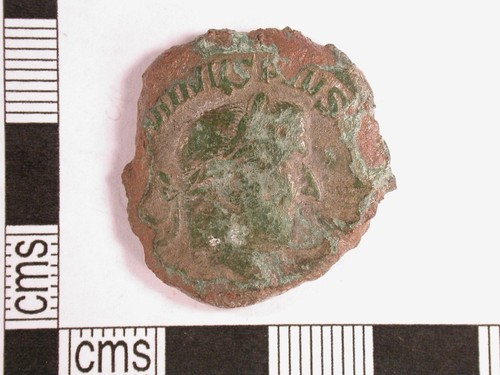
Sestertius of Maximinus Thrax
235-238 AD
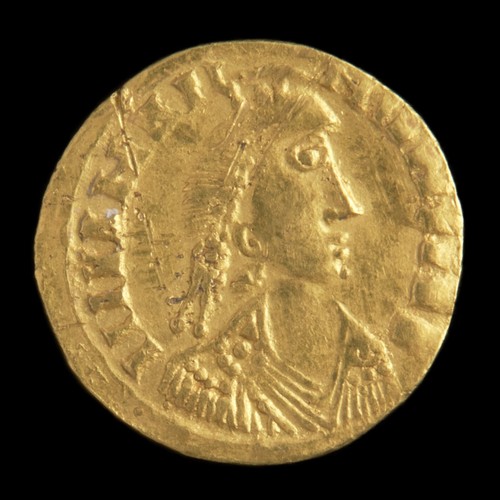
Solidus of Valentinian III
AD 425-455
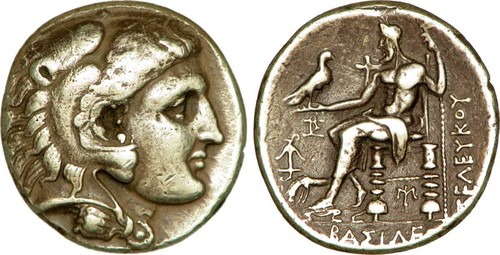
Seleucus I Nicator Tetradrachm
Late 4th-3rd century BC
Nummus of Magnentius
AD 350-353
Follis of Galerius
AD 308-310