
How to Identify the Bronze Coin of Corinth (Augustan)
A collector's guide to recognizing an Augustan-era Corinthian colonial bronze by its portrait, fabric, size, legends, and patina.
Read the full Bronze Coin of Corinth (Augustan) encyclopedia entry →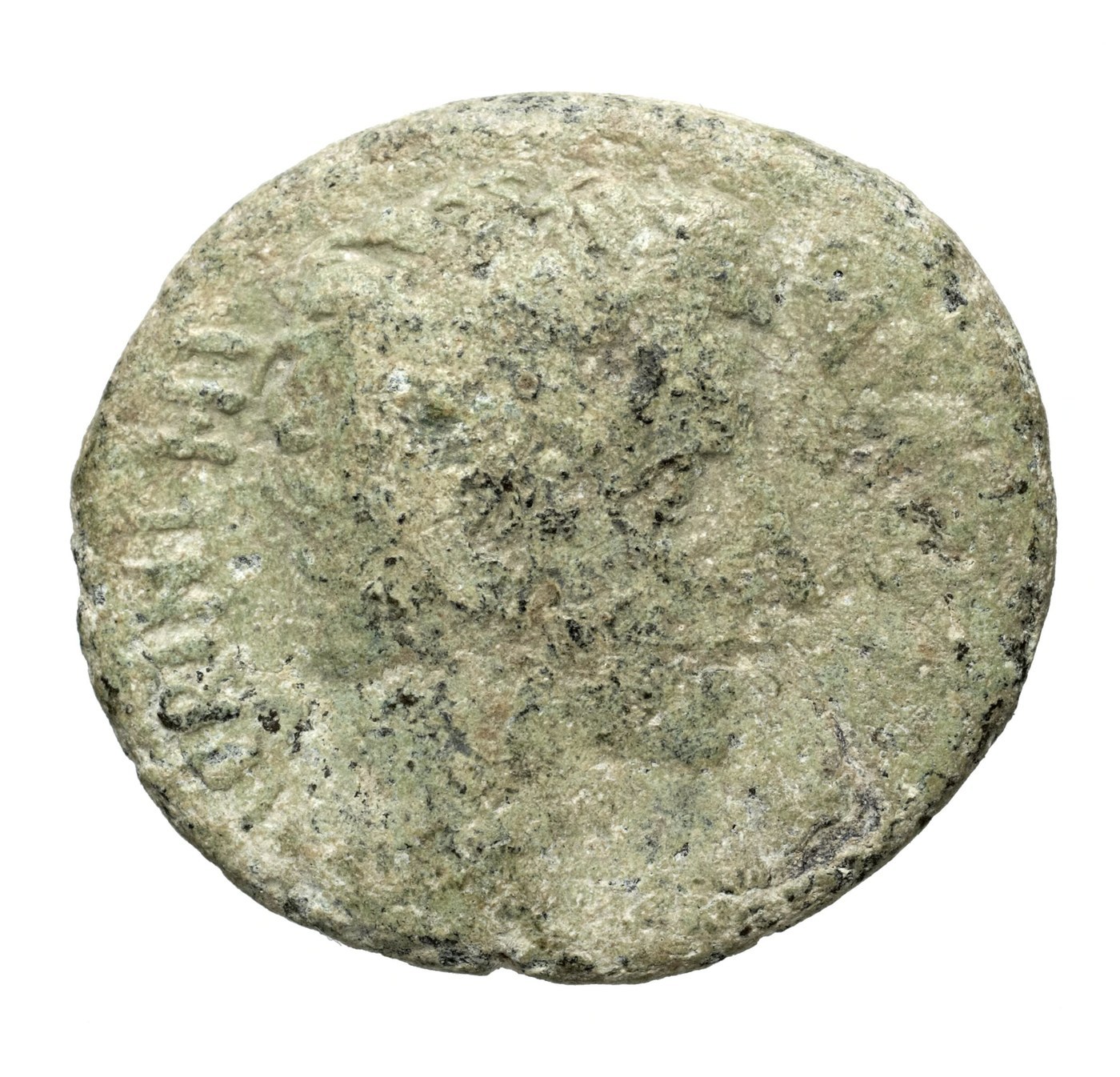
Begin by confirming it is an ancient struck bronze rather than a cast copy or modern coin. Look for an irregular flan, a hand-engraved laureate portrait, and the uneven, sometimes off-center strike typical of first-century provincial issues. Genuine bronze of this age carries a hard, stable patina in green or brown, not painted-on color.
Work the obverse first. The laurel-wreathed male head is the strongest diagnostic on this example and points to an Augustan imperial or honorific portrait. Study the hairline, wreath ties, and truncation of the bust, and compare the style to published Julio-Claudian colonial portraits. Any surviving letters around the head can help, though on many worn pieces the legend is gone.
Then attempt the reverse, keeping expectations realistic when it is corroded as it is here. Corinthian colonial reverses often show Pegasus, a temple facade, a standing deity, or the Latin names of the duoviri, and legends built on COR / CORINT confirm the mint. Under raking light, trace any faint raised outlines before concluding; if nothing resolves, record the coin as an unattributed Corinthian-type colonial bronze rather than guessing a specific issue.
Measure diameter and weight and match them to Julio-Claudian colonial AE modules, which are small compared with large imperial bronzes. Finally, watch for authentication pitfalls: tooled surfaces (modern engraving added to sharpen a worn design), casting seams or bubbles that betray a fake, and artificial patina. For a firm attribution, cross-reference fabric and any legible detail against Roman Provincial Coinage (RPC) or a specialist's Corinth reference before assigning a catalog number.
Frequently asked questions
Can this specific coin be fully attributed from the photos?
Not reliably. The obverse portrait marks it as an Augustan Corinthian-style colonial bronze, but the heavily corroded reverse hides the type and legend needed to pin down the exact issue and magistrates.
How can I tell a genuine ancient bronze from a fake?
Look for a struck (not cast) fabric, an irregular hand-made flan, and a hard natural patina. Casting bubbles, seams, unnaturally smooth fields, or painted-on color are warning signs, as is evidence of modern tooling.
What distinguishes a Corinthian colonial bronze from other provincial issues?
Latin legends referencing the colony (COR / CORINT) and Corinthian reverse types such as Pegasus are the key markers, together with the small AE module and Julio-Claudian portrait style. Without those, size and fabric alone are only suggestive.
Should I clean the corrosion off to read the reverse?
Be cautious. Aggressive cleaning can strip original surfaces and destroy value. Gentle conservation by someone experienced with ancient bronze is safer, and even then a badly corroded reverse may never fully resolve.