
Coin Encyclopedia
Search and identify coins from around the world — with country, denomination, metal, mint, history, and how to tell them apart.
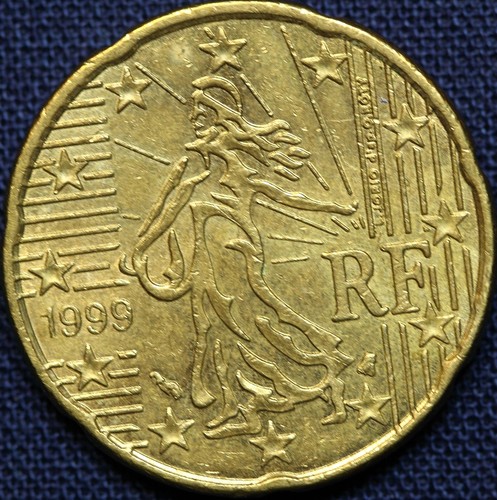
France 50 Cent Euro
France's gold-coloured 50 euro cent coin, showing the striding Sower (Marianne) among the EU stars on one side and the value 50 on the other.
Circulation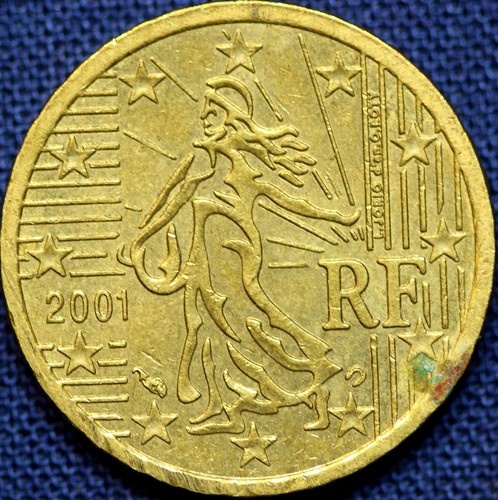
France 10 Cent Euro
France's gold-coloured 10 euro cent: the striding Sower for the French Republic on one side, a European map and the value 10 on the other.
Circulation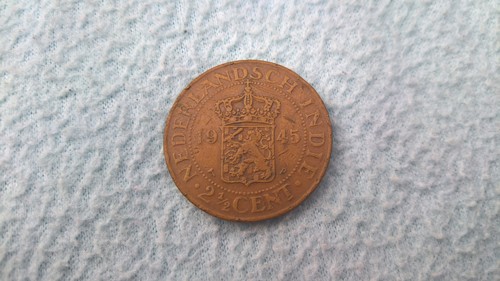
Netherlands East Indies 2 Cent
A wartime 1945 bronze 2-cent coin of the Dutch colony of the Netherlands East Indies, showing the crowned Netherlands shield and an ornate colonial reverse.
Southeast Asia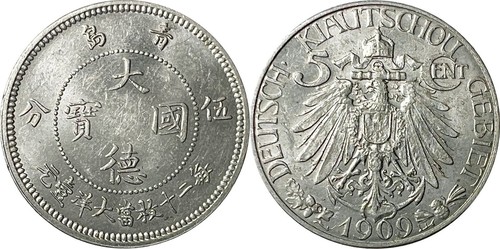
Kiautschou 5 Cents
A 1909 nickel 5 Cent coin of the German-leased Kiautschou Bay territory in China, pairing Chinese characters with the German imperial eagle.
Colonial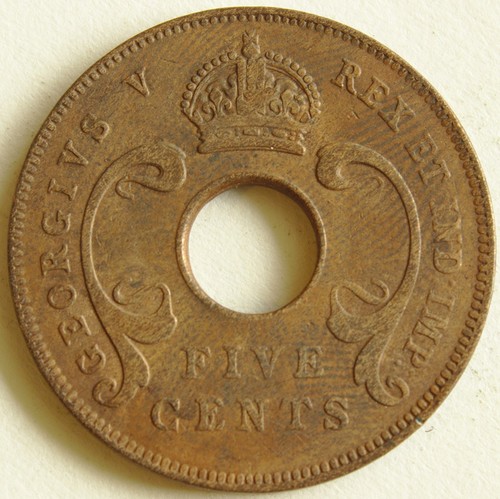
East African 5 Cents
A holed copper-nickel colonial coin with a crown above scrollwork and EAST AFRICA lettering, issued by the East African Currency Board.
World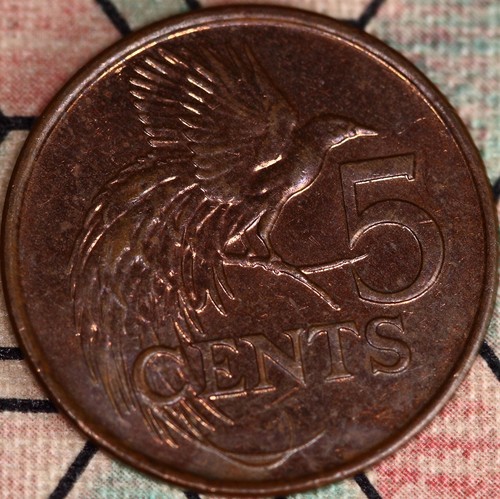
Trinidad and Tobago 5 Cents
A bronze five-cent coin of Trinidad and Tobago showing a perched bird — the Greater Bird of Paradise, often mistaken for a parrot — with FIVE CENTS on the reverse.
Circulation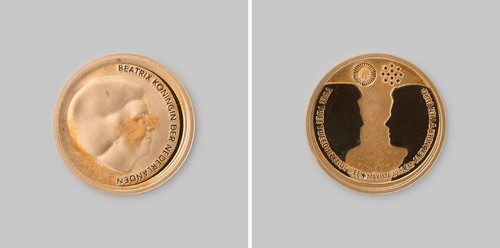
10 Euro (Royal Marriage)
A 2002 Netherlands gold 10 Euro commemorating the royal wedding, with Queen Beatrix on the obverse and the dual profiles of Willem-Alexander and Maxima on the reverse.
Commemorative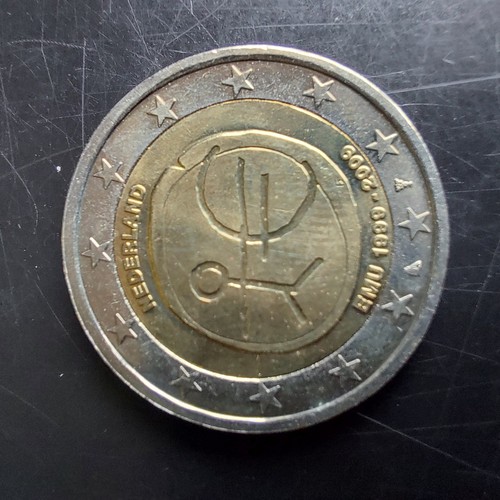
1 Euro (10 Years EMU)
Dutch bi-metallic 1 Euro marking ten years of Economic and Monetary Union, with a stylized integration design and the twin dates 1999 and 2009.
Commemorative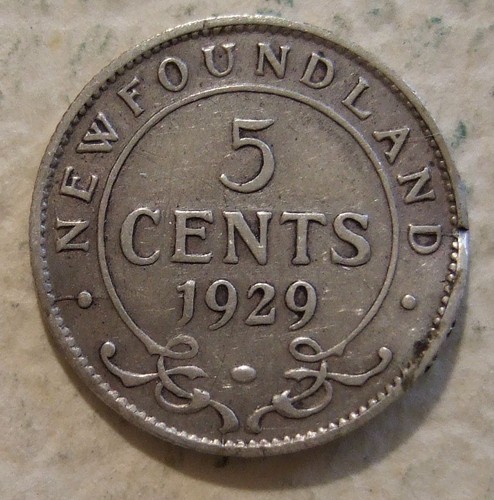
Newfoundland Five Cents
Tiny sterling-silver 5-cent piece of the Dominion of Newfoundland; the 1929 issue bears King George V and a crowned denomination reverse.
Canadian & Provincial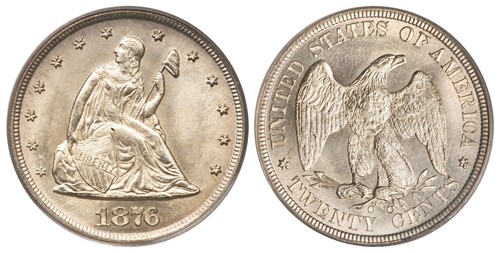
Twenty Cent Piece
A short-lived U.S. silver coin worth twenty cents, showing a seated Liberty and a soaring eagle, struck only from 1875 to 1878.
Twenty Cent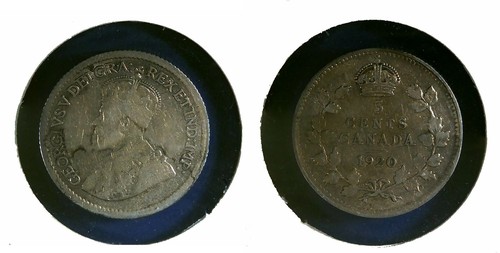
Canadian Five Cents (Nickel)
Canada's five-cent 'nickel,' with G.E. Kruger Gray's beaver reverse. This 1987 example pairs the beaver with an Elizabeth II portrait.
Canadian & Provincial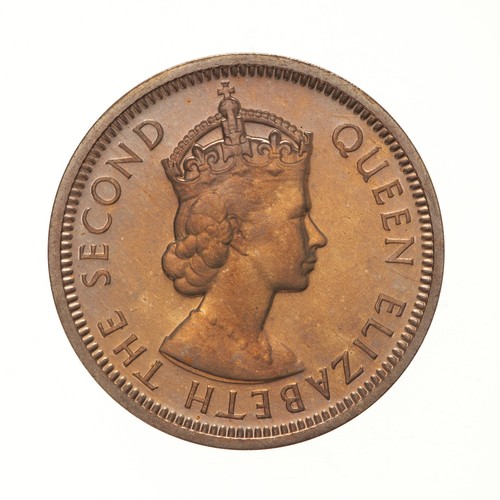
Belize 1 Cent
A small bronze one-cent coin from the Caribbean nation now called Belize, carrying a portrait of Queen Elizabeth II and dated 1954.
Circulation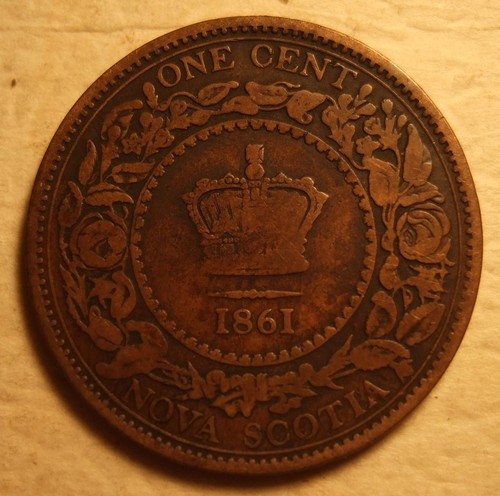
Nova Scotia One Cent
Bronze one-cent coin of the colony of Nova Scotia, with a crowned Queen Victoria obverse and a crown-and-maple-leaves reverse.
Canadian & Provincial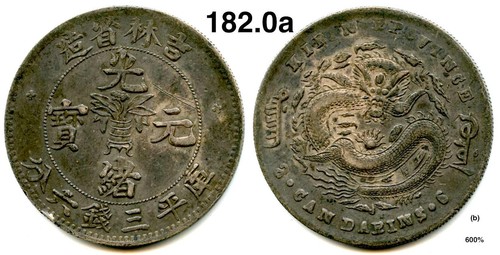
Guangxu Yuanbao 50 Cents
A Qing-dynasty silver half-dollar bearing the legend Guangxu Yuanbao and a coiled dragon, struck by Chinese provincial mints during the Guangxu Emperor's reign.
Circulation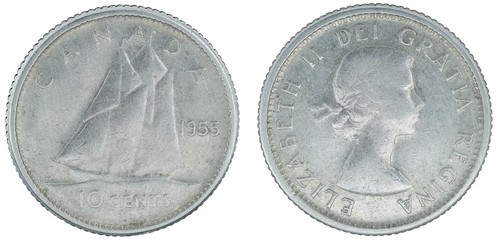
Canadian Ten Cents
Small silver Canadian dime with the Bluenose schooner reverse and an early Queen Elizabeth II portrait; the pictured coin is dated 1955.
Canadian & Provincial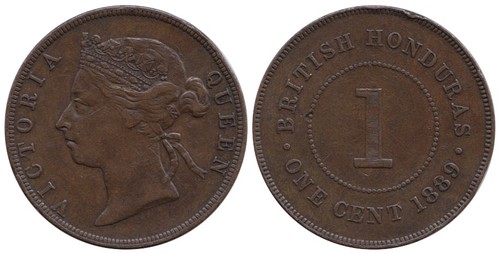
British Honduras One Cent
A colonial copper one cent of British Honduras under Queen Victoria, dated 1889, with the Queen's profile and the value and country name on the reverse.
Colonial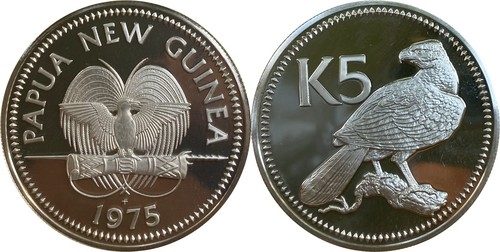
Papua New Guinea 5 Kina
Papua New Guinea's 1975 five-kina coin: Queen Elizabeth II in profile on the obverse, a bird-of-paradise with the K5 denomination on the reverse.
Circulation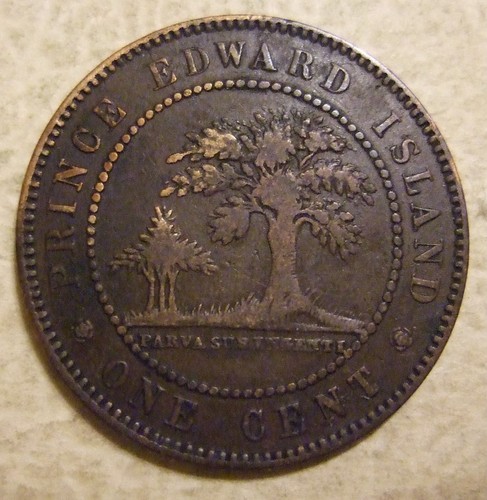
Prince Edward Island One Cent
Bronze one-cent coin struck in 1871 for the colony of Prince Edward Island, with Queen Victoria on the obverse and the island's name and date on the reverse.
Canadian & Provincial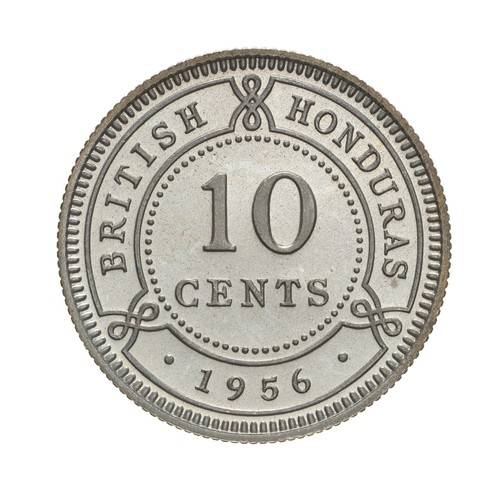
British Honduras 10 Cents
A silver-colored colonial 10 cents of British Honduras, with the Queen's portrait on the obverse and a plain 10 CENTS legend around BRITISH HONDURAS and the date.
Colonial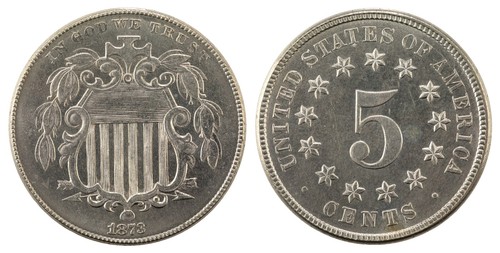
Shield Nickel
The first U.S. five-cent piece struck in copper-nickel, showing a Union shield on the obverse and a large numeral 5 on the reverse, made 1866–1883.
Nickel Five Cent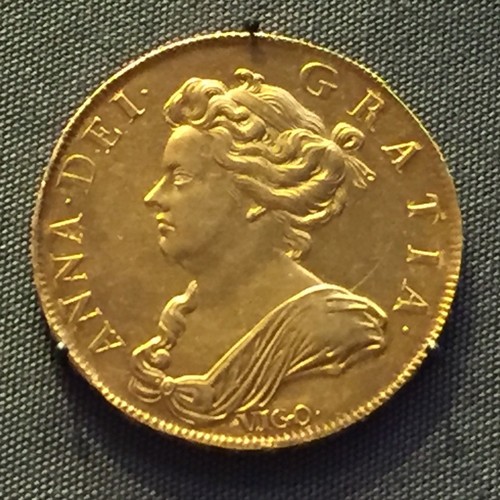
Five Guineas of Anne
Queen Anne's largest gold coin, the celebrated 1703 issue struck with VIGO below the bust from gold captured at the Battle of Vigo Bay.
Milled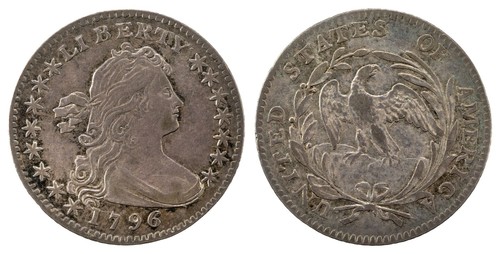
Draped Bust Half Dime
An early U.S. silver five-cent piece showing a draped bust of Liberty ringed by stars; the tiny half dime was struck 1796–1805.
Half Dime
Canadian 50 Cents
Canada's mid-century silver 50-cent piece bearing King George VI, struck in 80% silver with the Canadian coat of arms.
World Coins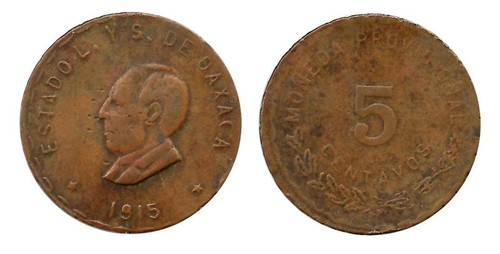
Oaxaca 5 Centavos
A copper 5-centavos struck by the sovereign State of Oaxaca during the Mexican Revolution, with a profile bust on the obverse and the numeral 5 in a wreath on the reverse.
Revolutionary