
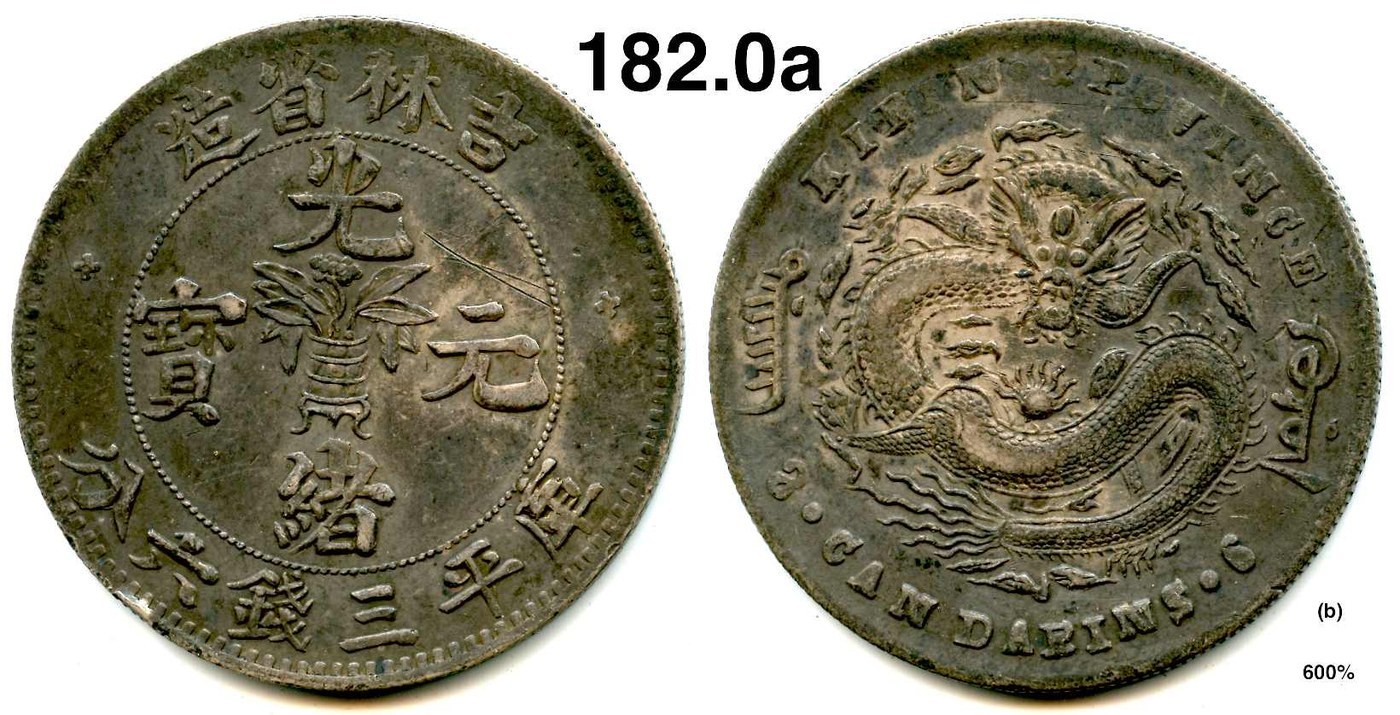
Guangxu Yuanbao 50 Cents
A Qing-dynasty silver half-dollar bearing the legend Guangxu Yuanbao and a coiled dragon, struck by Chinese provincial mints during the Guangxu Emperor's reign.
- Country
- China
- Denomination
- 50 Cents
- Metal
- Silver
Got a coin like this?
Identify any coin from a photo, free.
Overview
The Guangxu Yuanbao 50 Cents is a silver coin of the late Qing dynasty, issued in the name of the Guangxu Emperor (reigned 1875–1908). Its obverse carries the four Chinese characters 光緒元寶 — read Guangxu Yuanbao, meaning roughly "Guangxu currency/treasure" — arranged around a central field, together with markings that state the denomination. The reverse is dominated by a coiled Chinese dragon, the imperial emblem, usually surrounded by a beaded or scaled border and legends.
This 50-cent piece is the half-dollar unit of a broader machine-struck silver series that also included the dollar, 20-cent, 10-cent and 5-cent denominations. It was produced by several provincial mints rather than a single national one, so the exact wording, dragon style and side inscriptions vary from province to province while the core design idea stays the same.
As one of China's first widely circulated machine-struck silver coins, the Guangxu Yuanbao half dollar is a tangible product of the Qing empire's late-19th-century modernization, and it remains a popular and historically resonant type among collectors of Chinese coinage.
History & Background
During the second half of the 19th century, China's traditional cast cash coins and imported foreign silver dollars proved increasingly inadequate for a modernizing economy. To address this, provincial authorities — beginning notably with Guangdong in the 1880s–90s and followed by Hubei, Beiyang, Kiangnan and others — imported Western coining machinery and began striking milled silver coins in the name of the reigning Guangxu Emperor.
The result was the Yuanbao silver series, struck in dollar and fractional values including this 50-cent (half-dollar) piece. Because each province operated its own mint, designs, legends and quality differed regionally, and coins often carried the province's name in Chinese, in Manchu script, and in English. The denomination itself was frequently expressed in the old weight system — the half dollar corresponds to roughly 3 mace 6 candareens of silver — as well as in "cents" on English-legend issues.
Production spanned the Guangxu era up to the emperor's death in 1908, after which coinage continued under his successor and, ultimately, the standardized national dollar coinage of the early Republic. The provincial Guangxu Yuanbao issues thus represent a transitional chapter between old-style Chinese money and a unified modern currency.
How to Identify
Look first at the character side. Genuine coins of this type show the four Chinese characters 光緒元寶 (Guangxu Yuanbao), typically read top–bottom–right–left around a central medallion. That central field commonly contains additional script (often Manchu or a provincial mark), and the denomination — stated as a number of cents or as a silver weight such as 3 mace 6 candareens — appears in the surrounding legend. Many provincial issues also add an English inscription naming the province and value.
The reverse displays a single coiled dragon facing forward or to the side, often with a flaming pearl and cloud or wave motifs, enclosed by a circular border and, frequently, an English legend around the rim. The dragon's exact style — its scales, whiskers and posture — differs by province and mint, which is one of the main ways specialists attribute a given coin.
Physically, the 50-cent piece is a mid-sized silver coin: smaller than the full dollar but noticeably larger than the 20-cent piece, and struck in silver alloy so that it has real heft and a bright metallic ring. To pin down a specific coin, identify the province (from the Chinese, Manchu or English legends), the dragon variety, and the stated denomination together, since these three features distinguish the many regional versions of the type.
Value & Collectibility
Value depends heavily on which province issued the coin, its specific die variety, and its condition. Some provincial half dollars are relatively available and trade as affordable, historically interesting silver, while scarcer mints, dates and varieties can command significant premiums with collectors of Chinese coinage. As with all silver coins, the metal content provides a baseline, but collector demand is usually the larger factor for this type.
Condition matters a great deal: the high points of the dragon and the crispness of the Chinese characters are the first areas to wear, so well-struck, lightly circulated examples with clear detail are far more desirable than heavily worn pieces. Original surfaces and attractive toning also add appeal.
Because Guangxu silver coins are widely collected and some varieties are valuable, the series is heavily counterfeited and includes many modern fakes and fantasy pieces. For that reason, examples authenticated by a reputable grading service tend to bring the strongest and most reliable prices. Any specific valuation should be checked against recent sales of the same province and variety in comparable grade rather than treated as a fixed figure.
Frequently asked questions
What does “Guangxu Yuanbao” mean?
It is the reading of the four Chinese characters 光緒元寶 on the obverse. “Guangxu” is the reign title of the emperor who ruled 1875–1908, and “Yuanbao” denotes currency or a unit of treasure — so the phrase identifies the coin as Guangxu-era money.
Is this coin made of silver?
Yes. The Guangxu Yuanbao 50 Cents is a machine-struck silver half-dollar denomination, so it has genuine metallic weight and a bright ring in addition to its collector value.
Which mint made it?
There was no single mint. Several Qing provincial mints — such as Guangdong, Hubei, Beiyang and Kiangnan — struck Guangxu Yuanbao silver in their own names, so the province is identified from the Chinese, Manchu or English legends on the coin.
What is the denomination in old Chinese units?
The 50-cent (half-dollar) piece corresponds to roughly 3 mace 6 candareens of silver in the traditional weight system, which is why some coins state the value that way rather than as “50 cents.”
Why are there so many different versions?
Because each province operated its own mint, the dragon style, legends and central marks vary regionally even though the core Guangxu Yuanbao design and denomination stay the same. Collectors distinguish coins by province and die variety.
Guangxu Yuanbao 50 Cents guides
In-depth guides for identifying, valuing, and collecting Guangxu Yuanbao 50 Cents.
Other coins you may enjoy
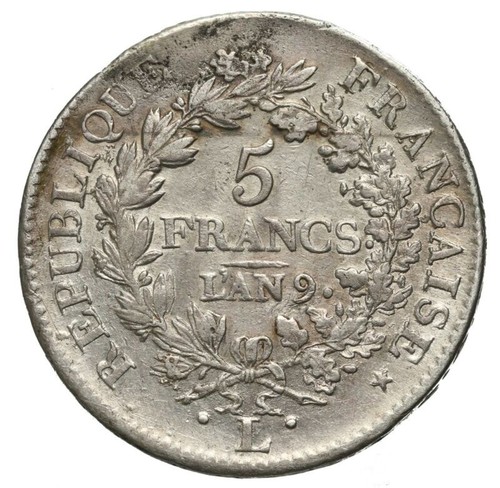
5 Francs (First Republic)
L'an 9 (1800–1801)
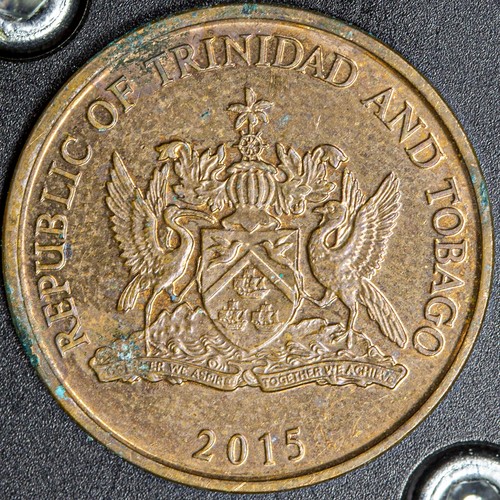
Trinidad and Tobago Dollar
2015
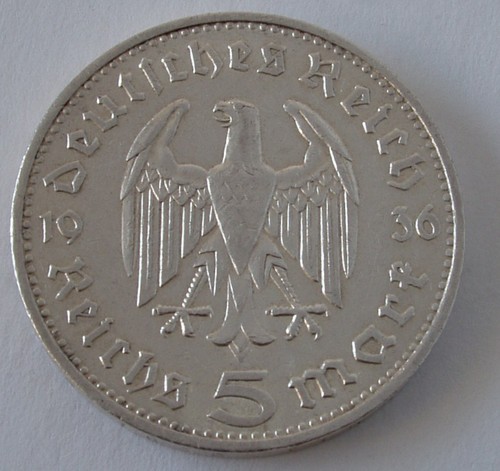
German 5 Reichsmark (Hindenburg)
1935–1936 (Hindenburg type with swastika)
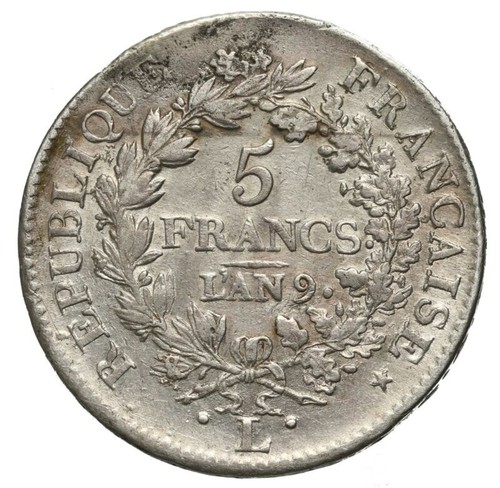
5 Francs Semeuse
1960–1969
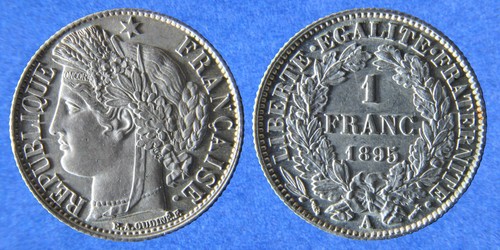
French Cérès 1 Franc
1849–1895
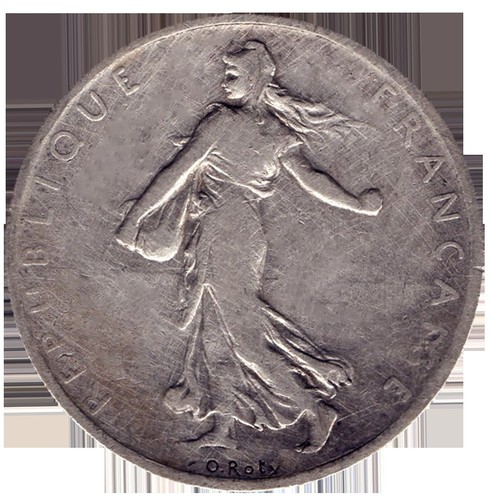
French Semeuse 2 Francs
1898–1920 (silver issues; pictured example dated 1899)
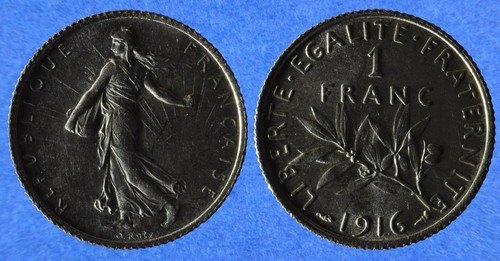
French Semeuse 1 Franc
1898–1920 (silver Semeuse 1 franc type)
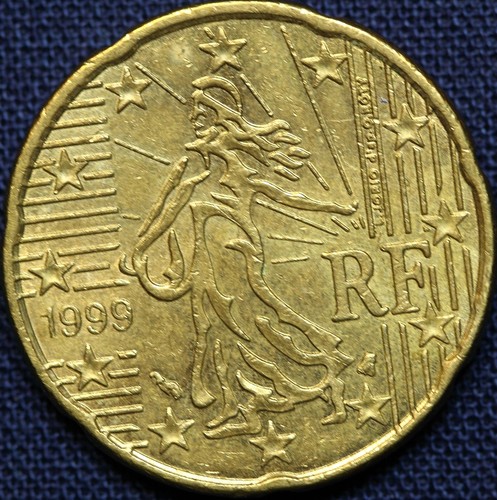
France 50 Cent Euro
1999–present
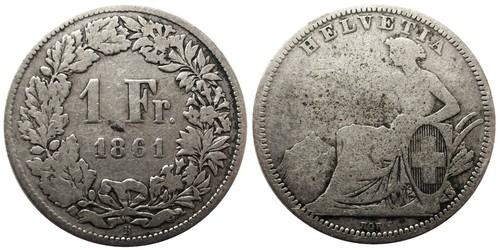
Swiss 1 Franc
1861
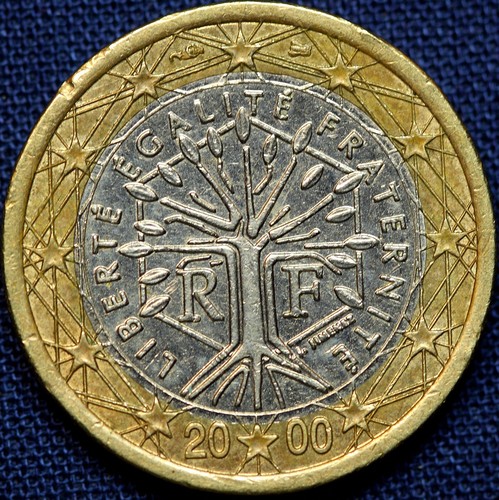
France 20 Centimes
1962–2001 (Fifth Republic, Marianne / Lagriffoul type)
Swiss 2 Francs
1860
Austria-Hungary 15 Kreuzer
1807