
How to Identify the Guangxu Yuanbao 50 Cents
A collector's checklist for the Qing silver half dollar: reading the Guangxu Yuanbao characters, the dragon reverse, size and metal, provincial marks, and fake cautions.
Read the full Guangxu Yuanbao 50 Cents encyclopedia entry →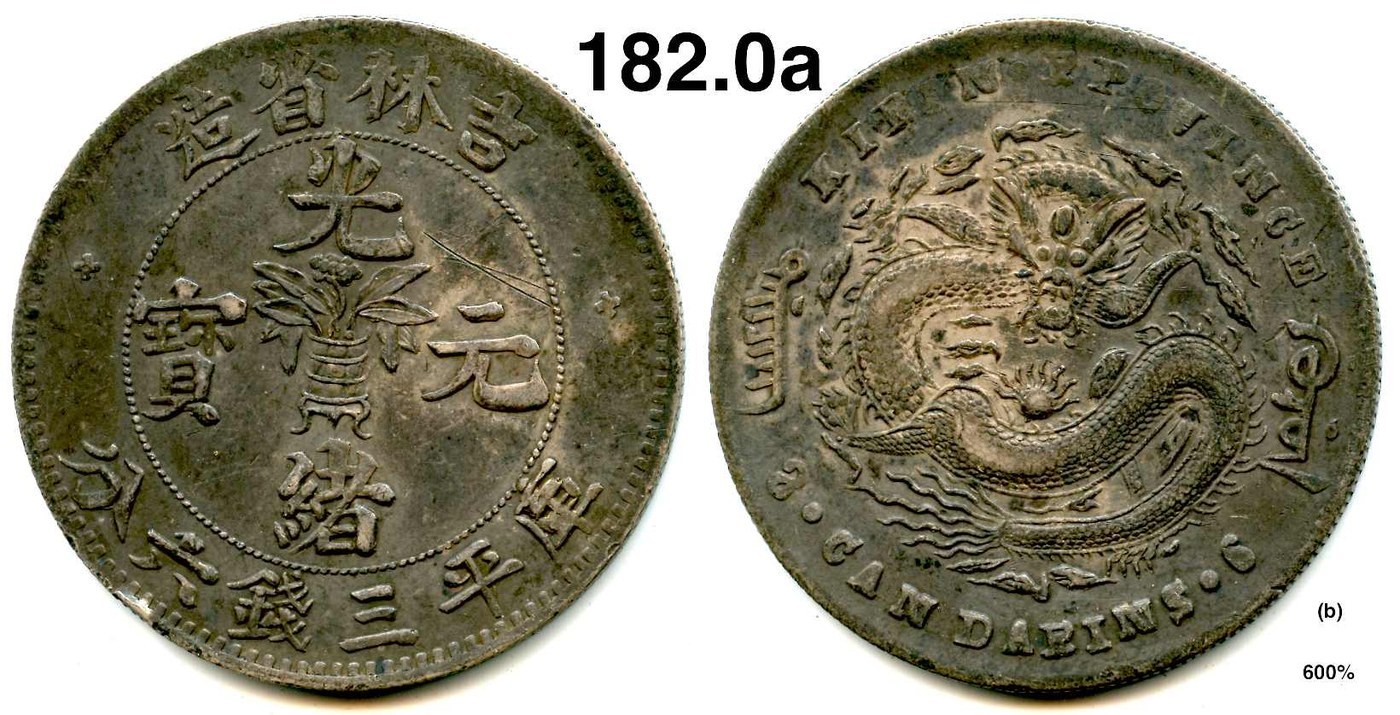
Start with the character side and read the four large Chinese characters. A genuine coin of this type shows 光緒元寶 (Guangxu Yuanbao), conventionally read top, bottom, right, then left, arranged around a central medallion. That central field usually holds extra script — often Manchu or a small provincial mark — and the surrounding legend states the denomination, either in cents or as a silver weight such as 3 mace 6 candareens. Many issues add an English inscription with the province name and value, which is one of the quickest ways to attribute the coin.
Turn to the dragon side next. Expect a single coiled Chinese dragon, commonly with a flaming pearl and cloud or wave elements, enclosed by a circular border and often an English legend around the rim. Do not treat any dragon as identical to another: scales, whiskers, claws and posture differ by province and die, and matching those details against reference images is how specialists confirm exactly which mint and variety a coin belongs to.
Confirm the physical characteristics before going further. The 50-cent piece sits in the middle of the silver series — clearly smaller than the full dollar but distinctly larger than the 20-cent coin — and it is struck in silver alloy, so it should feel dense for its size and ring rather than clink dully. Weigh and measure it against published figures for the specific province, since an underweight or undersized coin is an immediate warning sign.
Use the province, denomination and dragon variety together rather than any one feature alone. The Guangxu name appears across an enormous range of provincial issues, so identifying the coin means reading the provincial legend (Chinese, Manchu or English), confirming the stated value, and matching the dragon style. Small differences in the legends and dragon are what separate a common variety from a scarce one.
Finally, be cautious about authenticity. Guangxu silver is among the most heavily counterfeited of all Chinese coinage, with cast copies, altered pieces and outright fantasy “provinces” that never issued such coins. Watch for casting seams, grainy or soft surfaces, mushy characters, wrong weight or diameter, and dragons that do not match any documented die. For anything of real value, rely on coins authenticated and encapsulated by a reputable grading service and compare against verified references before buying.
Frequently asked questions
What is the fastest way to recognize this coin?
Look for the four Chinese characters 光緒元寶 (Guangxu Yuanbao) on one side and a coiled dragon on the other, on a mid-sized silver piece. That character-and-dragon pairing on a half-dollar-sized silver coin is the signature of the type.
How do I tell which province struck my coin?
Read the surrounding legends. Provincial issues name the province in Chinese, often in Manchu in the central field, and frequently in English around the rim; the dragon style also differs by mint, so use the legends and dragon together to attribute it.
How is the 50-cent size different from the dollar or 20 cents?
The 50 cents is the half-dollar unit: noticeably smaller and lighter than the full silver dollar but clearly larger than the 20-cent piece. Measuring diameter and weight against published specs helps confirm you have the half dollar and not a neighboring denomination.
Are fakes a real concern with this type?
Very much so. Guangxu silver is heavily counterfeited, including cast copies, altered coins and fantasy pieces. Check for casting seams, soft detail, wrong weight or diameter, and dragons that match no known die, and favor examples authenticated by a reputable grading service.