
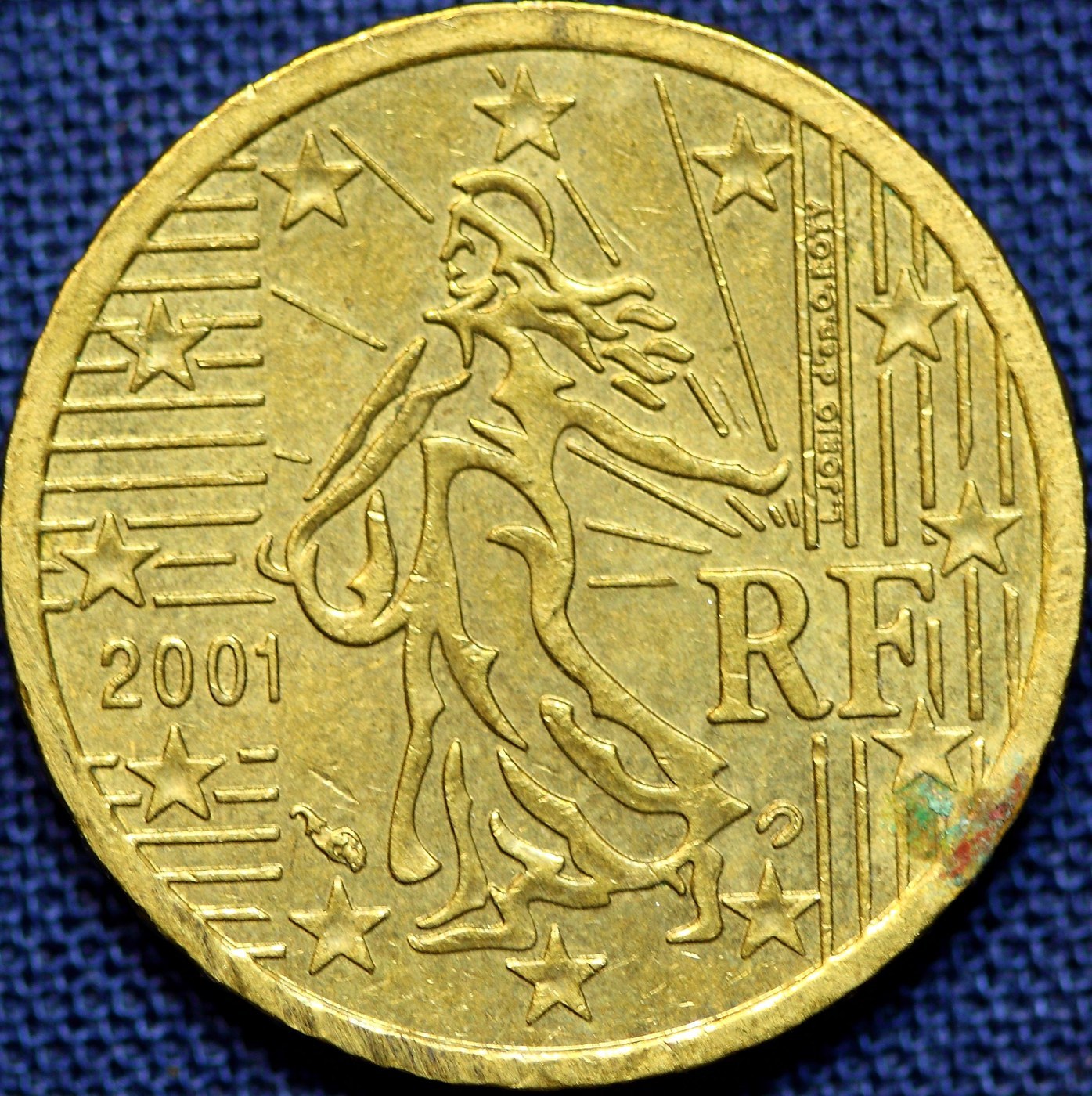
France 10 Cent Euro
France's gold-coloured 10 euro cent: the striding Sower for the French Republic on one side, a European map and the value 10 on the other.
- Country
- France
- Denomination
- 10 Euro Cent
- Metal
- Brass
Got a coin like this?
Identify any coin from a photo, free.
Overview
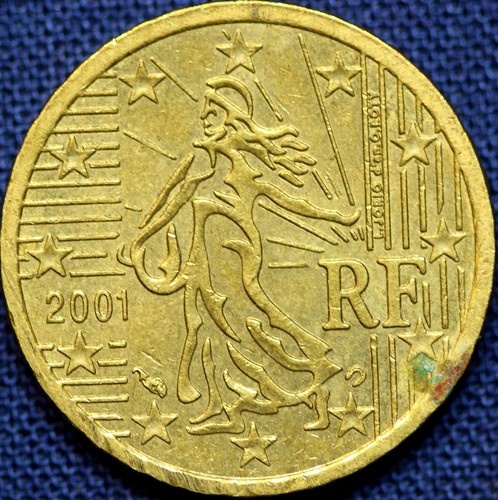
The France 10 Cent Euro is a gold-coloured circulation coin of the euro, the common currency France adopted in place of the franc. Like every euro coin it has two faces: a national side chosen by France and a common European side shared by all euro-area countries. The example shown here carries a national design featuring the striding Sower (La Semeuse), a classic French allegory of the Republic, inscribed for RÉPUBLIQUE FRANÇAISE (RF), paired with the European map-and-stars reverse and the year 2001.
The 10 cent sits in the middle group of the eight euro denominations, between the small copper-coloured 1, 2 and 5 cent coins and the two-tone 1 and 2 euro pieces. It is struck in a gold-toned brass-type alloy known as Nordic gold, which gives the whole 10–20–50 cent family its warm yellow colour.
As one of the most heavily produced modern French coins, the 10 cent is abundant and circulates throughout the euro area, not only in France. It is collected mainly as part of a French or euro type set rather than for individual rarity.
History & Background
France was a founding member of the euro. The single currency became legal for accounting in 1999 and euro coins and notes entered everyday circulation on 1 January 2002. To have enough stock ready for that changeover, France struck coins in advance dated 1999, 2000 and 2001, so a 2001 example like this one belongs to that first pre-circulation production.
For its national designs France used three themes across the denominations. The middle values — the 10, 20 and 50 cent — show the Sower (La Semeuse), a figure sowing seed against a rising sun that had already appeared on French silver coinage for much of the 20th century and is treated as an image of the Republic, closely tied to the Marianne tradition. The smaller cents carry a face of Marianne, and the 1 and 2 euro coins a stylised tree.
The French Sower side has stayed essentially unchanged since 1999. The common European reverse, however, was updated in 2007: the earliest coins (1999–2006) show a map of the then fifteen-member European Union, while later coins show a map of the whole of Europe. A coin dated 2001 therefore carries the original first-series map.
How to Identify
National side (shown): a striding female figure — the Sower, La Semeuse — walking left and scattering seed, with rays of a rising sun behind her, taken as an allegory of the French Republic. It is inscribed for the Republic with RF / RÉPUBLIQUE FRANÇAISE and carries the date. Two small privy marks flank the design: France's mint mark (a cornucopia) and the engraver's differ mark.
Common European side: the large value 10 beside the words EURO CENT, the twelve stars of the European Union, and a relief map of Europe designed by Luc Luycx (the LL initials appear small in the field). On a 2001 coin this is the original map showing the then-fifteen EU members.
Size and metal: a mid-sized coin about 19.75 mm across and roughly 4.1 g, struck in Nordic gold, a gold-coloured brass-type alloy of copper, aluminium, zinc and tin. Its warm yellow tone and finely worked edge separate it from the reddish 1–5 cent coins and the silver-and-gold 1 and 2 euro coins.
Value & Collectibility
The France 10 Cent Euro is an extremely common modern circulation coin, so ordinary worn or lightly circulated pieces are worth their face value of ten cents. They are collected by date and design rather than for scarcity, and are among the easiest euro coins to obtain.
Uncirculated examples, and coins taken from official annual or proof sets, carry a small premium over face value, driven mostly by condition and eye appeal rather than rarity. The early dates of 1999, 2000 and 2001 were made in very large numbers and remain inexpensive, though a bright, spot-free early coin is more desirable than a heavily circulated one.
Because euro-coin prices depend on the specific date, finish and grade and shift with the collector market, treat any single figure as a rough guide. Compare recent sales of similar French 10 cent coins of the same year and condition before buying or selling.
Frequently asked questions
What is the figure on the French 10 cent coin?
The national side shows the Sower (La Semeuse), a striding woman scattering seed against a rising sun. She is a traditional French allegory of the Republic, inscribed RÉPUBLIQUE FRANÇAISE.
What metal is the France 10 cent euro made of?
It is struck in Nordic gold, a gold-coloured brass-type alloy of copper, aluminium, zinc and tin. This gives the 10, 20 and 50 cent coins their warm yellow tone.
Why does my French 10 cent show a different map than newer ones?
Coins dated 1999–2006, including 2001, use the original common side with a map of the fifteen-member EU. The reverse was redesigned in 2007 to show all of Europe.
Is the France 10 cent euro valuable?
Generally no. It is a very common circulation coin worth its face value, though uncirculated and proof-set examples carry a small premium based on condition.
Can I spend a French 10 cent euro outside France?
Yes. Every euro coin is legal tender throughout the euro area regardless of which country's national side it carries, so a French 10 cent works anywhere the euro is used.
France 10 Cent Euro guides
In-depth guides for identifying, valuing, and collecting France 10 Cent Euro.
Other coins you may enjoy
5 Francs (First Republic)
L'an 9 (1800–1801)
Trinidad and Tobago Dollar
2015
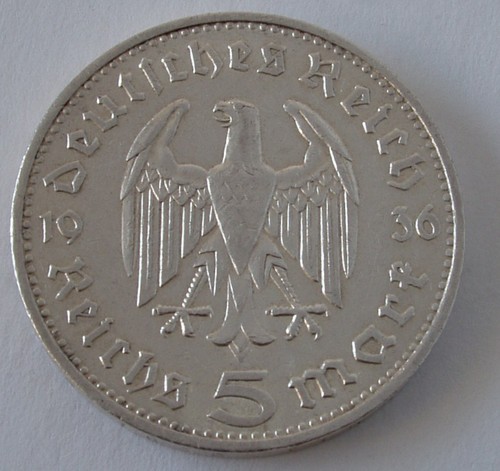
German 5 Reichsmark (Hindenburg)
1935–1936 (Hindenburg type with swastika)
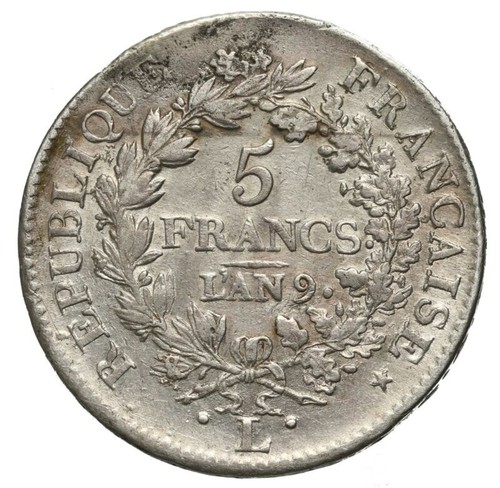
5 Francs Semeuse
1960–1969
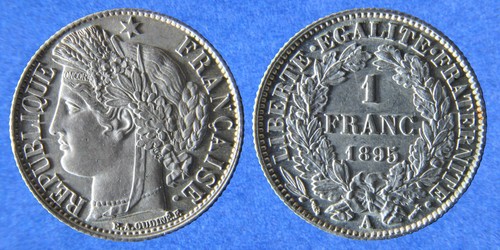
French Cérès 1 Franc
1849–1895
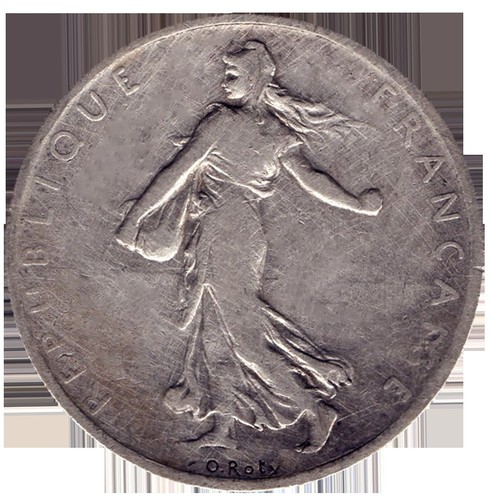
French Semeuse 2 Francs
1898–1920 (silver issues; pictured example dated 1899)
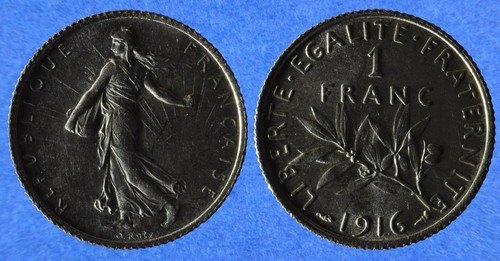
French Semeuse 1 Franc
1898–1920 (silver Semeuse 1 franc type)
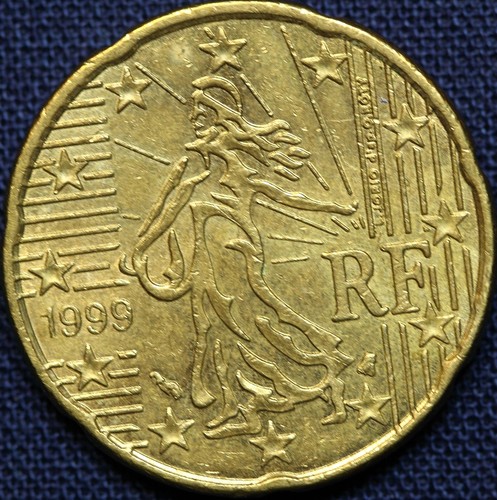
France 50 Cent Euro
1999–present
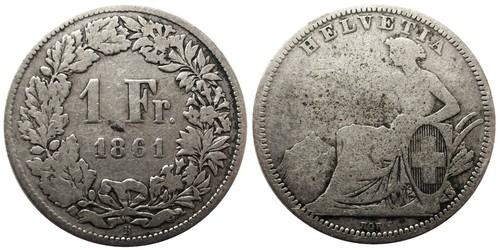
Swiss 1 Franc
1861
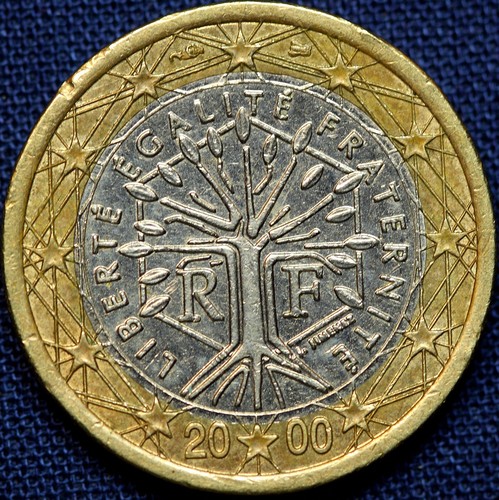
France 20 Centimes
1962–2001 (Fifth Republic, Marianne / Lagriffoul type)
Swiss 2 Francs
1860
Austria-Hungary 15 Kreuzer
1807