
How to Identify the France 10 Cent Euro
A collector's guide to recognizing the French 10 euro cent by its Sower design, EURO CENT value, Nordic-gold colour and mint marks.
Read the full France 10 Cent Euro encyclopedia entry →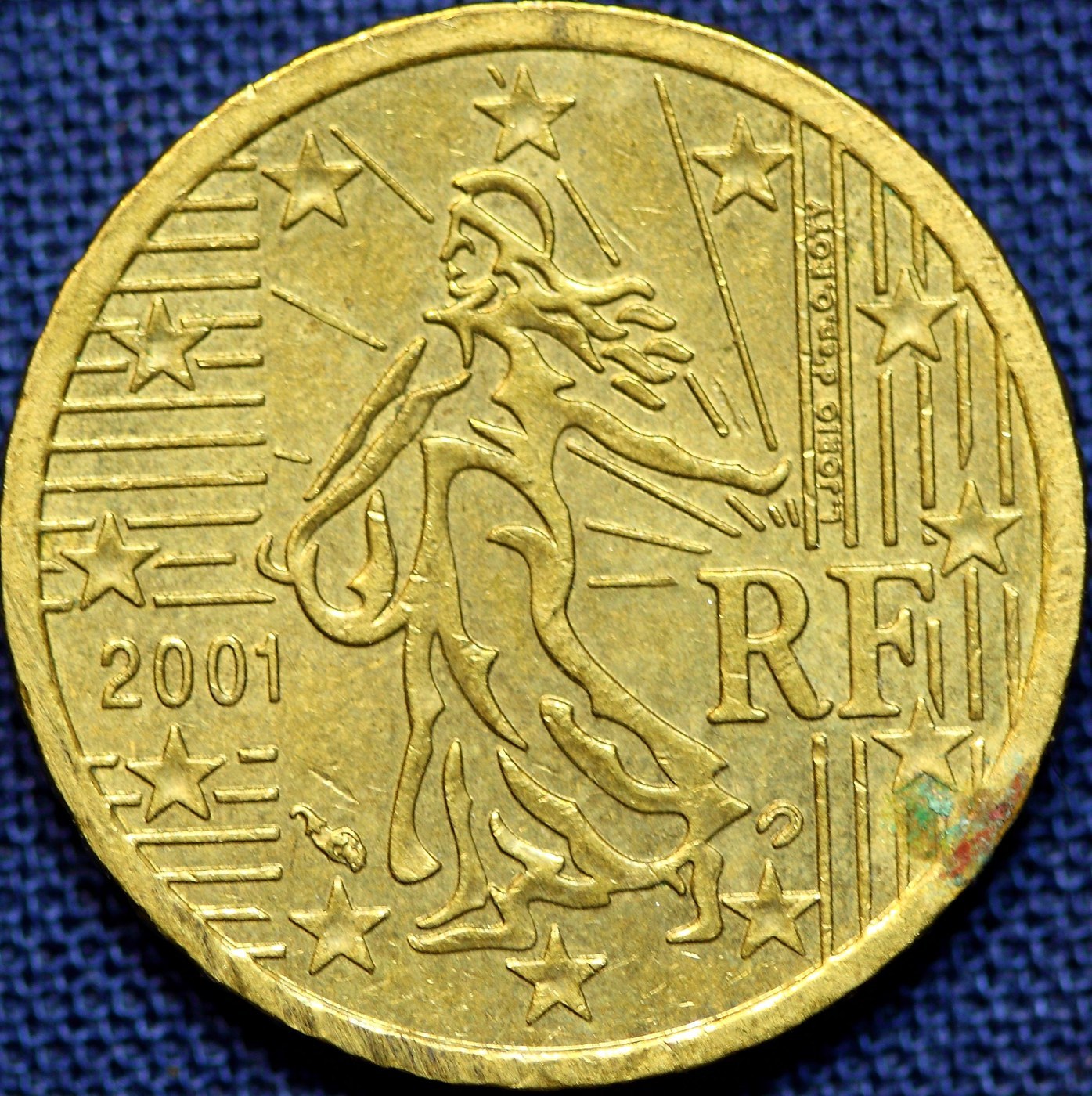
Begin with the two-sided euro layout. A genuine France 10 Cent Euro has one national side and one common European side. The national side identifies the country: look for the striding Sower (La Semeuse) — a woman walking left and sowing seed against a rising sun — together with the letters RF or RÉPUBLIQUE FRANÇAISE and the date. That figure and legend are the fastest confirmation of both France and the 10 cent type.
Turn to the common side to confirm the denomination. You should see the value 10 next to the words EURO CENT, the twelve EU stars, and a relief map of Europe. Reading whether the map shows only the fifteen older EU members (used 1999–2006) or the whole continent (from 2007) helps date the coin: a 2001 piece will always carry the original fifteen-member map.
Check colour, size and metal together. The 10 cent is a mid-sized coin of about 19.75 mm and roughly 4.1 g, struck in Nordic gold — a gold-coloured brass-type alloy. Its warm yellow tone is the key separator from the smaller reddish 1, 2 and 5 cent coins and from the bi-metallic silver-and-gold 1 and 2 euro coins. A coin of the right design but red-copper colour is a lower cent value, not the 10.
Look for the small French privy marks. Beside the Sower design, French euro coins carry two tiny symbols: the mint mark (a cornucopia, for the Monnaie de Paris) and the engraver's differ mark. These confirm French striking and can distinguish year-to-year varieties, but they are small — use magnification. The value side also carries the tiny LL initials of designer Luc Luycx.
Rule out look-alikes and note authentication cautions. Every euro country issues its own 10 cent, all sharing the same common side and colour, so never identify by the reverse alone — always check the national side for the French Sower and RF legend. Low-value cent coins are seldom counterfeited, so most concerns are grade rather than fakes: watch for wear that flattens the Sower, dark spotting on the Nordic gold, and harsh cleaning. For a specific date or variety, compare against reference images of a confirmed French 10 cent of the same year.
Frequently asked questions
What is the single easiest way to identify this coin?
Find the national side: the striding Sower (La Semeuse) with RF or RÉPUBLIQUE FRANÇAISE confirms France, and the value 10 with EURO CENT on the other side confirms the denomination.
How do I tell the 10 cent from other euro cent coins?
By colour and size. The 10 cent is a gold-toned Nordic-gold coin about 19.75 mm across; the 1, 2 and 5 cents are smaller and reddish-copper, and the 1 and 2 euro coins are two-tone.
Could my coin be from another euro country?
The common side is identical across the euro area, so check the national side. Only French 10 cents show the Sower and RÉPUBLIQUE FRANÇAISE; another design means a different country.
What do the tiny symbols next to the date mean?
They are French privy marks — a cornucopia mint mark for the Monnaie de Paris and the engraver's differ mark. They confirm French striking and help identify the year of issue.