
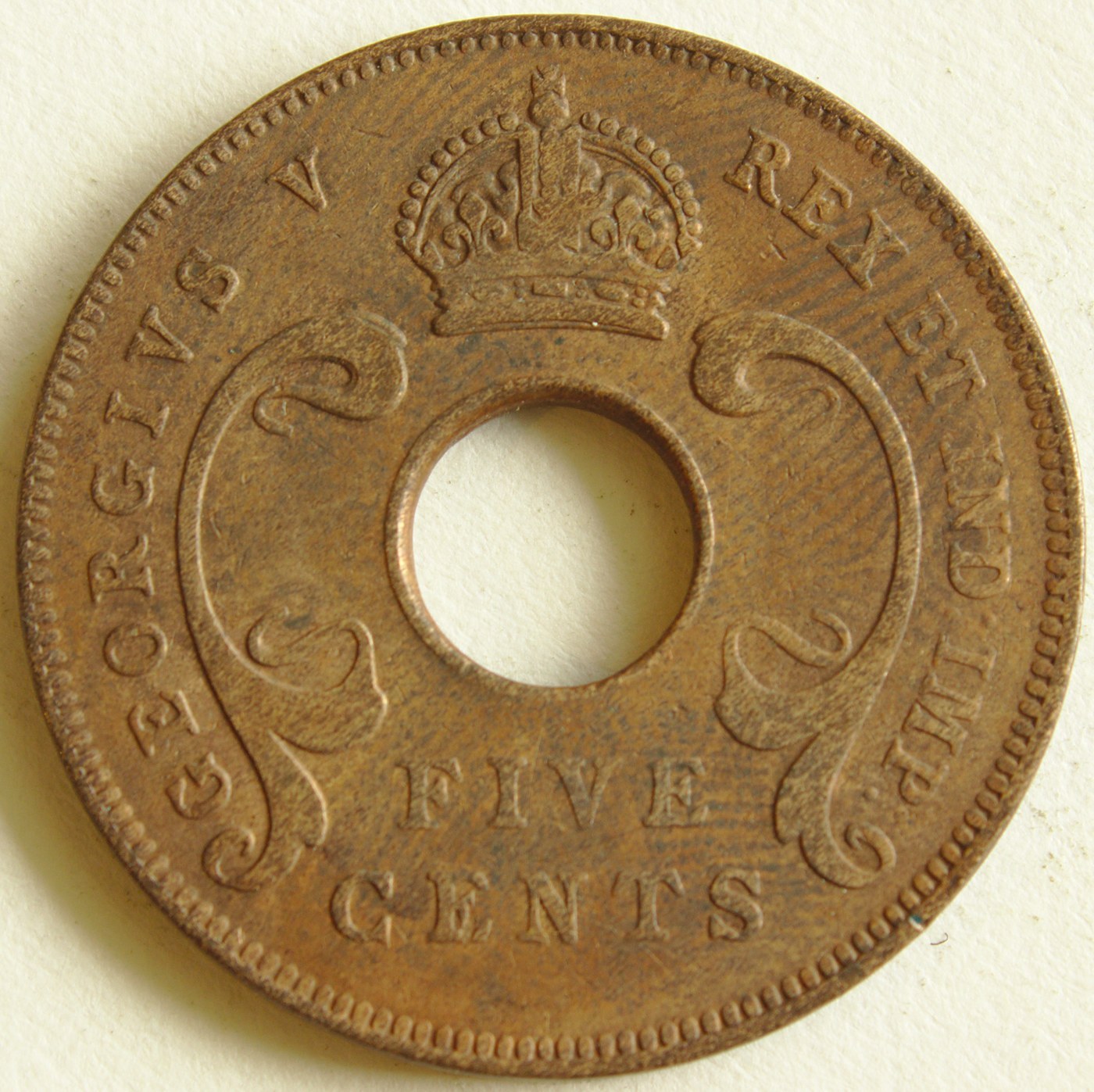
East African 5 Cents
A holed copper-nickel colonial coin with a crown above scrollwork and EAST AFRICA lettering, issued by the East African Currency Board.
- Country
- East Africa
- Denomination
- 5 Cents
- Metal
- Copper-nickel
Got a coin like this?
Identify any coin from a photo, free.
Overview
The East African 5 Cents is a small holed copper-nickel coin struck for Britain's East African territories and issued through the East African Currency Board. The example photographed is dated 1924 and shows the hallmark design of the type: a crown set above decorative scrollwork, with the denomination and the words EAST AFRICA arranged around a central hole.
Because the coin is pierced through the middle, both faces are organized in concentric rings around the opening rather than around a portrait. This distinctive holed format was practical as well as decorative, letting users thread the low-value pieces onto string or wire, and it makes the type instantly recognizable among world coins.
As a minor circulation denomination, the 5 Cents saw heavy everyday use across the region, so surviving pieces are common in worn grades and were part of the ordinary small change of colonial East Africa.
History & Background
The East African Currency Board was established to provide a unified coinage for Britain's neighboring East African possessions, replacing earlier local and Indian-based currencies with a shilling-and-cent system. The holed cent denominations, including the 5 Cents, circulated across the territories that later became Kenya, Uganda, Tanganyika, and Zanzibar.
The 1924 date on this coin places it in the reign of King George V, whose royal crown appears above the scrollwork on the obverse in place of a monarch's portrait. Rather than a bust, the design relies on the crown, the EAST AFRICA legend, and the value to identify the issuing authority, a common approach for colonial minor coinage of the period.
Coins of this series were produced at British mints, and pieces from this era can carry mint identifiers alongside the date. The holed copper-nickel cents remained a familiar part of regional small change through the following decades until later reforms and independence-era coinages replaced them.
How to Identify
The quickest identifier is the central hole. Genuine pieces are pierced cleanly through the middle, with the design laid out in concentric rings around the opening. The obverse shows a crown above ornamental scrollwork, with the denomination and EAST AFRICA lettering framing the hole; the date, here 1924, appears as part of the surrounding legends.
The coin is struck in copper-nickel, giving it a pale silvery-gray to dull gray tone rather than the reddish-brown of a bronze cent. It is a small, thin, lightweight piece appropriate to a minor denomination. Look for even spacing of the legends around the hole and a crisp, well-formed crown as signs of an original strike.
Because the type omits a ruler's portrait, attribution rests on the EAST AFRICA legend, the crown, the 5 Cents value, and the date rather than on a bust. Any mint letter that appears near the date can help pin down where a given piece was produced.
Value & Collectibility
As a common minor coin that circulated heavily, the East African 5 Cents is generally an affordable collectible, with typical worn examples trading for modest sums in the low single-digit to low double-digit dollar range. Condition is the main driver of value: sharp, lightly circulated pieces with clear crowns and undamaged holes command more than heavily worn or bent coins.
Specific dates and mint combinations can be scarcer than others, and cleaner survivors of the less common years bring premiums with collectors of British colonial coinage. Problem pieces, cleaned surfaces, corrosion, or a hole that has been enlarged or damaged reduce desirability.
Because prices shift with grade, date, and demand, treat any single figure as a rough guide. For a precise valuation, compare like-for-like recent sales of the same date and grade rather than relying on a catalog headline number.
Frequently asked questions
Why does this coin have a hole in the middle?
The holed format was used for low-value East African cent coins. The opening let people string the pieces together for easy carrying and storage, and it became a signature feature of the series.
Whose crown is on the coin?
The obverse shows a royal crown rather than a portrait. On a 1924 piece this represents the reign of King George V, with the EAST AFRICA legend identifying the issuing authority instead of a monarch's bust.
What is the coin made of?
It is struck in copper-nickel, which gives it a pale gray, silvery appearance. That distinguishes it from reddish-brown bronze cents of similar size.
Which countries used this coin?
It circulated across Britain's East African territories under the East African Currency Board, in the region that includes present-day Kenya, Uganda, Tanganyika, and Zanzibar.
Is a 1924 5 Cents valuable?
Most circulated examples are common and affordable. Value depends mainly on condition, with sharp, undamaged pieces worth more, and scarcer date-and-mint combinations bringing premiums.
East African 5 Cents guides
In-depth guides for identifying, valuing, and collecting East African 5 Cents.
Other coins you may enjoy
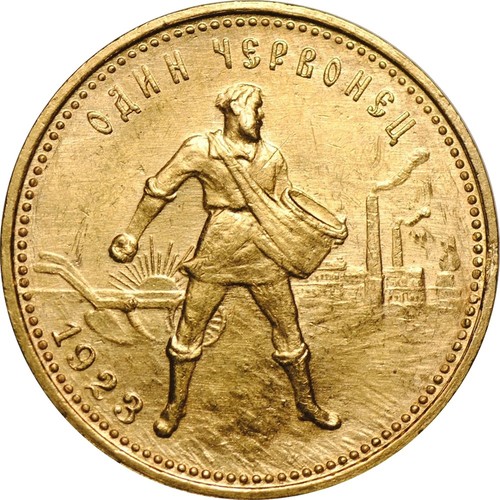
Gold Chervonets
1923
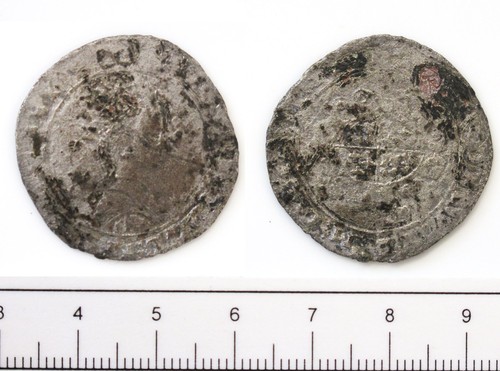
Shilling of Edward VI
1547–1553 (reign of Edward VI)
French Silver Franc
c. 1871–1920 (example dated 1899)
Ghana 20 Pesewas
1967
200 CFA Francs
2003–present
Tunisia 100 Millimes
1983–2005 (this brass type)
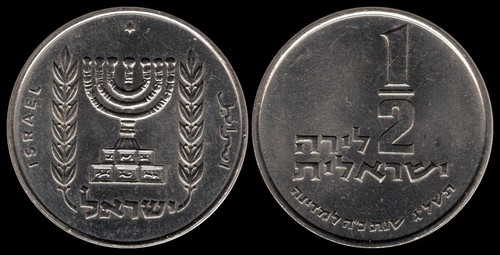
Israel Half Lira (25th Anniversary)
1973 (5733)
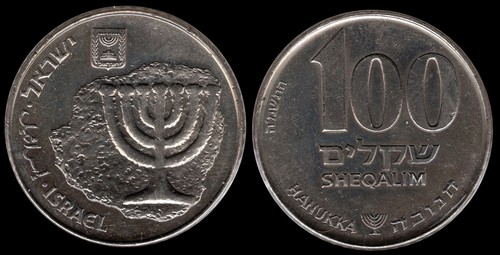
Israel 100 Sheqalim Hanukka Commemorative
1985
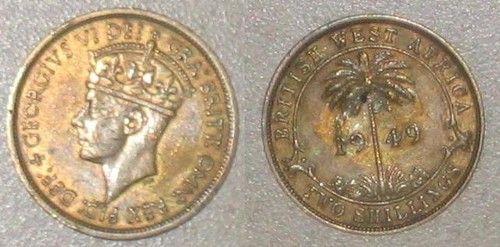
British West Africa 2 Shillings
1936–1952 (George VI type)
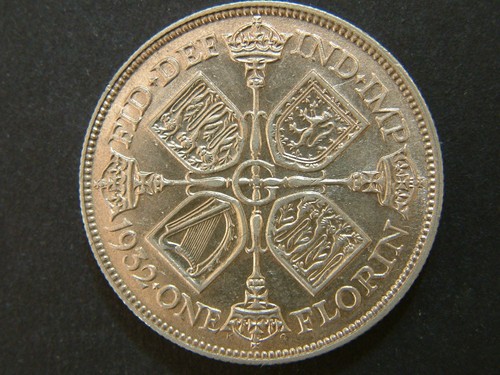
British Florin
Victorian issues c. 1849–1901 (example dated 1890)
Swiss 5 Francs
1888–1916 (this design)
North Yemen 1 Rial
1963 (AH 1382)