
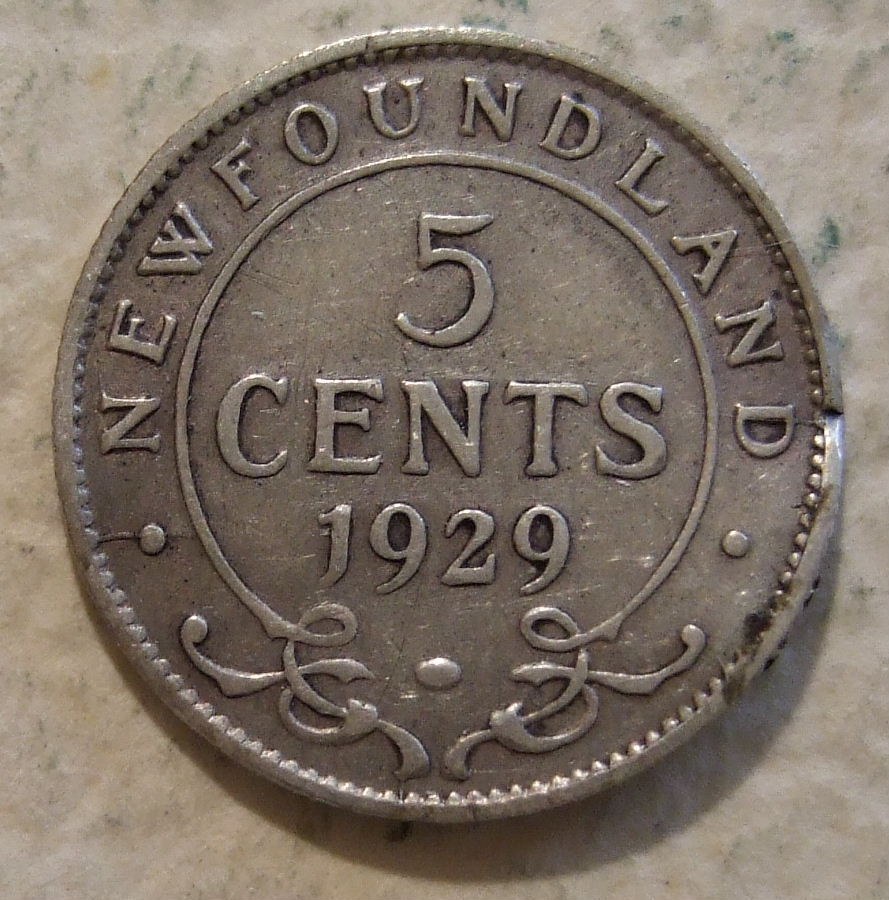
Newfoundland Five Cents
Tiny sterling-silver 5-cent piece of the Dominion of Newfoundland; the 1929 issue bears King George V and a crowned denomination reverse.
- Country
- Newfoundland
- Denomination
- 5 Cents
- Metal
- Silver
Got a coin like this?
Identify any coin from a photo, free.
Overview
The Newfoundland Five Cents is a very small silver coin issued by the Dominion of Newfoundland, which struck its own currency separately from Canada until it joined Confederation in 1949. Despite the name "five cents," it was made of silver, not nickel, and is one of the smallest coins many collectors will ever handle.
The example shown here is dated 1929, placing it in the reign of King George V. One face carries the King's crowned or bare portrait with a Latin royal legend; the other displays NEWFOUNDLAND, the denomination 5 CENTS, the date, and ornamental leafwork around a central crown. This crowned denomination design is the hallmark of the series.
Struck in sterling silver and weighing barely over a gram, the coin is roughly 15.5 mm across, smaller than a modern U.S. dime. Its diminutive size earned the type the nickname "fish scale."
History & Background
Newfoundland was Britain's oldest overseas colony and, from 1855, a self-governing dominion. It began issuing its own decimal coinage in 1865, independent of the Province of Canada, and continued to do so through 1947, shortly before joining Canada in 1949. The five-cent silver piece was part of this local coinage from the very first year.
The denomination ran through four monarchs: Queen Victoria (from 1865), King Edward VII, King George V, and King George VI. The 1929 coin belongs to the George V period, whose five-cent issues appeared in scattered years such as 1912, 1917, 1919, and 1929 rather than annually.
Newfoundland's coins were produced abroad, principally at the Royal Mint in London, with some issues struck at the Heaton Mint in Birmingham and, in later years, at the Royal Canadian Mint in Ottawa. Because the coin was a small silver piece rather than a base-metal one, it was retained and used heavily, and worn survivors are common today.
How to Identify
Identify the type by its reverse: the word NEWFOUNDLAND arched around a central crown, with the value 5 CENTS, the date (1929 on this coin), and ornamental sprigs or leafwork. The opposite side shows the reigning monarch's head with a Latin legend; for 1929 this is George V, styled with abbreviations such as GEORGIVS V and REX.
Confirm the physical standards. A genuine piece is struck in sterling silver (.925 fine), weighs only about 1.18 grams, measures roughly 15.5 mm in diameter, and has a reeded (grooved) edge. Its extremely small size is itself a strong identifier.
Most London strikings carry no mint mark. Where a facility other than the Royal Mint was used elsewhere in the series, a small letter may appear (an H for the Heaton Mint, or a C for Ottawa on certain issues). Read the date and legend together to fix the exact year and monarch before attributing the coin.
Value & Collectibility
Value depends on the specific date and, above all, on condition. The 1929 five cents is one of the more available George V dates, and well-worn examples typically trade for only a few dollars, a modest premium over the tiny amount of silver they contain.
Better-preserved coins with clear detail command more, and problem-free uncirculated examples can be worth substantially more than circulated ones. Other dates in the long 1865-1947 series vary enormously, from common to genuinely rare, so date and grade matter far more than the shared design.
Because this is a small silver coin whose price is driven by grade, treat any figure as a general guide. For a specific coin, consult a current price reference or a reputable dealer, and have scarce dates or high-grade pieces evaluated by a third-party grading service.
Frequently asked questions
Is the Newfoundland five cents silver or nickel?
It is silver. Despite the "five cents" name, the coin was struck in sterling silver (.925 fine), not nickel, throughout the series.
Who is on the 1929 Newfoundland five cents?
King George V. His portrait and Latin royal legend appear on the obverse, while the reverse names NEWFOUNDLAND with a crown, the value, and the date.
Why is the coin so small?
It was a small-denomination silver piece, only about 15.5 mm across and just over a gram in weight. Its tiny size earned it the nickname "fish scale."
Did Newfoundland use Canadian money?
Not at the time. Newfoundland was a separate British dominion and issued its own coinage until it joined Canada in 1949, after which Canadian currency was used.
Is a 1929 Newfoundland five cents valuable?
It is a relatively common date. Worn examples are worth only a few dollars, but well-preserved and uncirculated coins bring more. Have a specific coin appraised for an accurate value.
Newfoundland Five Cents guides
In-depth guides for identifying, valuing, and collecting Newfoundland Five Cents.
Other coins you may enjoy
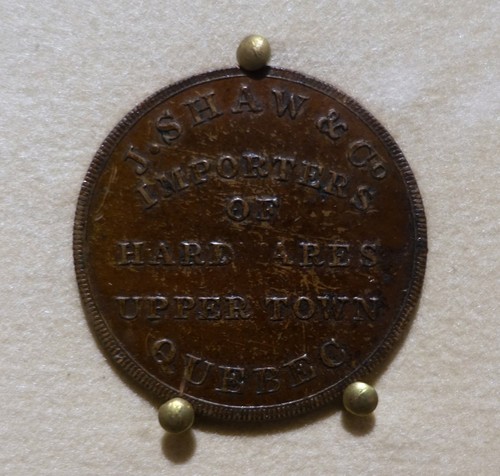
J. Shaw & Co. Hardware Token
circa 1850s
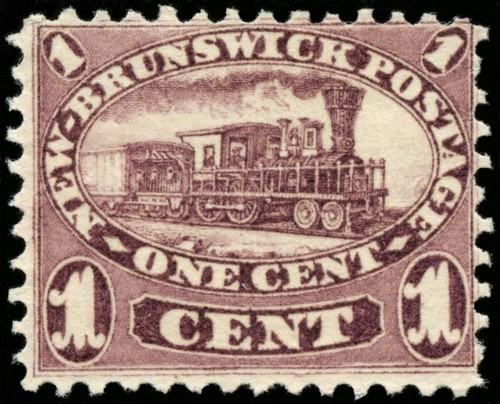
New Brunswick One Cent
Dated 1860 (locomotive token type)
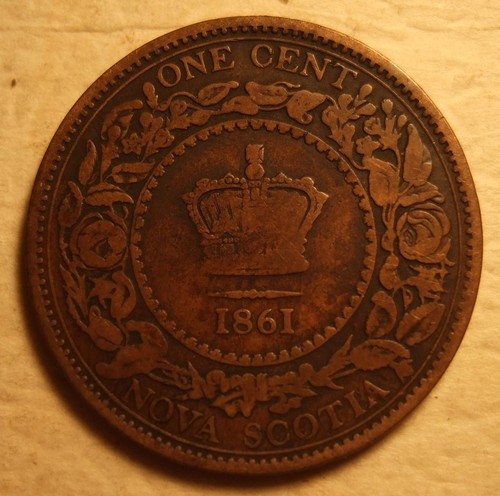
Nova Scotia One Cent
1861-1864
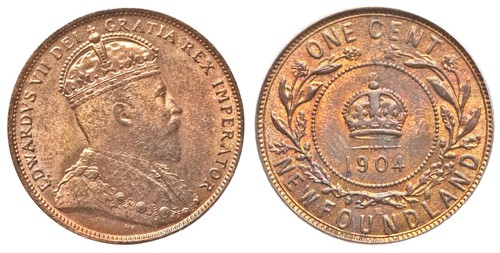
Newfoundland One Cent
1865-1936
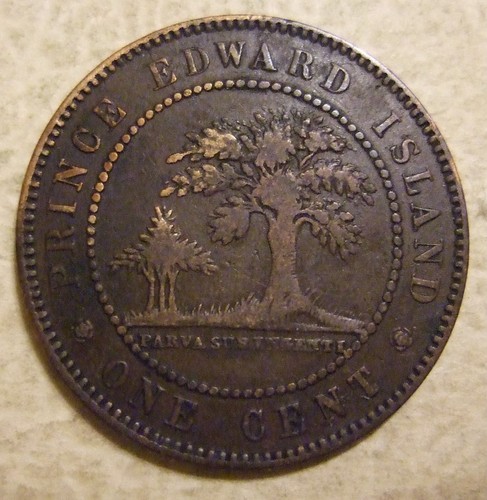
Prince Edward Island One Cent
1871
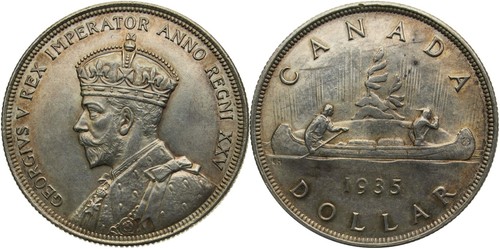
Canadian Silver Dollar
1935
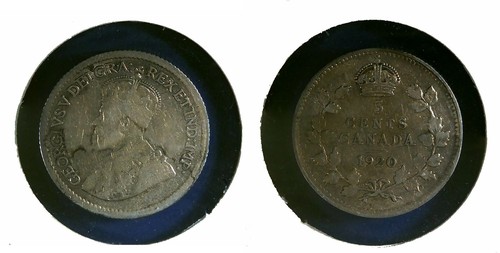
Canadian Five Cents (Nickel)
1937–present (beaver reverse; example shown: 1987)
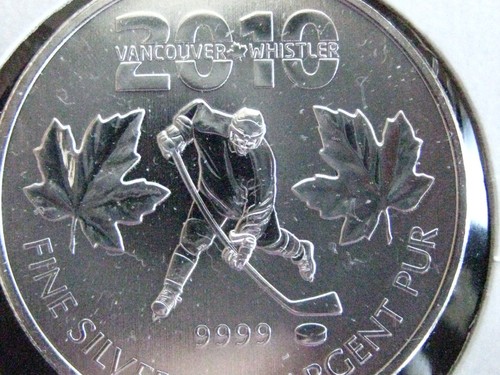
Olympic Hockey Commemorative Dollar
2010
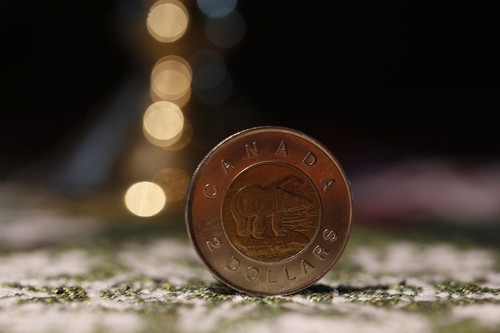
Canadian Two Dollar (Toonie)
1996-present
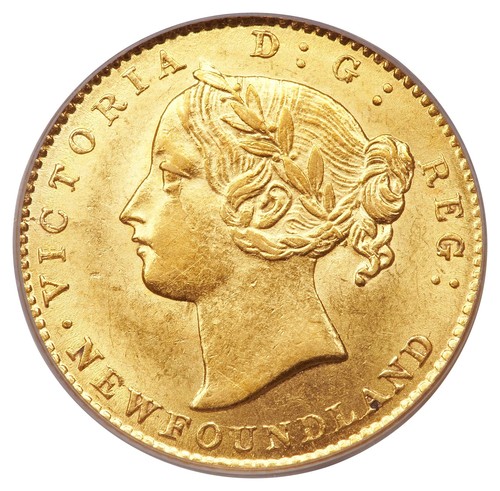
Newfoundland Two Dollars
1865-1888
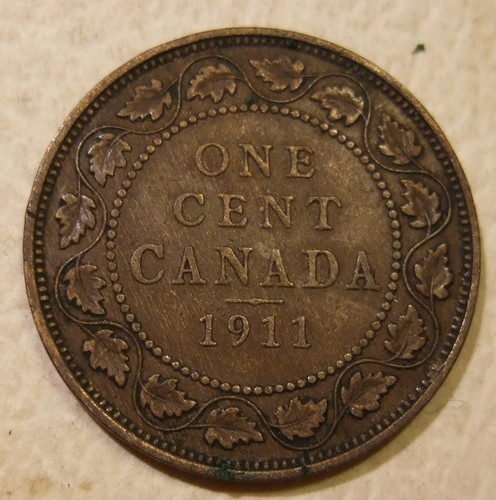
Canadian One Cent
1858-1920 (large cent series); example dated 1911
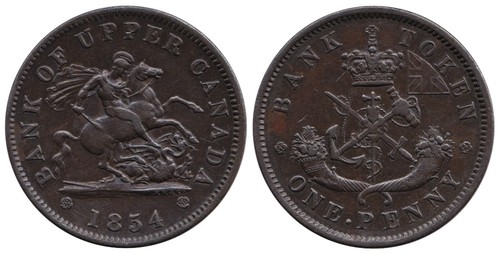
Bank of Upper Canada One Penny Token
1850-1857