
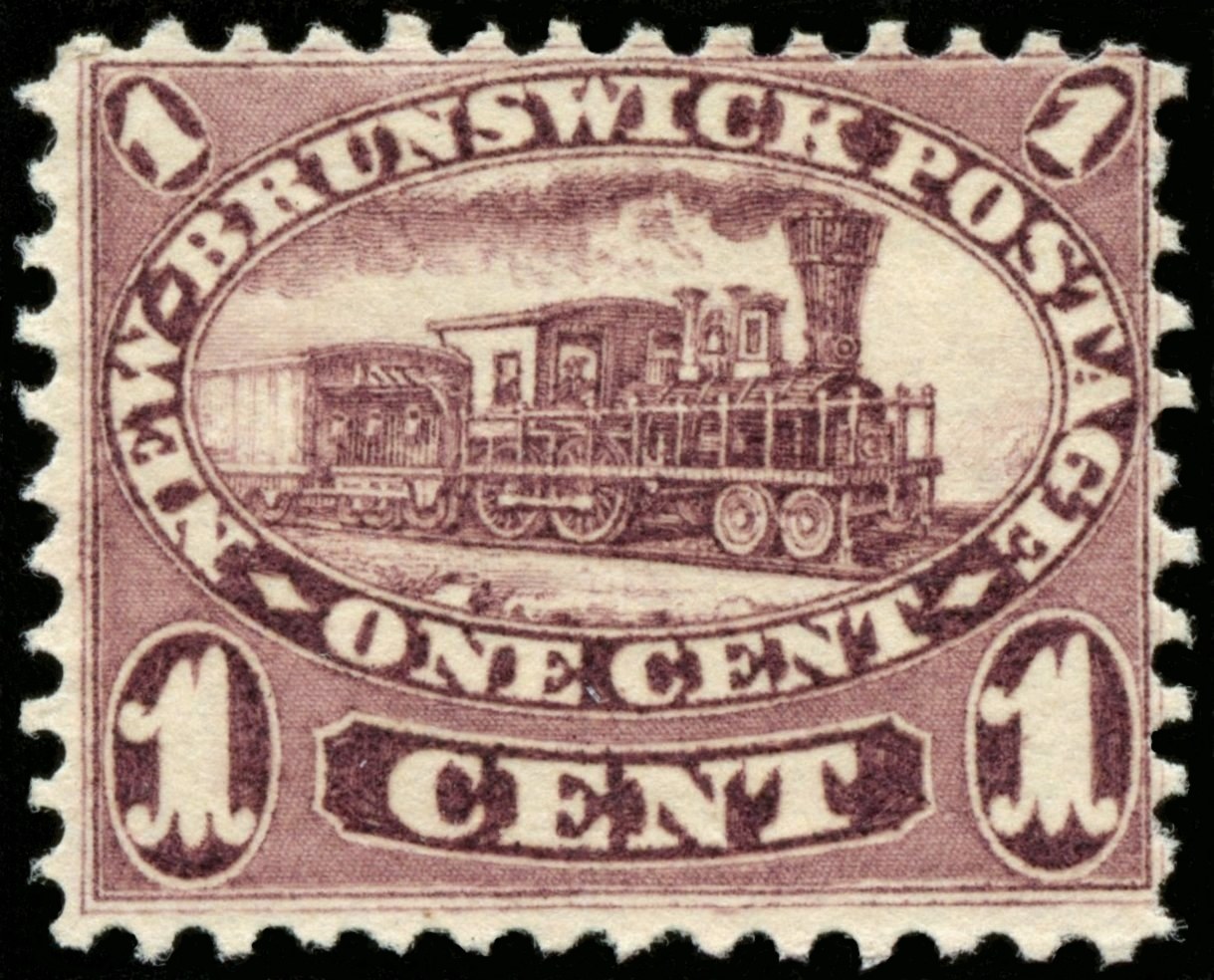
New Brunswick One Cent
A bronze one-cent piece dated 1860 showing a steam locomotive with NB and ONE CENT — a New Brunswick locomotive-type token distinct from the official 1861/1864 cent.
- Country
- Canada
- Denomination
- 1 Cent
- Metal
- Bronze
Got a coin like this?
Identify any coin from a photo, free.
Overview
This is a small bronze one-cent piece dated 1860, tied to the maritime provinces of eastern Canada. The example pictured shows a steam locomotive as its central design, with lettering referencing New Brunswick and Prince Edward Island, while the other side carries the initials NB and the value ONE CENT within an ornamental frame.
The locomotive imagery is the defining feature of this type and immediately sets it apart from Canada's better-known Victorian cents. Because the design departs from the standard monarch's-portrait format used on official provincial coinage, pieces of this kind are generally treated by collectors as tokens or novelty issues rather than as regular circulating currency. Anyone cataloguing one should record both the 1860 date and the locomotive motif exactly as they appear.
History & Background
The 1860s were a period of intense railway building in the Maritimes. The European and North American Railway reached across New Brunswick during this era, and the steam locomotive was a powerful symbol of progress that appeared on tokens, medals, and advertising pieces of the day. A one-cent piece dated 1860 carrying a locomotive fits squarely within that spirit of celebrating the railway age.
It is important to separate this locomotive type from the official Province of New Brunswick cent. The government one-cent coins struck for New Brunswick are dated 1861 and 1864 and bear a portrait of Queen Victoria on the obverse with ONE CENT and NEW BRUNSWICK on the reverse. They do not depict a locomotive and are not dated 1860. A bronze cent dated 1860 with a train engine therefore belongs to the broad family of tokens, commemoratives, and later novelty or replica pieces rather than to the regular coinage series.
Because locomotive 'one cent' pieces of this style have been produced and reproduced over a long span, exact origins for any single specimen can be hard to pin down. Collectors typically document the piece by its physical traits and treat published attributions with caution until a specimen can be compared against reference examples.
How to Identify
Look first at the locomotive side. A steam engine as the central device, combined with a 1860 date and lettering naming New Brunswick, is the signature of this type. The opposite side shows the initials NB together with the denomination ONE CENT, set off by ornamental scrollwork or a decorative border rather than a monarch's bust.
The piece is a small bronze coin-format token, close in size to a large cent of the period. Bronze gives it a warm brown to reddish-brown surface; a worn example tends toward chocolate brown, while an original piece may retain some red color. Weigh and measure any specimen and note the exact spelling and placement of the legends, since these details are the most useful points of comparison.
The most important identification step is to distinguish this locomotive type from the official New Brunswick cent. If a coin shows Queen Victoria's portrait and is dated 1861 or 1864, it is the regular government cent, not this locomotive piece. A train engine, the 1860 date, and the NB / ONE CENT layout together confirm you are looking at the locomotive token type described here.
Value & Collectibility
Value for a piece like this depends heavily on what it actually is — a period token, a commemorative medalet, or a later novelty or replica strike — and on its condition. Because these categories carry very different premiums, a single quoted figure can be misleading, and it is best to treat any price as a rough range pending expert attribution.
Genuine period tokens tied to the railway age can attract collector interest well above face value, especially with clear detail and honest surfaces. Later reproductions and souvenir strikings, by contrast, generally trade for modest sums. Eye appeal, sharpness of the locomotive design, and originality of the bronze surface are the factors that move the price.
For an accurate valuation, have the piece examined in hand by a dealer or specialist in Canadian tokens who can weigh it, measure it, and compare it against reference material. This is the surest way to separate a scarce original from a common replica before assigning a value.
Frequently asked questions
Is this the same as the official New Brunswick one-cent coin?
No. The official Province of New Brunswick cents are dated 1861 and 1864 and show Queen Victoria's portrait. A bronze cent dated 1860 with a steam locomotive is a separate token-style piece, not the regular government coin.
Why is there a train on a one-cent piece?
The 1860s were the height of Maritime railway building, and the steam locomotive was a popular symbol of progress. It appeared on many tokens and medals of the era rather than on standard portrait coinage.
What metal is it made of?
The pictured piece is bronze, an alloy of copper with tin and sometimes zinc. It shows the warm brown to reddish-brown surface typical of bronze, darkening toward chocolate brown with wear.
How much is a New Brunswick one-cent locomotive piece worth?
It depends on whether the specimen is a period token or a later replica, and on its condition. Values range widely, so an in-hand examination by a Canadian token specialist is the best way to get an accurate figure.
New Brunswick One Cent guides
In-depth guides for identifying, valuing, and collecting New Brunswick One Cent.
Other coins you may enjoy
J. Shaw & Co. Hardware Token
circa 1850s
Nova Scotia One Cent
1861-1864
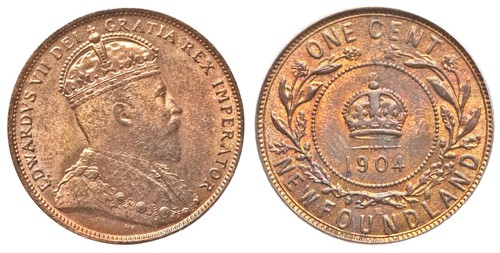
Newfoundland One Cent
1865-1936
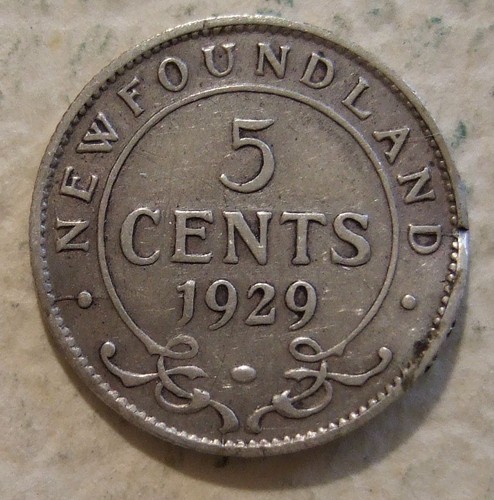
Newfoundland Five Cents
1865-1947
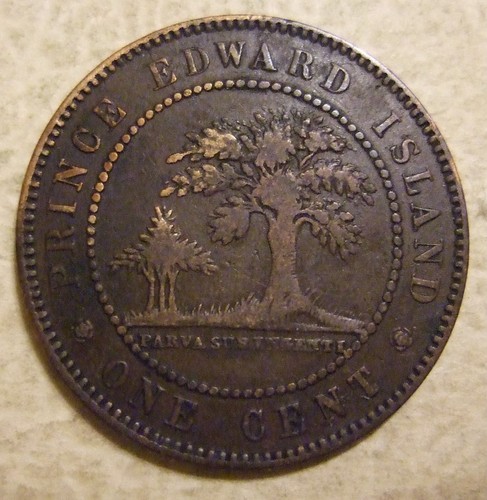
Prince Edward Island One Cent
1871
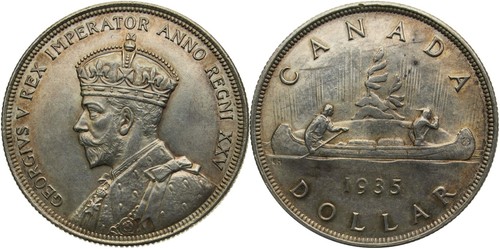
Canadian Silver Dollar
1935
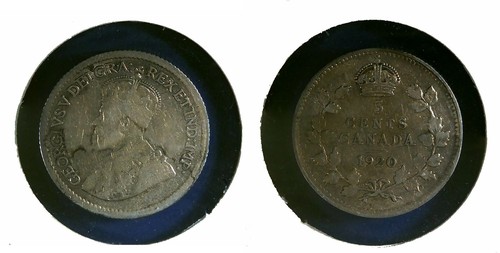
Canadian Five Cents (Nickel)
1937–present (beaver reverse; example shown: 1987)
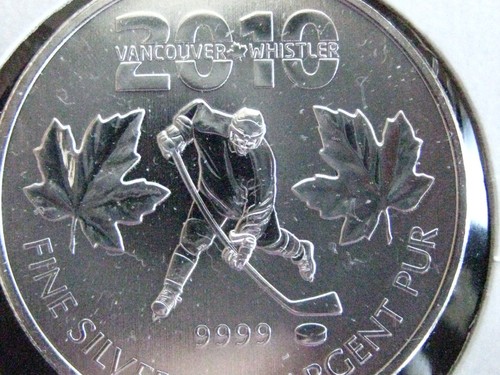
Olympic Hockey Commemorative Dollar
2010
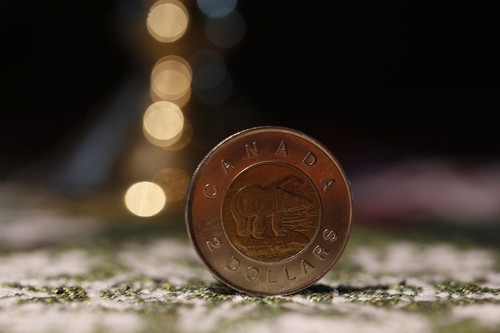
Canadian Two Dollar (Toonie)
1996-present
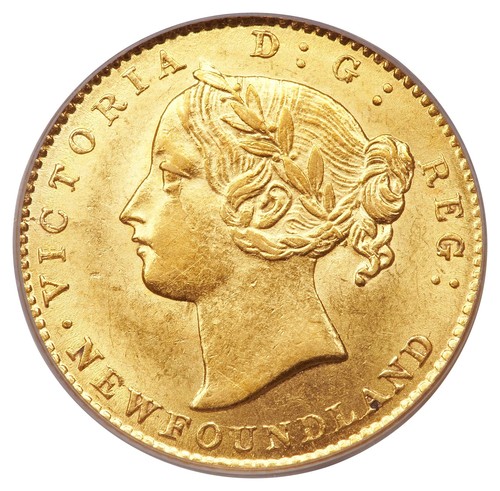
Newfoundland Two Dollars
1865-1888
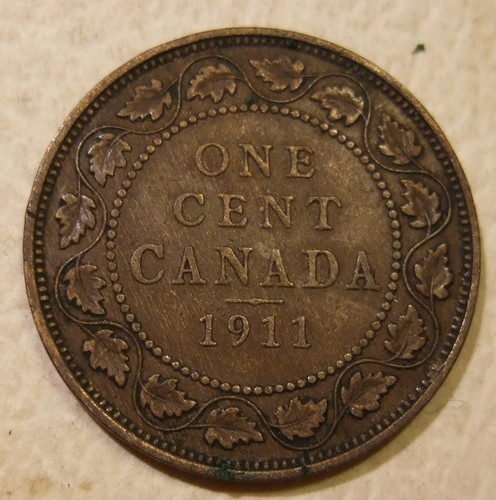
Canadian One Cent
1858-1920 (large cent series); example dated 1911
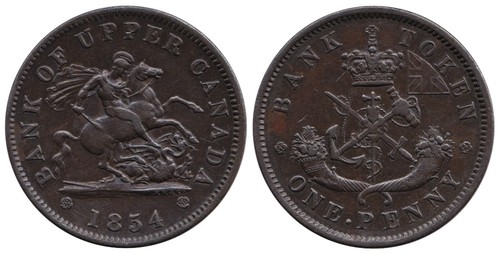
Bank of Upper Canada One Penny Token
1850-1857