
Coin Encyclopedia
Search and identify coins from around the world — with country, denomination, metal, mint, history, and how to tell them apart.
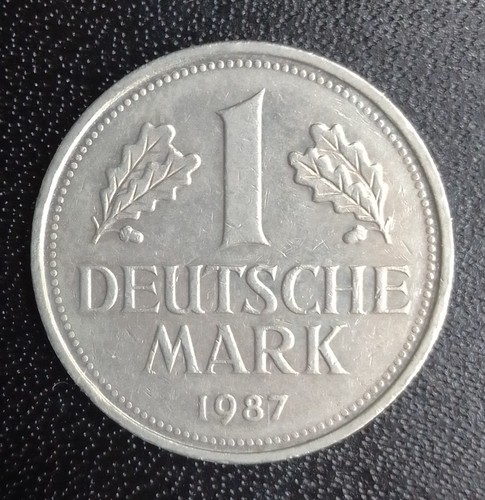
German 1 Deutsche Mark
The workhorse 1-Mark coin of West Germany and reunified Germany, showing a large numeral 1 framed by oak leaves and the words DEUTSCHE MARK.
Circulation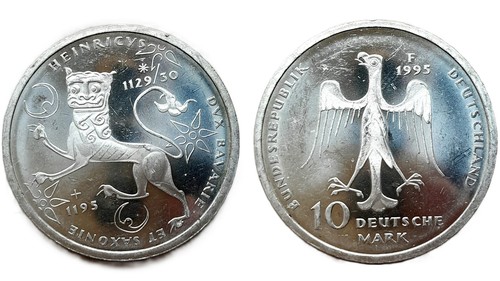
German 10 Deutsche Mark Commemorative
A West/unified German silver 10 Deutsche Mark commemorative; this 1995 issue honors Heinrich der Loewe (Henry the Lion) with the Federal Eagle reverse.
Commemorative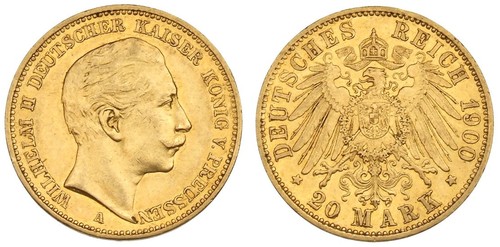
German 20 Mark Gold
German Empire gold 20 mark of Prussia, with Kaiser Wilhelm I's bust and the imperial eagle; a small .900 gold coin from the pre-WWI Goldmark era.
Bullion/gold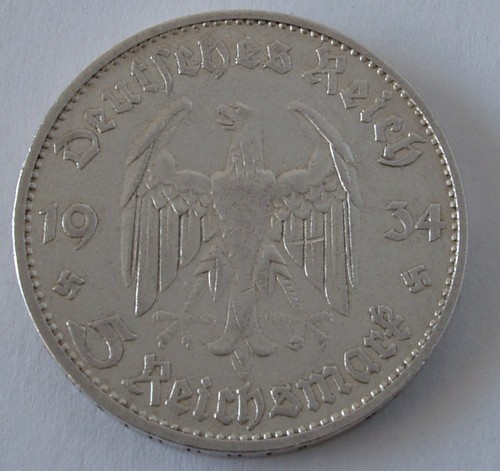
German 5 Reichsmark Garrison Church Commemorative
A 1934 German silver 5 Reichsmark commemorative with a spread-winged Reichsadler and 'Deutsches Reich' on the obverse and the Potsdam Garrison Church reverse.
Commemorative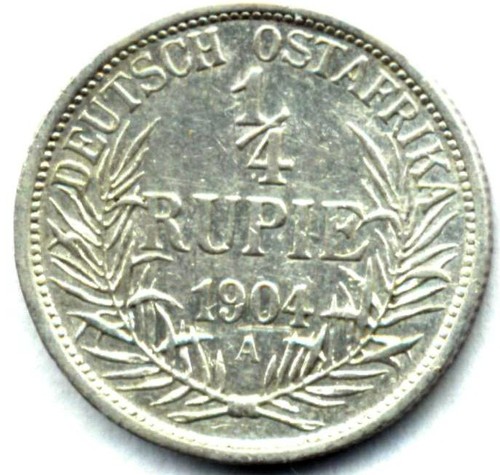
German East Africa 1/4 Rupie
A small colonial silver coin of German East Africa, inscribed DEUTSCH OSTAFRIKA and 1/4 RUPIE within a wreath, paired with the imperial eagle.
World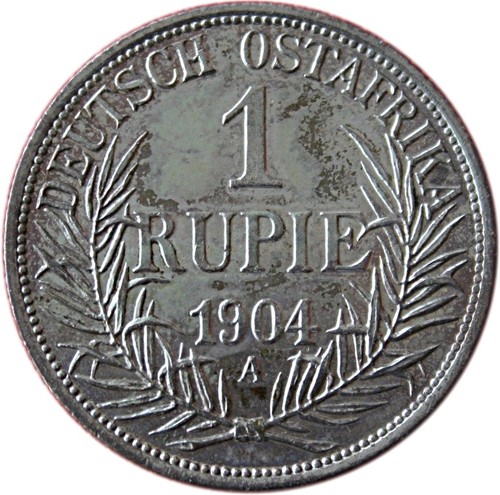
German East Africa 1 Rupie
A silver colonial rupee of German East Africa bearing the imperial eagle shield and the legend DEUTSCH OSTAFRIKA, struck for the German protectorate.
World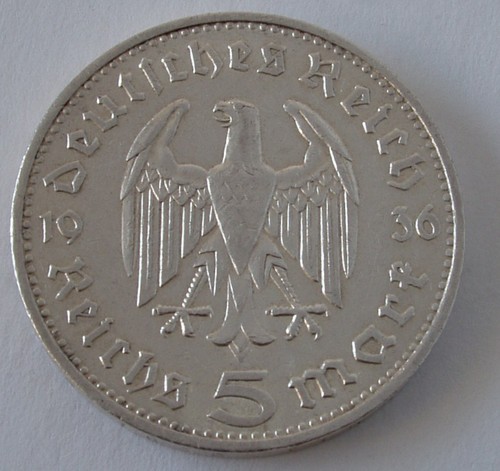
German 5 Reichsmark (Hindenburg)
German silver 5 Reichsmark of the Third Reich, pairing a portrait of Paul von Hindenburg with an eagle-and-swastika reverse; dated 1936.
Circulation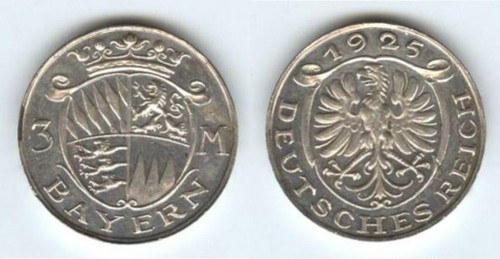
Bavaria 3 Mark
A silver 3 Mark tied to Bavaria, pairing the crowned Bavarian shield with its rampant lion against a German imperial eagle, dated 1925.
Circulation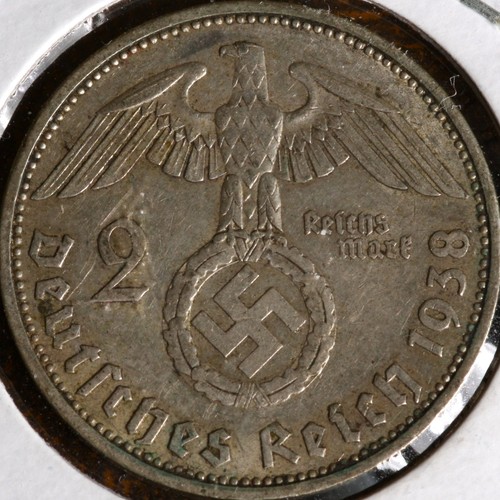
German 2 Reichsmark (Hindenburg)
Third Reich silver 2 Reichsmark showing an eagle over a swastika shield and, on the other side, Paul von Hindenburg with the value and date.
Circulation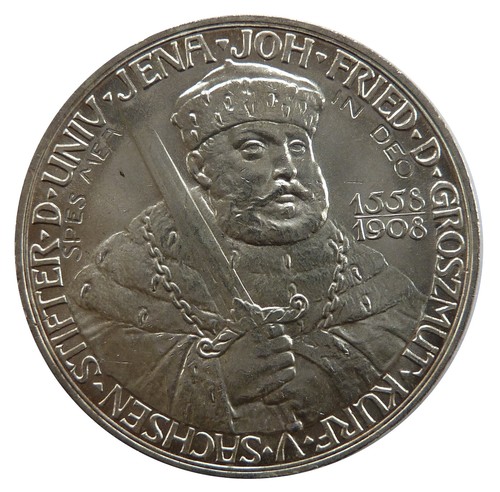
Sachsen-Weimar-Eisenach 5 Mark Commemorative
An 1908 German Empire 5 Mark silver commemorative of Saxe-Weimar-Eisenach marking the University of Jena's jubilee, with the founder's capped portrait.
Commemorative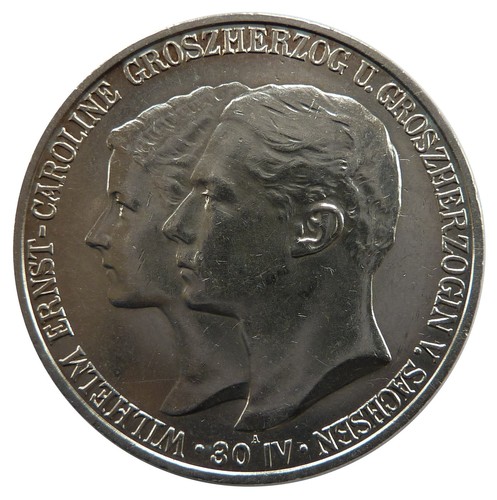
Sachsen-Weimar-Eisenach 5 Mark Wedding Commemorative
A silver German Empire 5 Mark of Sachsen-Weimar-Eisenach struck to mark a grand-ducal wedding, showing conjoined bride-and-groom profile busts.
Commemorative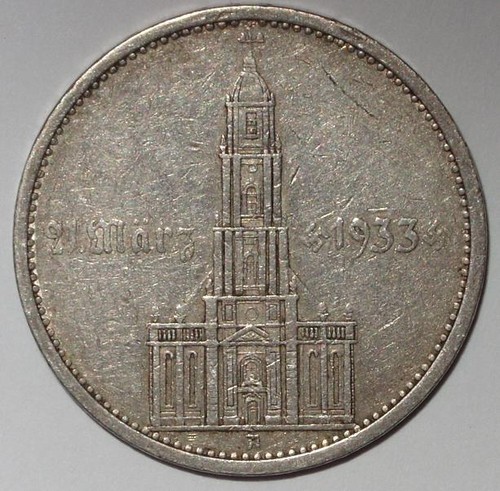
German 2 Reichsmark Garrison Church Commemorative
A 1933 German silver 2 Reichsmark commemorative showing the Potsdam Garrison Church tower, issued to mark the "Day of Potsdam."
Commemorative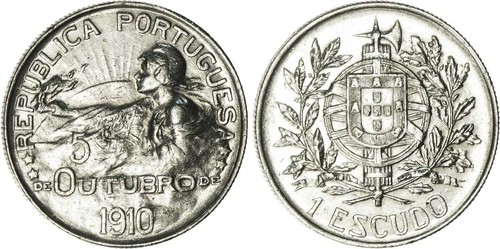
1 Escudo
Portugal's first silver escudo, struck in 1910 to mark the founding of the Republic, with an allegorical female head and the crowned national shield.
Modern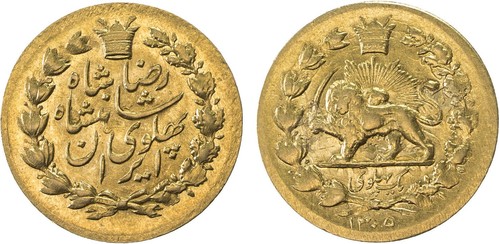
1 Pahlavi Gold Coin
A gold coin of Pahlavi-era Iran, with Persian text and a crowned royal emblem on one side and the Lion and Sun within laurel wreaths on the other.
Persia / Iran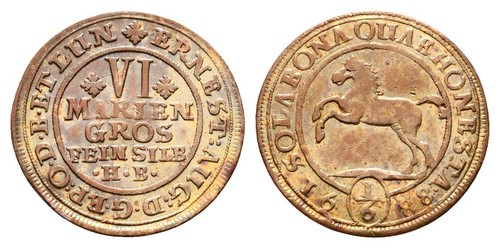
Hanover 1/6 Thaler
A German States silver 1/6 Thaler of Hanover (Brunswick-Luneburg) dated 1688, showing the leaping Saxon Steed and a fractional-denomination reverse.
German States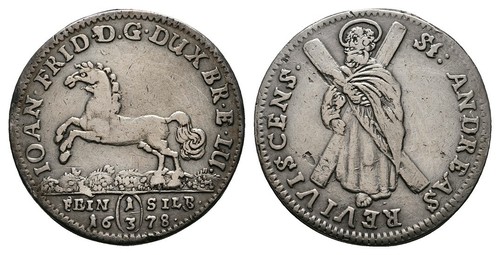
Brunswick 1/3 Thaler
A 1678 silver 1/3 thaler of the Duchy of Brunswick, showing the leaping Saxon steed on the obverse and a standing saintly figure with a cross on the reverse.
German States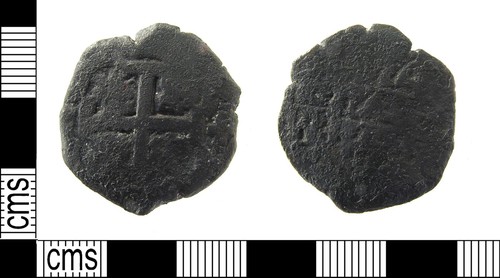
Spanish Colonial 1 Real (Bourbon)
A small silver coin of Spain's American colonies from the early Bourbon era, showing a cross with ornaments on one side and the crowned royal arms on the other.
Colonial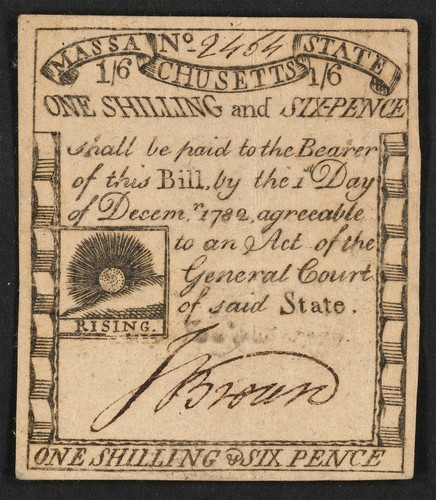
Massachusetts Shilling (1 Shilling 6 Pence)
A colonial-era Massachusetts silver piece valued at one shilling and sixpence, joining a pine-tree obverse with a rising-sun reverse and the date 1779.
Colonial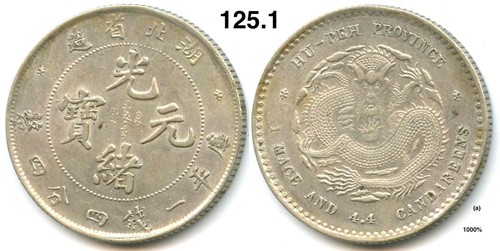
Guangxu Yuanbao 1 Mace 4.4 Candareens
A small silver dragon coin of Qing China from the Guangxu era, its face reading 1 Mace 4.4 Candareens and its back showing a coiled Chinese dragon.
Circulation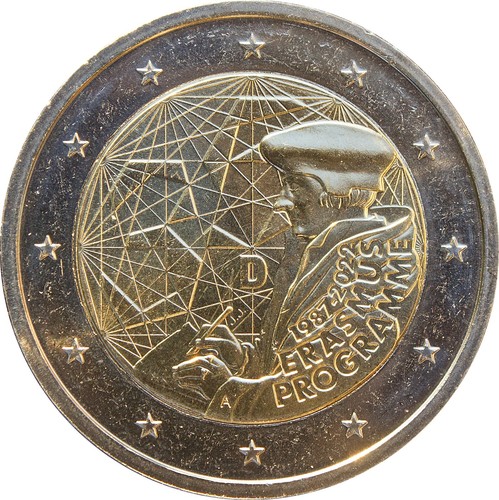
Germany 2 Euro Erasmus Programme Commemorative
A German 2 Euro commemorative dated 2022 marking the Erasmus Programme, its obverse showing a student figure with a globe and the reverse the ring of European stars.
Commemorative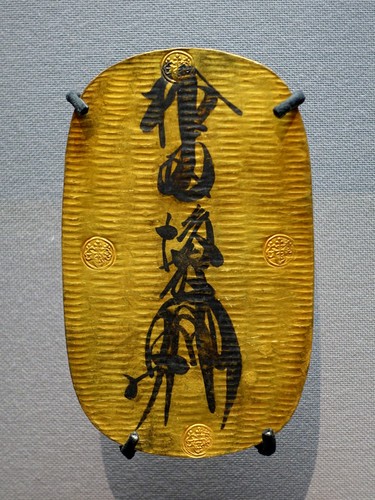
Keicho Koban
A thin oval Japanese gold coin worth one ryo, its surface covered in fine parallel striations with stamped cartouches and Goto mint marks.
Historic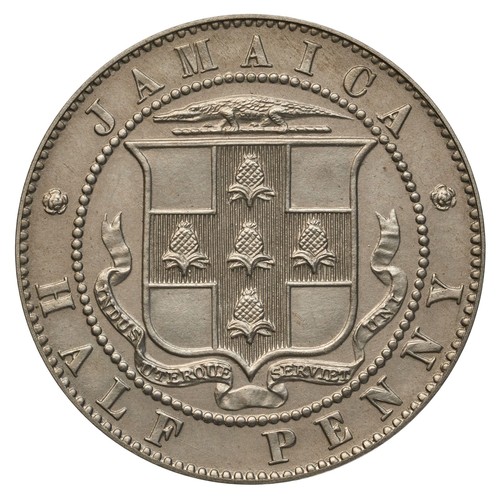
Bermuda Half Penny
A colonial-era copper-nickel half penny tied to Bermuda, showing a lion-crested coat of arms with pineapples and a Latin motto, dated 1909.
Colonial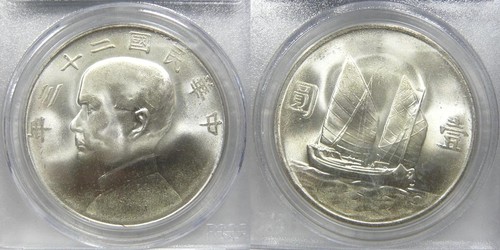
Junk Dollar
China's Republic-era silver dollar with Sun Yat-sen facing left and a Chinese junk under sail on the reverse; the pictured coin is Year 23 (1934).
Circulation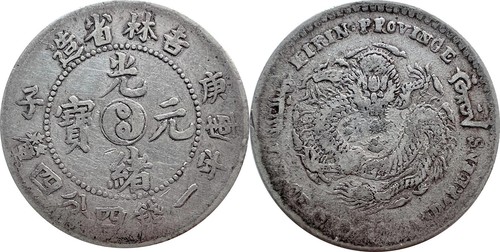
Guangxu Yuanbao 20 Cents
A machine-struck Qing silver 20 cents of the Guangxu era, with a coiled dragon on one face and a yin-yang (taiji) symbol on the other.
Circulation