
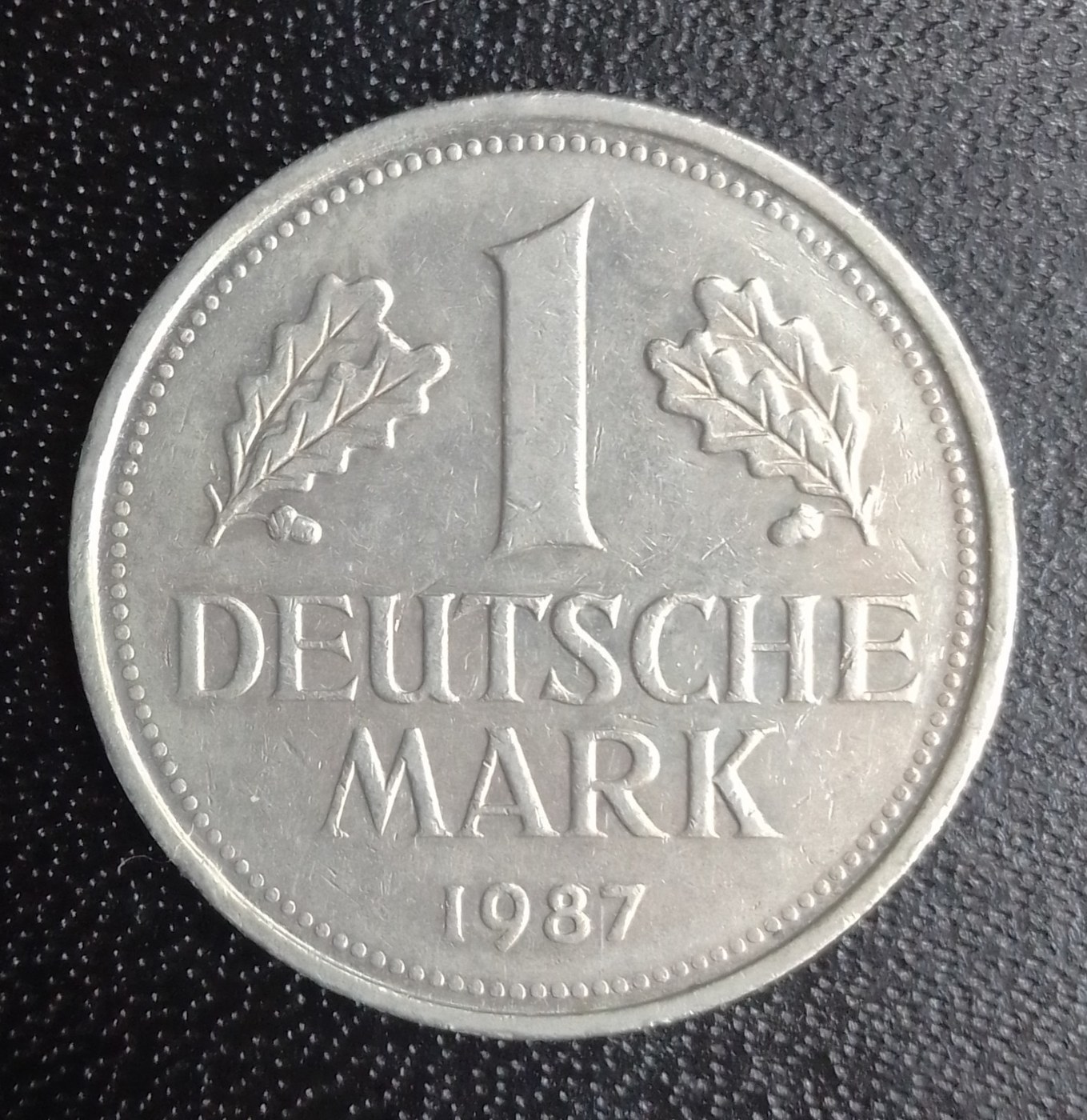
German 1 Deutsche Mark
The workhorse 1-Mark coin of West Germany and reunified Germany, showing a large numeral 1 framed by oak leaves and the words DEUTSCHE MARK.
- Country
- Germany
- Denomination
- 1 Mark
- Metal
- Cupro-nickel
Got a coin like this?
Identify any coin from a photo, free.
Overview
The German 1 Deutsche Mark was the one-Mark circulation coin of the Federal Republic of Germany (West Germany) and, after 1990, of reunified Germany. Struck in cupro-nickel, it was a everyday coin used across the country until the Deutsche Mark was replaced by the euro in 2002.
The face shown here carries a large numeral 1 flanked by oak leaves on either side, with the legend DEUTSCHE MARK — the value side of the coin. The opposite side (not visible in this image) bears the Federal Republic's eagle and the country name, along with the year and a mint mark. The 1987-dated example seen here is a standard late-series piece.
History & Background
The Deutsche Mark was introduced in the western occupation zones in 1948 as part of the currency reform that stabilized the post-war economy, and it became the currency of the Federal Republic of Germany. The 1-Mark coin in this familiar design entered circulation in the early 1950s and continued, essentially unchanged in type, for the rest of the D-Mark era.
Coins were struck at several state mints, each identified by a letter mint mark — for example D (Munich), F (Stuttgart), G (Karlsruhe), J (Hamburg), and A (Berlin, used after reunification). Because the type ran for roughly half a century across multiple mints, enormous numbers were produced in most years.
With German reunification in 1990 the same coinage continued to serve the enlarged country. The Deutsche Mark remained legal tender until the euro was introduced for cash on 1 January 2002, after which the 1-Mark coin was withdrawn from circulation, though the Bundesbank has continued to exchange D-Mark for euro.
How to Identify
Obverse (value side, shown): a large numeral 1 with a spray of oak leaves to each side and the inscription DEUTSCHE MARK. Oak is a long-standing German national symbol and appears on several D-Mark denominations.
Reverse (not shown): the spread-winged Federal eagle (Bundesadler), the legend BUNDESREPUBLIK DEUTSCHLAND, the year, and a single mint-mark letter (A, D, F, G, or J). Checking the reverse is the surest way to confirm date and mint.
Physical clues: the coin is cupro-nickel (silvery, non-magnetic), about 23.5 mm in diameter and roughly 5.5 g, with a reeded (milled) edge. It is noticeably smaller and lighter than the larger 5-Mark and 2-Mark pieces, which helps distinguish it at a glance.
Value & Collectibility
The vast majority of circulated 1-Deutsche-Mark coins are extremely common and are worth little beyond a small collector or novelty premium; the Bundesbank will still exchange them for euros at the fixed conversion rate (about 1.96 DM to 1 euro). As a base-metal coin it carries no precious-metal value.
Value rises mainly for top-grade uncirculated or proof examples, scarcer date-and-mint combinations, and early years. Condition, the specific year, and the mint-mark letter together drive any premium.
Note that Germany also issued a 1990 silver 1-Deutsche-Mark commemorative honoring the currency, which is a distinct collector item worth far more than an ordinary circulation piece. For any coin, compare recent sales of the same date and mint in similar grade rather than relying on a single quoted figure.
Frequently asked questions
What is the German 1 Deutsche Mark coin?
It is the one-Mark circulation coin of West Germany and later reunified Germany, struck in cupro-nickel and used until the euro replaced the Deutsche Mark in 2002.
Why does it show oak leaves and a large 1?
That is the value side of the coin: a large numeral 1 framed by oak leaves — a traditional German national emblem — with the words DEUTSCHE MARK. The eagle side carries the date and mint mark.
What do the letters like D, F, G or J mean?
They are mint marks identifying where the coin was struck: D is Munich, F Stuttgart, G Karlsruhe, J Hamburg, and A Berlin (used after reunification).
Is a 1987 1-Mark coin valuable?
Ordinary circulated examples are very common and worth little more than their exchange value. Premiums apply mainly to high-grade uncirculated or proof pieces and scarcer date-and-mint combinations.
Can I still spend or exchange it?
It is no longer legal tender, but Germany's Bundesbank continues to exchange Deutsche Mark coins and notes for euros at the fixed conversion rate with no deadline.
German 1 Deutsche Mark guides
In-depth guides for identifying, valuing, and collecting German 1 Deutsche Mark.
Other coins you may enjoy
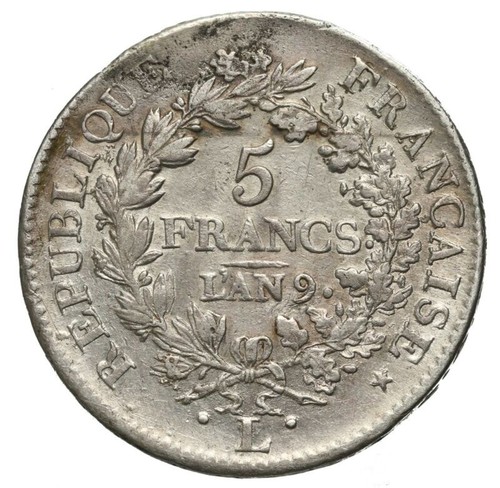
5 Francs (First Republic)
L'an 9 (1800–1801)
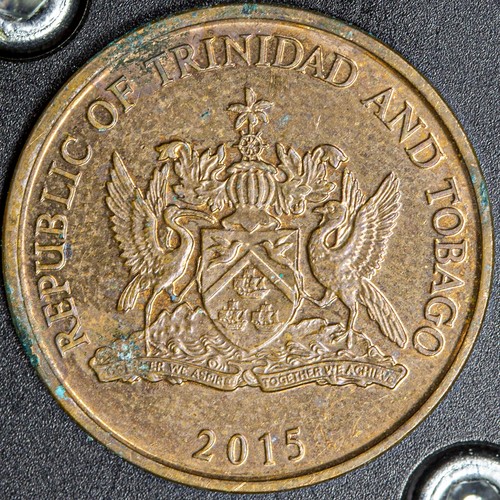
Trinidad and Tobago Dollar
2015
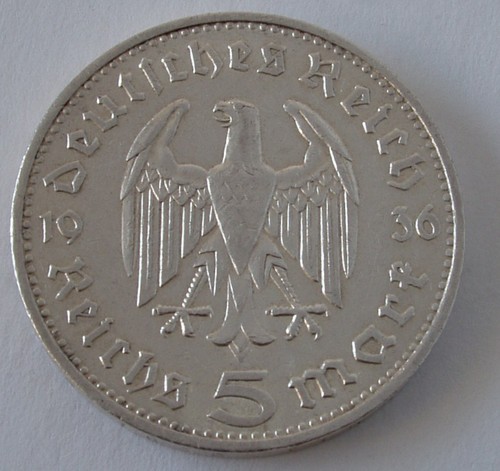
German 5 Reichsmark (Hindenburg)
1935–1936 (Hindenburg type with swastika)
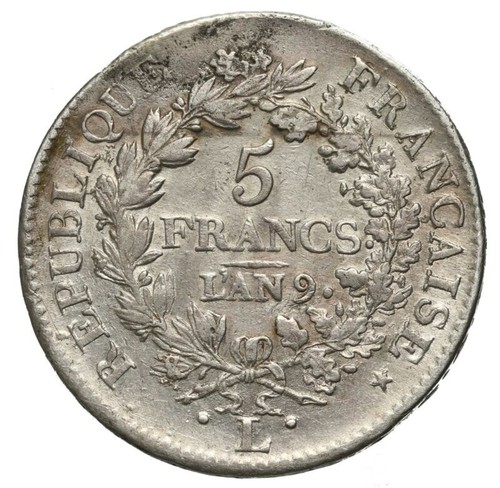
5 Francs Semeuse
1960–1969
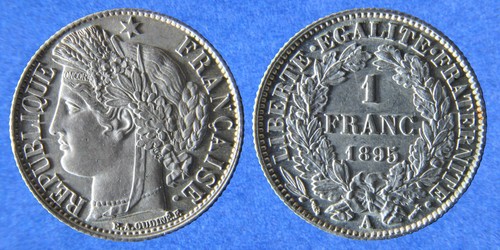
French Cérès 1 Franc
1849–1895
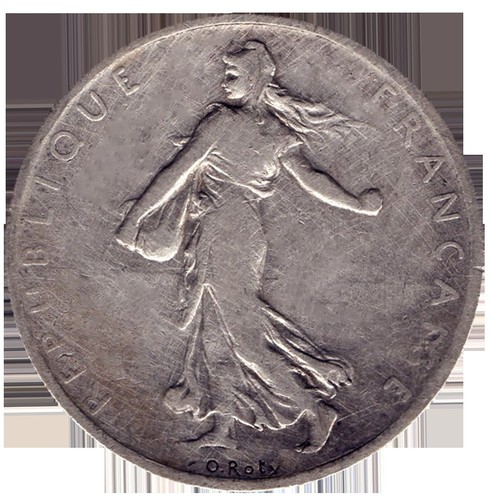
French Semeuse 2 Francs
1898–1920 (silver issues; pictured example dated 1899)
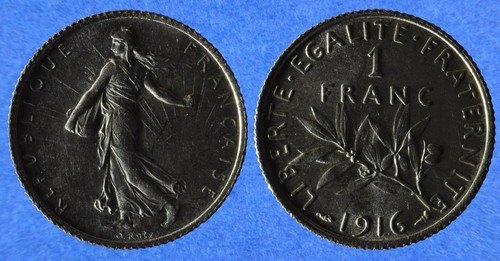
French Semeuse 1 Franc
1898–1920 (silver Semeuse 1 franc type)
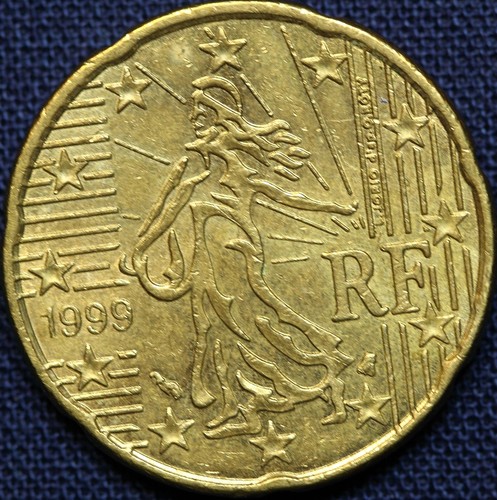
France 50 Cent Euro
1999–present
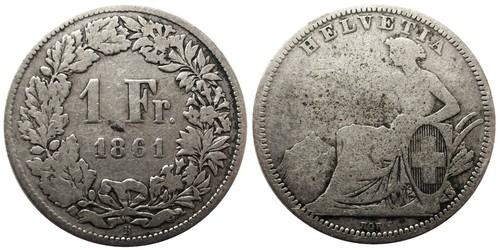
Swiss 1 Franc
1861
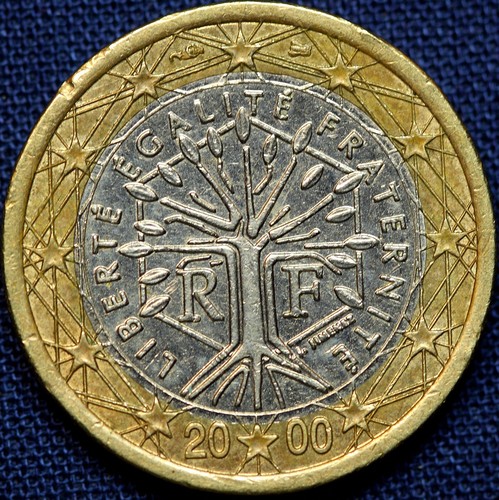
France 20 Centimes
1962–2001 (Fifth Republic, Marianne / Lagriffoul type)
Swiss 2 Francs
1860
Austria-Hungary 15 Kreuzer
1807