
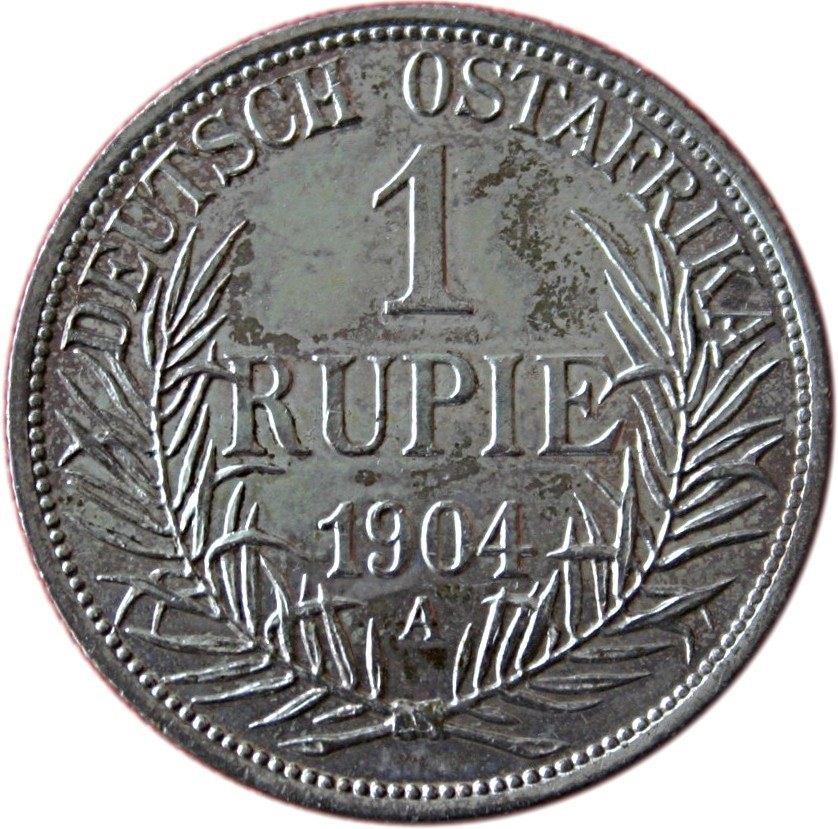
German East Africa 1 Rupie
A silver colonial rupee of German East Africa bearing the imperial eagle shield and the legend DEUTSCH OSTAFRIKA, struck for the German protectorate.
- Country
- German East Africa
- Denomination
- 1 Rupie
- Metal
- Silver
Got a coin like this?
Identify any coin from a photo, free.
Overview
The German East Africa 1 Rupie is a silver colonial coin issued for Deutsch-Ostafrika, the German protectorate that covered the territory of present-day mainland Tanzania, Rwanda, and Burundi. As seen on the pictured 1904 example, the obverse carries the German imperial eagle on a shield within the legend DEUTSCH OSTAFRIKA and the value 1 RUPIE.
The rupee was the principal silver unit of the colony, reflecting the strong Indian Ocean trade links of the region, where the Indian rupee already circulated widely. The German administration adopted the familiar rupee denomination rather than the mark used at home, making this coin a hybrid of German imperial iconography and East African monetary custom.
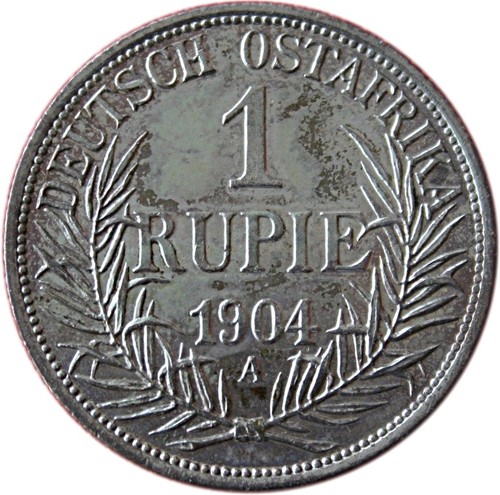
The reverse, not shown in a single-side view, typically displays a wreath surrounding the denomination and date. The coin is a substantial, full-size silver piece and is one of the most recognizable and collected issues of Germany's colonial coinage.
History & Background
German East Africa was administered first by the German East Africa Company and then, from the early 1890s, directly as an imperial protectorate. A distinct rupee coinage was introduced in 1890, denominated in rupees and pesa to match the existing regional money of account tied to the Indian rupee.
Early rupees carried a portrait of Kaiser Wilhelm II, but the design was later revised. The eagle-shield type seen on the 1904 coin belongs to the standardized issues struck in the first decade of the twentieth century, when the colony's currency was reformed and the rupee was divided into 100 heller. These silver rupees were produced at German mints for use in the colony.
Regular rupee coinage continued until the outbreak of the First World War in 1914, which severed the colony from Germany. During the wartime siege that followed, emergency coins were struck locally at Tabora in 1916. The mainland territory passed to British administration after the war as Tanganyika, ending German colonial coinage in the region.
How to Identify
The clearest diagnostic is the obverse legend DEUTSCH OSTAFRIKA wrapped around a crowned imperial eagle displayed on a shield, with the value 1 RUPIE. This eagle-shield design distinguishes the standardized early-1900s issues from the earlier type that showed the bust of Kaiser Wilhelm II.
The coin is a large silver piece, roughly the size of a contemporary rupee or half-crown and struck in a high-grade silver alloy, so it has a bright white tone and a solid heft. The reverse, not visible in a single-side photo, carries the denomination and date within a wreath. The date, such as 1904 on the pictured example, appears on that wreath side.
Because the rupee was minted at German facilities, look for a small mint mark near the date on the reverse. Confirm the German legend and the eagle to separate this coin from British East Africa, Indian, or Zanzibar rupees of similar size, which use entirely different inscriptions and emblems.
Value & Collectibility
The German East Africa 1 Rupie is a genuine silver colonial coin with steady collector demand, so even well-worn examples carry a real premium over ordinary base-metal world coins, reflecting both silver content and historical interest. Circulated pieces are widely available and trade in the modest-to-moderate range typical of common-date colonial silver.
Value rises sharply with condition and with scarcer dates. Higher grades with clear eagle detail and original luster, and less-common years within the 1890–1914 span, command significantly more, while the earlier Wilhelm II portrait rupees and the emergency 1916 Tabora issues are separate collecting stories with their own values.
Because this is a popular and sometimes counterfeited type, treat any figure as a rough guide. Confirm the exact date and mint mark, and weigh and measure the coin, before assigning value, and check recent auction and dealer listings for the specific year in hand.
Frequently asked questions
What is the German East Africa 1 Rupie made of?
It is a genuine silver coin, struck in a high-grade silver alloy. As a full-size colonial rupee it has real precious-metal content, unlike modern base-metal circulation coins.
Where was German East Africa?
It was a German protectorate covering the territory of present-day mainland Tanzania, Rwanda, and Burundi. The colony existed until the First World War, after which the mainland passed to British administration as Tanganyika.
Why does a German coin use the rupee?
The region's trade was tied to the Indian Ocean economy, where the Indian rupee already circulated. Germany adopted the familiar rupee denomination for its colony rather than the home-country mark.
What does the eagle on the coin represent?
It is the German imperial eagle on a shield, the emblem of the German Empire, paired with the legend DEUTSCH OSTAFRIKA to mark the coin as a colonial issue of German East Africa.
Is my German East Africa Rupie valuable?
It carries a real premium as historic colonial silver, with value driven by date, mint mark, and condition. Worn common dates are modest, while high grades and scarcer years bring considerably more. Have any suspicious piece authenticated.
German East Africa 1 Rupie guides
In-depth guides for identifying, valuing, and collecting German East Africa 1 Rupie.
Other coins you may enjoy
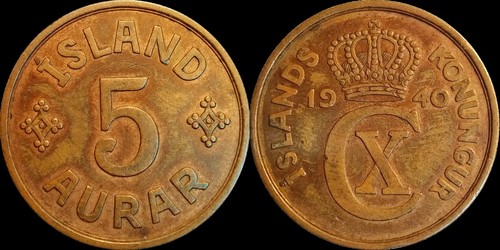
5 Aurar
1926-1942
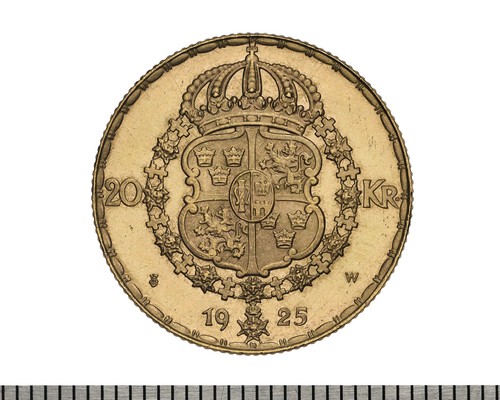
20 Kronor
1925 (denomination struck 1873-1925)
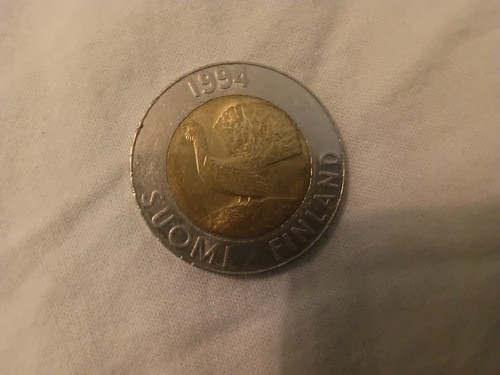
10 Markka
1993–2001
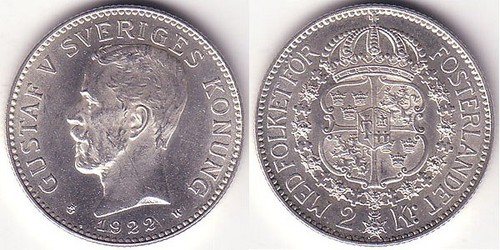
2 Kronor
1910-1940 (this example dated 1922)
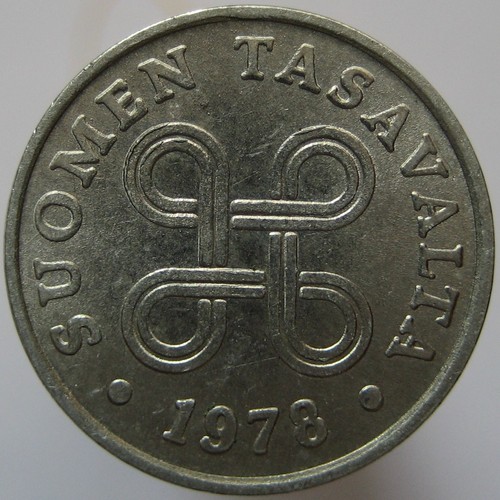
1 Penni
1969–1979
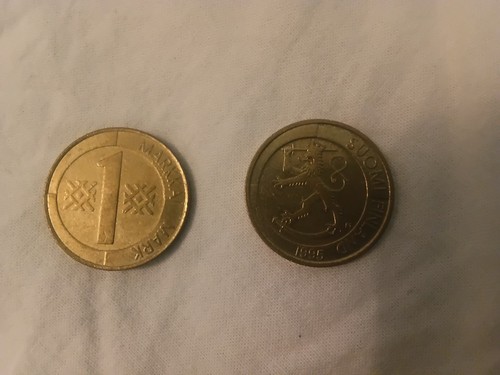
1 Markka
1993–2001
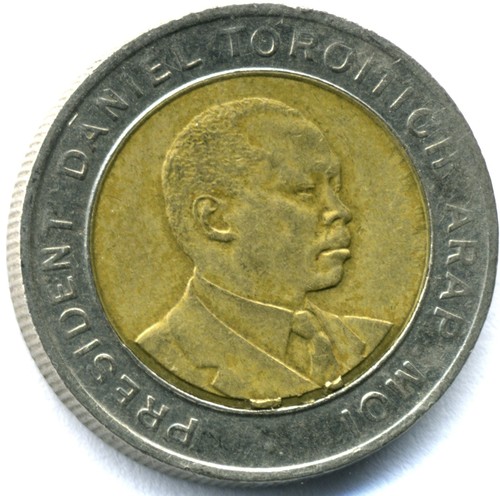
Kenya 5 Shillings
Bimetallic issues (2005–2010)
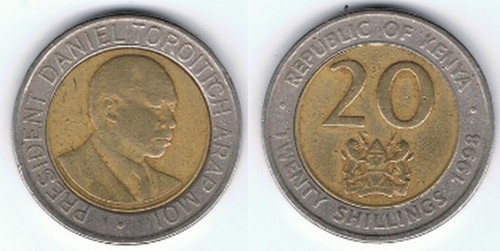
Kenya 20 Shillings
Modern issue (late 1990s–2000s)
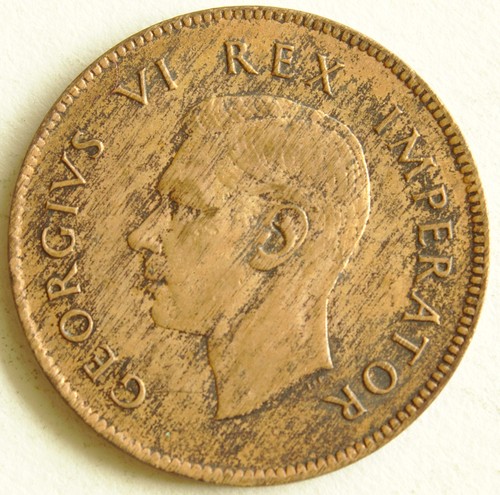
South Africa Farthing
1923-1960
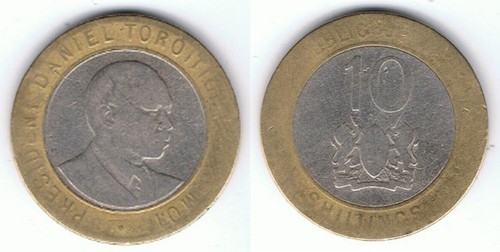
Kenya 10 Shillings
Republic of Kenya, bimetallic issues (mid-1990s to c. 2010)
Gold Sovereign
1817–present
Henri V Five Francs
1831