
How to Identify the German East Africa 1 Rupie
A collector's guide to recognizing the German East Africa silver rupee by its eagle shield, DEUTSCH OSTAFRIKA legend, size, and mint mark.
Read the full German East Africa 1 Rupie encyclopedia entry →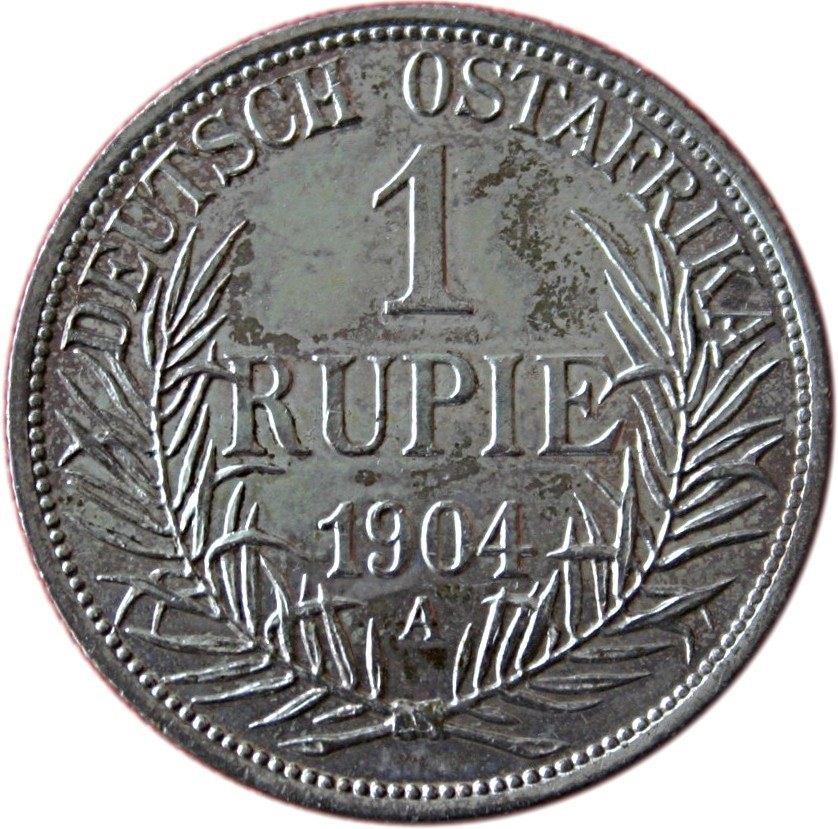
Start with the obverse legend and emblem. A genuine coin reads DEUTSCH OSTAFRIKA around a crowned imperial eagle on a shield, with the value 1 RUPIE. This eagle-shield type is the standardized issue of the early 1900s; if instead you see the bust of Kaiser Wilhelm II, you have the earlier portrait rupee, a related but distinct type worth checking separately.
Turn to the reverse, which is not visible in a single-side photo, to read the date and denomination within a wreath. The four-digit year, such as 1904, and a small mint mark near it are the details that pin down the exact issue. Note both, since date and mint mark together determine scarcity and value.
Confirm size and metal. The rupee is a large silver coin on the order of a contemporary rupee or half-crown, bright white in tone and noticeably heavy for its diameter. Weigh and measure it against catalog specifications; a genuine piece should match the published silver weight closely. A coin that is underweight, magnetic, or grey and dull may be a plated or cast forgery.
Rule out look-alikes. Several large silver rupees of the same era circulated in East Africa and the Indian Ocean, including British East Africa, Indian, Zanzibar, and Mombasa rupees. The decisive test is the inscription and emblem: only the German coin carries the German legend and imperial eagle. If the legends are in English, Arabic, or another script, it is a different country's coin.
Approach authentication with care, because popular colonial silver of this kind is sometimes counterfeited or has altered dates. Compare the eagle detail, letter style, and edge against known genuine examples, verify weight and diameter, and for any high-value date consider third-party grading or a specialist opinion before buying or assigning a firm value.
Frequently asked questions
How do I tell the eagle type from the Wilhelm II portrait rupee?
Look at the obverse. The type described here shows the imperial eagle on a shield with DEUTSCH OSTAFRIKA and 1 RUPIE. The earlier rupees instead show the bearded bust of Kaiser Wilhelm II. Both are silver rupees but are collected as separate designs.
Where are the date and mint mark?
On the reverse, within the wreath that surrounds the denomination. The four-digit year, such as 1904, sits there, and a small mint mark usually appears nearby. Note both to identify the exact issue and its scarcity.
How can I be sure it is not a British East Africa or Indian rupee?
Read the legends. Only the German coin carries the German inscription DEUTSCH OSTAFRIKA and the imperial eagle. British East Africa, Indian, and Zanzibar rupees of similar size use English or Arabic inscriptions and entirely different emblems.
Is authentication worth it for this coin?
Often yes, especially for higher grades and scarcer dates, because this is a popular and sometimes faked colonial silver type. Verify weight and diameter against catalog specs and consider professional grading before paying a strong price.