
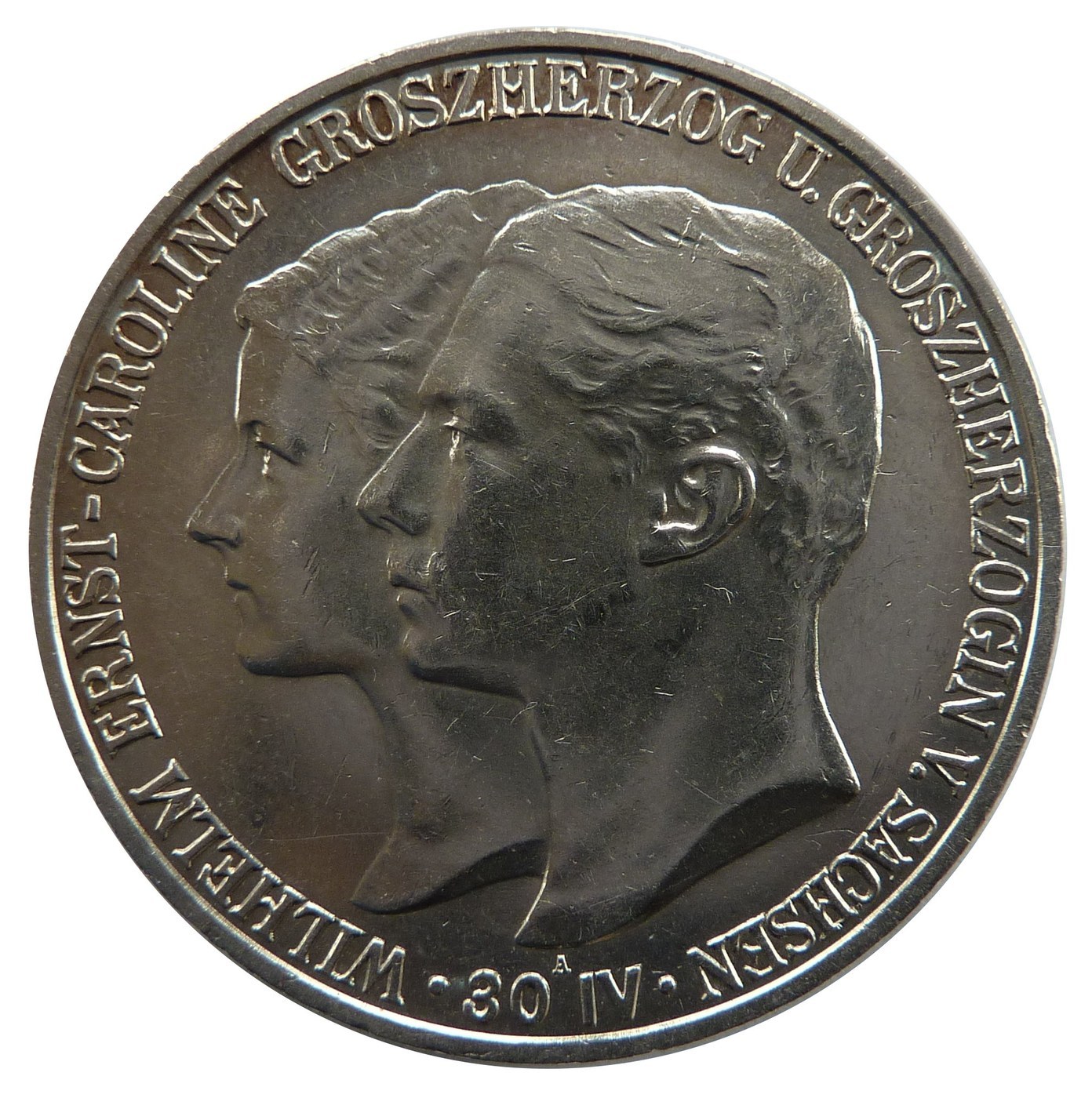
Sachsen-Weimar-Eisenach 5 Mark Wedding Commemorative
A silver German Empire 5 Mark of Sachsen-Weimar-Eisenach struck to mark a grand-ducal wedding, showing conjoined bride-and-groom profile busts.
- Country
- Germany
- Denomination
- 5 Mark
- Metal
- Silver
Got a coin like this?
Identify any coin from a photo, free.
Overview
The Sachsen-Weimar-Eisenach 5 Mark Wedding Commemorative is a large silver piece struck within the coinage of the German Empire for the Grand Duchy of Saxe-Weimar-Eisenach. It was issued to mark a grand-ducal marriage in the early 20th century and belongs to the imperial 5 Mark denomination.
The example shown carries two conjoined profile portraits — a bride and groom — on the obverse, the standard visual formula for a marriage commemorative. The reverse bears a commemorative inscription set within a circular border. As a state (German-states) issue that still circulated as legal-tender Reich money, it combines a princely event with the uniform Mark currency introduced across Germany after unification.
History & Background
After the founding of the German Empire in 1871, the many kingdoms, grand duchies, and principalities kept issuing coins under a single Mark standard, with silver 2, 3, and 5 Mark pieces bearing local rulers and arms on one side and imperial devices on the other. Within this system the smaller German states, including Saxe-Weimar-Eisenach, occasionally struck commemorative pieces tied to dynastic milestones such as anniversaries and weddings.
Saxe-Weimar-Eisenach was ruled in this period by Grand Duke Wilhelm Ernst, whose marriages in the first decade of the 1900s were the occasion for special 5 Mark strikings. Because these were low-population commemoratives from a minor state rather than everyday coinage, they were produced in far smaller quantities than the mainstream imperial Mark pieces.
With the collapse of the German monarchies at the end of the First World War in 1918, the grand duchy was abolished and this style of state-issued imperial coinage ended. Surviving wedding pieces are now collected as mementos of the last generation of Germany's princely courts.
How to Identify
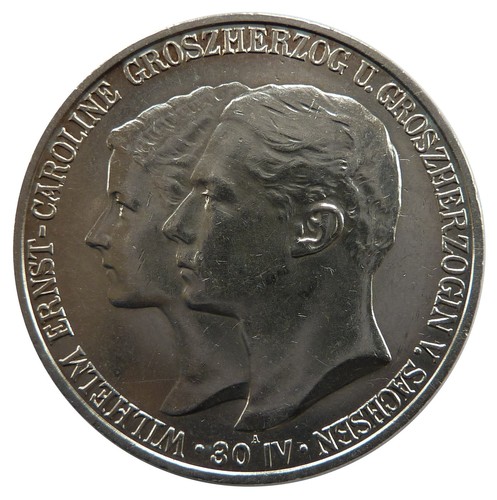
Obverse: two overlapping (conjoined) profile busts facing the same direction — the bride and groom of the commemorated marriage — encircled by a legend naming the ruling couple and their titles. Paired portraits like this are the signature of a wedding or marriage issue and distinguish it from ordinary single-ruler 5 Mark coins.
Reverse: a commemorative inscription arranged within a circular border, referencing the state and the event. Read the legends to confirm the Saxe-Weimar-Eisenach attribution and the wedding occasion.
Physical clues: it is a silver coin of the imperial 5 Mark module — a large crown-sized piece. Confirm the combination of paired bride-and-groom portraits, the 5 Mark value, and the German-Empire silver fabric together; any single feature alone is not enough to attribute the type. Look for a mint mark letter in the design or on the edge, and note the edge lettering typical of imperial 5 Mark coins.
Value & Collectibility
Value depends on which marriage is commemorated, the exact date and mint, the surface preservation, and overall grade. As a commemorative from a small German state, this 5 Mark was struck in far smaller numbers than common imperial Mark coinage, and clean, well-struck examples are sought after by collectors of German-states silver.
Exact prices vary widely with condition and demand, so treat any single figure with caution. Because attractive imperial commemoratives are sometimes copied or artificially toned, compare recent auction results for the matching Saxe-Weimar-Eisenach wedding type and seek a specialist opinion or third-party grading before a significant purchase or sale.
Frequently asked questions
What is the Sachsen-Weimar-Eisenach 5 Mark Wedding Commemorative?
It is a silver 5 Mark piece struck within the German Empire's coinage for the Grand Duchy of Saxe-Weimar-Eisenach to mark a grand-ducal wedding in the early 20th century. It shows conjoined bride-and-groom profile busts.
Who is shown on the coin?
The obverse shows the married couple as two overlapping profile portraits, a bride and groom of the ruling grand-ducal house of Saxe-Weimar-Eisenach, with their names and titles in the surrounding legend.
Is it real silver?
Yes. Imperial German 5 Mark commemoratives of this era were struck in silver as large crown-sized coins. Confirm the metal, weight, and diameter against published specifications for the type.
Why is the value only 5 Mark if it is commemorative?
German states issued commemoratives within the standard imperial currency, so the piece was legal-tender money worth 5 Mark while also honoring a dynastic event. Its collector value today can far exceed its face value.
Is it valuable?
As a low-mintage silver commemorative from a small German state, it is collectible, and condition and the specific wedding date drive the price. Have valuable examples authenticated, since imperial commemoratives are sometimes copied.
Sachsen-Weimar-Eisenach 5 Mark Wedding Commemorative guides
In-depth guides for identifying, valuing, and collecting Sachsen-Weimar-Eisenach 5 Mark Wedding Commemorative.
Other coins you may enjoy
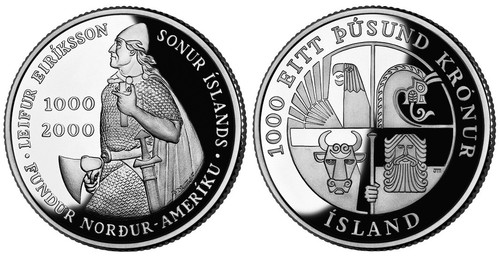
Leif Erikson Commemorative 1000 Króna
2000
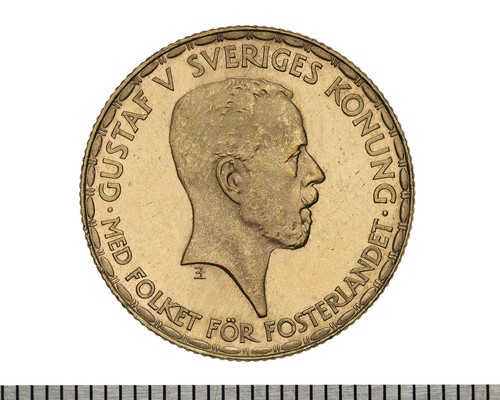
Swedish Gold Commemorative
Early 20th century
1 Lats (Christmas Bells)
2012
Romania International Year of Chemistry Commemorative
2011
1 Euro (10 Years EMU)
1999-2009
25 Euro (Bionik)
2012
100 Forint (Commemorative)
commemorative issue
2 Euro (150 Years PSP)
2018
3 Roubles (First All-Russian Coins)
1982
10 Euro (Royal Marriage)
2002
Swiss Shooting Thaler
1934
Germany 2 Euro Elbphilharmonie Commemorative
2017