
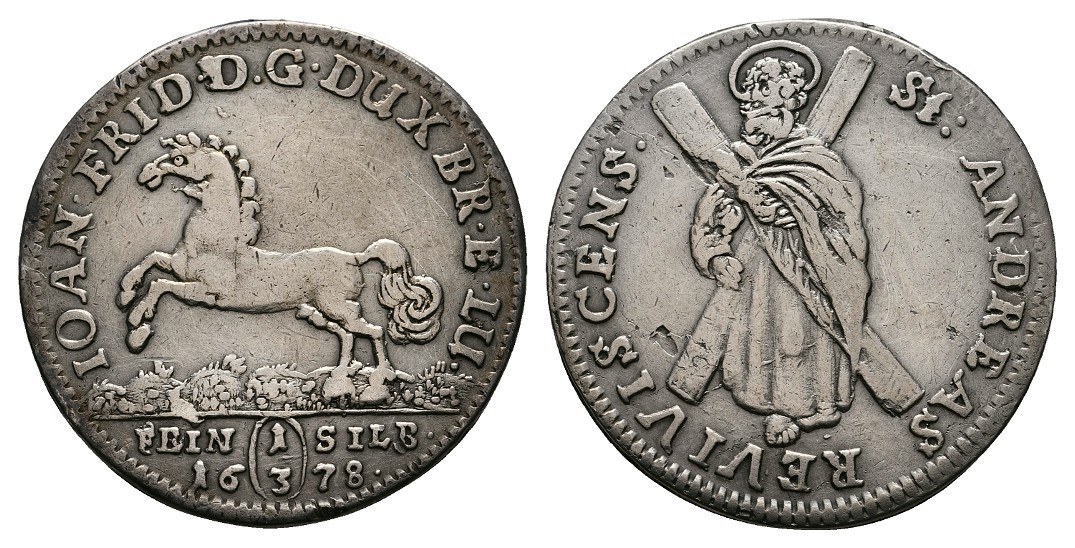
Brunswick 1/3 Thaler
A 1678 silver 1/3 thaler of the Duchy of Brunswick, showing the leaping Saxon steed on the obverse and a standing saintly figure with a cross on the reverse.
- Country
- Germany (Brunswick)
- Denomination
- 1/3 Thaler
- Metal
- Silver
Got a coin like this?
Identify any coin from a photo, free.
Overview
The Brunswick 1/3 Thaler is a silver coin of the German state of Brunswick (Braunschweig). The example shown is dated 1678 and carries the value of one-third of a thaler (a Drittelthaler), a fractional denomination of the large German silver thaler.
Its obverse is dominated by a rearing, leaping horse facing left — the Saxon steed (Sachsenross) that was the enduring heraldic emblem of the House of Welf and the Brunswick-Lüneburg dukes. The reverse shows a standing saintly figure holding a cross in an ornate flowing gown. Together these two devices identify the piece as a Welf coinage of the late 17th century.
History & Background
The Duchy of Brunswick-Lüneburg was one of the many territories of the House of Welf, whose lines ruled the Brunswick and Lüneburg lands of northern Germany within the Holy Roman Empire. Their coinage is famous for the springing Saxon steed, a badge the family used for centuries and which still appears in the arms of Lower Saxony today.
In the 1670s, when this coin was struck, the German states minted thalers and their fractions on the imperial standard. The 1/3 thaler, or Drittelthaler, was a practical middle-sized silver piece that sat between the small change and the full-weight thaler used for larger transactions. Brunswick's mints were active producers of such coins, drawing on the silver of the nearby Harz mountains.
The standing saintly figure with a cross reflects the religious imagery common on German-states silver of the period, where patron saints and pious devices frequently shared the coinage with dynastic heraldry.
How to Identify
Obverse: a leaping or rearing horse facing left, shown in profile with legs extended — the Saxon steed of the Brunswick dukes — encircled by a Latin legend and the date 1678.
Reverse: a standing saintly figure holding a cross, wearing a long, ornately draped gown, with a surrounding legend and often a denomination mark indicating the one-third-thaler value.
Physical clues: the coin is struck in silver and is a mid-sized fractional thaler, smaller than a full thaler but clearly larger than minor change. Genuine 17th-century pieces show hand-struck characteristics — slightly irregular flans, some weakness or off-centering, and lettering in the style of the period rather than machine-perfect modern strikes.
Value & Collectibility
Value depends heavily on grade, strike quality, the specific Brunswick line and mint, and eye appeal. As a genuine dated silver coin more than three centuries old, even a worn example carries a meaningful collector premium over its silver content, while sharp, well-centered pieces with clear legends command considerably more.
Because 17th-century German-states silver was struck across many small mints and issues, prices vary widely between common and scarce varieties. For a specific figure, compare recent auction results for the same date, denomination, and Brunswick line, and have higher-value pieces authenticated before buying or selling.
Frequently asked questions
What is a Brunswick 1/3 Thaler?
It is a silver coin worth one-third of a thaler, struck by the Duchy of Brunswick in northern Germany. The example shown is dated 1678.
What is the animal on the coin?
The rearing horse is the Saxon steed (Sachsenross), the heraldic emblem of the House of Welf and the Brunswick-Lüneburg dukes.
Who is the figure on the reverse?
The reverse shows a standing saintly figure holding a cross in an ornate gown, a type of religious imagery common on German-states silver of the 1600s.
Is the coin made of silver?
Yes. The 1/3 thaler was struck in silver as a fractional piece of the larger German thaler.
Is a Brunswick 1/3 Thaler rare?
It depends on the date, mint, and Brunswick line. Some issues are relatively available while others are scarce; grade and eye appeal strongly affect value.
Brunswick 1/3 Thaler guides
In-depth guides for identifying, valuing, and collecting Brunswick 1/3 Thaler.
Other coins you may enjoy
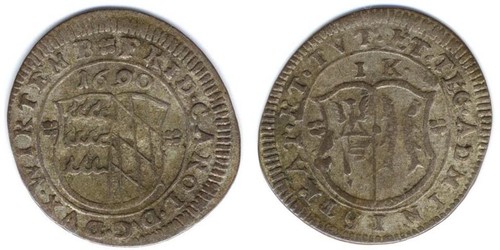
Württemberg Kreuzer
17th century (example dated 1690)
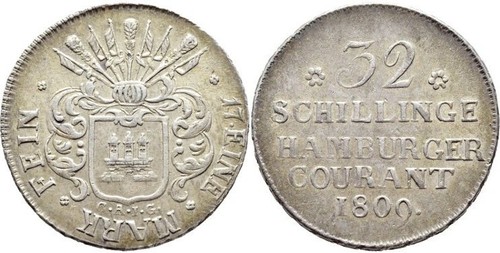
Hamburg 32 Schilling
1800
Hessen-Homburg Kreuzer
1840
Hanover-Luneburg 1.5 Thaler
1681 (dated example)
Prussian Taler
1750s–1786 (reign of Frederick II)
Bavaria 6 Kreuzer
1745 (issue shown)
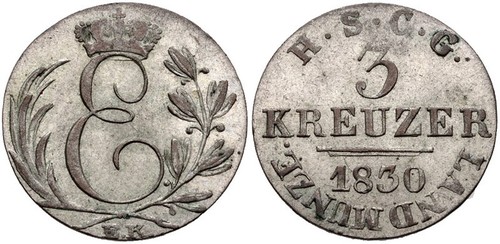
Gotha 3 Kreuzer
1830
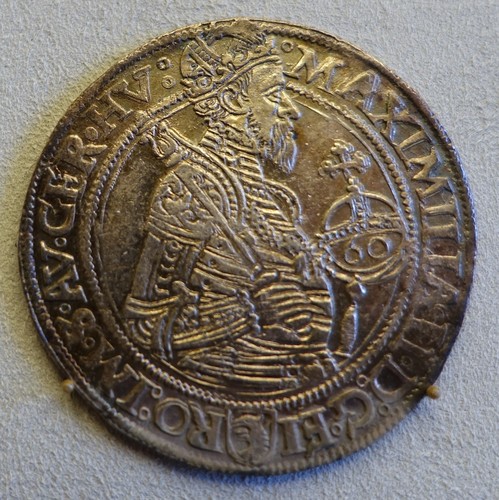
60 Kreuzer Guldiner
1568
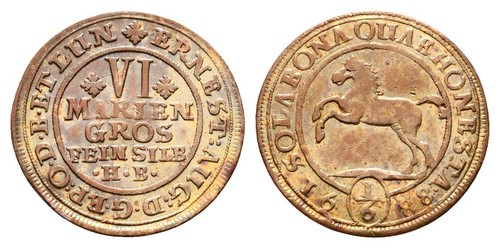
Hanover 1/6 Thaler
1688
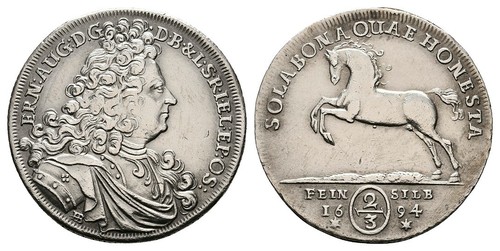
Hanover 2/3 Thaler
1694
Braunschweig-Lüneburg Thaler
17th–18th century
Braunschweig-Lüneburg 3 Thaler
1685 (late 17th century)