
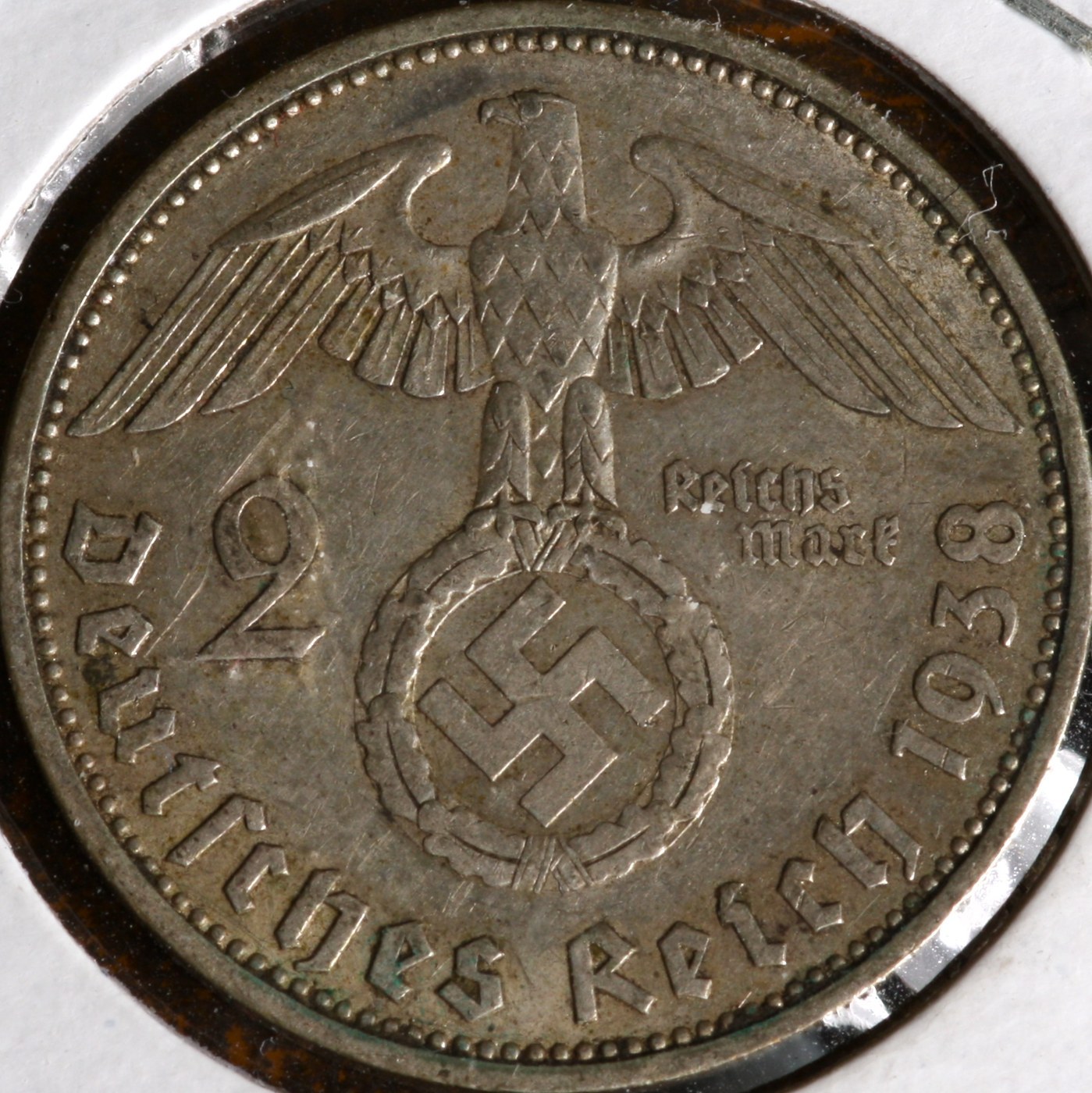
German 2 Reichsmark (Hindenburg)
Third Reich silver 2 Reichsmark showing an eagle over a swastika shield and, on the other side, Paul von Hindenburg with the value and date.
- Country
- Germany
- Denomination
- 2 Reichsmark
- Metal
- Silver
Got a coin like this?
Identify any coin from a photo, free.
Overview
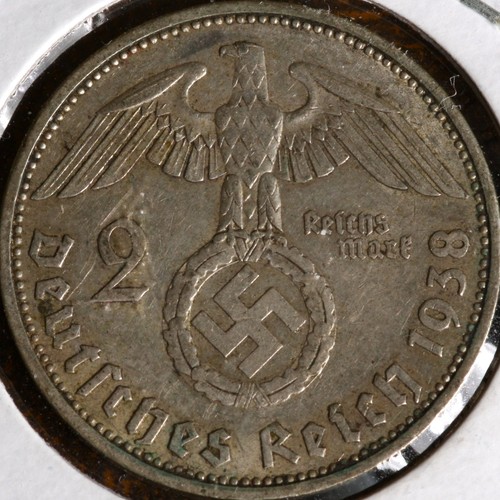
The German 2 Reichsmark of this Hindenburg type is a silver circulation coin of the Third Reich, produced in the later 1930s. The example shown carries the German national eagle (Reichsadler) clutching a wreathed swastika shield with the inscription DEUTSCHES REICH and the date 1938, paired with a portrait design and the 2 REICHSMARK value.
Struck in .625 silver, it is a mid-size white-metal coin that circulated alongside the 5 Reichsmark and smaller denominations. Its design belongs to the standardized coinage introduced after 1933, when the Weimar-era eagle was replaced by the eagle-and-swastika emblem used across state coinage of the period.
Because it was made in large numbers over several years, the type is common today and is collected mainly as a historical silver piece rather than for rarity. It is frequently encountered in world-coin accumulations and in collections focused on German or 20th-century history.
History & Background
Following the political changes of 1933, Germany revised its coinage to carry the new national emblem, and a silver 2 Reichsmark bearing the eagle-over-swastika device was introduced in the mid-1930s. The reverse honours Paul von Hindenburg, the Field Marshal and President of Germany who died in 1934, whose portrait appears on both the 2 and 5 Reichsmark silver coins of the era.
The Hindenburg silver type was struck across several dates in the second half of the 1930s at the various German state mints, each identified by a small mint-mark letter. Coins dated 1938, like the one shown, fall within this main production run, before wartime demands curtailed silver coinage.
As precious-metal coinage was withdrawn during the Second World War in favour of base-metal and zinc issues, the silver 2 Reichsmark ceased to circulate. Surviving examples are now studied as artifacts of the Third Reich period and remain widely available to collectors.
How to Identify
Obverse (shown): the German eagle (Reichsadler) with spread wings, its talons resting on a wreath enclosing a swastika, encircled by the legend DEUTSCHES REICH and the date (here 1938). A small mint-mark letter appears near the base, identifying the striking mint.
Reverse: the bare-headed portrait of Paul von Hindenburg facing to the side, with the denomination 2 REICHSMARK and, on many examples, his name and dates in the surrounding inscription.
Size and metal: a silver coin of .625 fineness, roughly 25 mm across and about 8 grams, with a reeded edge that on this type carries a raised motto. Its pale silver colour, the eagle-and-swastika emblem, and the clear 2 REICHSMARK value together identify the type; the neighbouring 5 Reichsmark shares the design but is noticeably larger and heavier.
Value & Collectibility
The Hindenburg 2 Reichsmark is a common silver coin, and most circulated examples trade at a modest premium tied largely to their silver content rather than to numismatic rarity. Well-worn pieces are inexpensive and plentiful.
Value rises with condition: clean, lightly circulated and especially uncirculated coins with sharp detail command higher prices, and certain date-and-mintmark combinations are scarcer than others. Proof strikings, where they exist, are worth considerably more than ordinary business strikes.
Because prices move with the silver market and with collector demand, treat any single figure as approximate. Compare recent sales of the same date, mint mark and grade, and be aware that historical interest in Third Reich material can affect demand in either direction.
Frequently asked questions
What is depicted on this German 2 Reichsmark?
One side shows the German eagle holding a wreathed swastika shield with DEUTSCHES REICH and the date; the other shows a portrait of Paul von Hindenburg with the value 2 REICHSMARK.
What metal is it made of?
It is struck in .625 fine silver. The coin is a pale silver-coloured piece of roughly 25 mm and about 8 grams with a reeded, lettered edge.
Is the Hindenburg 2 Reichsmark rare or valuable?
Generally no. It was made in large numbers and is common, so most examples are worth a modest premium mainly for their silver, with condition and specific date/mint mark driving higher values.
What do the letters on the coin mean?
A small single letter near the eagle is the mint mark identifying which German state mint struck the coin. Different letters correspond to different mint cities.
How is it different from the 5 Reichsmark of the same era?
The two share the eagle-and-swastika and Hindenburg designs, but the 5 Reichsmark is larger and heavier and reads 5 REICHSMARK, while this coin reads 2 REICHSMARK.
German 2 Reichsmark (Hindenburg) guides
In-depth guides for identifying, valuing, and collecting German 2 Reichsmark (Hindenburg).
Other coins you may enjoy
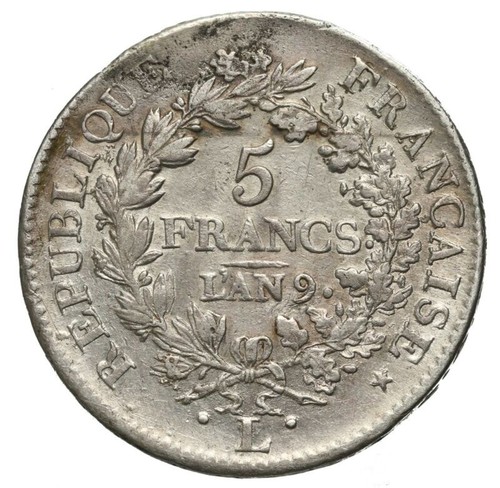
5 Francs (First Republic)
L'an 9 (1800–1801)
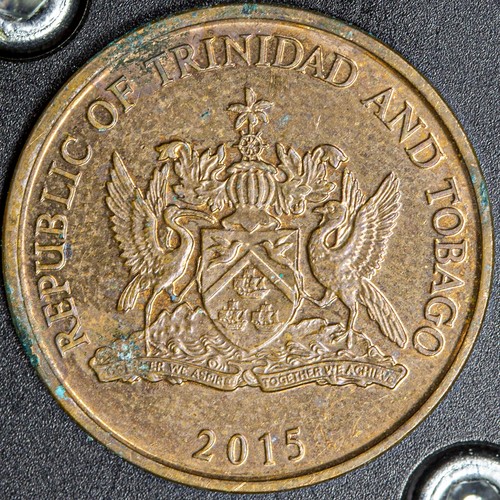
Trinidad and Tobago Dollar
2015
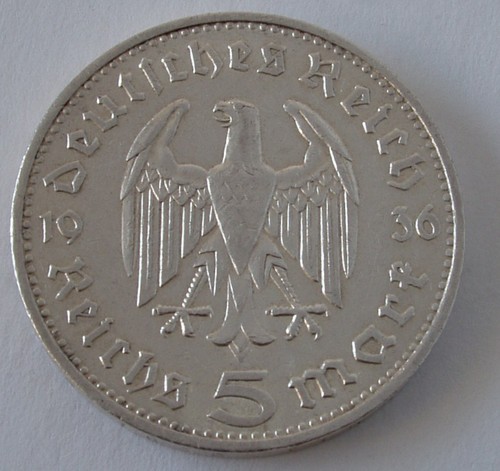
German 5 Reichsmark (Hindenburg)
1935–1936 (Hindenburg type with swastika)
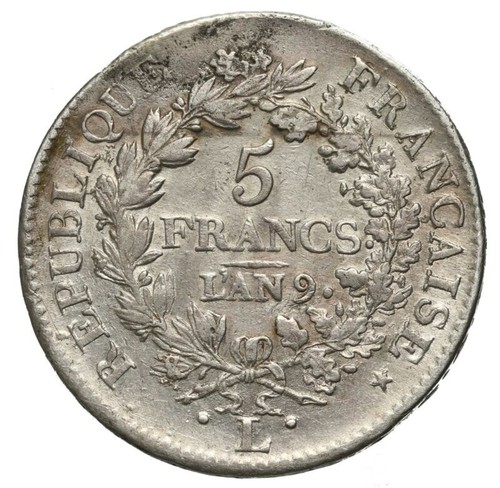
5 Francs Semeuse
1960–1969
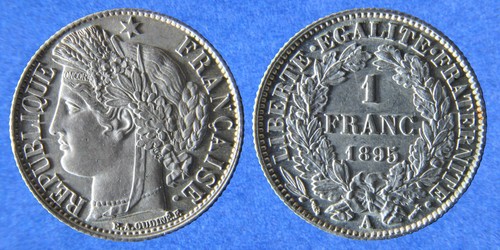
French Cérès 1 Franc
1849–1895
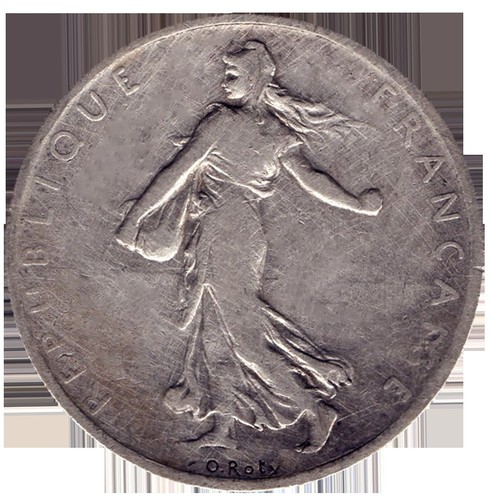
French Semeuse 2 Francs
1898–1920 (silver issues; pictured example dated 1899)
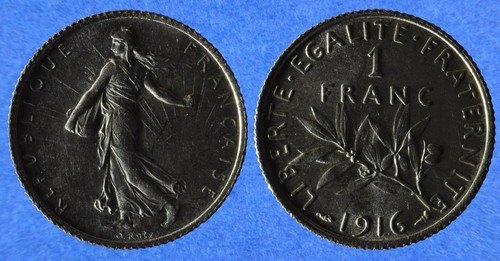
French Semeuse 1 Franc
1898–1920 (silver Semeuse 1 franc type)
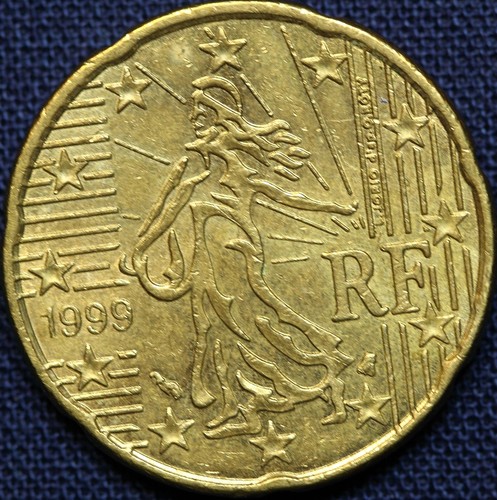
France 50 Cent Euro
1999–present
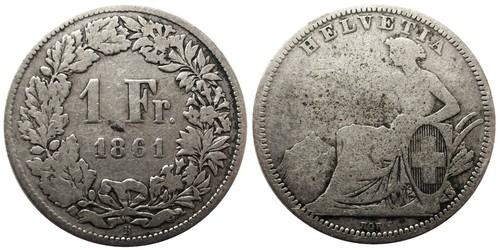
Swiss 1 Franc
1861
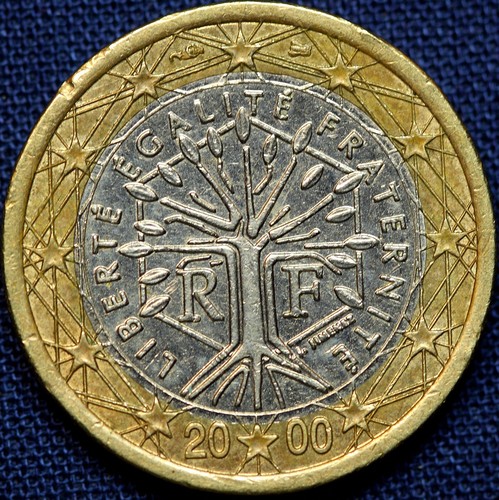
France 20 Centimes
1962–2001 (Fifth Republic, Marianne / Lagriffoul type)
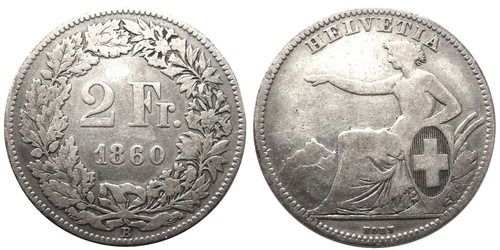
Swiss 2 Francs
1860
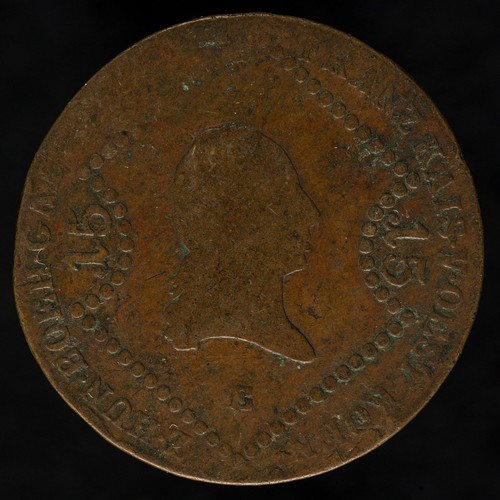
Austria-Hungary 15 Kreuzer
1807