
Coin Encyclopedia
Search and identify coins from around the world — with country, denomination, metal, mint, history, and how to tell them apart.
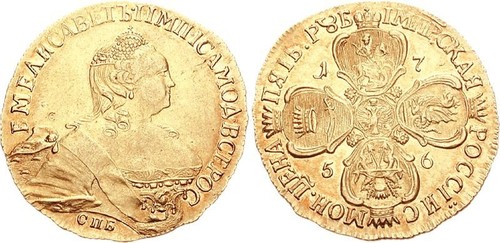
5 Roubles (Alexander III)
An Imperial Russian gold 5 Roubles of Alexander III, showing the tsar's bearded profile and the crowned double-headed eagle, struck in the late 1880s.
Modern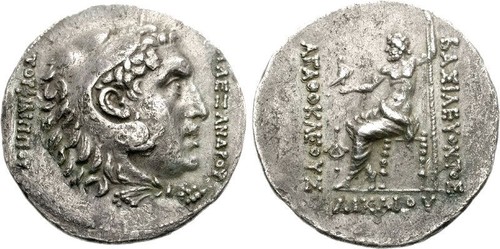
Agathokles Commemorative Tetradrachm for Alexander the Great
Silver tetradrachm of Agathokles of Syracuse, c. 310-300 BC, struck in the Alexander tradition with a bearded head and an enthroned deity reverse.
Ancient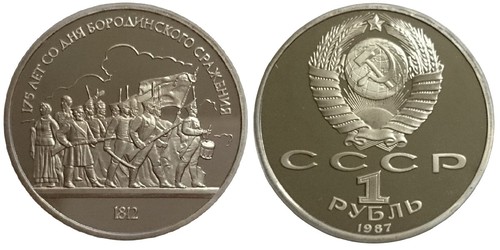
1 Rouble (1834)
An Imperial Russian silver 1 Rouble dated 1834, showing a right-facing imperial portrait with the Cyrillic ИМПЕРАТОРЪ legend and a crowned double-headed eagle.
Modern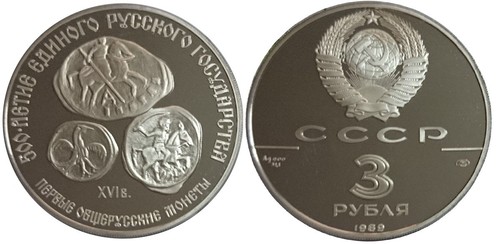
3 Roubles (First All-Russian Coins)
Soviet 1982 commemorative 3 Roubles honoring the first all-Russian coins, showing three historical 18th-century Russian coins with the state emblem reverse.
Commemorative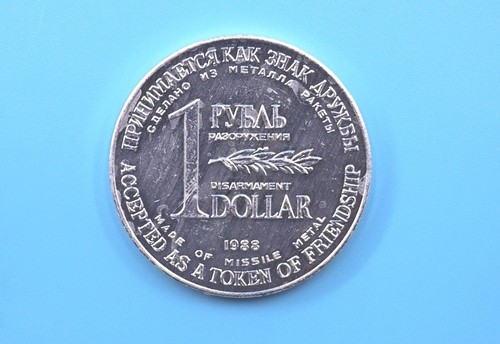
Disarmament Commemorative Ruble
A 1988 Soviet copper-nickel commemorative ruble marking the US-Soviet treaty that scrapped intermediate- and shorter-range nuclear missiles.
World Coins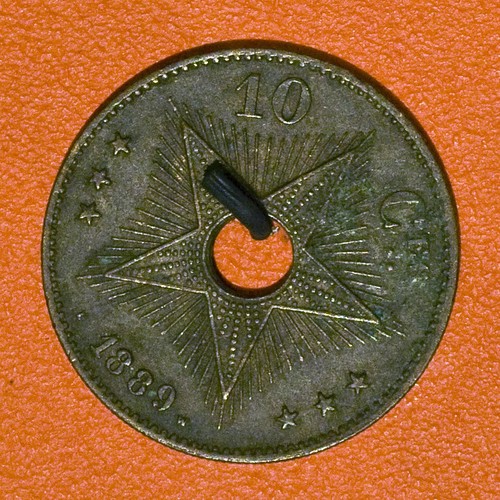
Congolese Commemorative Coin
An 1889 holed copper 10-centime coin of the Congo Free State, with a radiant five-pointed star, the value 10 C, and a ring of small stars.
World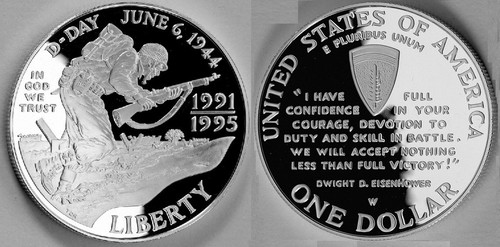
World War II 50th Anniversary Silver Dollar
A 1993 U.S. 90% silver dollar in the World War II 50th Anniversary program, showing a D-Day infantryman and a heraldic eagle with an Eisenhower quote.
Modern Commemorative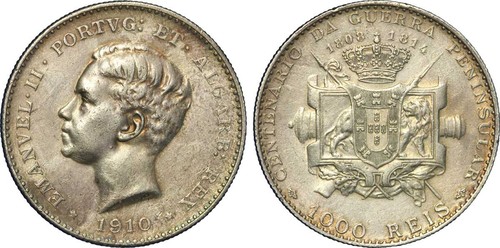
Reis (Peninsular War)
A 1910 Portuguese silver Reis struck under King Manuel II to mark the centenary of the Peninsular War, dated 1808-1814 across the king's bust.
Modern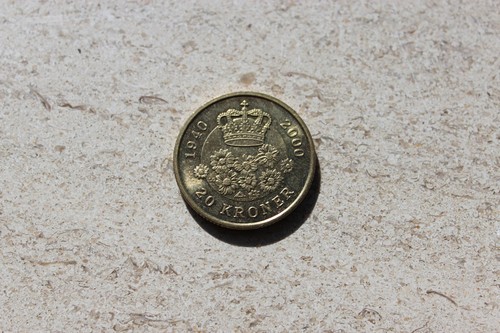
20 Kroner
Danish aluminum-bronze 20 Kroner of 1990 honoring Queen Margrethe II, with a crown over a marguerite daisy and the dates 1940 and 1990.
Modern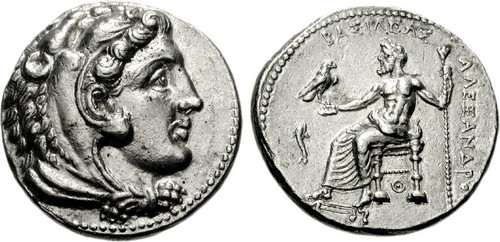
Alexander the Great Tetradrachm
Silver tetradrachm of Alexander III of Macedon with the head of Heracles in a lion skin and an enthroned deity holding an eagle on the reverse.
Ancient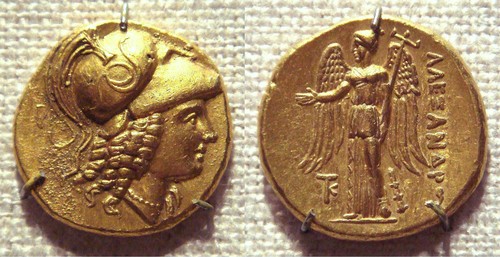
Alexander the Great Gold Stater
Gold stater struck in the name of Alexander the Great, with a helmeted Athena obverse and Nike holding a wreath on the reverse; this example c. 323-315 BC.
Ancient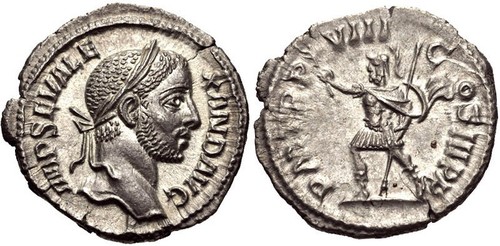
Denarius of Severus Alexander
Silver denarius of the emperor Severus Alexander (AD 222–235), with his laureate portrait and a Mars reverse dated to about AD 229.
Ancient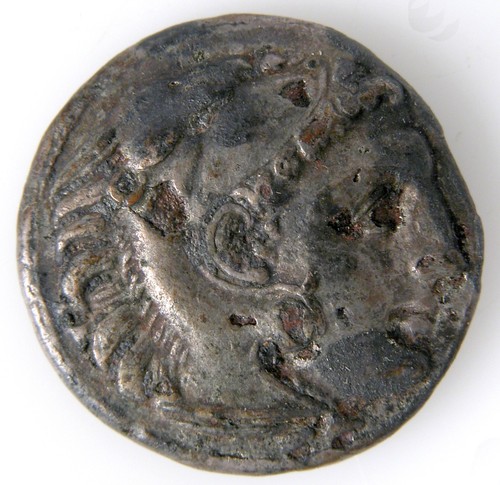
Alexander the Great Silver Drachm
Silver drachm in the name of Alexander the Great, with the head of young Herakles in a lion skin and Zeus enthroned on the reverse.
Ancient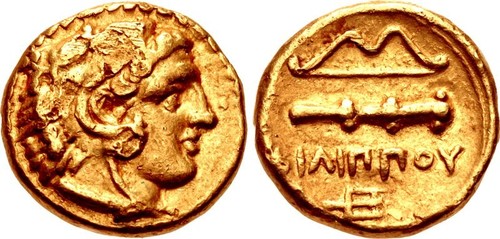
Alexander the Great Gold Quarter Stater
A small gold fraction of the Alexander the Great coinage, showing the head of Heracles and an eagle perched on a thunderbolt, the attributes of Zeus.
Ancient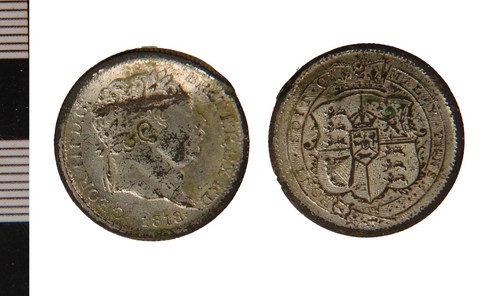
British Bank Token
Copper token of the late George III period bearing the king's left-facing bust and a quartered royal-arms reverse, dated 1819.
British Isles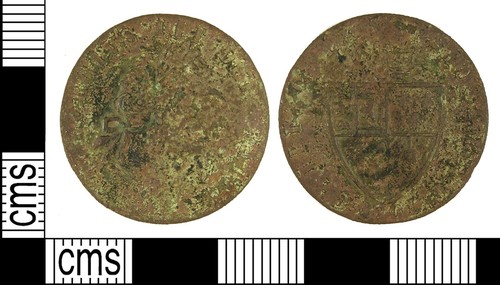
Spade Guinea Token
A base-metal imitation of the George III spade guinea, made as a gaming counter or advertising token, with a male profile obverse and a spade-shaped shield reverse.
Token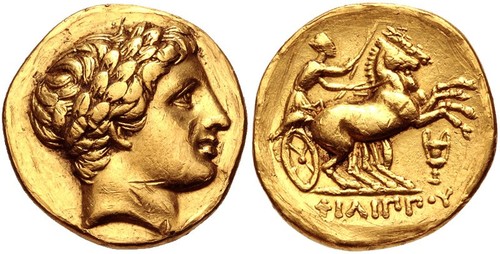
Philip III Gold Stater
A Macedonian gold stater struck under Philip III Arrhidaeus, half-brother of Alexander the Great, showing Heracles and an enthroned Zeus.
Ancient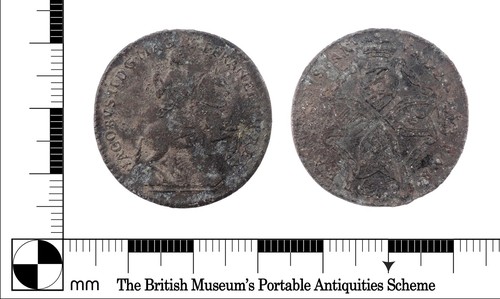
American Plantations Token
A 1688 tin token struck under James II for England's American colonies, valued at 1/24 of a Spanish real — the first regal-authorized coinage for British America.
Colonial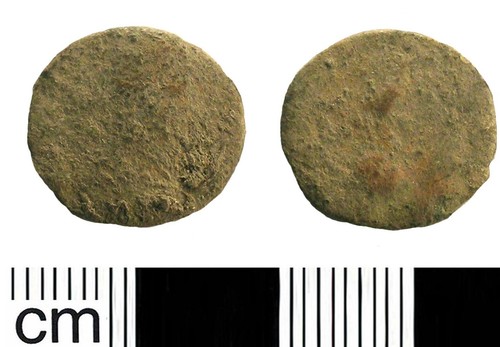
Half Centenionalis of Constans or Constantius II
A small mid-4th-century Roman bronze attributed to Constans or Constantius II, sons of Constantine the Great, worn but identifiable by its imperial portrait and era.
Ancient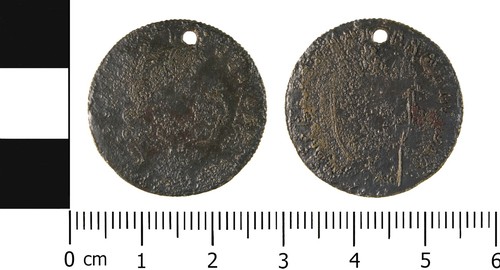
Imitation Guinea Gaming Piece
A brass or bronze token imitating a George III spade guinea, made for card games and gaming tables rather than as legal-tender money.
British Isles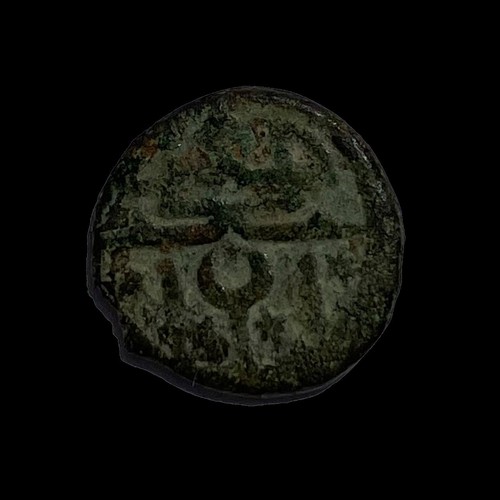
Ottoman Manghir
The manghir was the small copper coin of the Ottoman Empire, used for everyday change; this example bears a tughra and dates to the reign of Murad II.
Medieval Islamic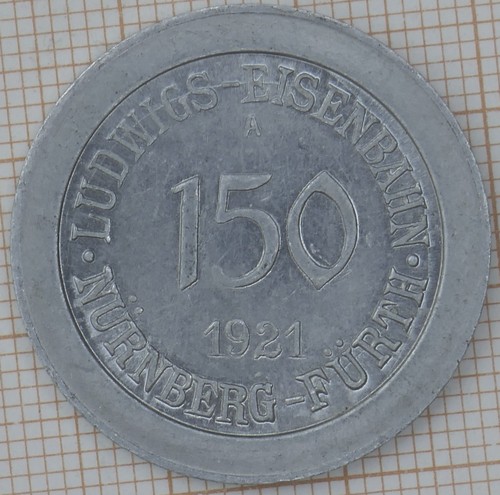
Ludwigs-Eisenbahn Nürnberg-Fürth 150 Pfennig
A 1921 German emergency-money 150 Pfennig piece from Nürnberg-Fürth, struck in zinc-iron and showing an ornamental Kunstbrunnen fountain monument.
Token/notgeld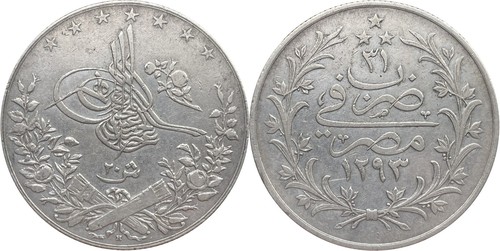
Egypt 20 Qirsh
The 20 qirsh was Egypt's largest silver coin under the Khedivate, bearing the Ottoman sultan's tughra; this example dates to 1905.
World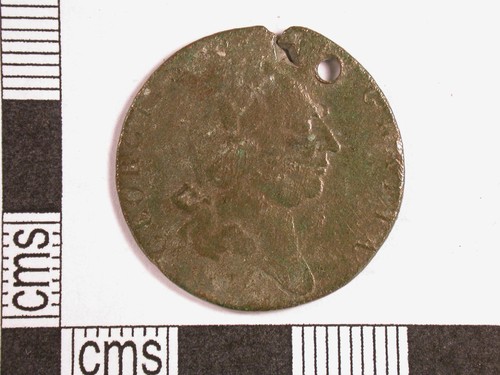
Guinea Counter (Imitation)
A brass or bronze gaming counter made to imitate a George III guinea, showing a faint male profile and a shield reverse; a token, not money.
Token