1 Rouble (1834)
An Imperial Russian silver 1 Rouble dated 1834, showing a right-facing imperial portrait with the Cyrillic ИМПЕРАТОРЪ legend and a crowned double-headed eagle.
- Country
- Russia
- Denomination
- 1 Rouble
- Metal
- Silver
Got a coin like this?
Identify any coin from a photo, free.
Overview
The 1 Rouble of 1834 is a large silver coin of Imperial Russia, struck during the reign of Emperor Nicholas I (1825–1855). The example shown here carries a right-facing imperial portrait on one face with the Cyrillic legend ИМПЕРАТОРЪ (Emperor), and a crowned double-headed eagle with a central shield, the denomination, and inscriptions on the other. It is a classic 'crown-sized' silver piece, the standard high-value silver coin of the period.
The rouble was the anchor of the Russian monetary system, and a silver rouble like this represented a substantial sum in everyday terms. Its combination of a portrait and the imperial eagle marks it as a commemorative or memorial issue rather than a plain circulation strike, since ordinary Nicholas I roubles of these years usually carried the eagle and a wreath of value without any bust.
Dated squarely to 1834, the coin belongs to a small group of portrait roubles from that year. The pairing of a right-facing imperial head, the ИМПЕРАТОРЪ legend, and the crowned double-headed eagle is the coin's signature look and the reason it stands out from the more common eagle-and-wreath roubles of the same decade.
History & Background
By the 1830s the silver rouble was the backbone of Russian coinage, struck to a long-standing standard and produced in large numbers under Nicholas I. Most roubles of this era were plain circulation pieces bearing the crowned double-headed eagle and a wreath enclosing the value, but the government also issued occasional portrait roubles to mark events and to honour members of the imperial family.
The year 1834 is notable for exactly such a commemorative rouble: the memorial piece struck for the unveiling of the Alexander Column in St. Petersburg, a monument raised to the late Emperor Alexander I (reigned 1801–1825). Coins of this kind carry a right-facing imperial portrait and the ИМПЕРАТОРЪ legend, tying the observed features of this piece to the small run of portrait roubles from that year rather than to the everyday eagle-and-wreath issue.
Russian silver roubles of the 1830s were struck at the St. Petersburg Mint, and the reign of Nicholas I is well documented for its many minor varieties in legend, portrait, and eagle style. Because 1834 portrait roubles were made in far smaller quantities than the plain circulation type, they have long been sought after by collectors of Imperial Russian coinage.
How to Identify
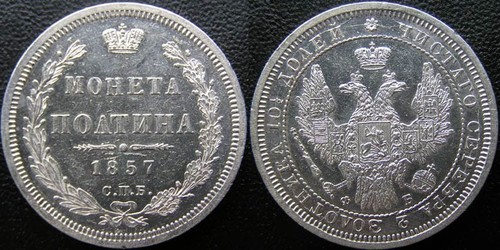
Look first for the portrait. The obverse of this piece shows a bare imperial head facing right, surrounded by a Cyrillic legend that includes ИМПЕРАТОРЪ (Emperor). This portrait is the key diagnostic: ordinary Nicholas I roubles of the period do not carry a bust, so a right-facing head marks the coin as a commemorative or memorial issue. The reverse shows the crowned double-headed eagle of Russia with a central shield, the denomination, and Cyrillic inscriptions, typically stating the value in roubles and the date 1834.
The coin is a large silver piece in the 'crown' size class, roughly 35–36 mm across and weighing on the order of 20 grams, made of high-grade silver. In hand it has the heft and bright, coolly reflective surfaces of a substantial silver coin, and worn examples take on the soft grey tone typical of circulated silver of the era.
Because several distinct roubles share the 1834 date, confirm the type by reading all of the elements together: the direction the portrait faces, the exact wording of the legends, the form of the double-headed eagle, and the stated denomination. The blend of a right-facing imperial portrait, the ИМПЕРАТОРЪ legend, and a crowned eagle reverse is what separates this piece from the plain eagle-and-wreath roubles of the same decade.
Value & Collectibility
As a large silver coin of Imperial Russia, the 1834 rouble carries value from its silver content, its age, and collector demand for nineteenth-century Russian coinage. Portrait and commemorative roubles from this year are scarcer than the plain circulation type and are correspondingly more sought after, so the specific variety matters a great deal to value.
Prices vary widely with the exact type, die variety, condition, and authenticity. A worn common circulation rouble sits toward the lower end, while a well-preserved commemorative such as an 1834 memorial rouble can command a substantial premium far above bullion value. Because ranges are broad and variety-dependent, a specific piece is best appraised individually rather than valued from a single figure.
Authentication matters here. Popular Imperial Russian roubles, and the 1834 memorial issue in particular, have been widely copied and restruck, so an unattributed piece is worth far less than one confirmed by a recognised grading service. Any rouble being bought or sold at a meaningful price should be independently authenticated first.
Frequently asked questions
What is this coin made of?
It is a large silver coin, the standard high-value silver denomination of Imperial Russia. An 1834 rouble is a 'crown-sized' piece of high-grade silver, roughly 35–36 mm across and about 20 grams.
Who is on the portrait?
The observed piece shows a right-facing imperial head with the Cyrillic ИМПЕРАТОРЪ (Emperor) legend. Portrait roubles of 1834 include the memorial issue for the Alexander Column, which honours Emperor Alexander I; confirm the identity from the full legend on the specific coin.
Why does this rouble have a portrait when others don't?
Most Nicholas I roubles of the 1830s show only the eagle and a wreath of value, with no bust. A portrait marks a coin as a commemorative or memorial issue rather than a plain circulation strike, which is why it stands out.
What does the reverse show?
The reverse carries the crowned double-headed eagle of Russia with a central shield, together with the denomination and Cyrillic inscriptions stating the value in roubles and the 1834 date.
Is an 1834 rouble rare?
It depends on the type. Plain circulation roubles are more common, while portrait and commemorative roubles of 1834 were made in far smaller numbers and are notably scarcer and more collectible.
1 Rouble (1834) guides
In-depth guides for identifying, valuing, and collecting 1 Rouble (1834).