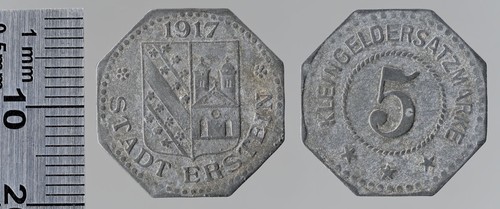
Ludwigs-Eisenbahn Nürnberg-Fürth 150 Pfennig
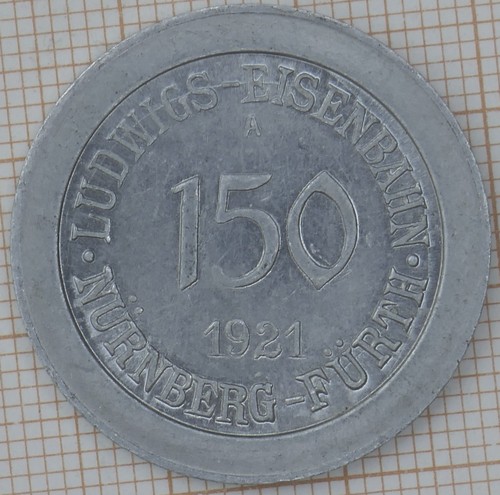
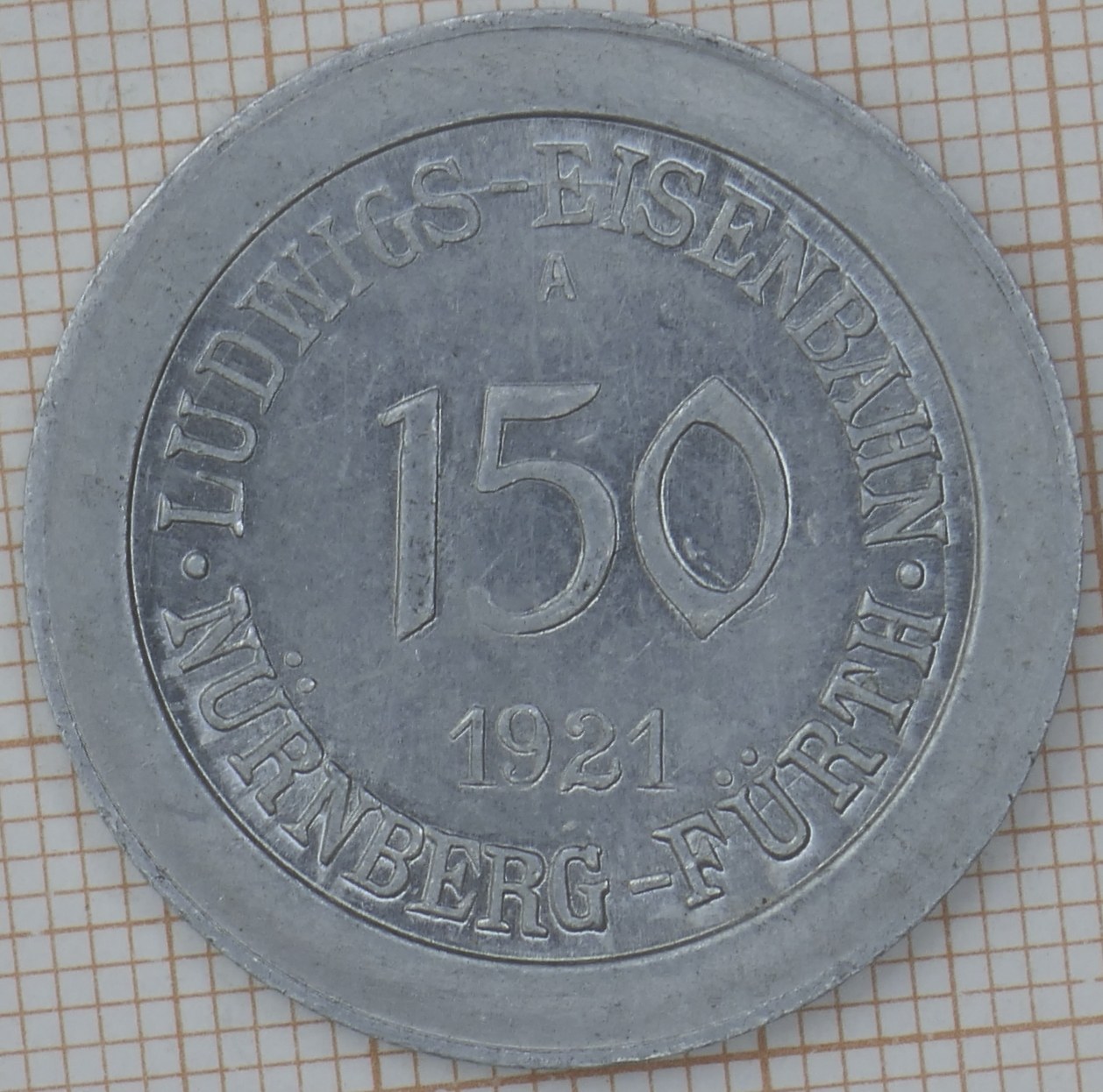
A 1921 German emergency-money 150 Pfennig piece from Nürnberg-Fürth, struck in zinc-iron and showing an ornamental Kunstbrunnen fountain monument.
- Country
- Germany
- Denomination
- 150 Pfennig
- Metal
- Zinc-iron
Got a coin like this?
Identify any coin from a photo, free.
Overview
The Ludwigs-Eisenbahn Nürnberg-Fürth 150 Pfennig is a piece of German emergency money (Notgeld) dated 1921 and denominated at 150 Pfennig. The example shown is struck in zinc-iron, a base-metal composition typical of the small-change tokens produced across Germany during the inflation years following the First World War.
The obverse depicts a monument and ornamental architectural structure — a decorative fountain (Kunstbrunnen) — a civic landmark motif, while the reverse carries a single, simple denomination marking for the value of 150 Pfennig. The name links the piece to the Ludwigs-Eisenbahn, the historic Nuremberg-to-Fürth railway, and to the twin cities it connected.
History & Background
By 1921 Germany was in the grip of the monetary disruption that would culminate in the hyperinflation of 1922–1923. As official coinage lost value and small change grew scarce, cities, districts, private firms and associations across the country issued their own Notgeld — emergency money — in paper, and in base-metal tokens struck from cheap materials such as zinc, iron and aluminium. These pieces circulated locally to keep daily commerce moving.
The motif and name tie this issue to the Ludwigs-Eisenbahn (Ludwig Railway), the line opened in 1835 between Nuremberg and Fürth — celebrated as the first steam-hauled passenger railway in Germany. The two neighbouring Franconian cities shared a long civic and commercial history, and Nuremberg's ornamental fountains are among its best-known landmarks, which is consistent with the Kunstbrunnen monument shown on this piece.
Because Notgeld was produced in enormous variety by countless local issuers, pieces of this kind survive today mainly as collectors' items and as tangible mementos of a turbulent chapter in German monetary history rather than as everyday currency.
How to Identify
Obverse: an ornamental monument / architectural structure — a decorative fountain (Kunstbrunnen) — rendered as a civic landmark. Look for the surrounding legend naming Nürnberg-Fürth and referencing the Ludwigs-Eisenbahn.
Reverse: a single, plain denomination marking stating the value of 150 Pfennig, typically with the date 1921. The reverse of Notgeld tokens is usually spare, emphasising the value over decoration.
Physical clues: the piece is a small base-metal token in zinc-iron. Such alloys are light and often show grey toning or surface corrosion with age. Confirm the identification by matching the fountain motif, the Nürnberg-Fürth / Ludwigs-Eisenbahn legend, the 150-Pfennig value and the 1921 date together, rather than relying on any one feature.
Value & Collectibility
As a common category of German Notgeld, base-metal emergency tokens of this era are generally modest in value, and much depends on the specific issuer, the denomination, the metal, and above all condition. Well-preserved examples with clear detail and minimal corrosion are more desirable than worn or pitted pieces.
Exact prices vary with the particular variety and the state of the collector market, so treat any single figure with caution. For a specific valuation, compare recent sales of matching Nürnberg-Fürth 150 Pfennig pieces and consult catalogues of German Notgeld, since the field is well documented by issuer and denomination.
Frequently asked questions
What is the Ludwigs-Eisenbahn Nürnberg-Fürth 150 Pfennig?
It is a piece of German emergency money (Notgeld) dated 1921 and valued at 150 Pfennig. The example shown is struck in zinc-iron and features an ornamental fountain monument, tied to the historic Nuremberg-to-Fürth railway.
What is Notgeld?
Notgeld means 'emergency money'. During and after the First World War, German towns, firms and associations issued their own paper and base-metal tokens to cope with coin shortages and inflation. This piece is one such local issue.
What is shown on the coin?
The obverse shows a monument and ornamental architectural structure — a decorative fountain (Kunstbrunnen) — while the reverse carries a single, simple 150 Pfennig denomination marking, with the date 1921.
Why does it mention a railway?
The Ludwigs-Eisenbahn was the pioneering railway opened in 1835 between Nuremberg and Fürth, remembered as Germany's first steam passenger line. The token commemorates that heritage of the two connected cities.
Is it valuable?
Base-metal Notgeld of this era is usually modest in value, with condition, issuer and denomination the main factors. Clean, well-struck examples are worth more than corroded ones; compare recent sales of matching pieces for a specific estimate.
Ludwigs-Eisenbahn Nürnberg-Fürth 150 Pfennig guides
In-depth guides for identifying, valuing, and collecting Ludwigs-Eisenbahn Nürnberg-Fürth 150 Pfennig.