
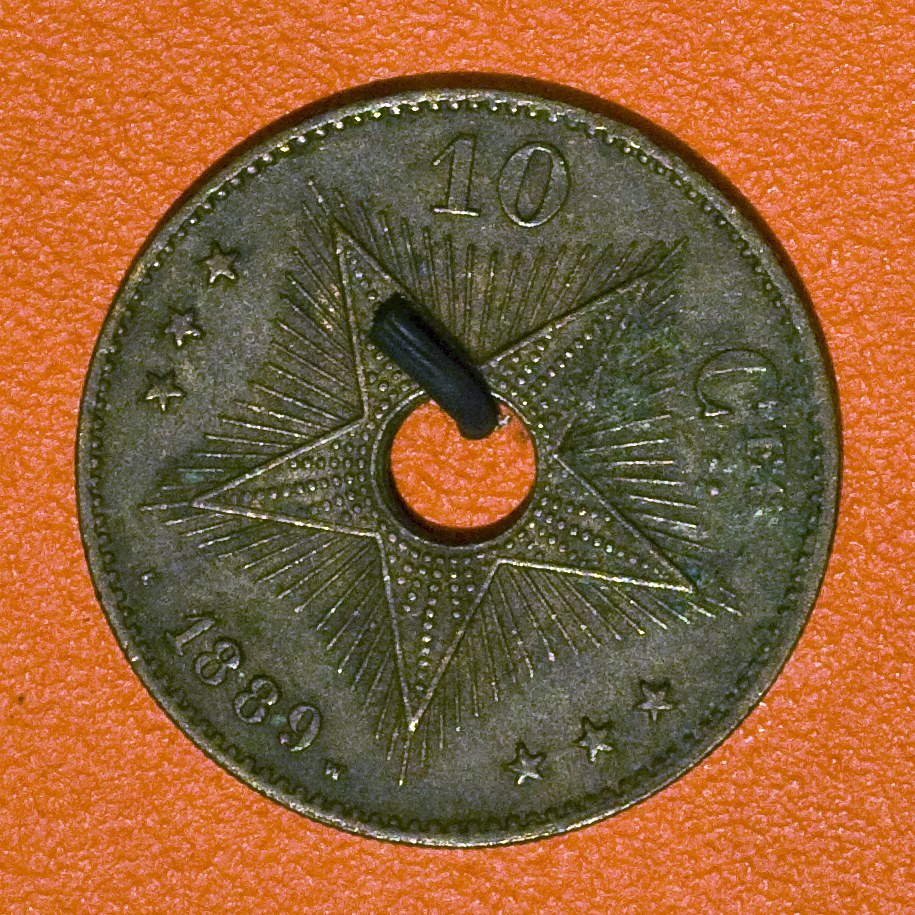
Congolese Commemorative Coin
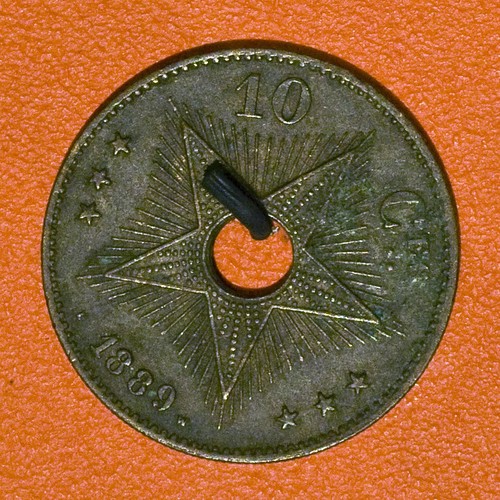
An 1889 holed copper 10-centime coin of the Congo Free State, with a radiant five-pointed star, the value 10 C, and a ring of small stars.
- Country
- Congo Free State (present-day Democratic Republic of the Congo)
- Denomination
- 10 Centimes
- Metal
- Copper
Got a coin like this?
Identify any coin from a photo, free.
Overview
The coin in this photograph is a historical circulation piece of the Congo Free State, cataloged here under the broad label "Congolese Commemorative Coin." The visible face shows the value 10 with a large letter C for centimes, a bold radiant five-pointed star, a border of small stars, and the date 1889, all struck around a central hole in a brown, copper-toned metal.
Despite the generic catalog name, the piece itself is an everyday small-change coin rather than a modern commemorative. It belongs to the early coinage of the Congo Free State, the territory in central Africa that later became the Belgian Congo and, eventually, the Democratic Republic of the Congo.
The holed format and star motif are the defining visual features. The center hole is functional and part of the original design, and the surrounding rays and ring of stars give the coin a distinctive, easily recognized appearance among African colonial-era coppers.
History & Background
The Congo Free State (État Indépendant du Congo) existed from 1885 to 1908 as a territory under the personal rule of King Leopold II of Belgium. It issued its own coinage beginning in the late 1880s to support commerce in the region, separate from Belgium's own coins.
The small-denomination coppers, including the 5 and 10 centimes, were made as holed coins bearing a radiant star and the crowned royal monogram of Leopold II, and were struck in Europe for use in the colony. The 10 centimes appears with dates in this early series, and the example shown is dated 1889.
In 1908 the territory was annexed by Belgium and became the Belgian Congo, which later introduced its own coinage. As a result, Congo Free State pieces such as this one are now historical collectibles tied to a specific and heavily debated period of colonial history; the entry describes the coin as an object without endorsing that history.
How to Identify
Start with the star face, which is the side shown. A genuine coin of this type carries the numeral 10 near the top and a letter C (for centimes) opposite it, a large five-pointed radiant star centered on the coin, a ring of small stars around the rim, and a date such as 1889 along the lower edge. The central hole passes cleanly through the design.
The metal is brown, copper-colored, and the coin is comparatively large and heavy for a small denomination, on the order of a big colonial copper. The opposite face, not shown here, typically bears the crowned intertwined monogram of Leopold II and the legend ÉTAT INDÉPENDANT DU CONGO around the same central hole.
Do not confuse it with the visually similar but smaller 5 centimes of the same series, which reads 5 instead of 10, nor with later Belgian Congo holed coins that were struck in a paler copper-nickel alloy and look silvery rather than brown. Reading the value, the date, and the metal color together is the most reliable way to place the coin.
Value & Collectibility
As a common early colonial copper, most examples are affordable. Well-worn pieces with smooth surfaces, corrosion, or damage around the hole tend to sell for modest sums and are often traded as inexpensive world- or colonial-coin material.
Condition and eye appeal drive any premium. Coins with sharp star rays, a fully legible date, clean fields, and even brown patina bring more than heavily circulated examples, and certain dates within the series can be scarcer than others.
Because values vary with date and grade, treat any figure as a rough guide rather than a fixed price. Check the specific date against recent auction results and world-coin listings, and be cautious with cleaned, holed-as-jewelry, or corroded pieces, which are worth less than problem-free coins.
Frequently asked questions
What coin is actually shown in the photo?
It is a 10 centimes of the Congo Free State, identifiable by the value 10, the letter C, the radiant five-pointed star, the ring of small stars, the central hole, and the date 1889.
Is it really a commemorative coin?
No. "Congolese Commemorative Coin" is a broad catalog label. The piece itself is an ordinary small-change circulation coin from the early coinage of the Congo Free State, not a special commemorative issue.
Why does the coin have a hole in the middle?
The central hole is part of the original design of the Congo Free State's small copper coins. The radiant star and stars are arranged around it, and it was a common feature of low-value coins of the era.
What metal is it made of?
The photographed example is a brown, copper-colored coin, consistent with the copper small-denomination pieces of this series, rather than a pale silver-colored or precious-metal coin.
Is my coin valuable?
Usually modestly. Most worn examples are common and inexpensive, though well-preserved coins with a clear date and sharp star can bring a higher price from collectors of African colonial coinage.
Congolese Commemorative Coin guides
In-depth guides for identifying, valuing, and collecting Congolese Commemorative Coin.
Other coins you may enjoy
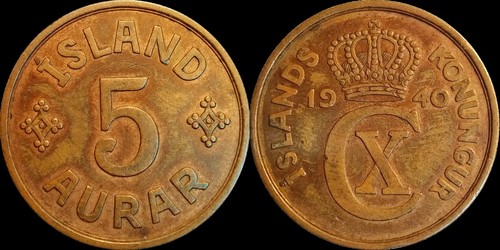
5 Aurar
1926-1942
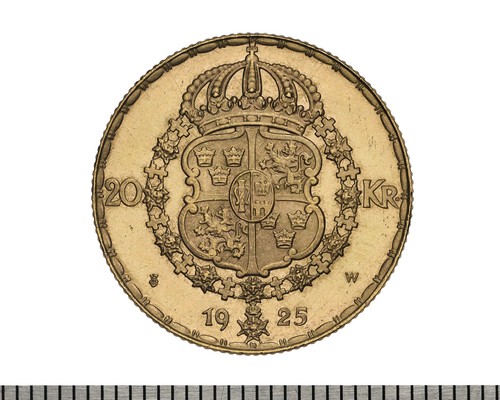
20 Kronor
1925 (denomination struck 1873-1925)
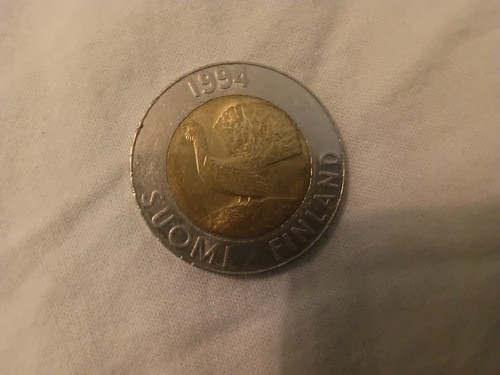
10 Markka
1993–2001
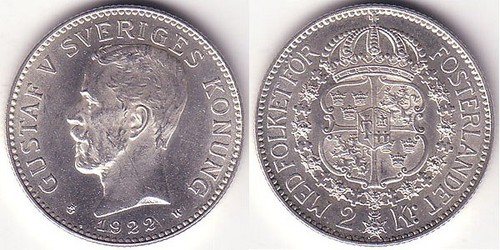
2 Kronor
1910-1940 (this example dated 1922)
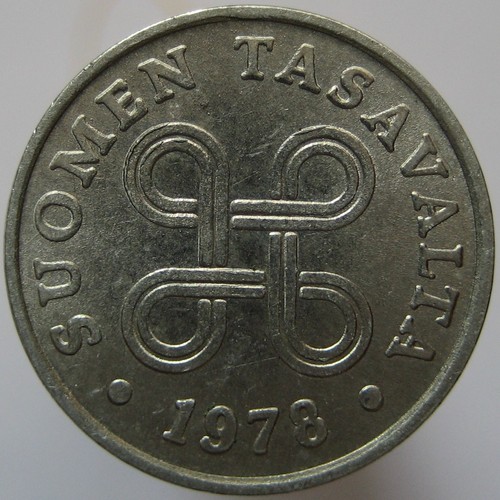
1 Penni
1969–1979
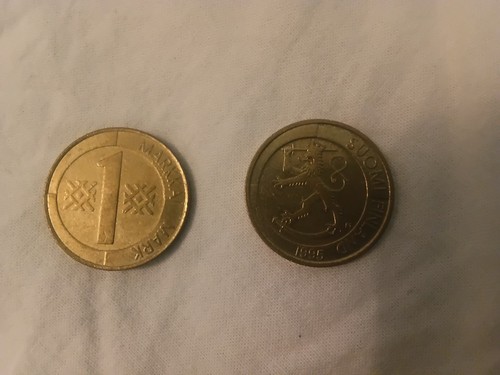
1 Markka
1993–2001
Kenya 5 Shillings
Bimetallic issues (2005–2010)
Kenya 20 Shillings
Modern issue (late 1990s–2000s)
South Africa Farthing
1923-1960
Kenya 10 Shillings
Republic of Kenya, bimetallic issues (mid-1990s to c. 2010)
Gold Sovereign
1817–present
Henri V Five Francs
1831