
Coin Encyclopedia
Search and identify coins from around the world — with country, denomination, metal, mint, history, and how to tell them apart.
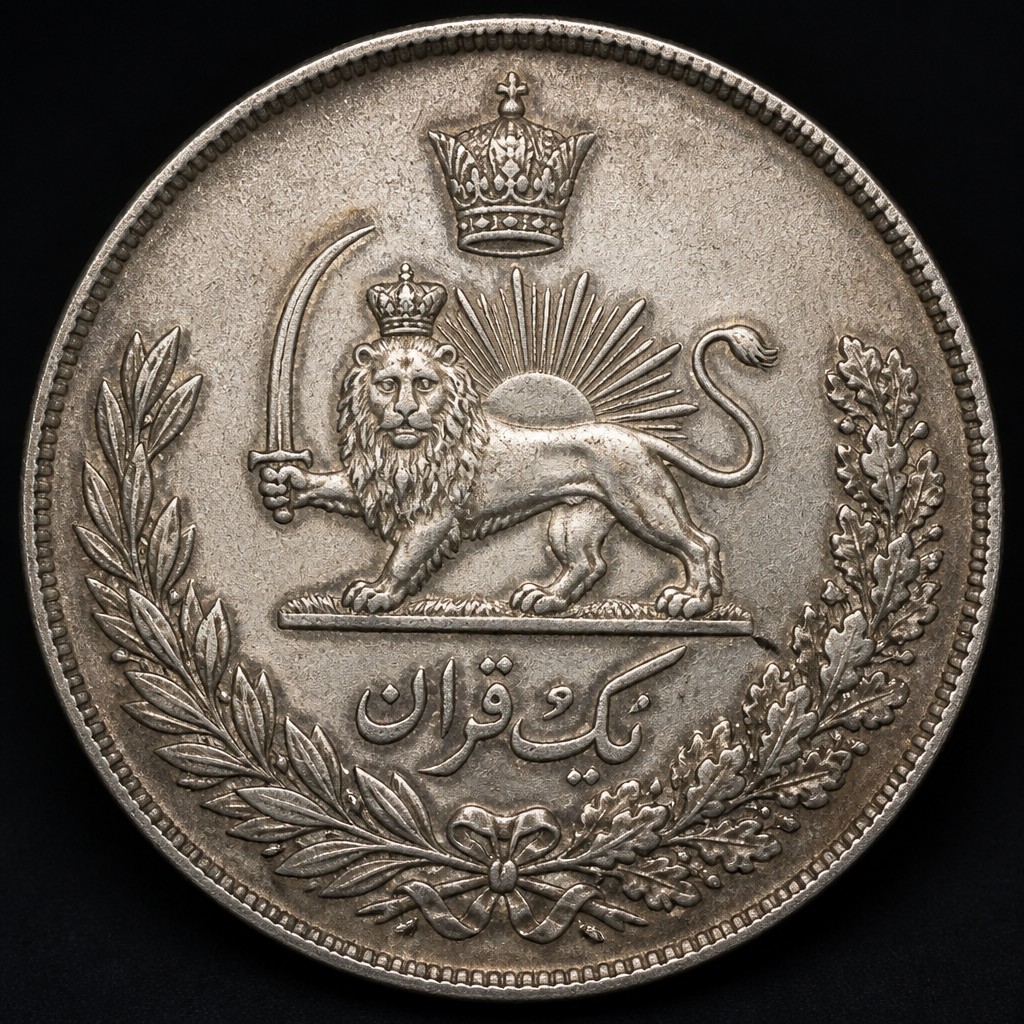
Persian Kran (Qajar silver)
The standard silver coin of Qajar Persia, worth one-tenth of a gold toman, widely struck under Naser al-Din Shah and later rulers and commonly seen with the lion-and-sun emblem.
Asian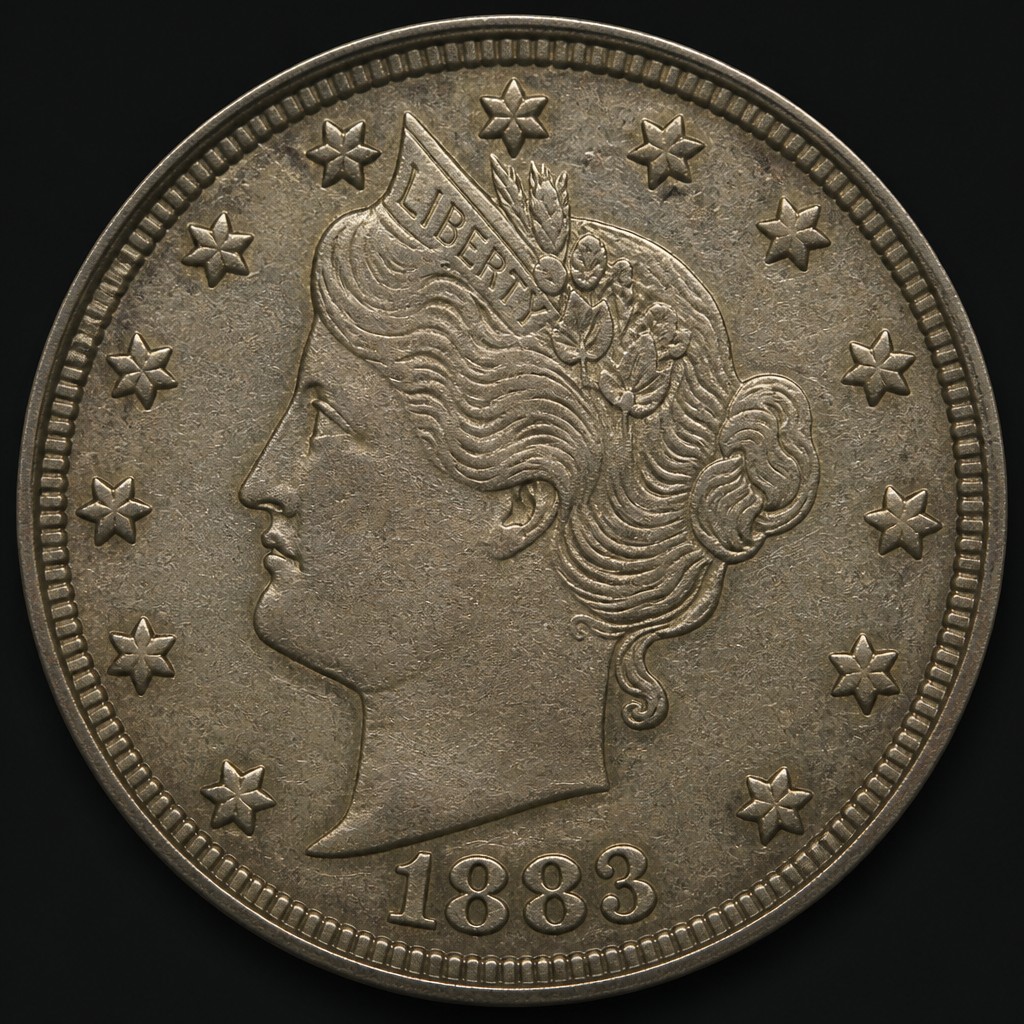
1883 No Cents Liberty Head Nickel
The first-year Liberty Head Nickel design that omitted the word CENTS from the reverse, later infamous as the 'Racketeer Nickel' after being gold-plated and passed off as a five-dollar coin.
United States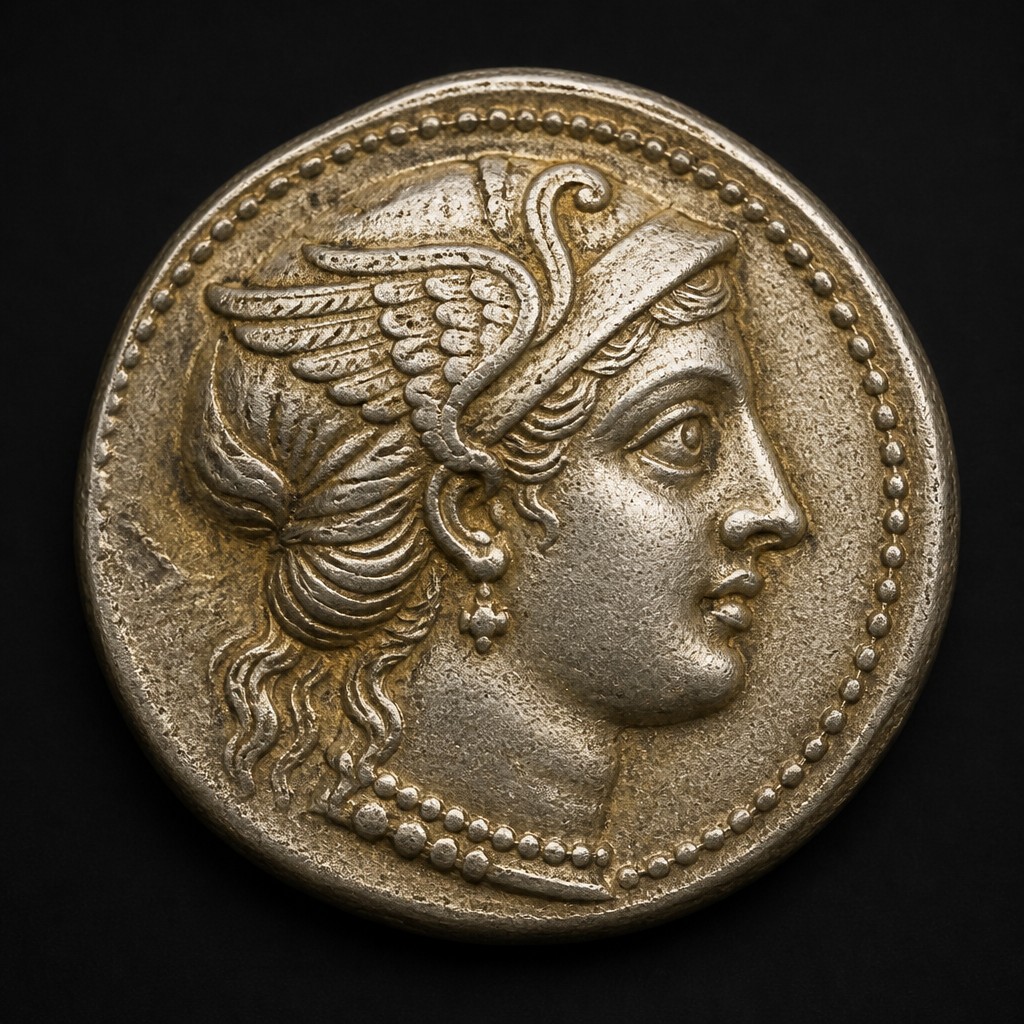
Carthage Zeugitania Electrum Stater
A gold-silver electrum coin struck by Carthage, chiefly to fund its wars in Sicily, showing a wreathed female head and a horse or horse's head.
Ancient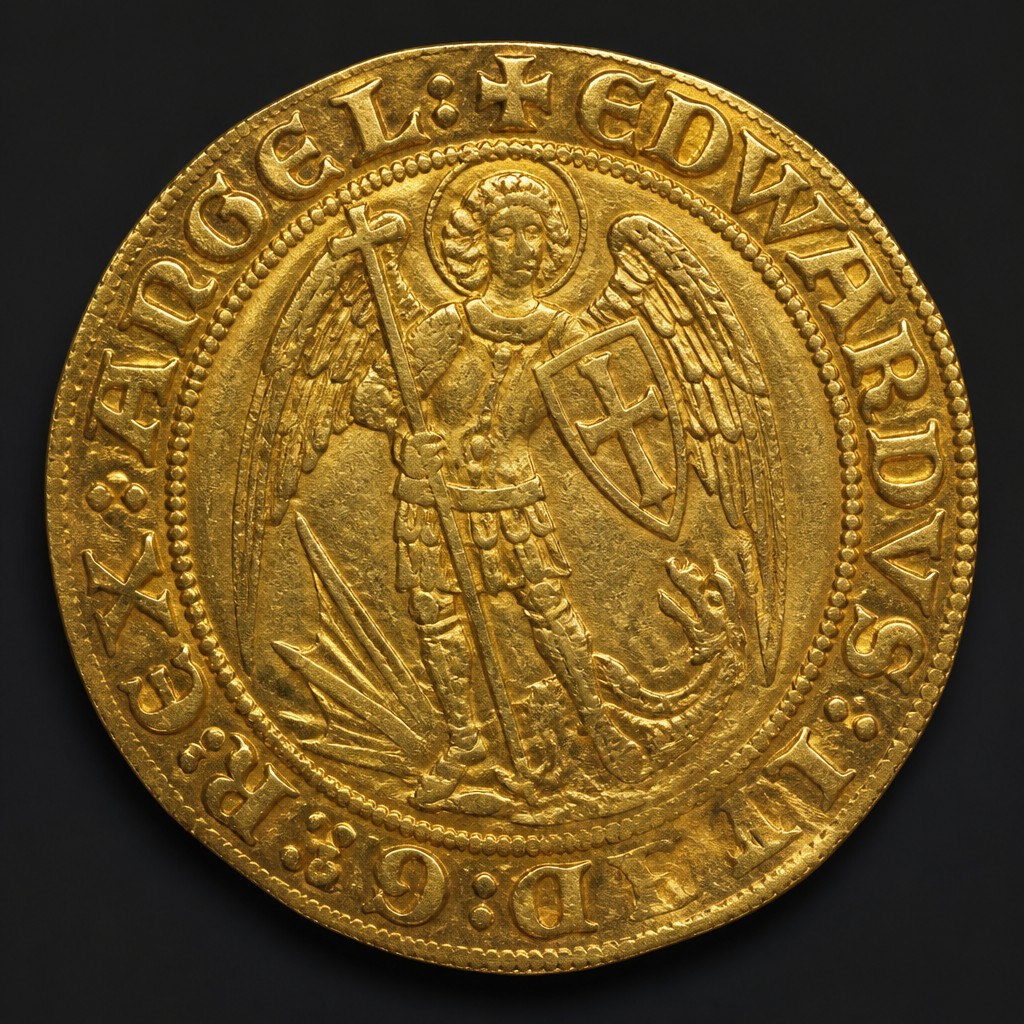
Angel
An English gold coin depicting the Archangel Michael slaying a dragon, introduced in 1465 and famously used as a ceremonial 'touch piece' in royal healing rituals.
British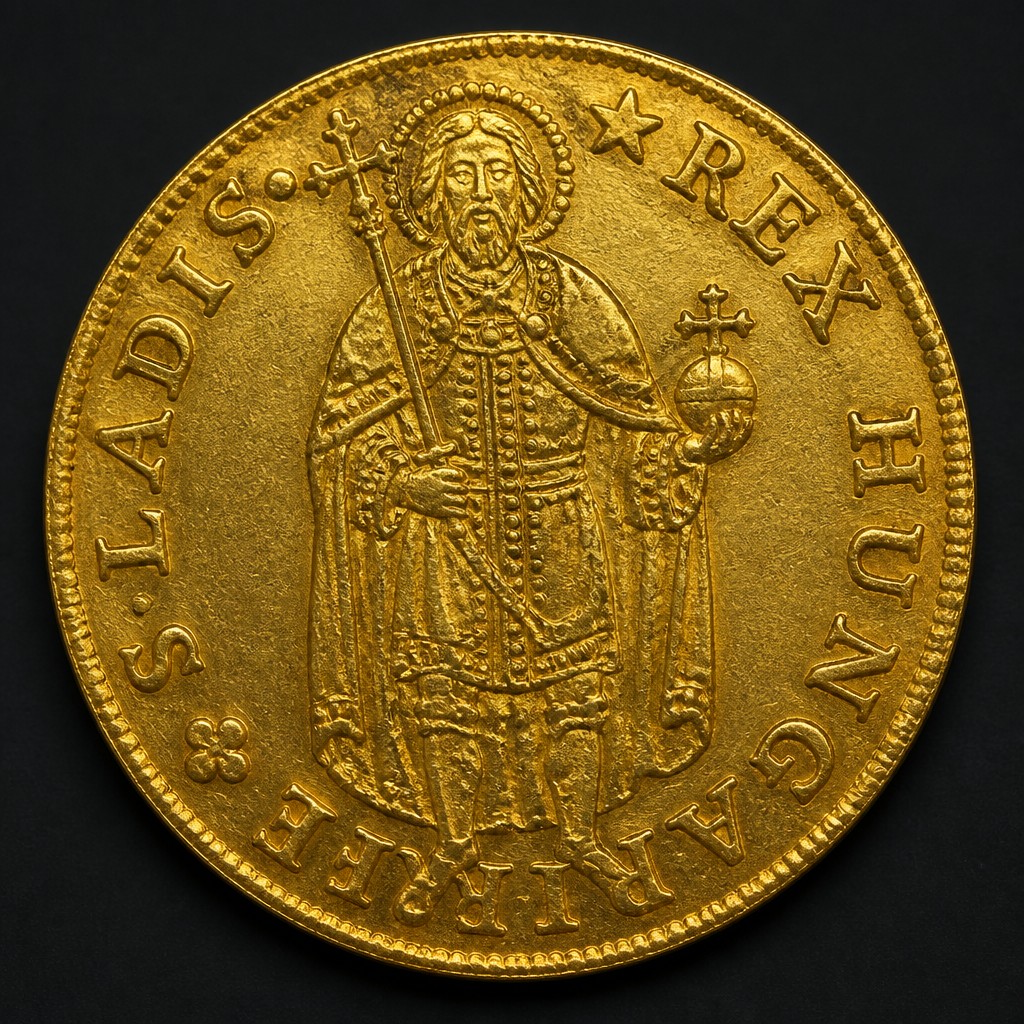
Hungarian Ducat
A remarkably long-lived gold coin of the Kingdom of Hungary, showing St. Ladislaus and the Madonna and Child, prized for centuries as one of Europe's most trusted trade coins.
European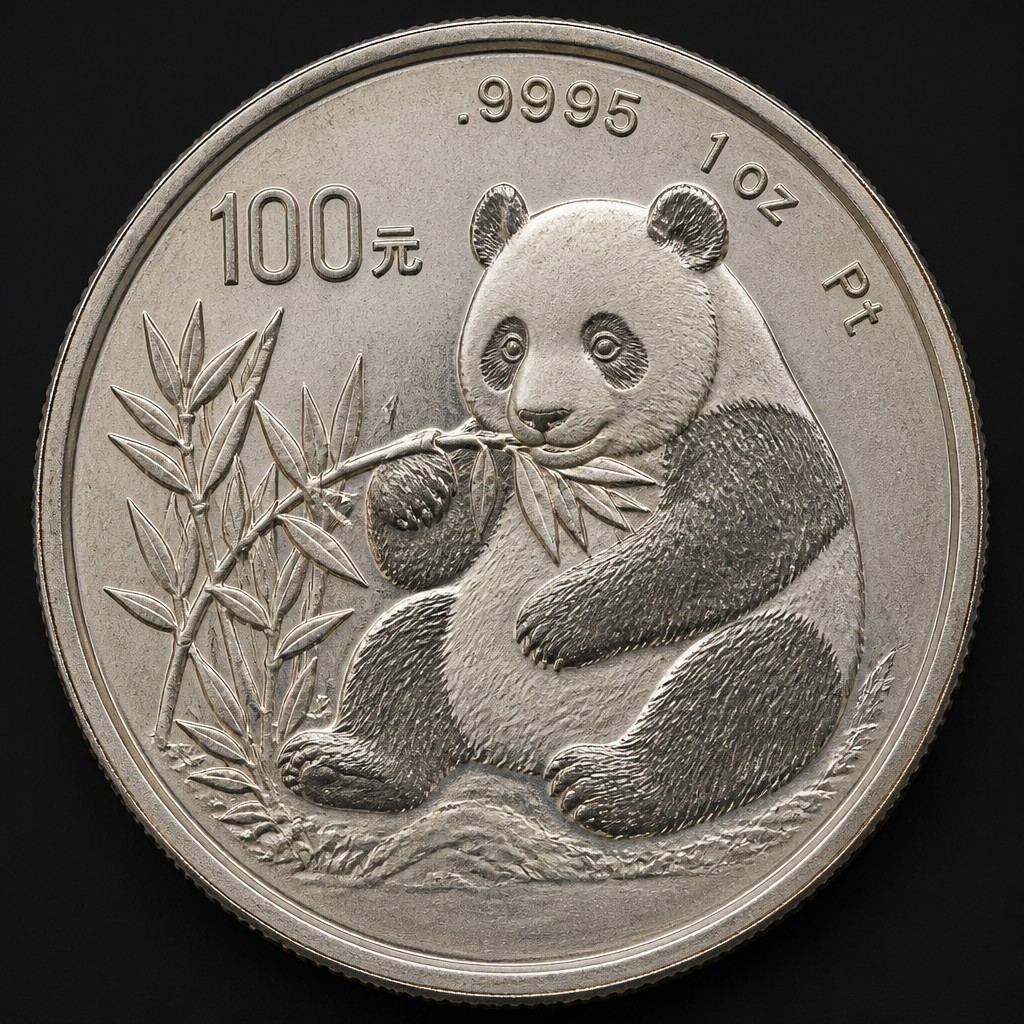
Chinese Platinum Panda
China's platinum bullion coin series, sister to the famous Gold Panda, featuring a new panda design nearly every year since its 1987 debut.
Bullion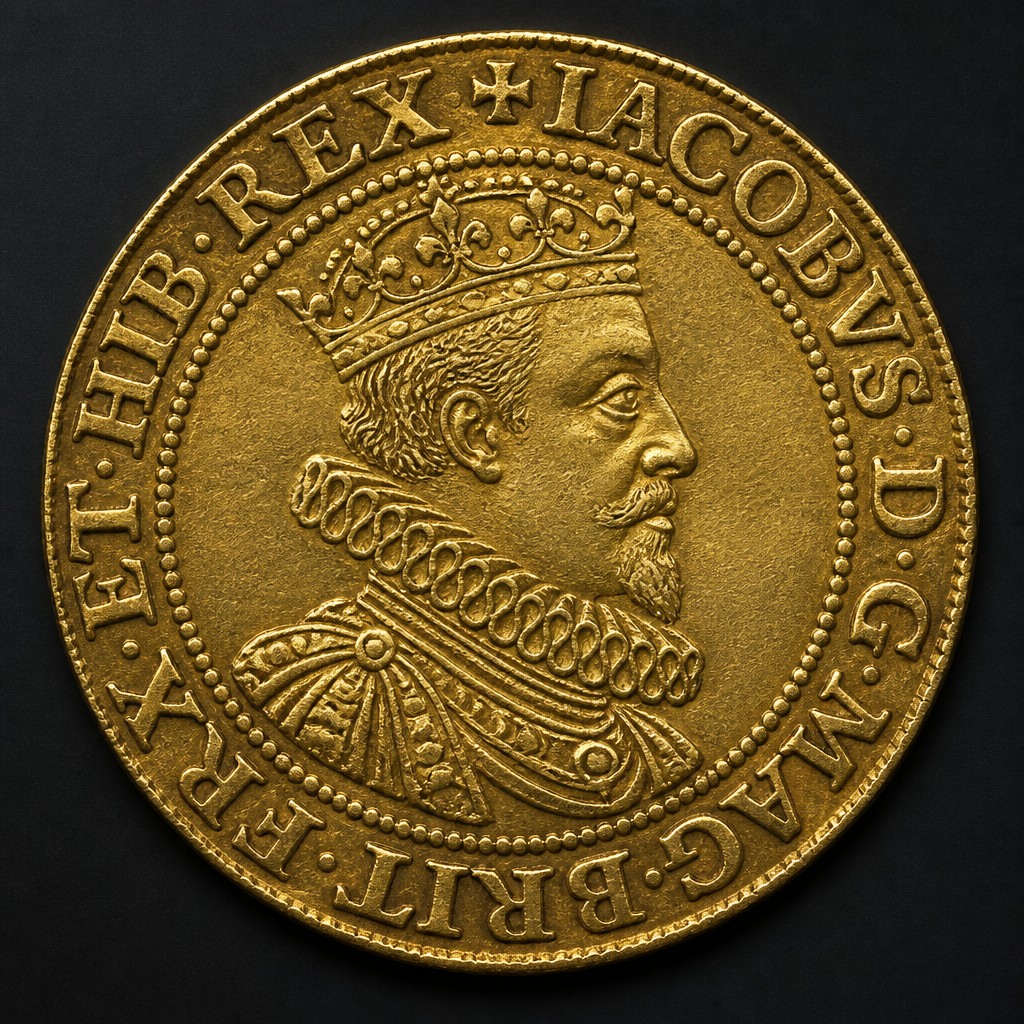
Unite
A gold twenty-shilling coin introduced by James I in 1604 to celebrate the union of the English and Scottish crowns, its name literally symbolizing the joining of the two kingdoms.
British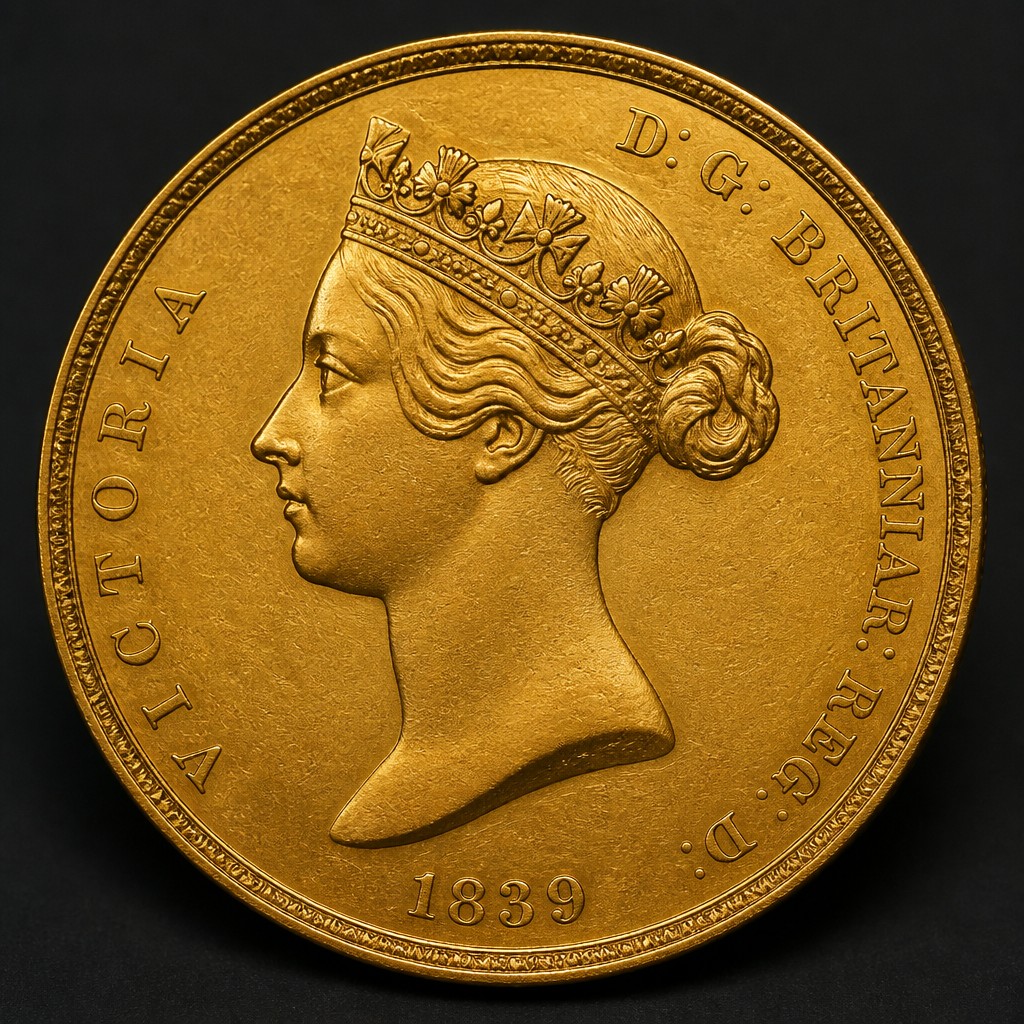
Una and the Lion Five Pound
A legendary 1839 gold proof depicting young Queen Victoria as Una leading a lion, widely considered one of the most beautiful coins ever struck and a benchmark of Victorian coin art.
British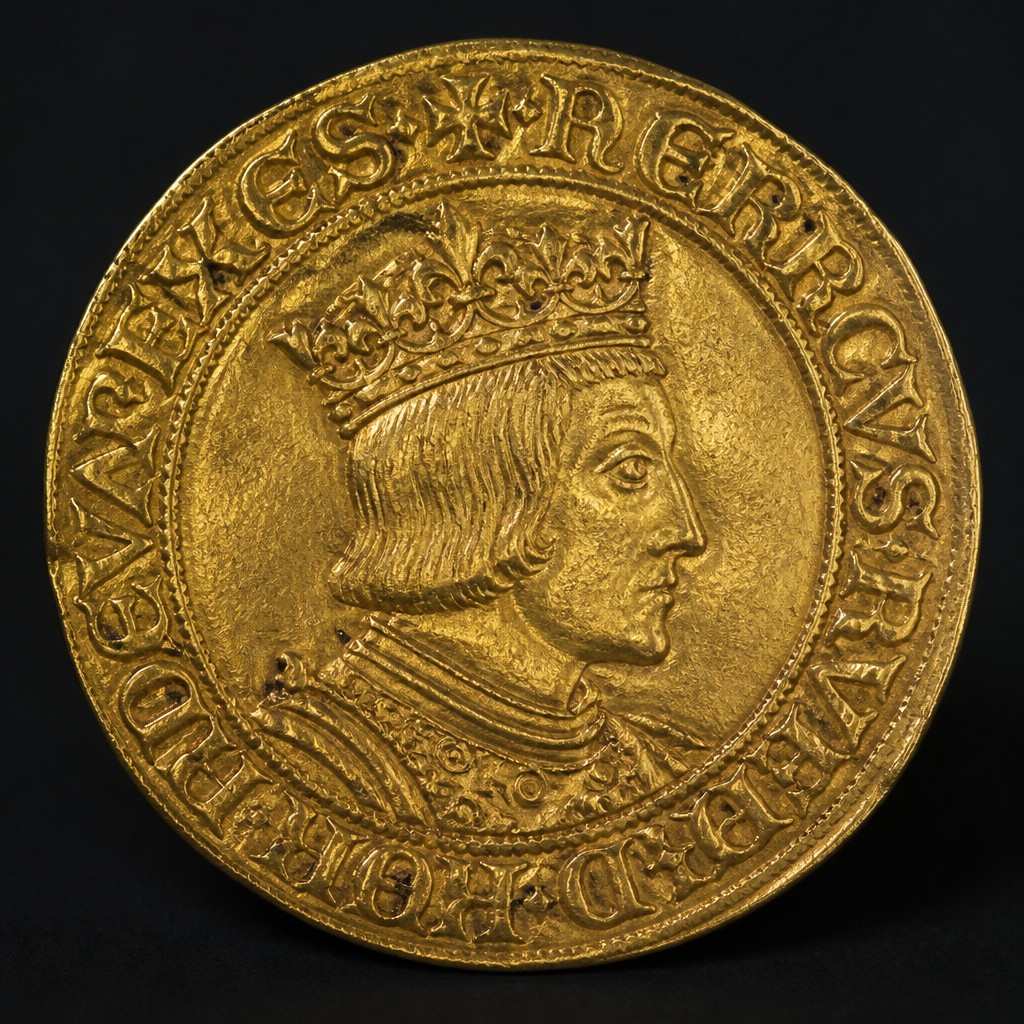
English Sovereign of Henry VII
The first English sovereign, introduced by Henry VII in 1489 as a large, prestigious gold coin showing the king enthroned in majesty, meant to project royal power after the Wars of the Roses.
British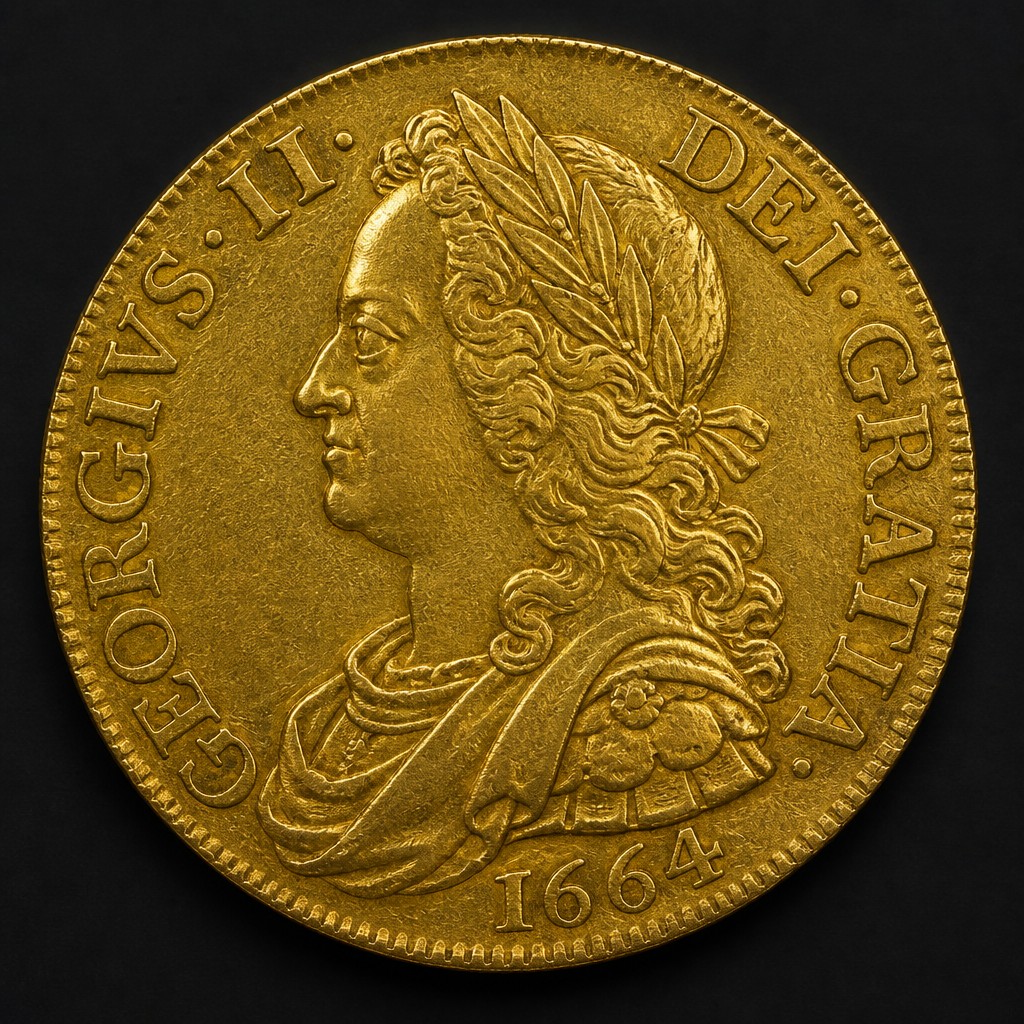
Two Guinea (Double Guinea)
A substantial gold coin worth two guineas, struck intermittently from the reign of Charles II through George II as part of England and Great Britain's early guinea coinage system.
British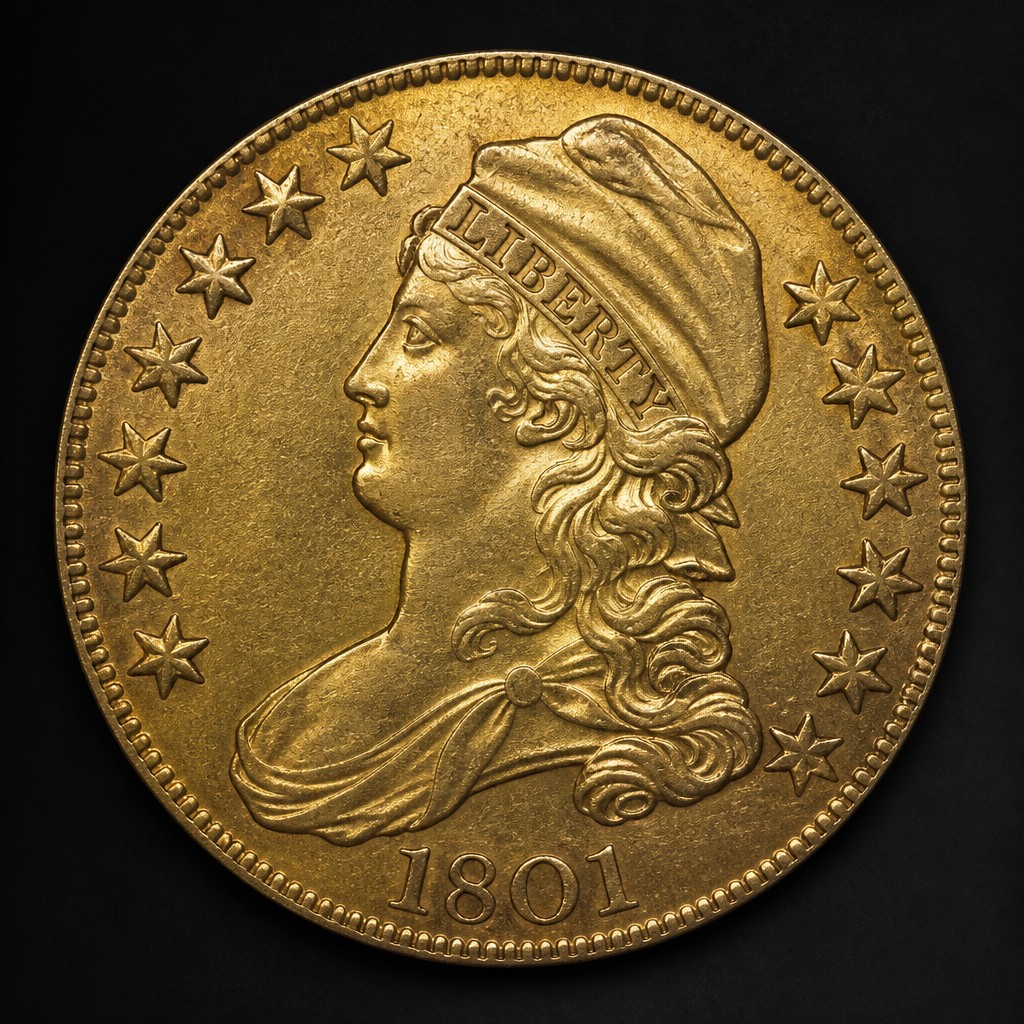
Turban Head Eagle
The first U.S. $10 gold coin, struck 1795-1804 and nicknamed 'Turban Head' for Liberty's cap-like headdress; the earliest examples pair her portrait with a small, spread-winged eagle.
United States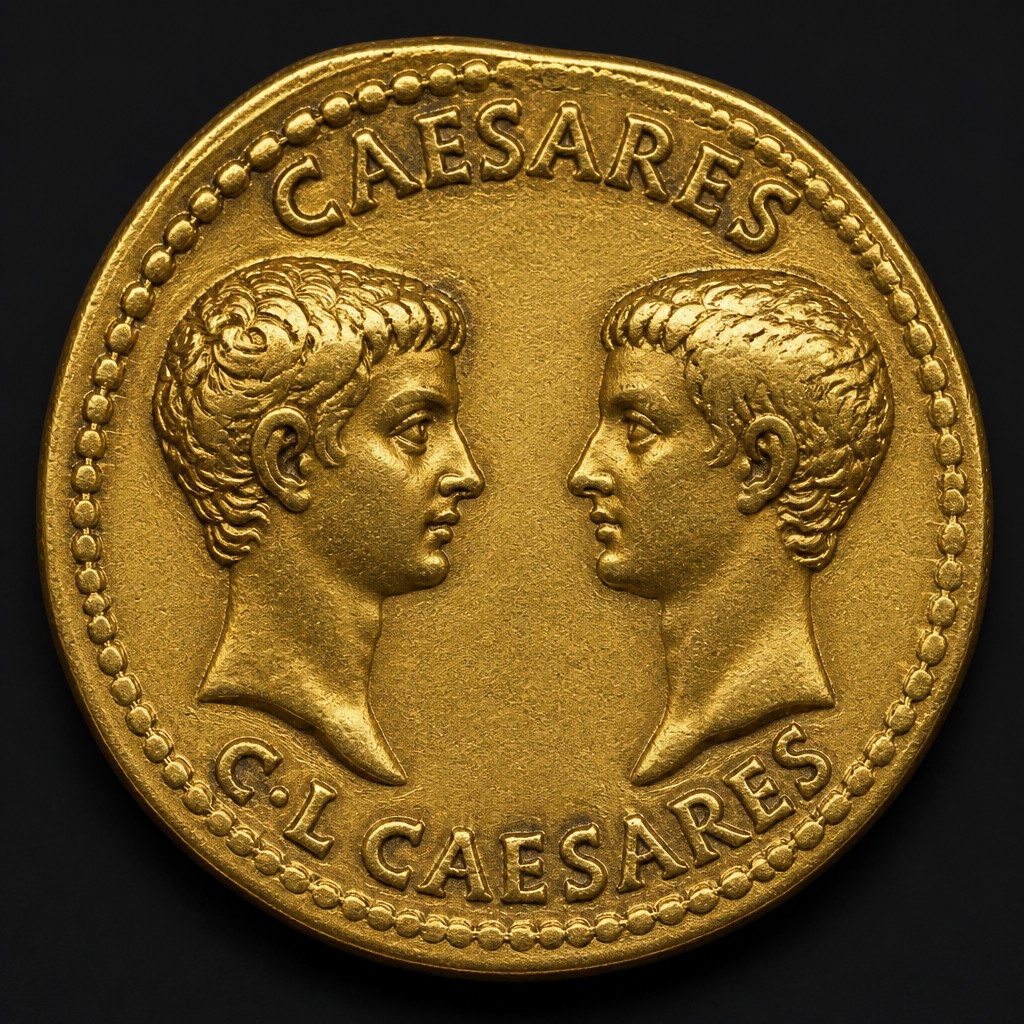
Augustus Aureus Gaius and Lucius Caesar
One of the most common ancient gold coins, an Augustus aureus honoring his grandsons and intended heirs Gaius and Lucius Caesar, both of whom died young.
Ancient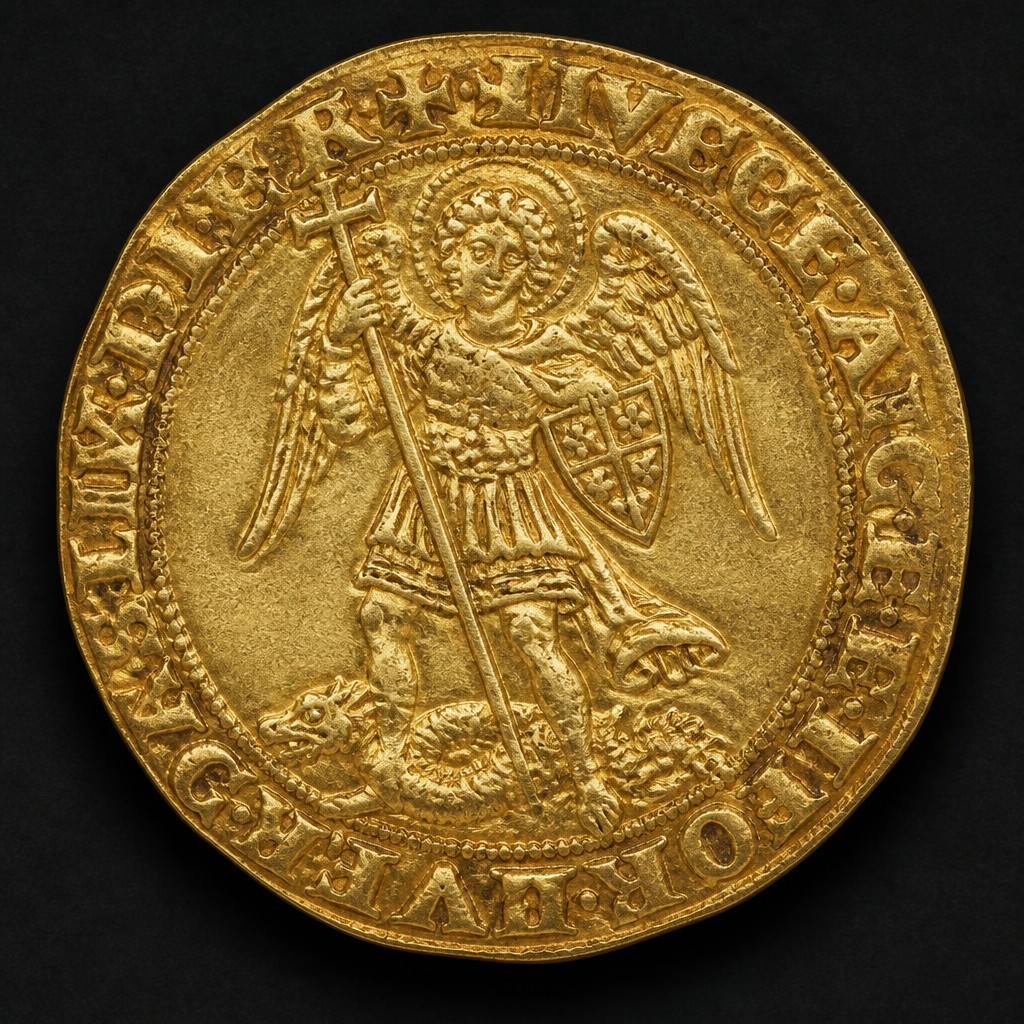
Half Angel (Angelet)
A small English gold coin worth half the value of the Angel, sharing its famous design of the Archangel Michael slaying a dragon, issued across several reigns from Edward IV to James I.
British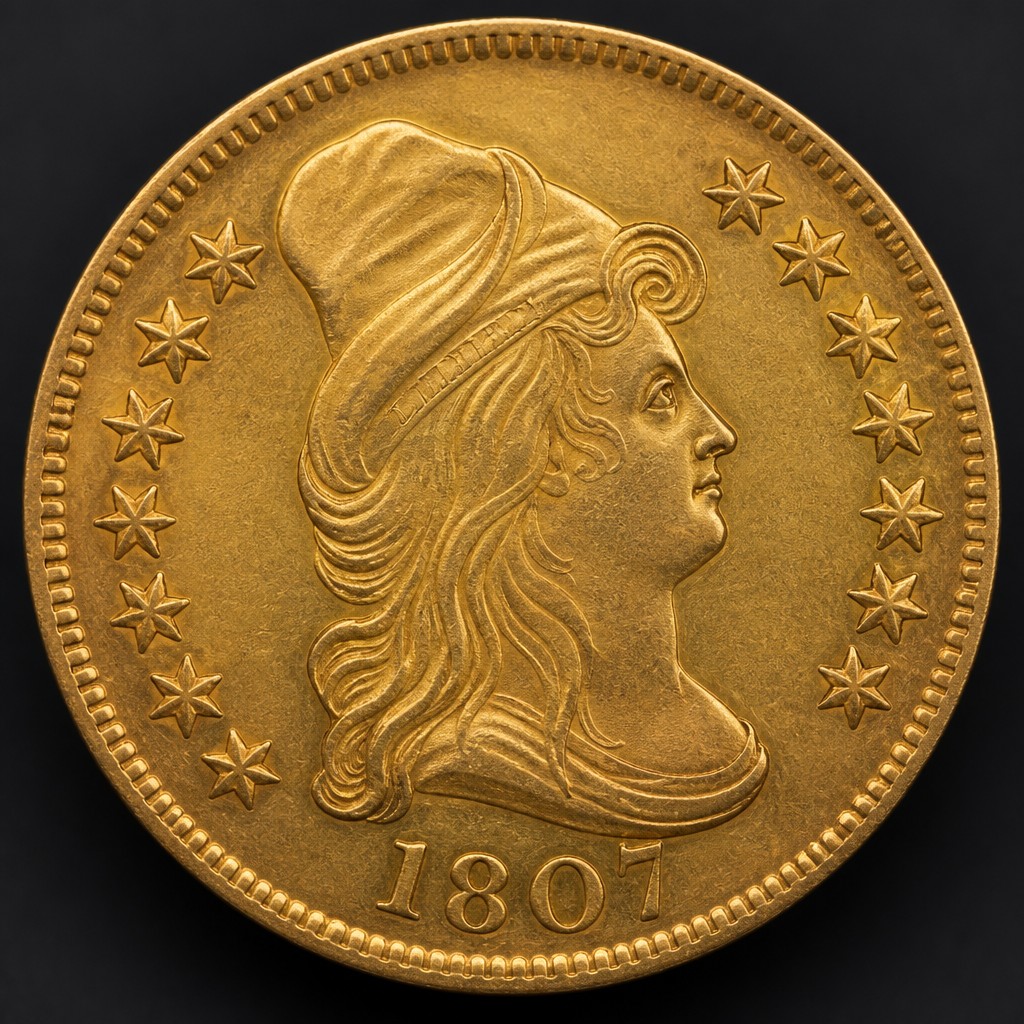
Capped Bust Right Half Eagle
America's first five-dollar gold coin, struck 1795-1807 with Liberty facing right under a soft cap, first paired with a small perched eagle reverse and later a bold heraldic eagle.
United States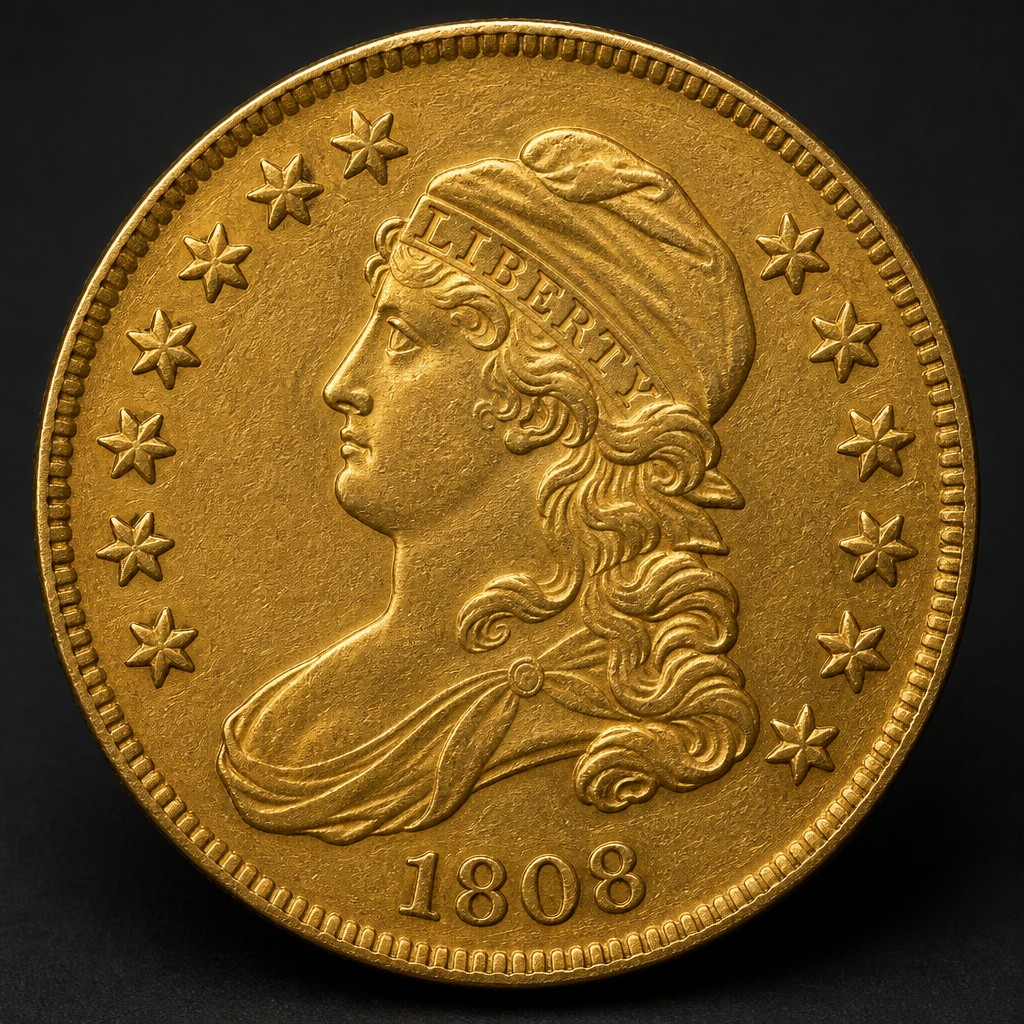
Capped Bust Quarter Eagle
An umbrella term for the earliest U.S. $2.50 gold coins (1796-1834), whose Liberty-in-a-cap portrait evolved through several sub-types, including the famous single-year 1808 issue.
United States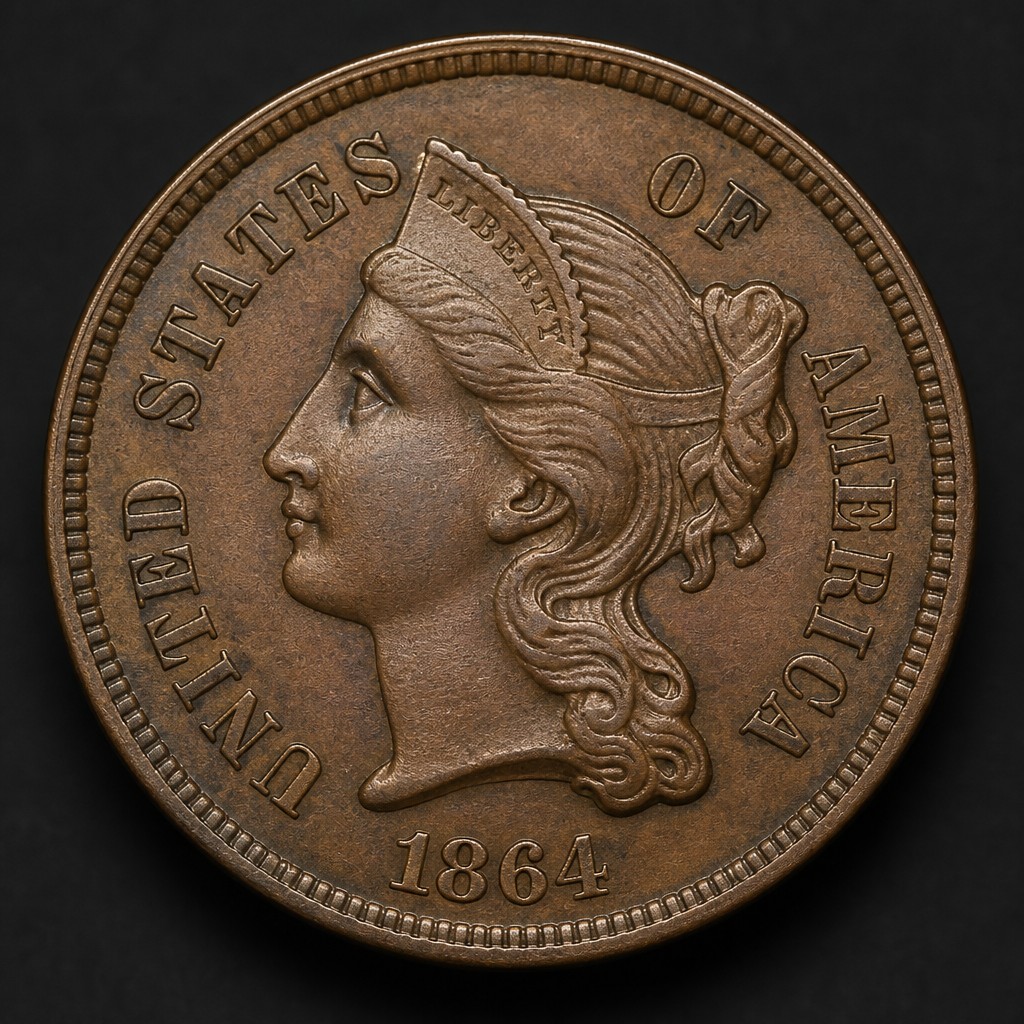
Two-Cent Piece
A short-lived Civil War-era coin notable as the first U.S. coin to bear the motto 'IN GOD WE TRUST,' issued to help ease a wartime coin shortage.
United States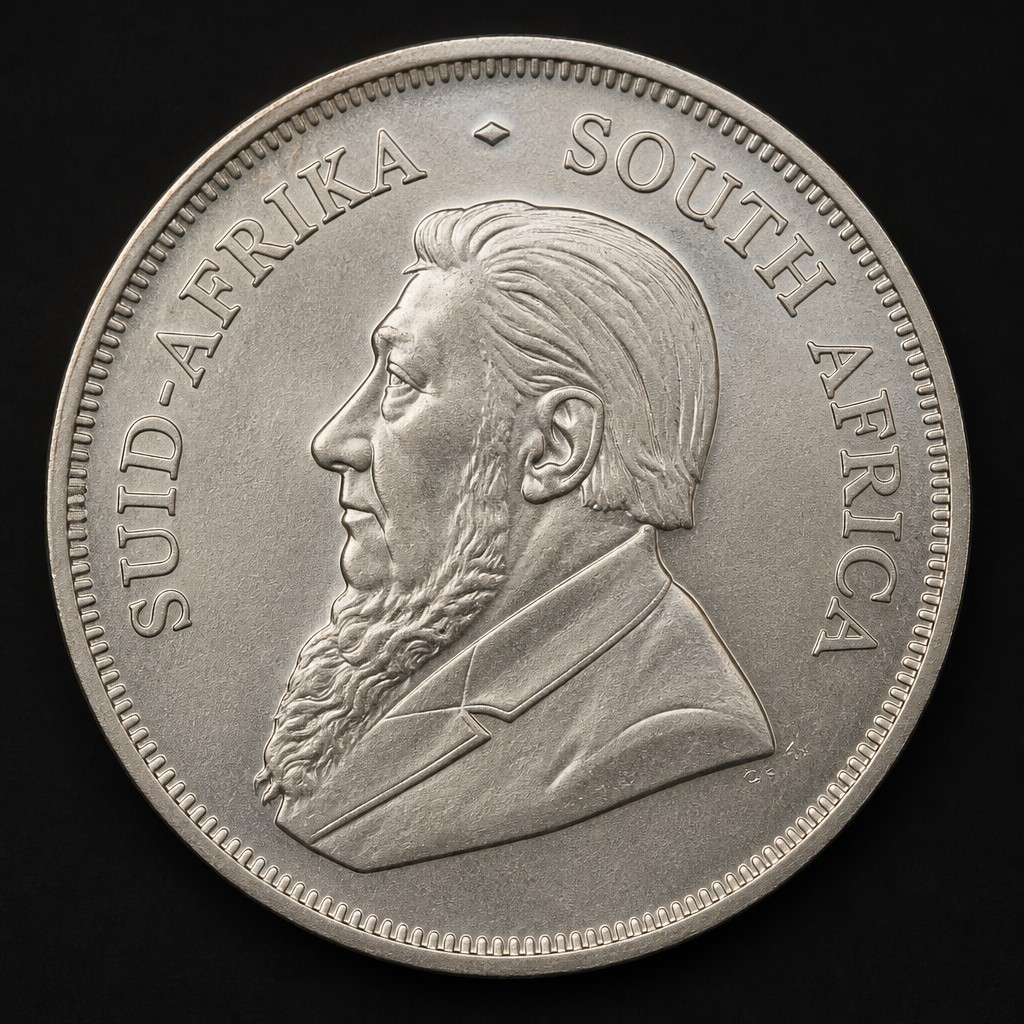
South African Silver Krugerrand
The silver version of the world-famous Krugerrand, launched in 2017 to mark the gold coin's 50th anniversary, using the same Kruger and springbok design.
Bullion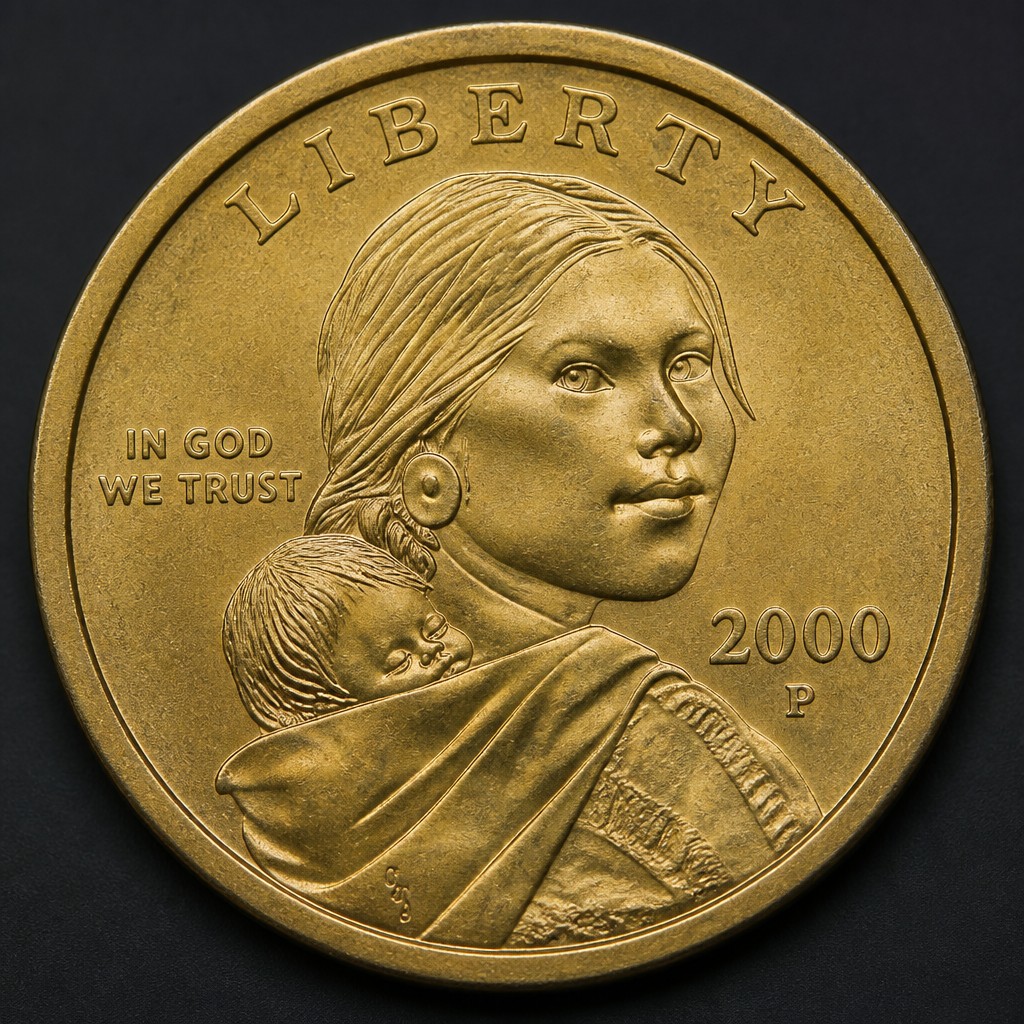
Sacagawea Dollar
A golden-colored, manganese-brass dollar coin (2000-present) depicting Sacagawea carrying her infant son, replacing the Susan B. Anthony dollar.
United States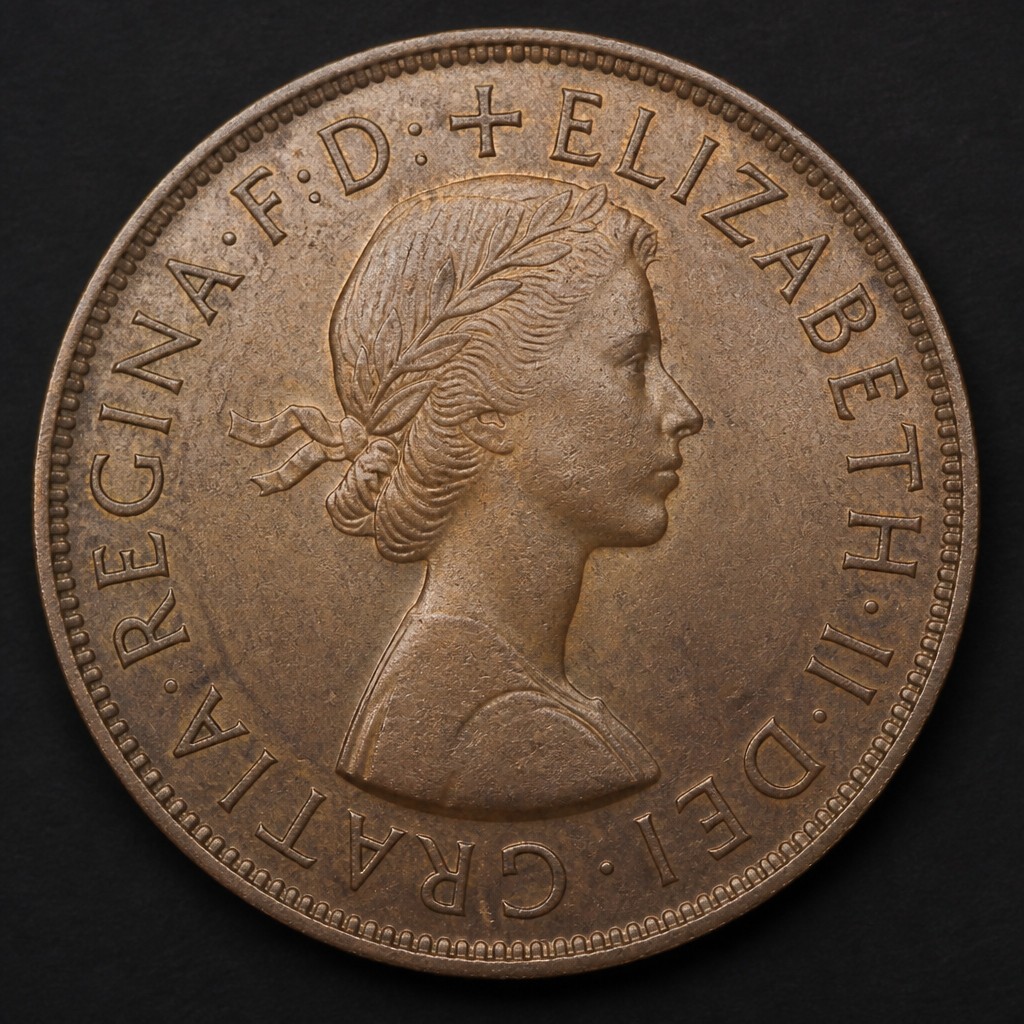
Halfpenny
A small British bronze coin worth half a penny, best known in its twentieth-century form featuring Sir Francis Drake's ship the Golden Hind on the reverse.
British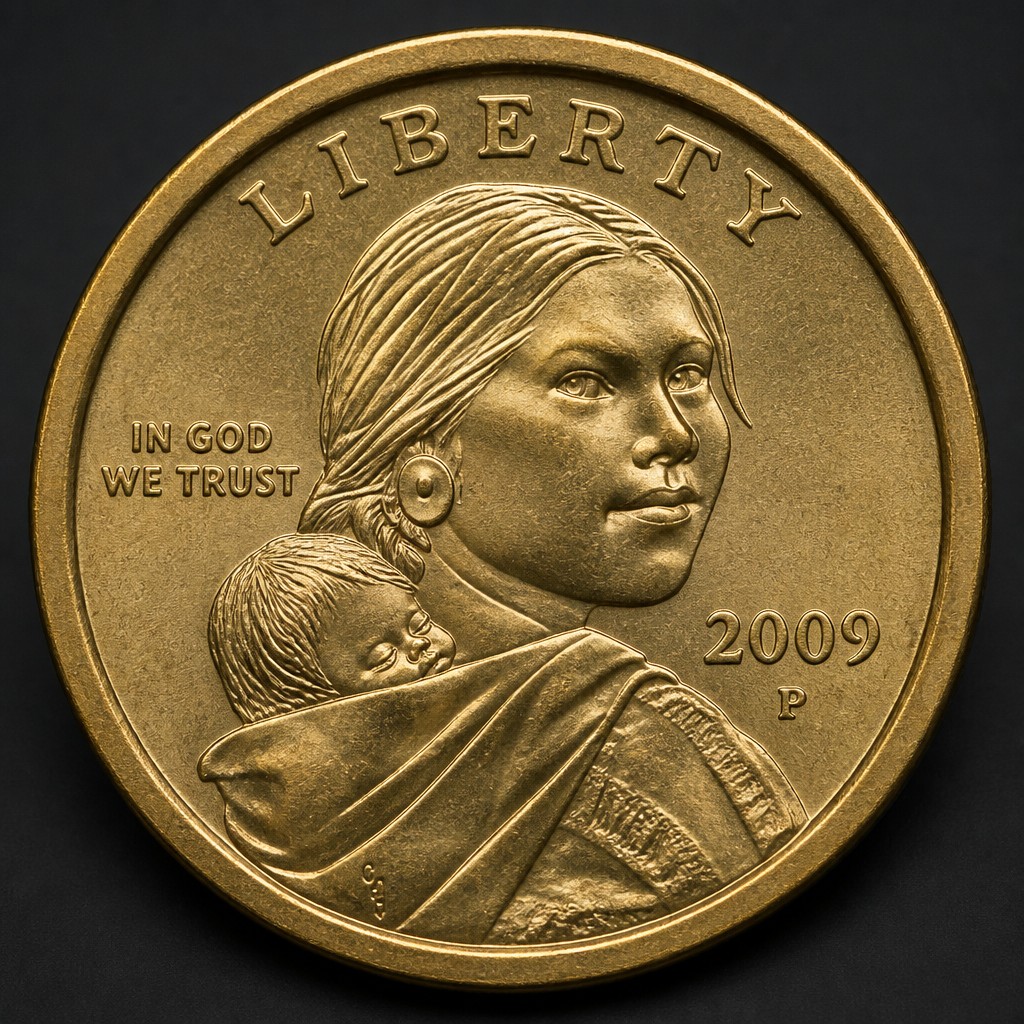
Native American Dollar (Sacagawea Reverse Series)
A continuation of the Sacagawea dollar with an annually changing reverse honoring Native American history and culture, while keeping Sacagawea's portrait on the obverse.
United States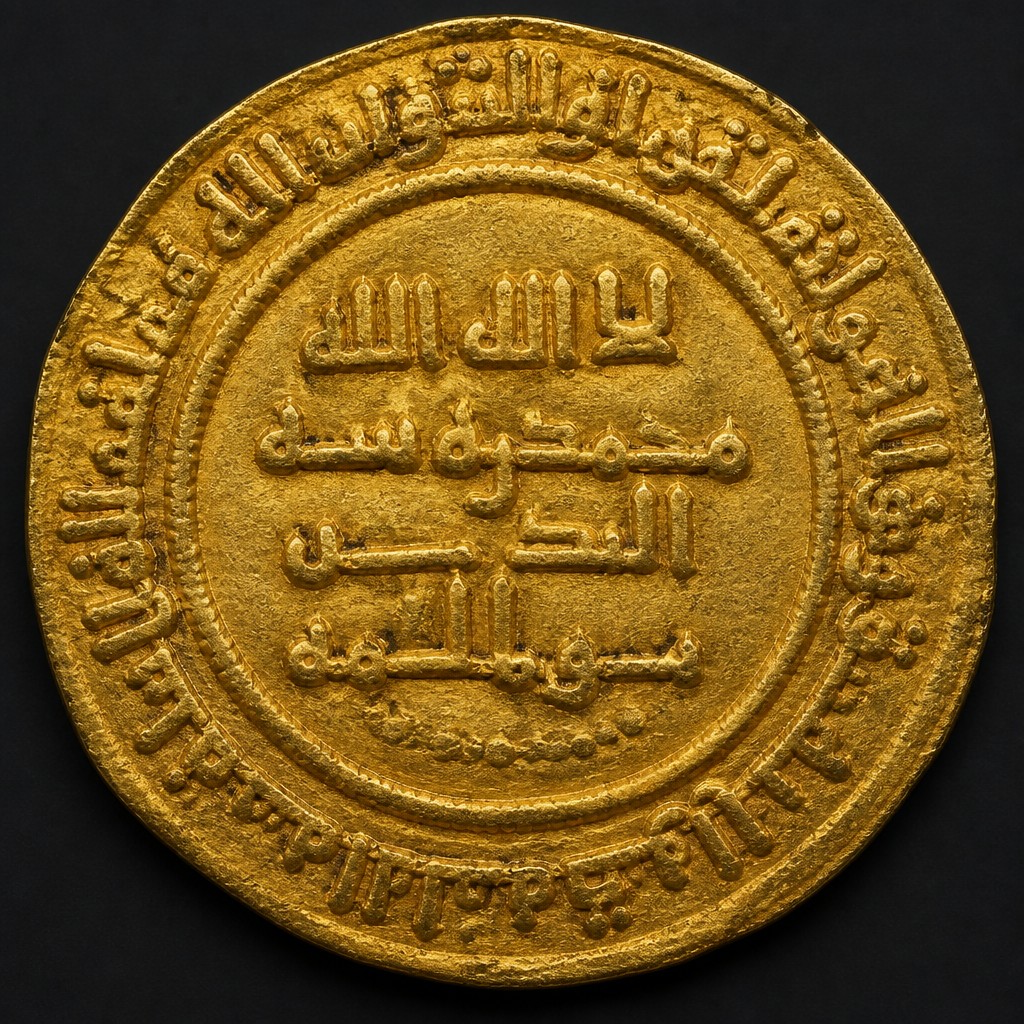
Ayyubid Dinar of Saladin
A gold dinar struck under Salah al-Din (Saladin), founder of the Ayyubid dynasty famed for recapturing Jerusalem, continuing the Islamic tradition of purely inscriptional coinage.
World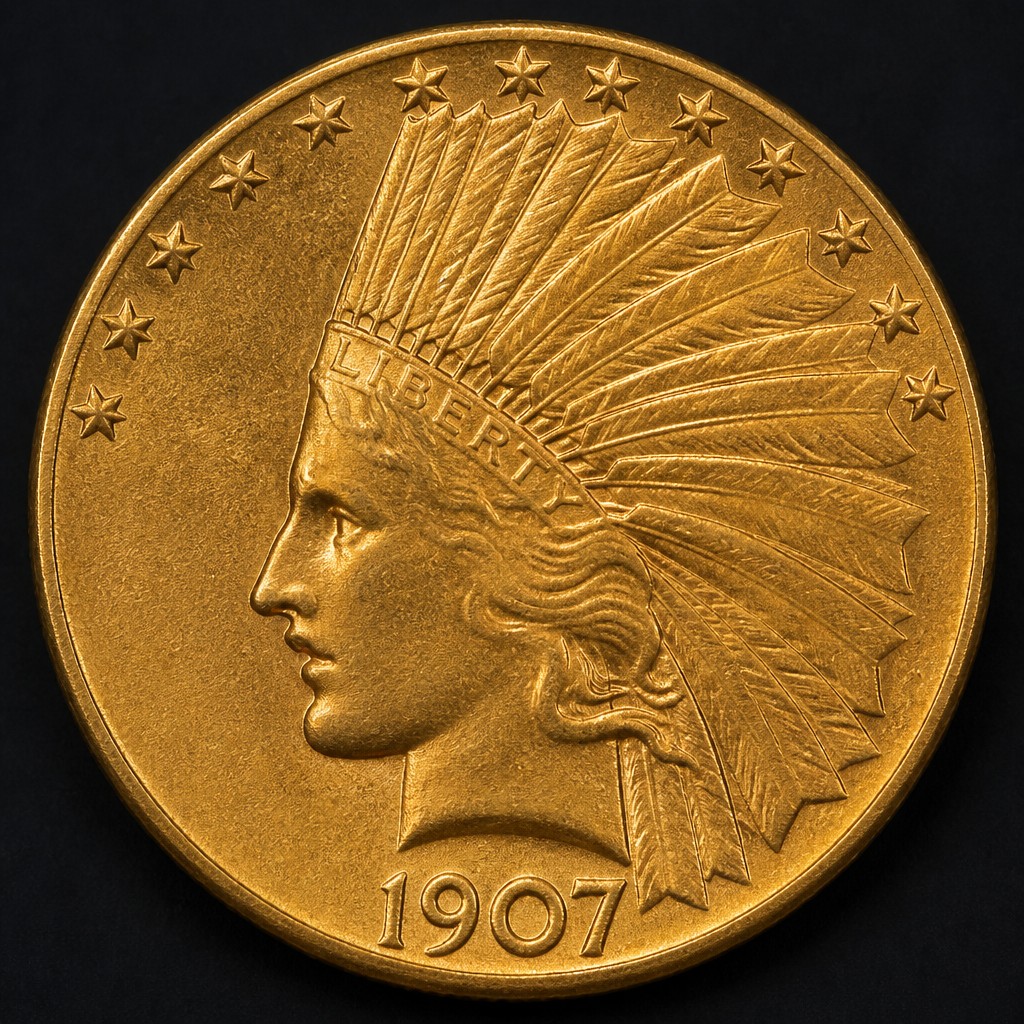
Indian Head Eagle ($10)
A striking early 20th-century gold eagle designed by Augustus Saint-Gaudens as part of President Theodore Roosevelt's push to beautify American coinage.
United States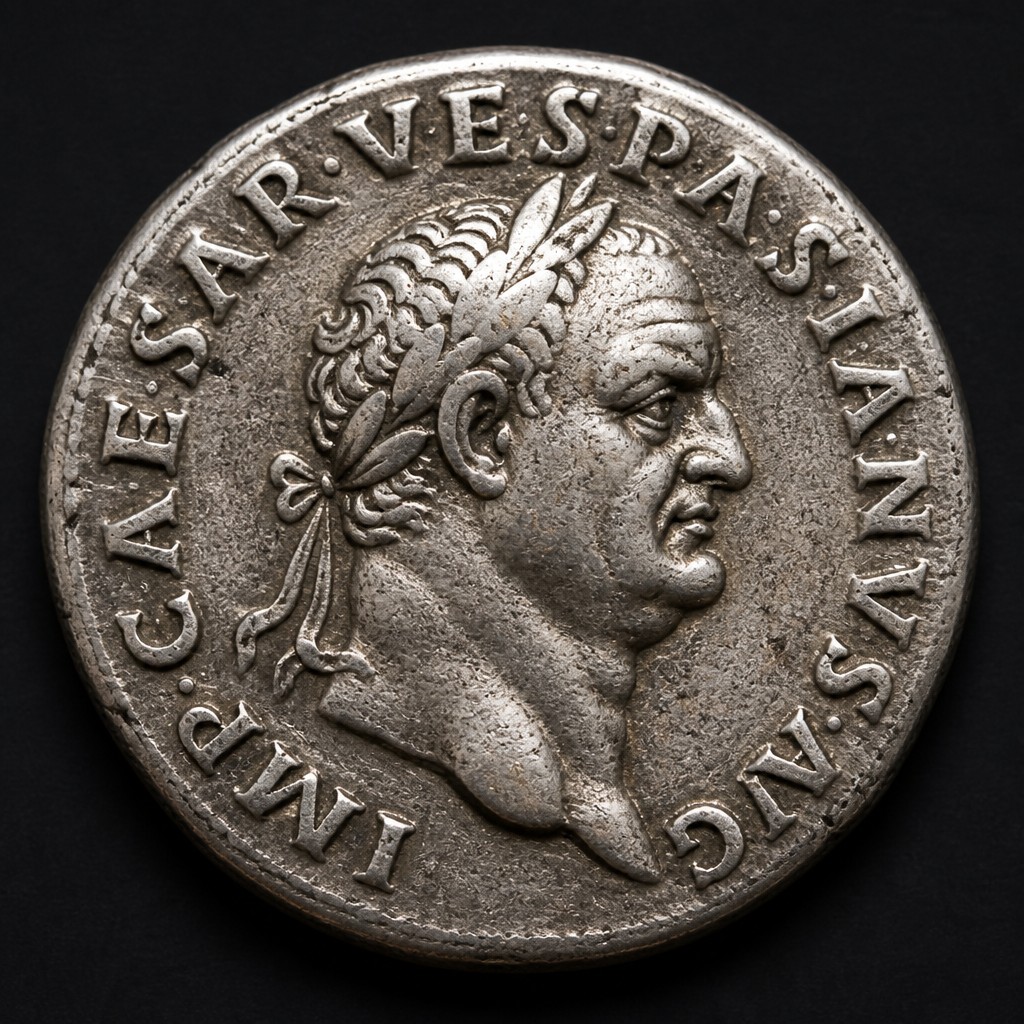
Vespasian Denarius
The silver coin of Emperor Vespasian, founder of the Flavian dynasty, notably including the famous 'Judaea Capta' series commemorating Rome's suppression of the Jewish revolt.
Ancient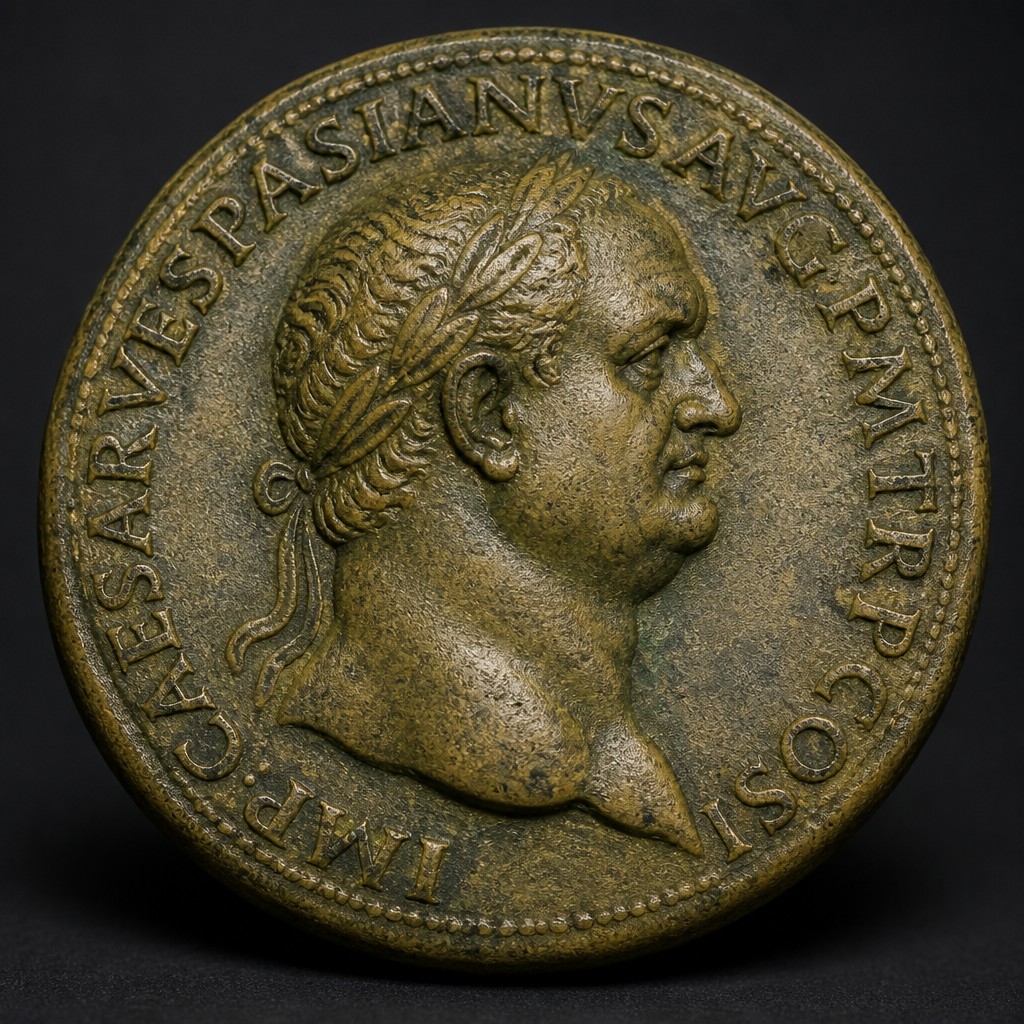
Vespasian Judaea Capta Sestertius
A large bronze coin of Emperor Vespasian commemorating Rome's suppression of the Jewish Revolt, showing a mourning captive beneath a palm tree with the legend IVDAEA CAPTA.
Ancient