
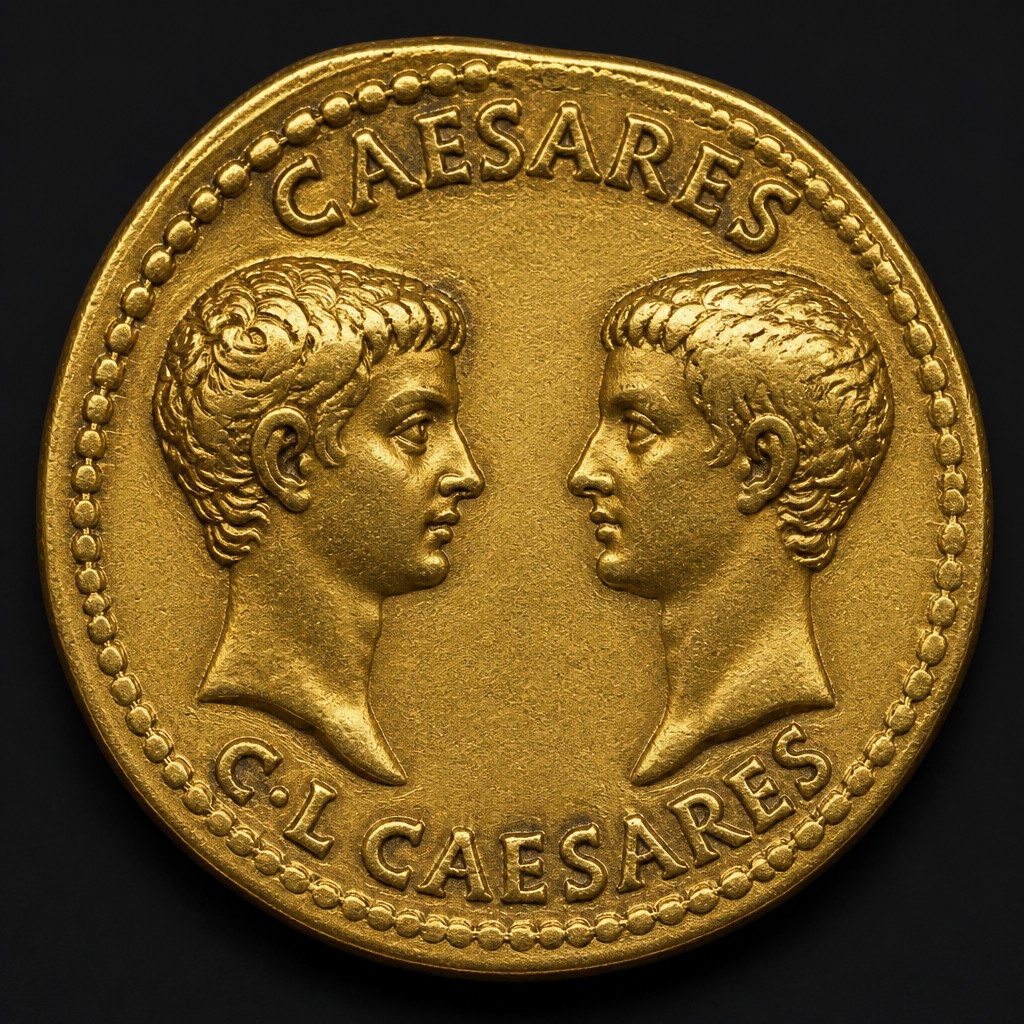
Augustus Aureus Gaius and Lucius Caesar
One of the most common ancient gold coins, an Augustus aureus honoring his grandsons and intended heirs Gaius and Lucius Caesar, both of whom died young.
- Country
- Ancient Rome
- Denomination
- Aureus
- Metal
- Gold
Got a coin like this?
Identify any coin from a photo, free.
Overview
This gold aureus of Augustus, honoring his grandsons and adopted sons Gaius and Lucius Caesar, is among the most frequently encountered ancient gold coins available to collectors today, thanks to its large-scale production at the Lugdunum mint over a period of several years. It offers an accessible way to own a genuine gold coin from the founder of the Roman Empire.
Beyond its availability, the coin carries genuine historical poignancy: Gaius and Lucius were carefully groomed by Augustus as his intended successors, yet both died young, in 4 AD and 2 AD respectively, forcing Augustus to look elsewhere for an heir and ultimately paving the way for Tiberius's succession.
History & Background
Augustus, having no surviving sons of his own, adopted his grandsons Gaius and Lucius Caesar, sons of his daughter Julia and his close ally Marcus Agrippa, as his intended heirs, publicly promoting them and grooming them for eventual leadership of the Roman state. This aureus type, struck in large quantities at the important mint of Lugdunum in Gaul beginning around 2 BC, celebrated the two young princes and their designated role as future leaders of Roman youth.
Tragically for Augustus's succession plans, both young men died prematurely: Lucius in 2 AD and Gaius in 4 AD, from illness and injury respectively, well before either could inherit power. Their deaths forced Augustus to adopt Tiberius as his heir instead, a succession that would shape the future Julio-Claudian dynasty; despite the princes' early deaths, this coin type continued to be struck for some years afterward, contributing to its exceptional survival rate today.
How to Identify
The obverse shows the laureate head of Augustus facing right, with the legend CAESAR AVGVSTVS DIVI F PATER PATRIAE ("Augustus Caesar, son of the deified [Julius Caesar], father of the country"). The reverse depicts Gaius and Lucius Caesar standing side by side, togate, each resting a hand on a shield, with spears standing behind them, and between them a simpulum (ladle) and lituus (augur's staff) representing their priestly offices, with the legend AVGVSTI F COS DESIG PRINC IVVENT ("sons of Augustus, consuls-designate, princes of the youth").
As a standard aureus, the coin is small, roughly 19–20mm, and struck in gold, distinguishing it immediately from denarii of similar diameter but silver composition. This type is notably common for an ancient gold coin due to its large mintage at Lugdunum, and its consistent, easily recognizable design (two standing youths with shields and spears) makes it one of the more approachable ancient gold types for new collectors to learn to identify.
Value & Collectibility
This is widely regarded as one of the most obtainable ancient gold coin types on the market, thanks to substantial original mintage figures at Lugdunum, meaning that well-preserved examples are more available, and often more reasonably priced, than many other Roman gold issues of comparable age. Even so, prices remain well above simple gold bullion value given strong ongoing collector demand for genuine Augustan coinage.
Condition and strike quality matter significantly: coins with sharp, well-centered portraits and clear detail on both standing figures bring notably higher prices than softly struck or heavily handled examples. Because of its relative availability, this type is frequently recommended to collectors seeking their first piece of ancient Roman gold from a major historical figure.
Frequently asked questions
Who are Gaius and Lucius Caesar?
They were Augustus's grandsons, adopted as his heirs and groomed to succeed him, but both died young before they could inherit power, in 2 AD and 4 AD.
Why is this aureus type so common for an ancient gold coin?
It was struck in unusually large quantities at the Lugdunum mint over several years, resulting in a comparatively high survival rate among ancient gold issues.
What do the objects between the two figures represent?
The simpulum (ceremonial ladle) and lituus (augur's staff) reference the religious and priestly offices held by Gaius and Lucius as part of their public honors.
Who eventually succeeded Augustus instead?
After Gaius and Lucius both died young, Augustus adopted Tiberius, who became the second Roman emperor upon Augustus's death in 14 AD.
Other coins you may enjoy
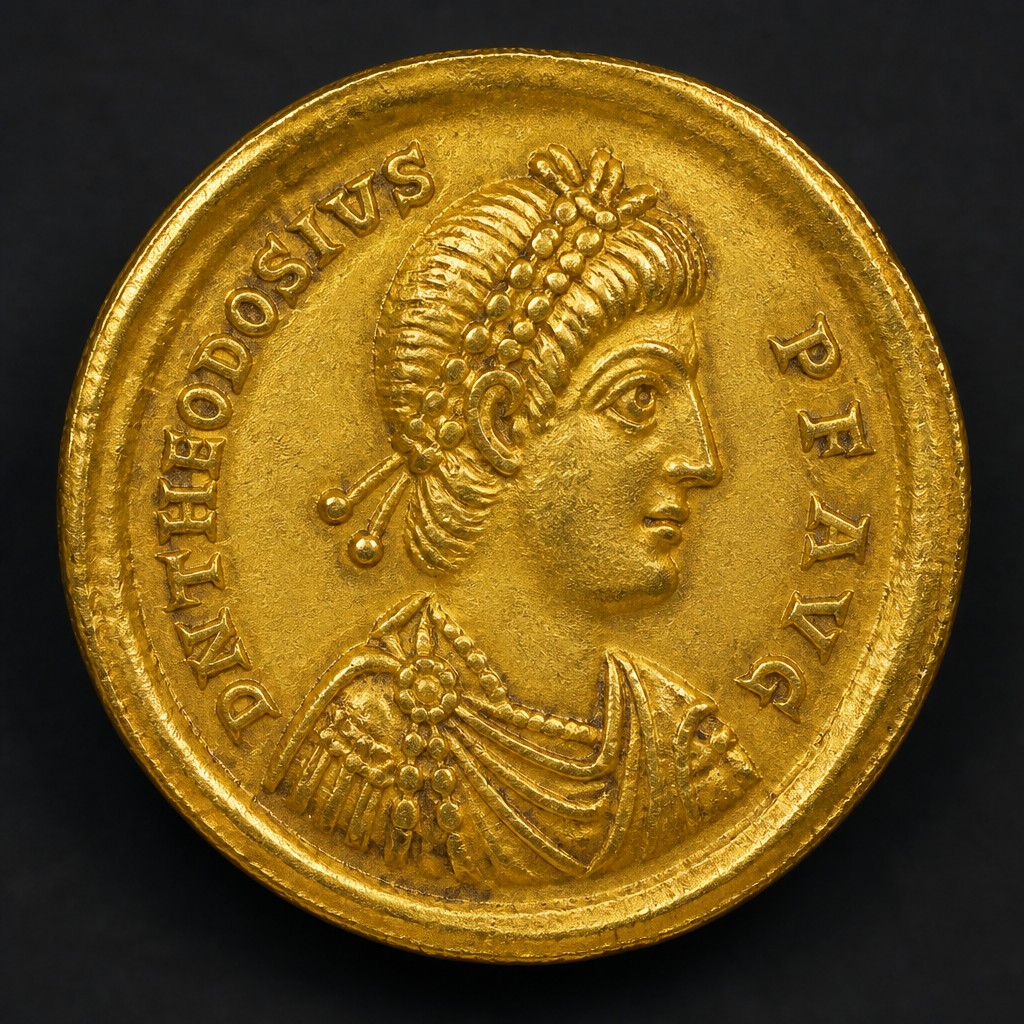
Theodosius I Solidus
379–395 AD
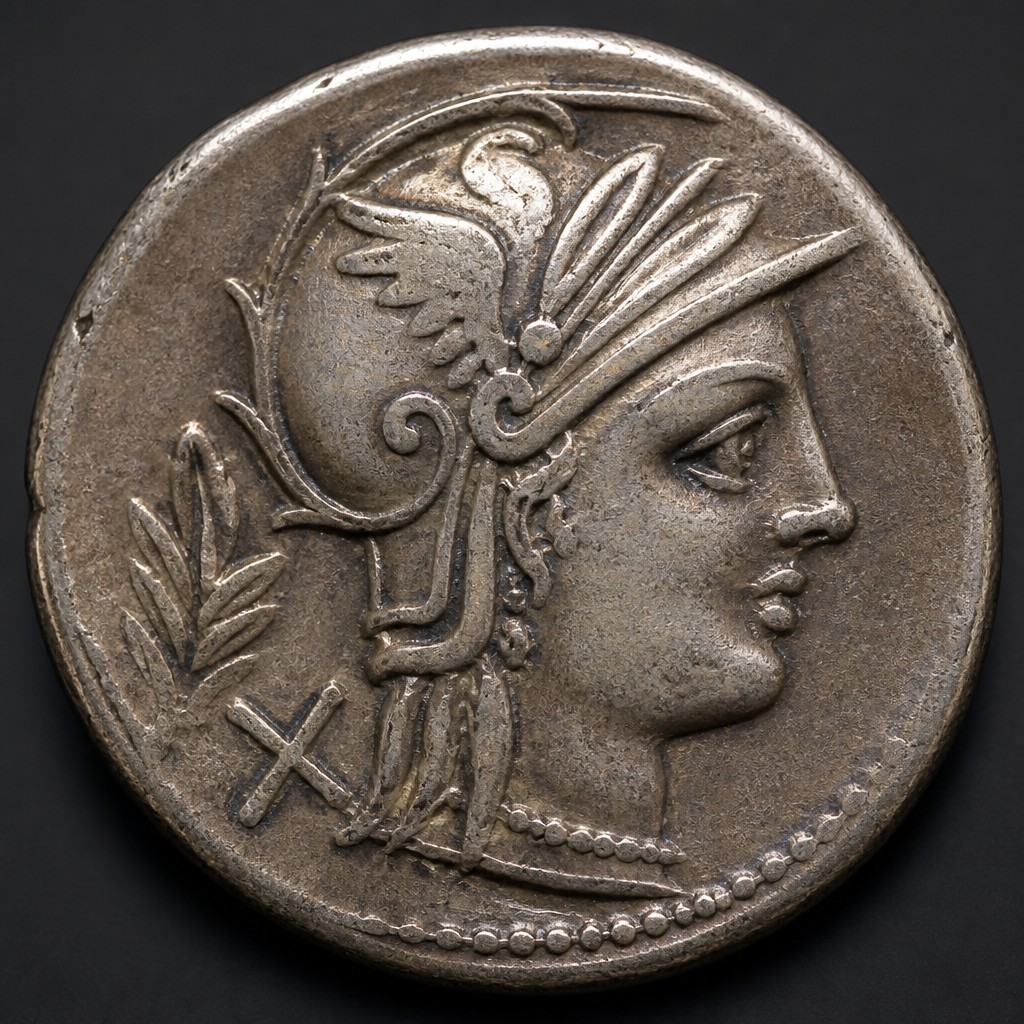
Republican Victoriatus
c. 211–170 BC
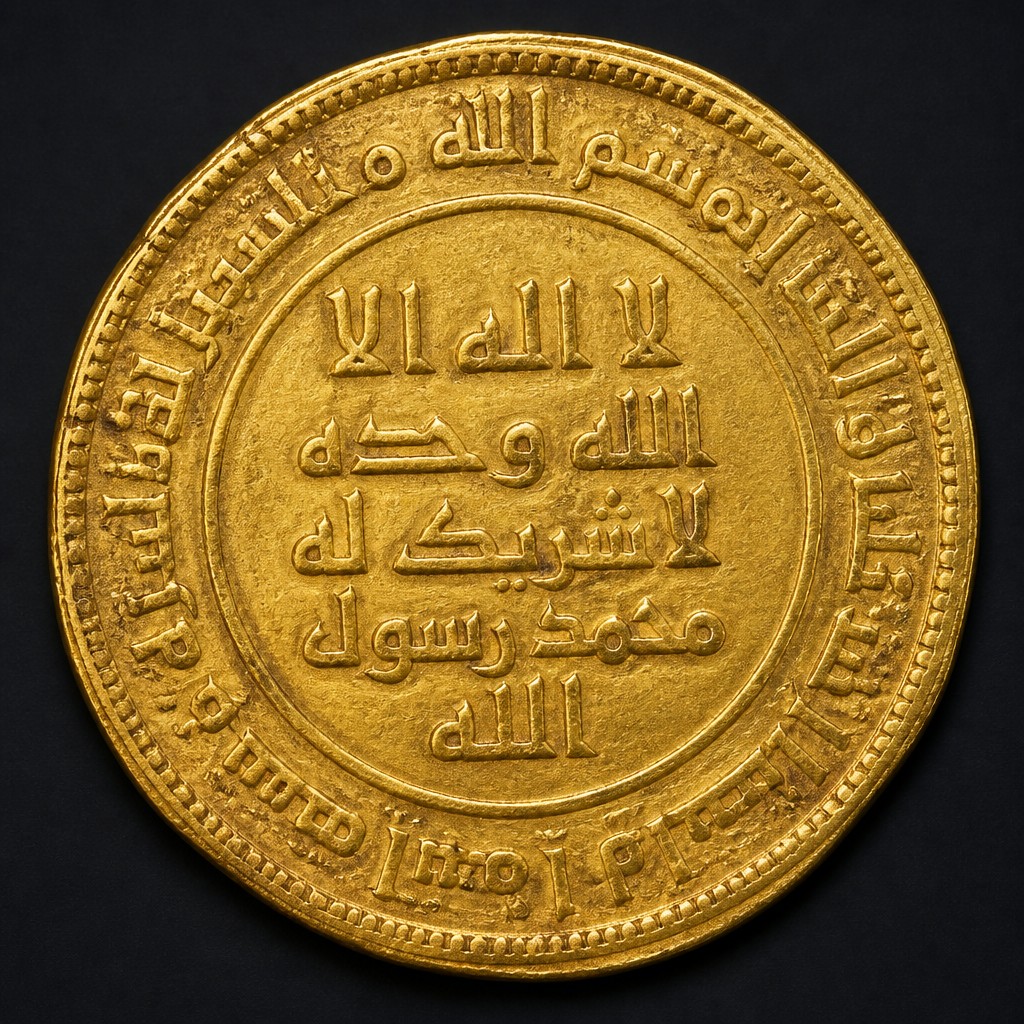
Islamic Gold Dinar (Umayyad)
c. 696–750 AD
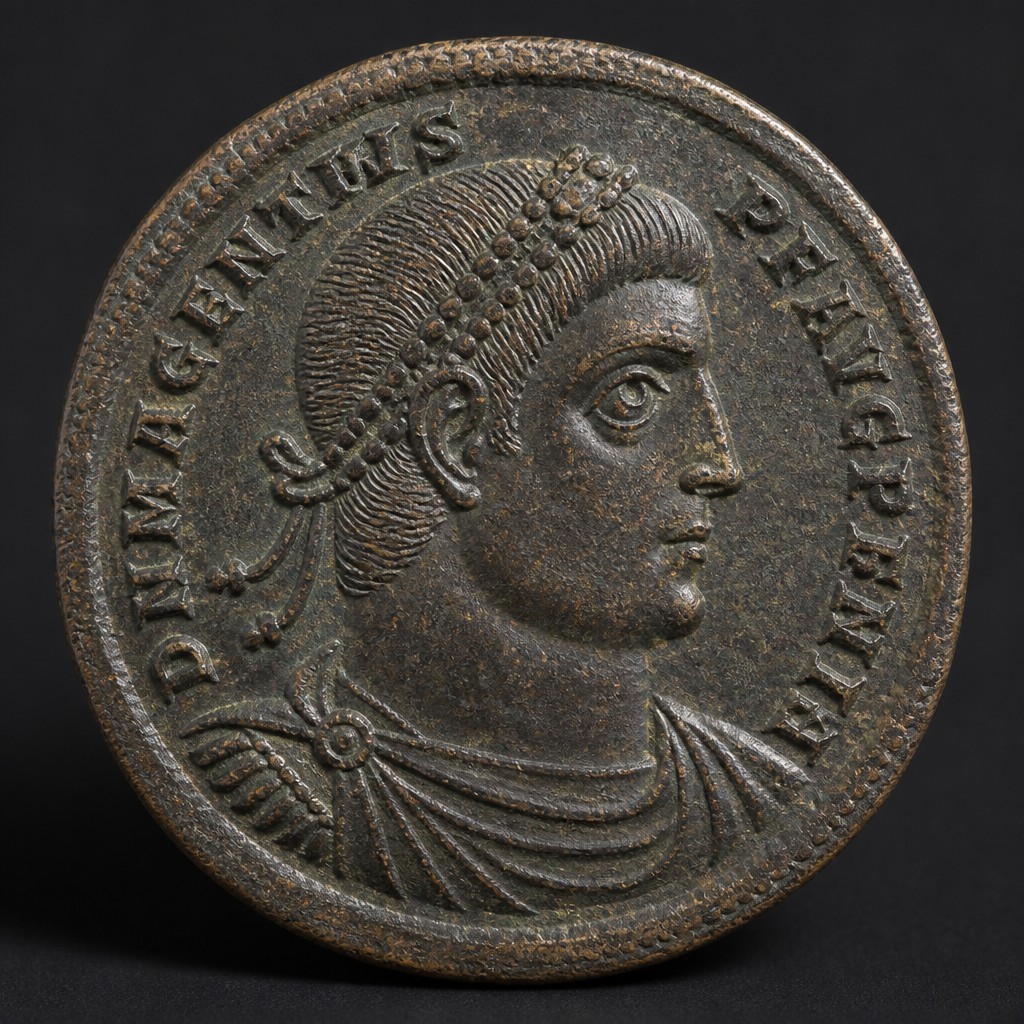
Magnentius Double Centenionalis
350–353 AD
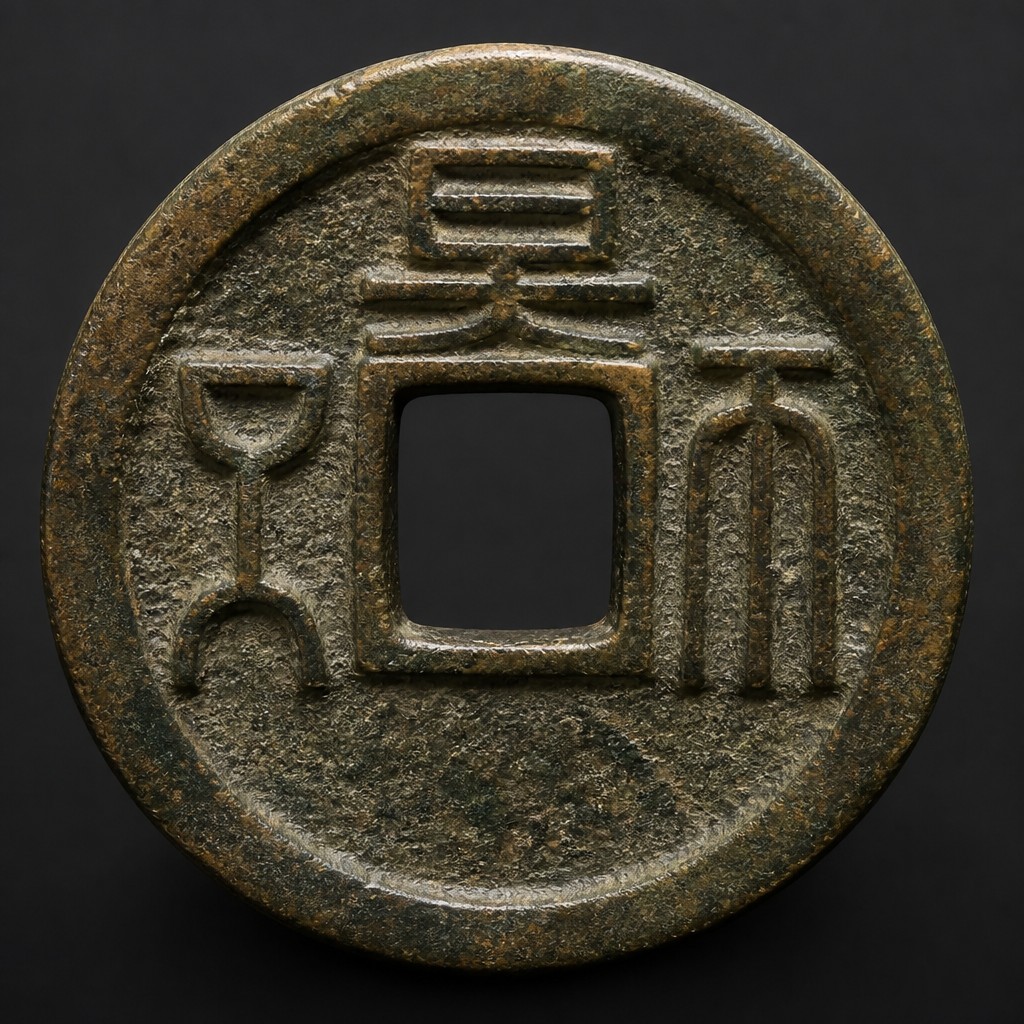
Chinese Wu Zhu Cash
118 BC – 618 AD
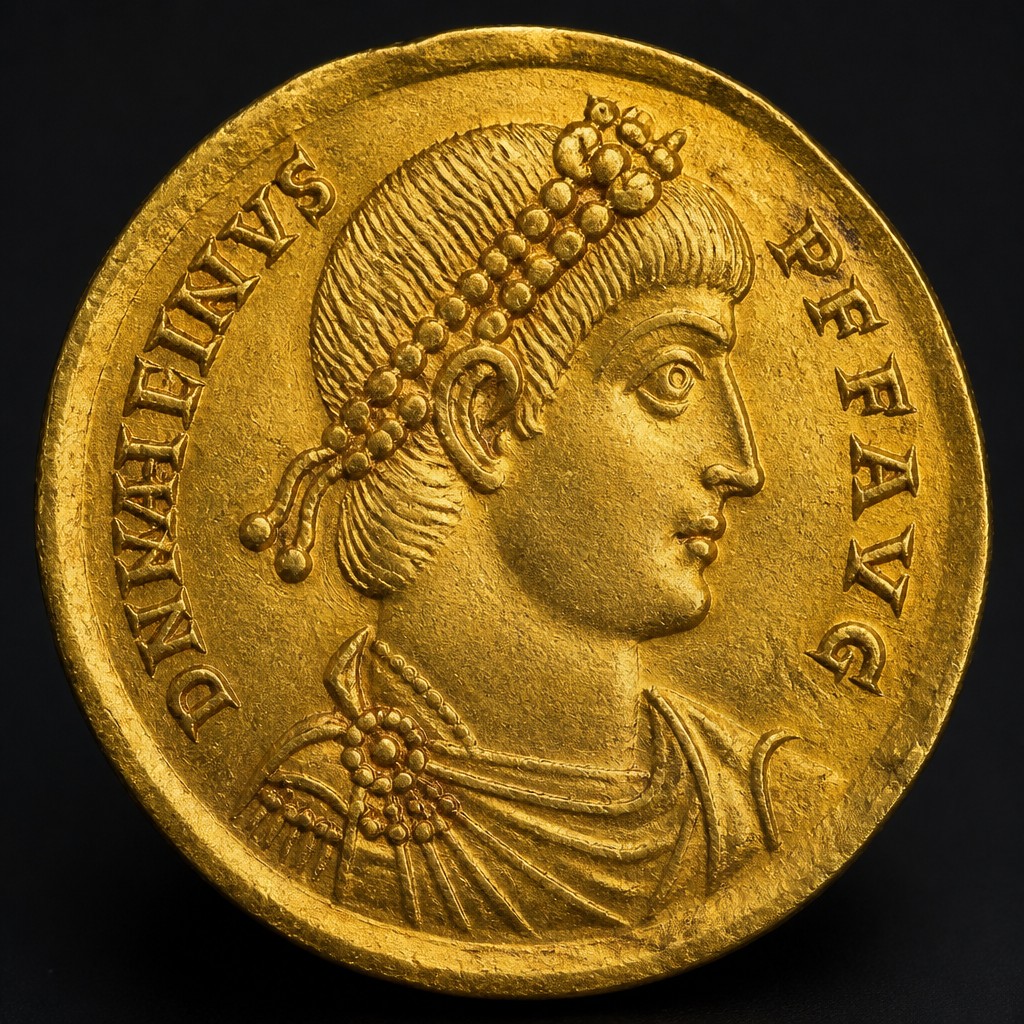
Valentinian I Solidus
364–375 AD
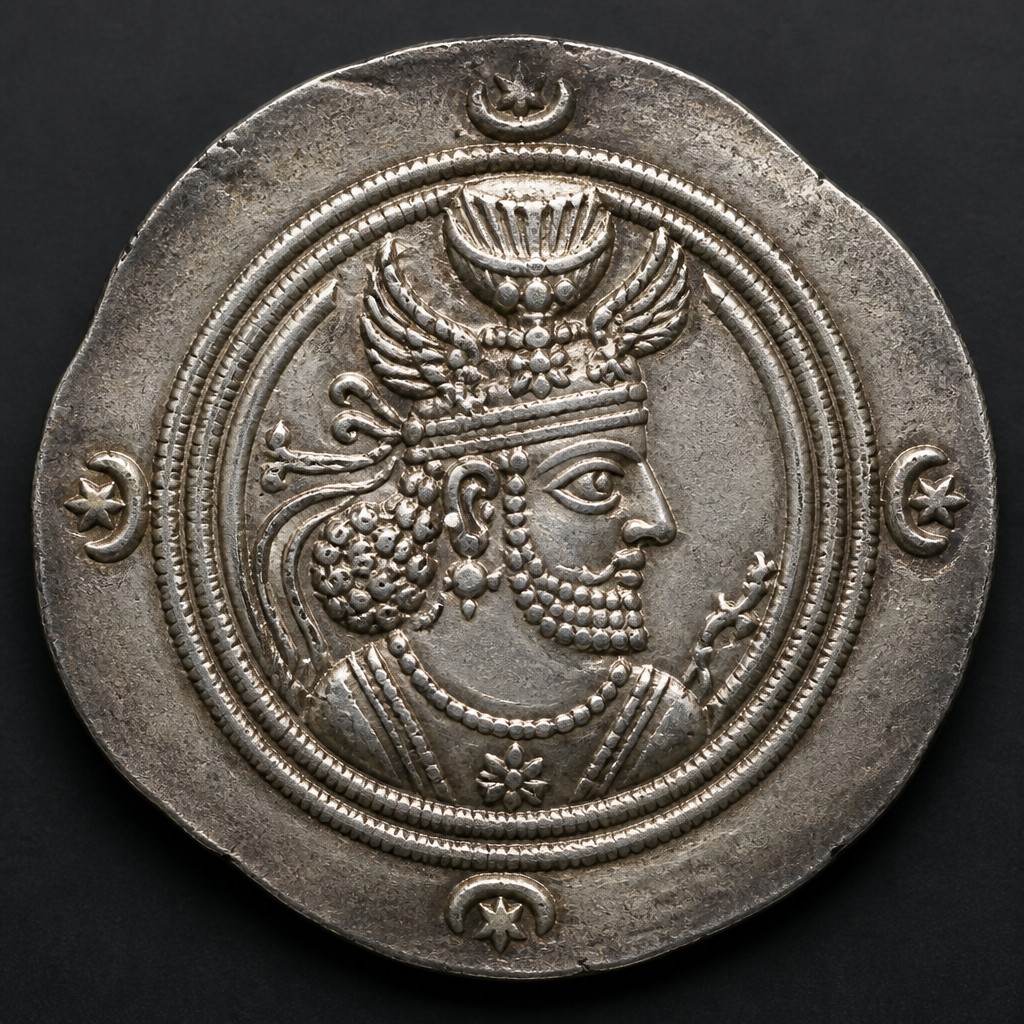
Sassanian Silver Drachm
c. 224–651 AD
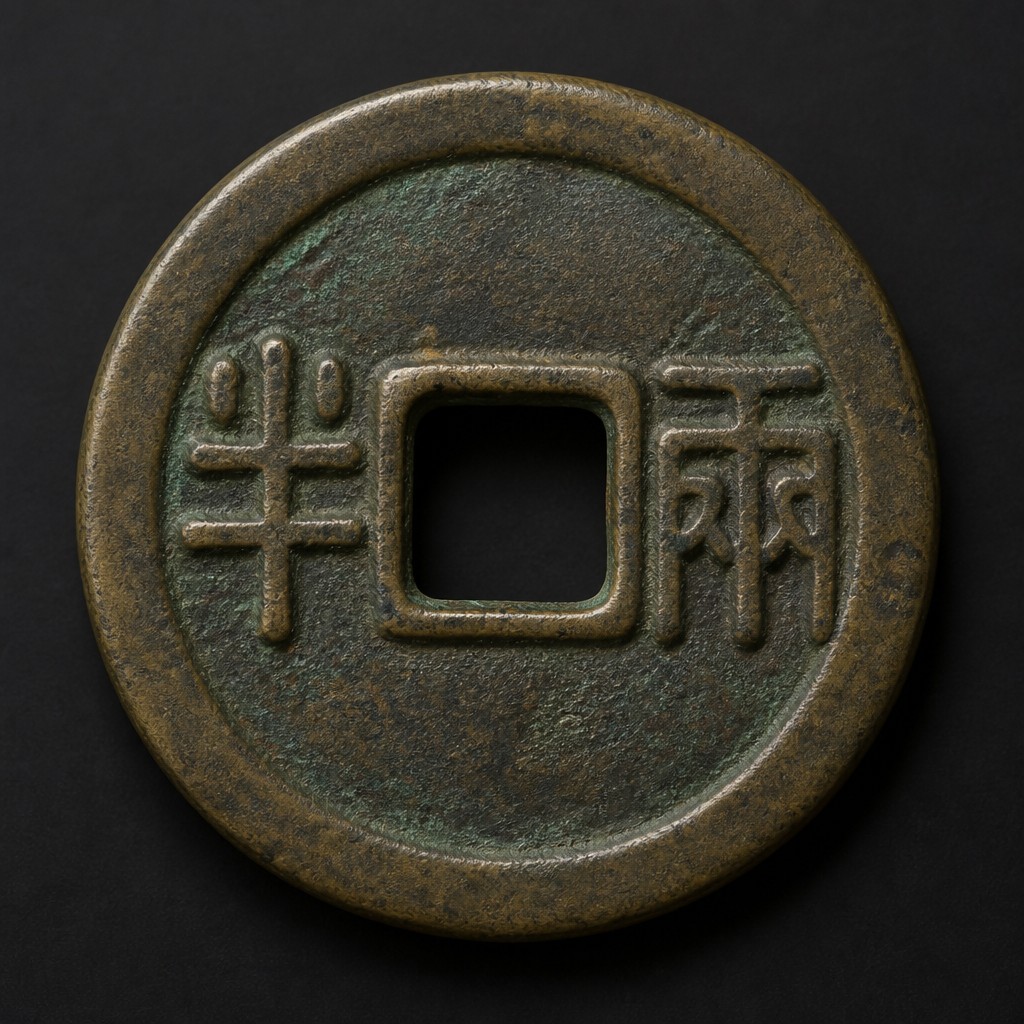
Chinese Ban Liang Cash
c. 221–118 BC
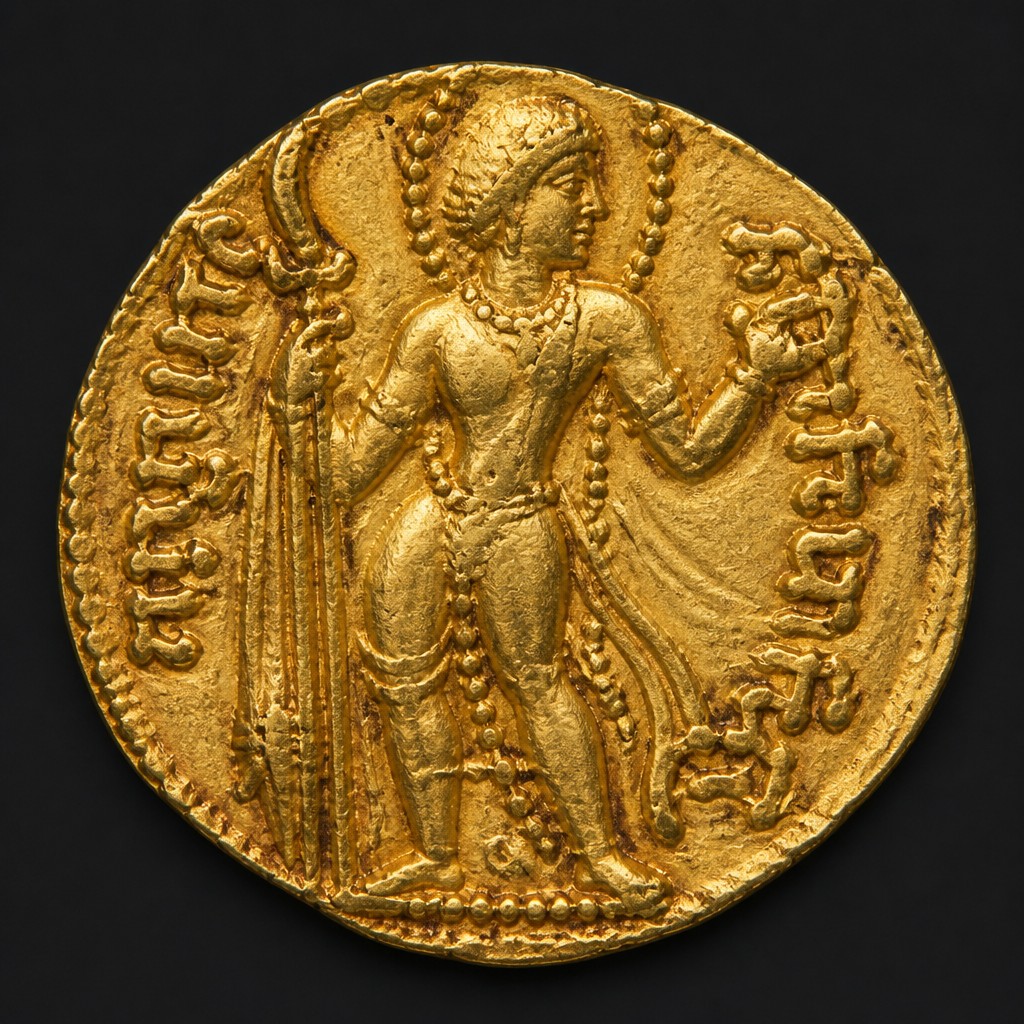
Gupta Empire Gold Dinar
c. 320–550 AD
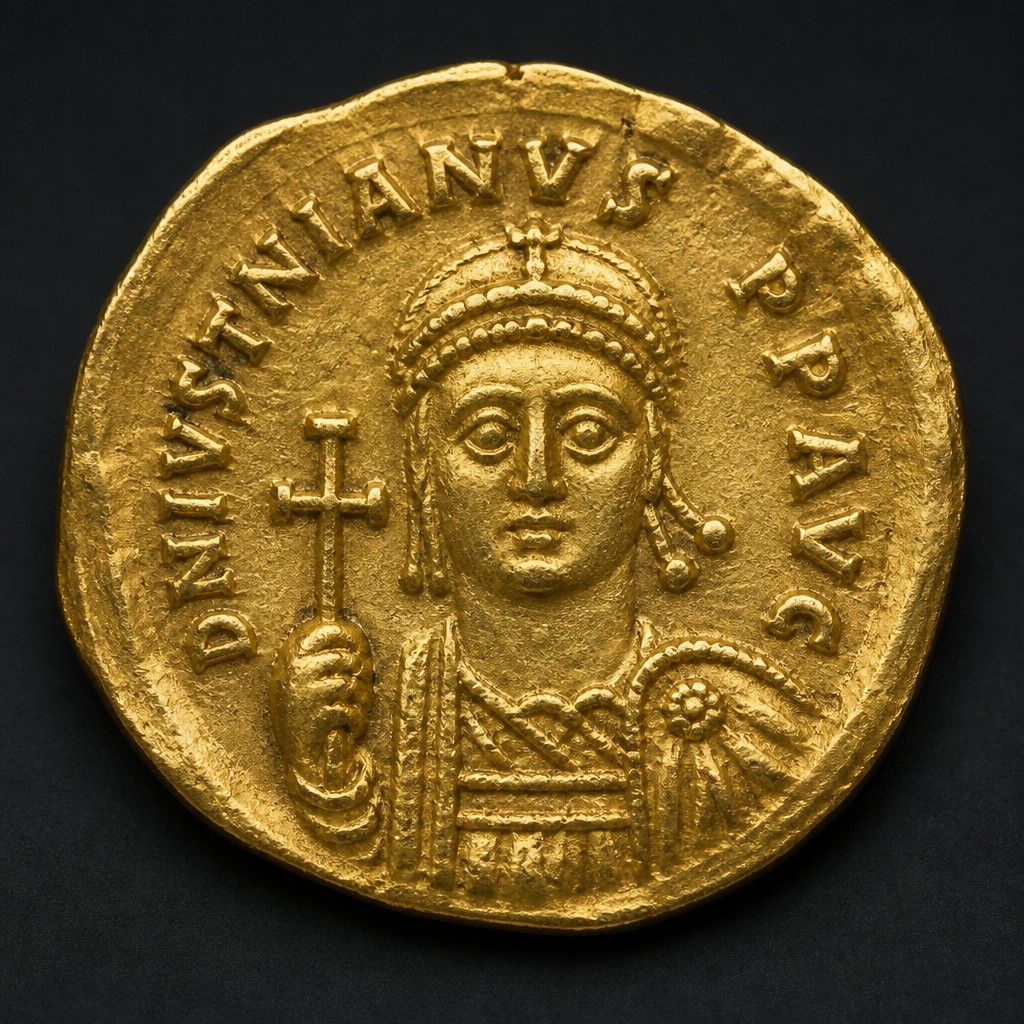
Byzantine Gold Tremissis
c. 4th–7th century AD
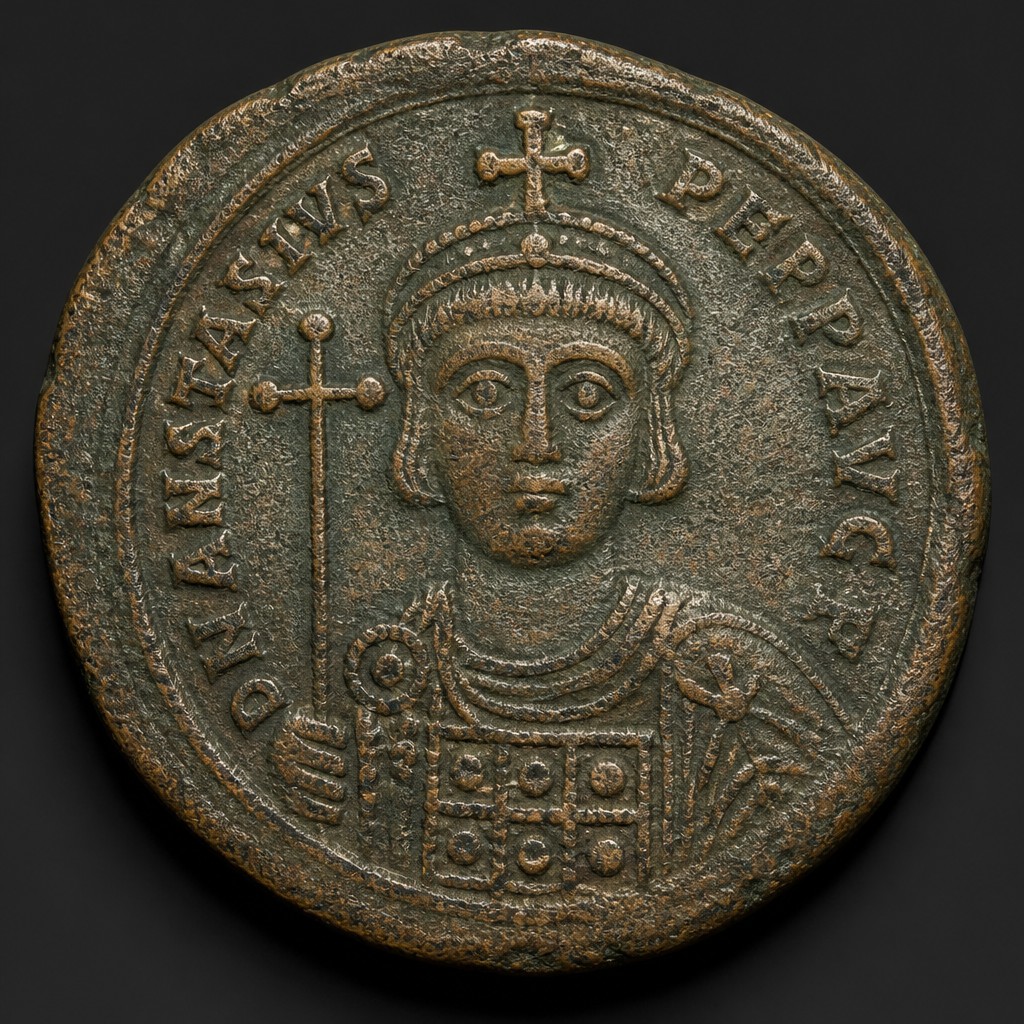
Byzantine Follis
498–c. 11th century AD
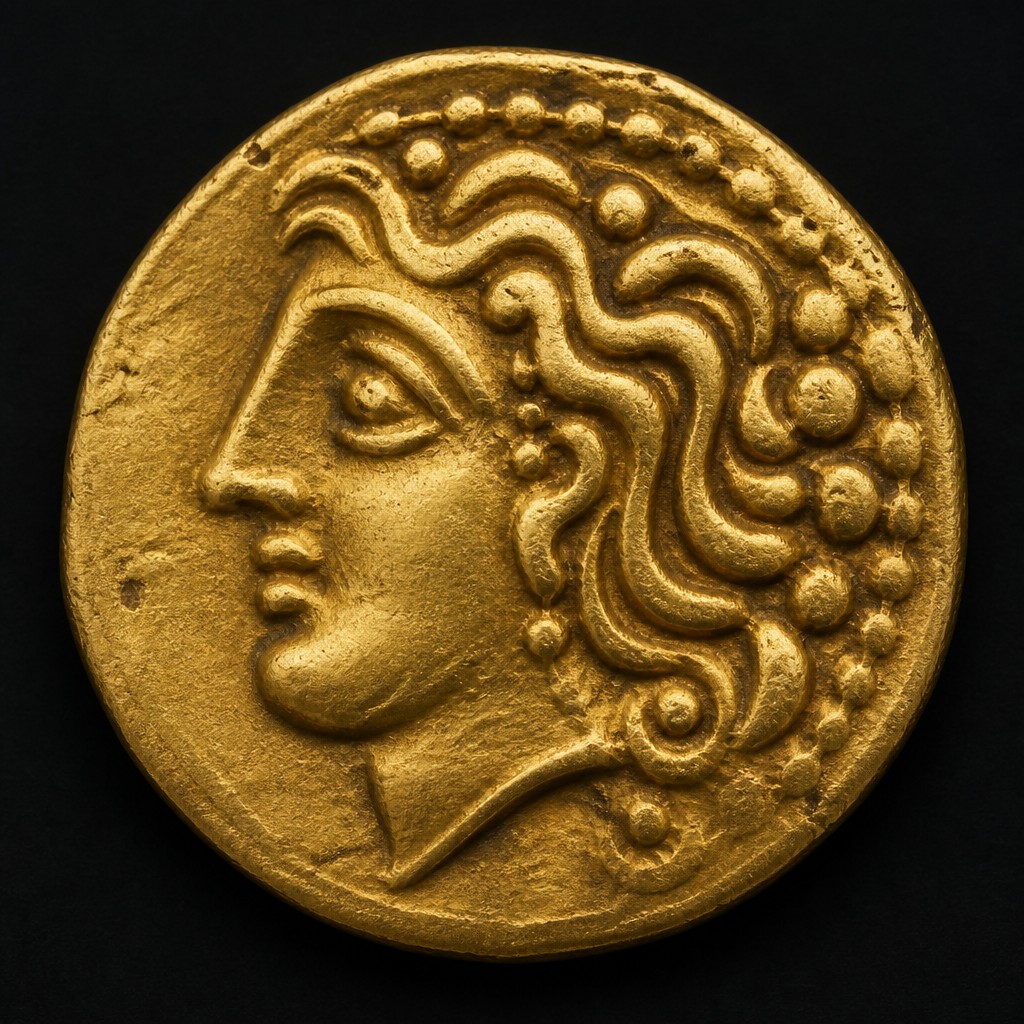
Celtic Gold Stater
c. 3rd century BC – 1st century AD