
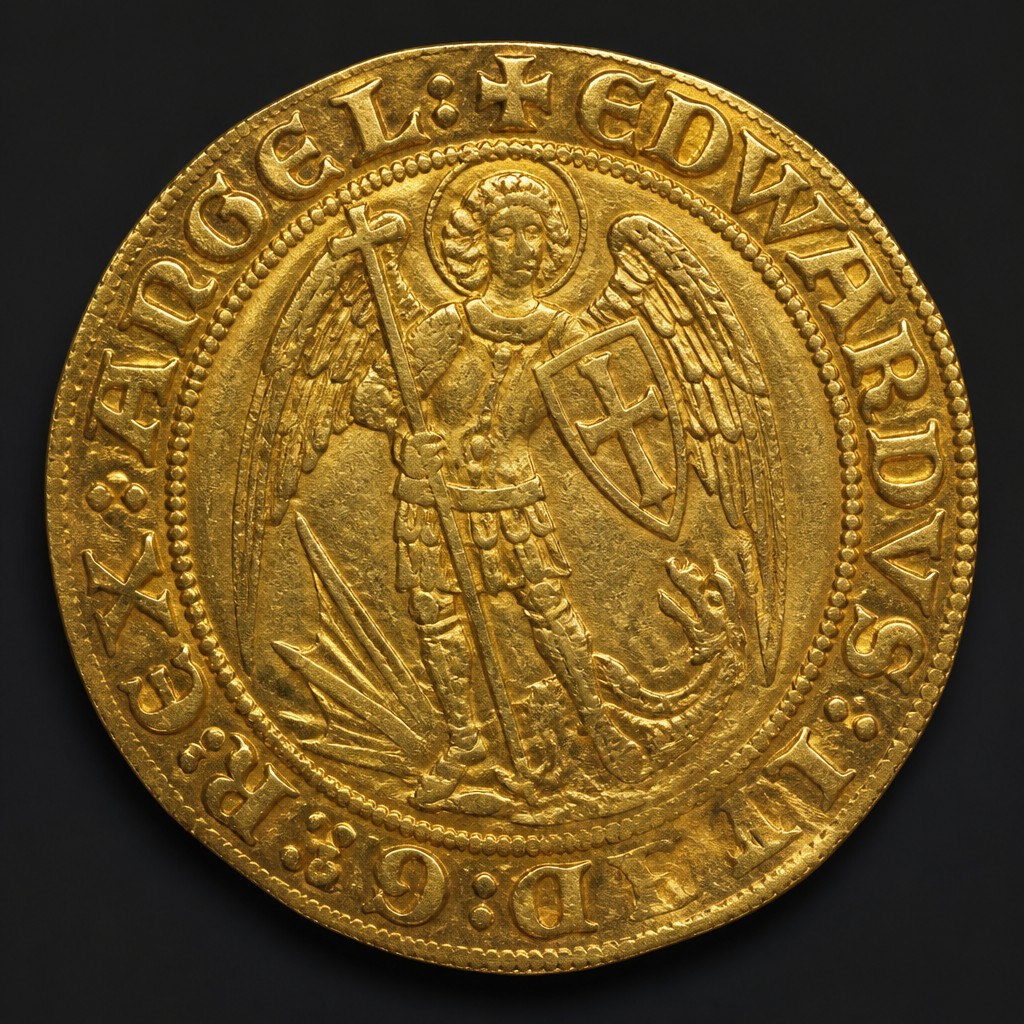
Angel
An English gold coin depicting the Archangel Michael slaying a dragon, introduced in 1465 and famously used as a ceremonial 'touch piece' in royal healing rituals.
- Country
- England
- Denomination
- Angel (varied, initially 6s 8d)
- Metal
- Gold (23 carat)
Got a coin like this?
Identify any coin from a photo, free.
Overview
The angel was an English gold coin introduced in 1465 under Edward IV, named for its striking obverse depiction of the Archangel Michael slaying a dragon, a design steeped in religious and royal symbolism of protection and divine right. It succeeded the gold noble as a primary English gold denomination and remained in production, with fluctuating values and weights, for nearly two centuries.
Beyond its monetary role, the angel gained a unique cultural significance as the coin traditionally used in the royal ceremony of "touching for the King's Evil," in which English monarchs would touch sufferers of scrofula (a form of tuberculosis) and present them with a pierced angel coin believed to carry healing power, a practice that continued for generations.
Collectors value the angel both as a beautiful example of late medieval and early modern coin artistry and for its fascinating connection to royal ceremony, folklore, and medicine in pre-modern England.
History & Background
Edward IV introduced the angel in 1465 as part of a coinage reform that also adjusted the value and design of English gold currency following the noble's long run. Its imagery of Saint Michael defeating a dragon symbolized both religious protection and the monarch's God-given authority, themes highly resonant in fifteenth-century political and religious culture.
The angel continued to be struck across the Tudor and early Stuart periods, through the reigns of Henry VII, Henry VIII, Edward VI, Mary I, Elizabeth I, James I, and Charles I, with its value and exact specifications adjusted periodically to reflect changing gold prices and monetary policy. Smaller half-angel, or "angelet," denominations were also produced.
The coin became deeply associated with the royal ceremony of touching for the King's Evil, where monarchs presented pierced angels to those they ceremonially touched in hopes of curing scrofula, a practice rooted in the belief in the divine healing power of royal touch that persisted into the early eighteenth century even after the angel itself ceased to be minted, with the last angels struck under Charles I before the English Civil War disrupted royal coinage traditions.
How to Identify
The obverse depicts the Archangel Michael standing atop a dragon, piercing it with a spear or cross-tipped staff, surrounded by a Latin legend naming the monarch. The reverse typically shows a ship bearing a shield with the royal arms and a cross-topped mast, along with further Latin religious or royal inscriptions, echoing the ship imagery of the earlier noble.
Angels used as touch pieces are often found with a small pierced hole near the top, added so the coin could be worn on a ribbon around the recipient's neck as a talisman, a distinguishing feature collectors specifically look for in pieces associated with the King's Evil ceremony.
The coin is struck in high-purity gold, with weight and diameter varying somewhat across the nearly two centuries of production as monarchs adjusted the coin's specifications; careful attention to the specific monarch's titles and mint marks in the legend is necessary to date individual examples precisely.
Value & Collectibility
Angels are scarce and historically rich gold coins that generally command strong collector prices, with values ranging from solid four figures for more common Tudor-era examples to significantly higher sums for rare rulers, exceptional strikes, or well-documented touch-piece specimens with pierced holes.
Pierced touch-piece angels occupy an interesting niche: while the piercing might reduce value for a purist collector focused on original mint state, the ceremonial history it represents can also add significant desirability and a compelling provenance story for collectors interested in the King's Evil tradition.
As with most hand-struck pre-modern gold coinage, strength of strike, centering, and legend clarity heavily influence value, and specific monarch, mint, and variety all play a substantial role in determining where an individual angel falls within the wide value range for the series.
Frequently asked questions
Why does the angel show Saint Michael and a dragon?
The design symbolizes divine protection and the monarch's God-given authority, both important themes in medieval and early modern English royal ideology.
What is a touch piece?
A specially pierced angel coin given by English monarchs to sufferers of scrofula during the ceremonial 'touching for the King's Evil,' believed to have healing power.
When was the angel minted?
From 1465 under Edward IV through the reign of Charles I in the early seventeenth century.
Does a pierced hole reduce an angel's value?
It can affect value from a pure grading standpoint, but genuine touch pieces with documented ceremonial history are often prized specifically for that provenance.
Other coins you may enjoy
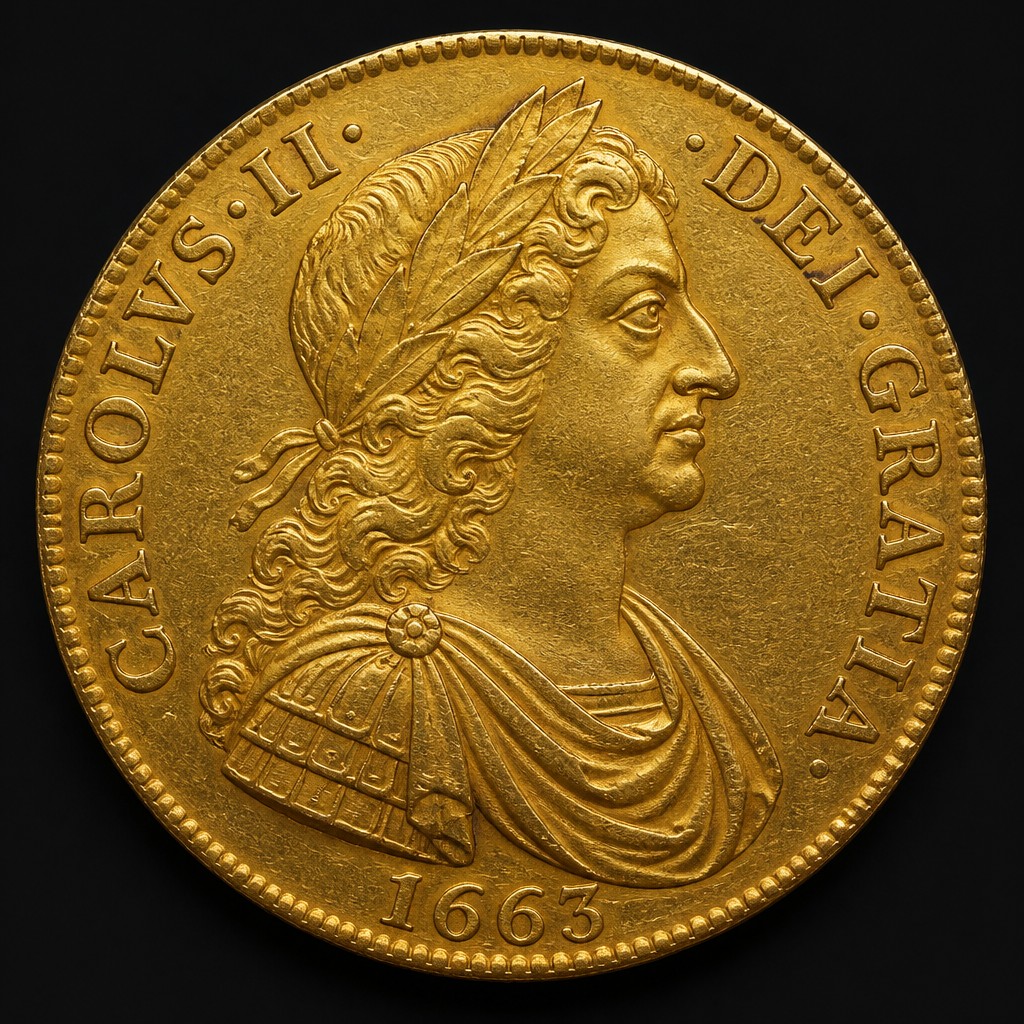
British Guinea
1663–1814
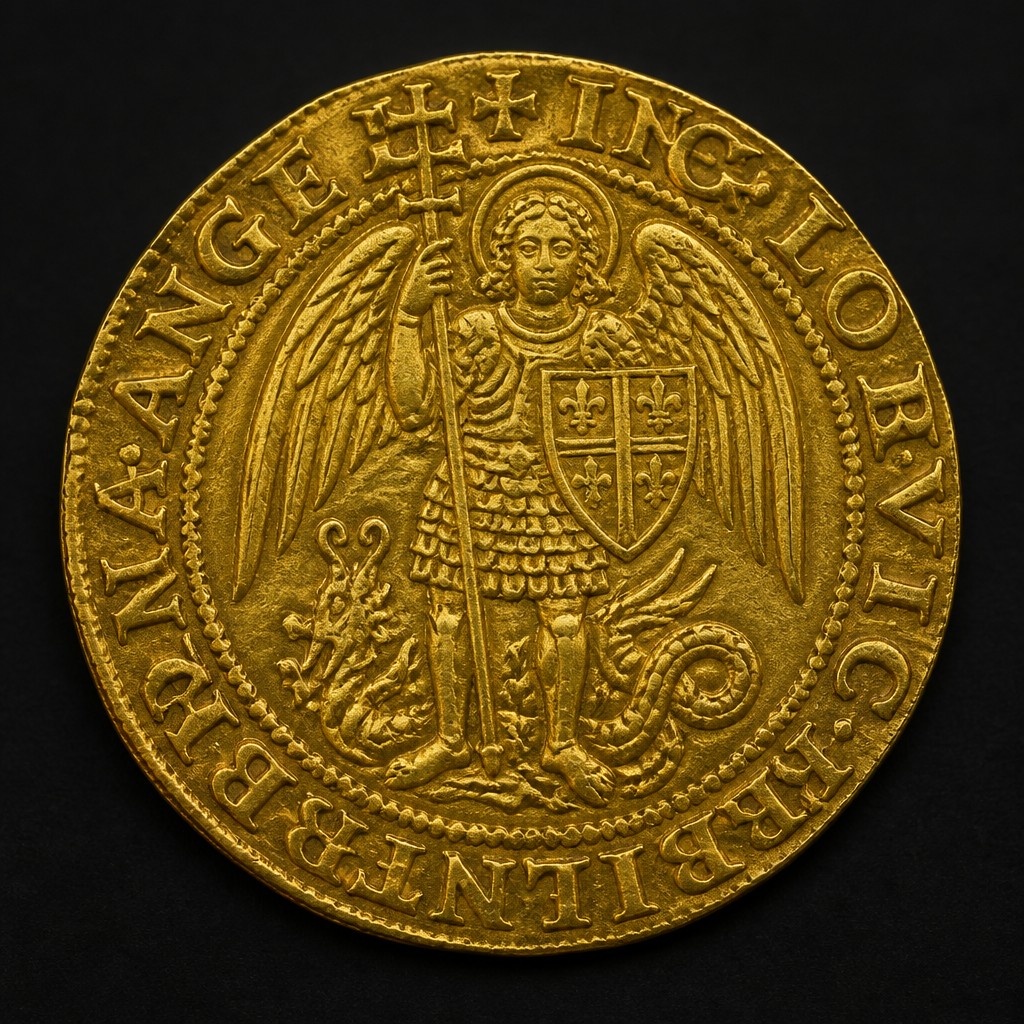
English Angel
1465–1642
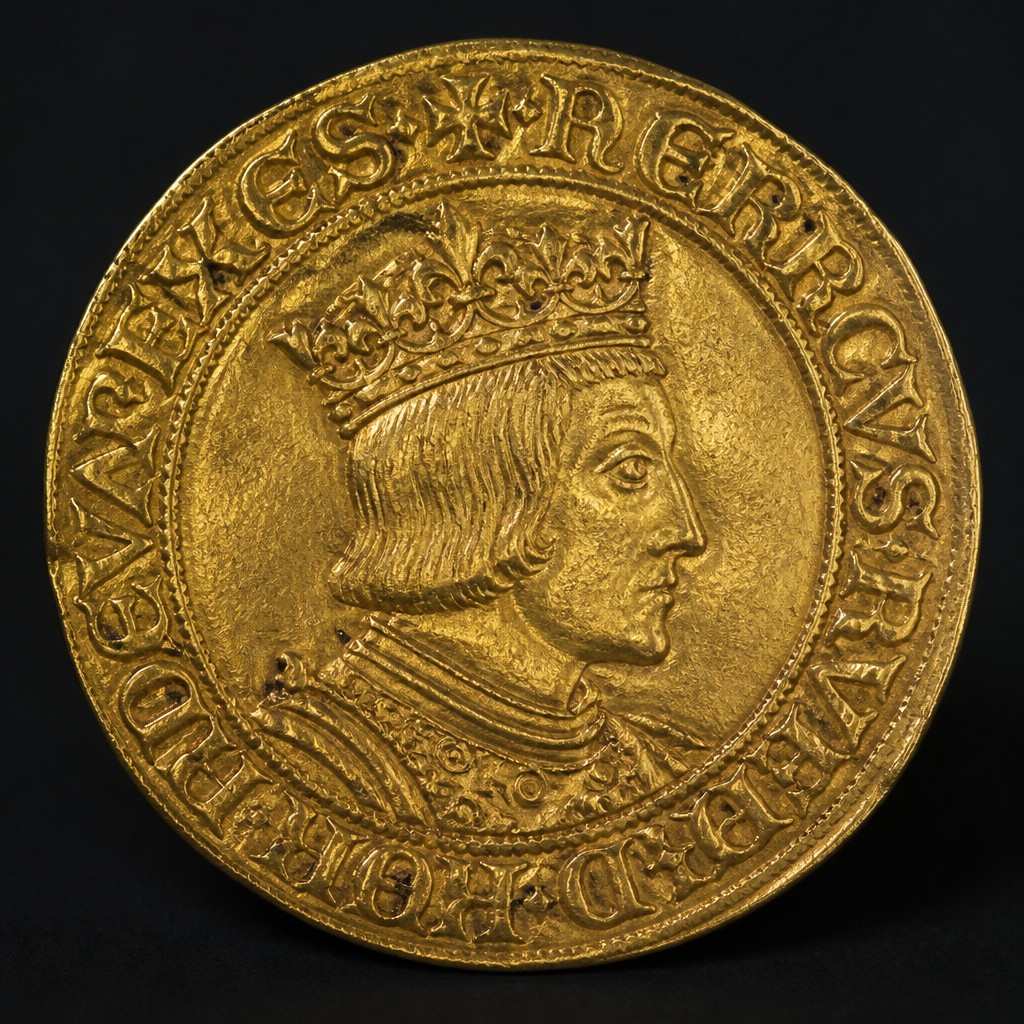
English Sovereign of Henry VII
1489–1509
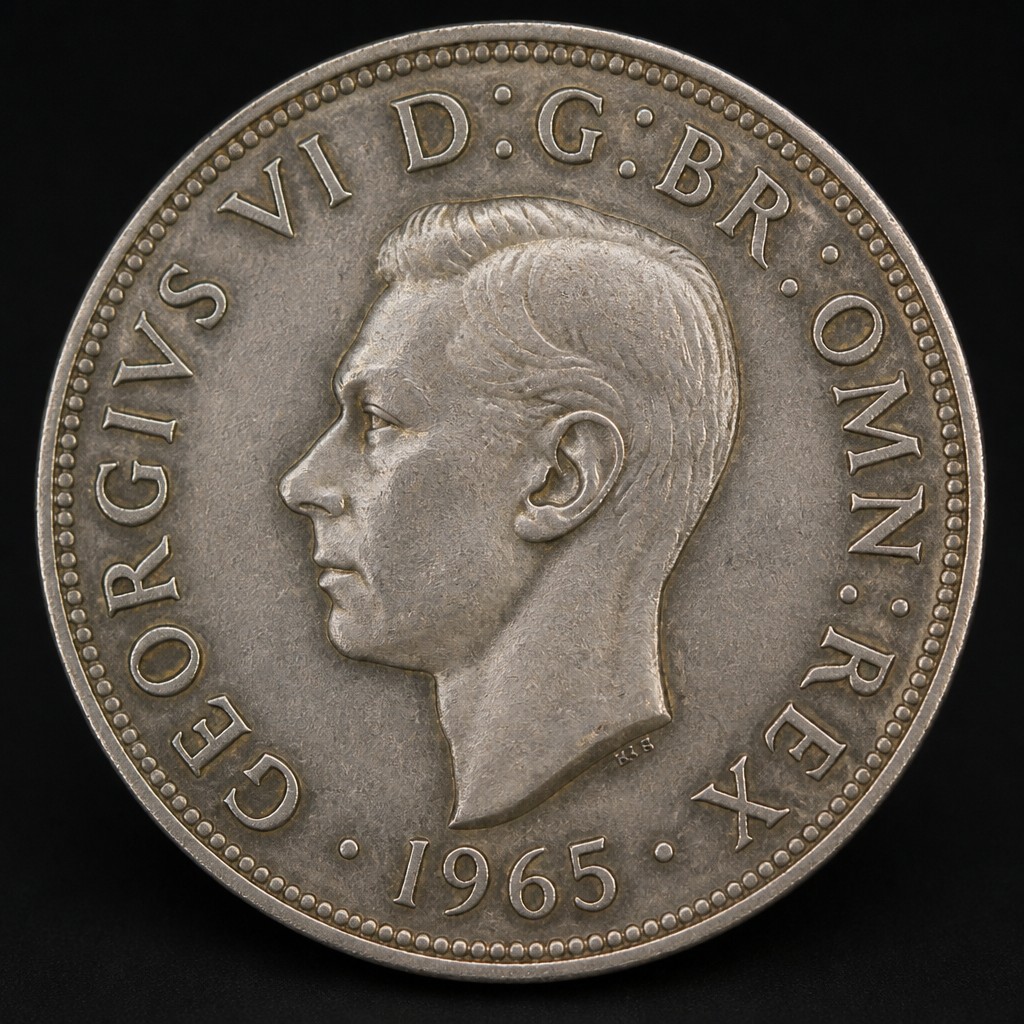
English Crown
1526–1965 (pre-decimal; commemorative crown-sized coins continue as five pound coins)
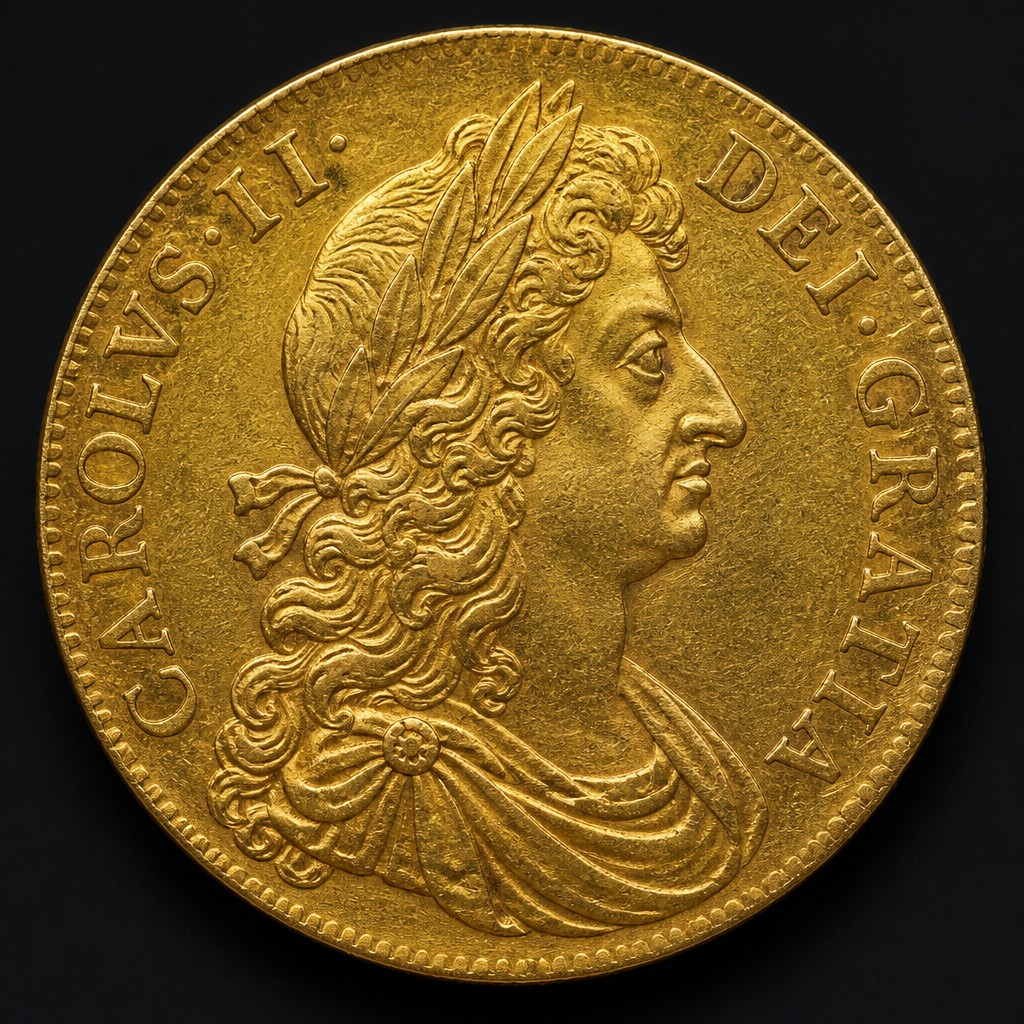
British Gold Guinea
1663–1814
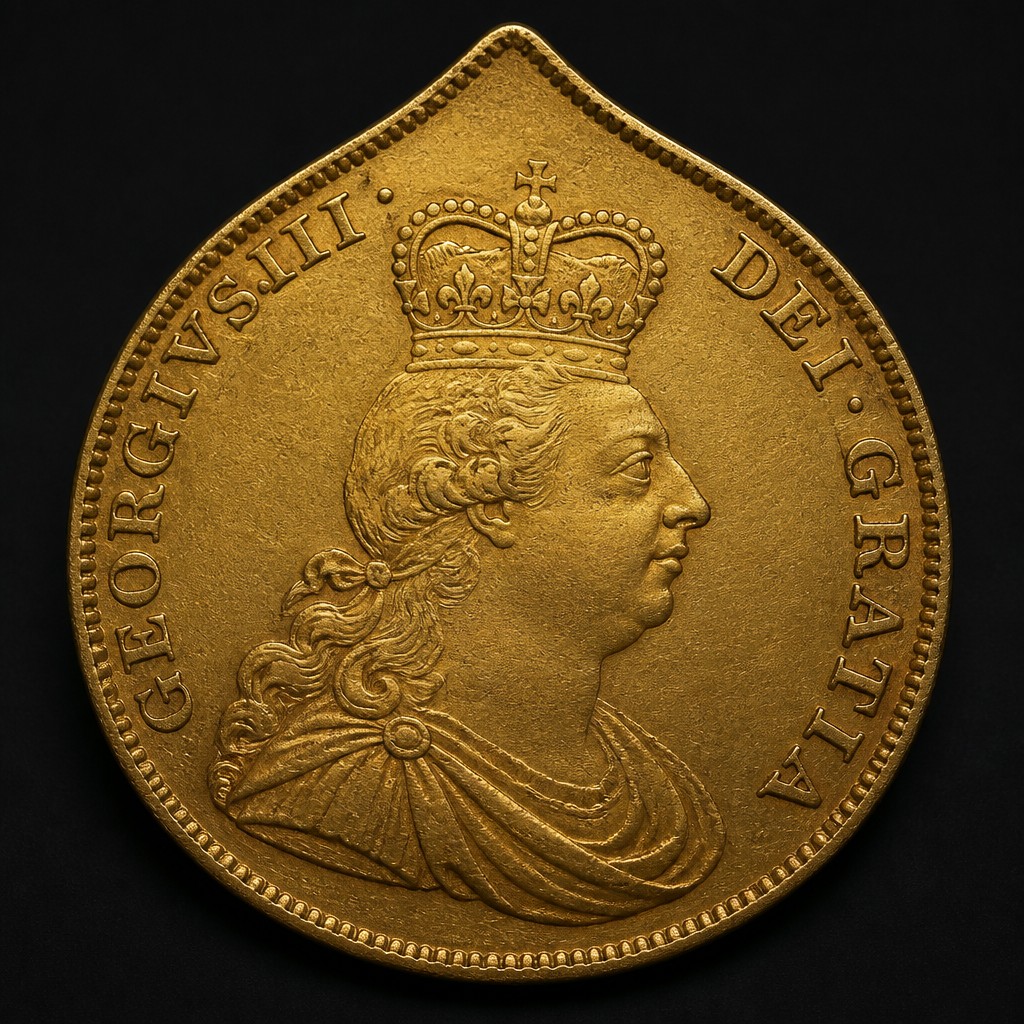
Spade Guinea
1787–1799
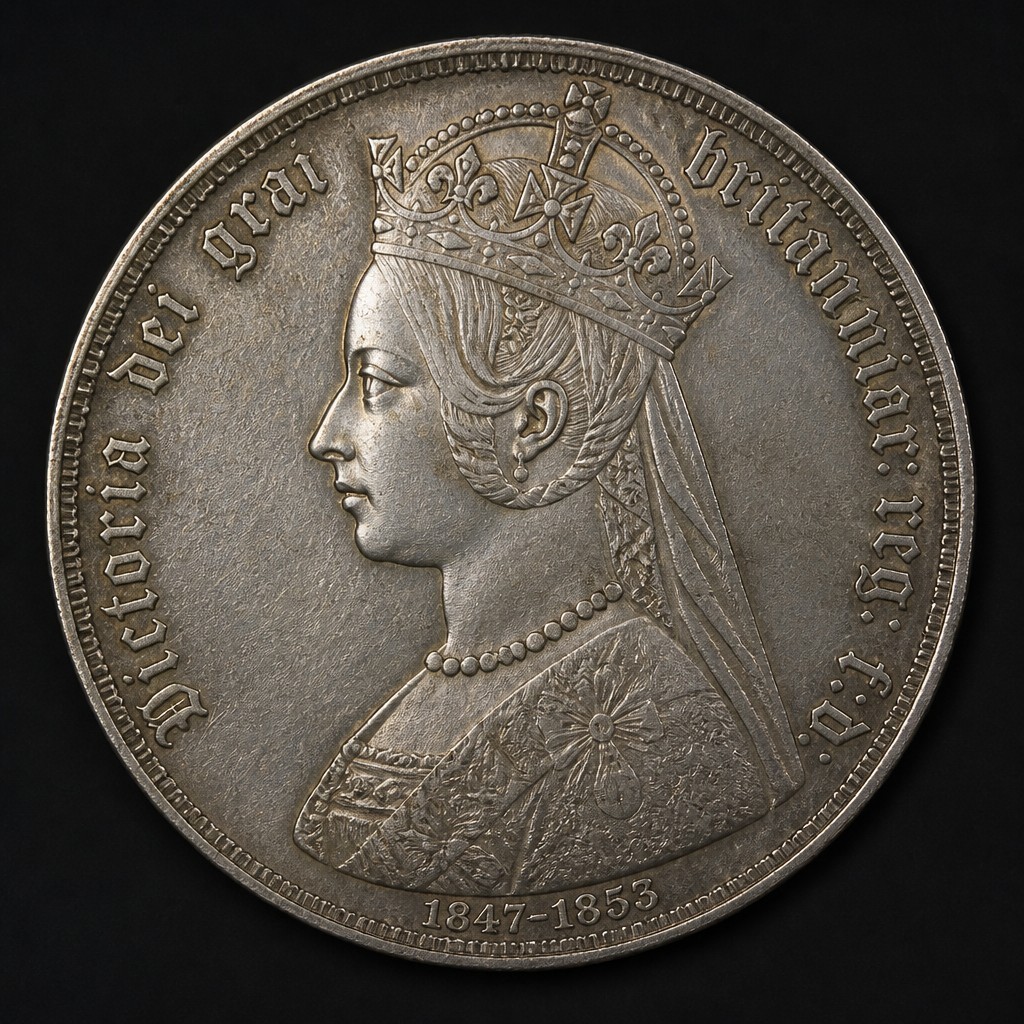
Gothic Crown
1847–1853
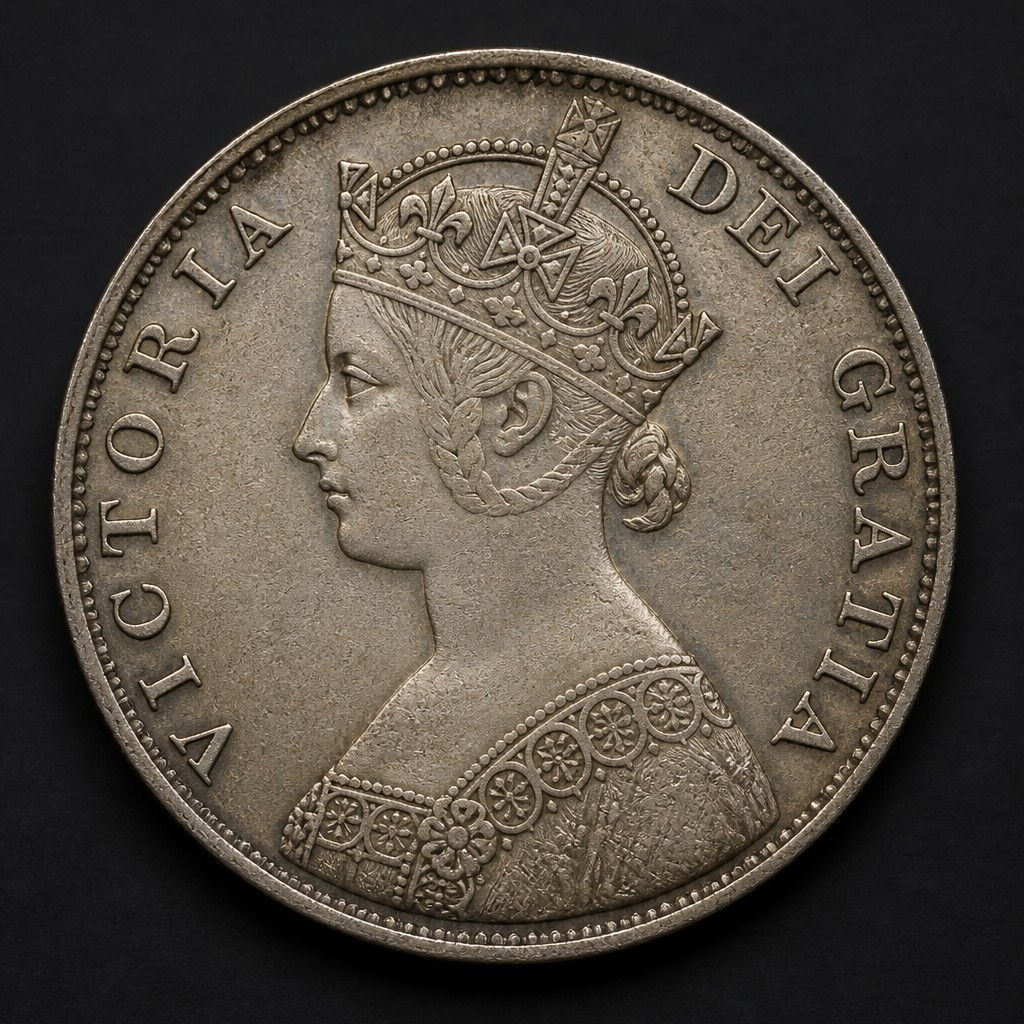
Groat (Fourpence)
1279–1888 (various revivals)
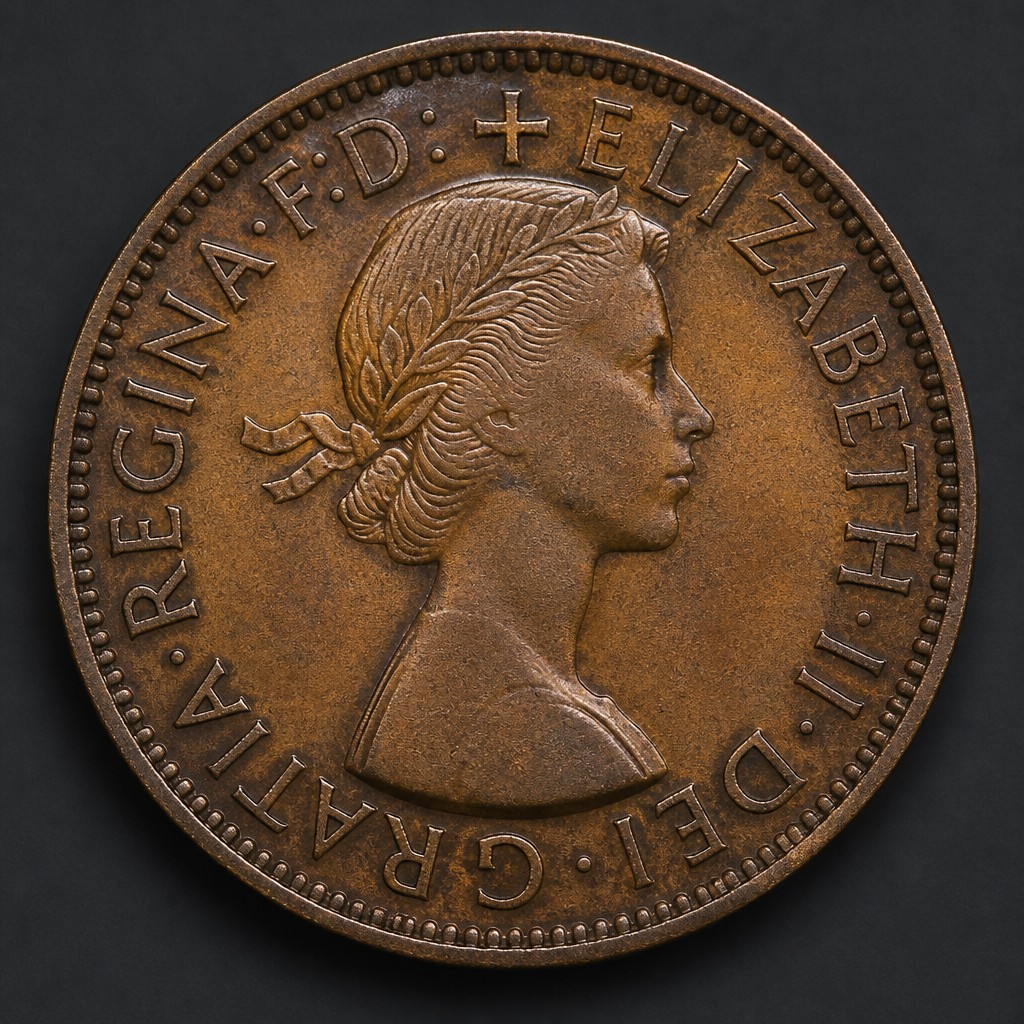
Farthing
13th century–1956
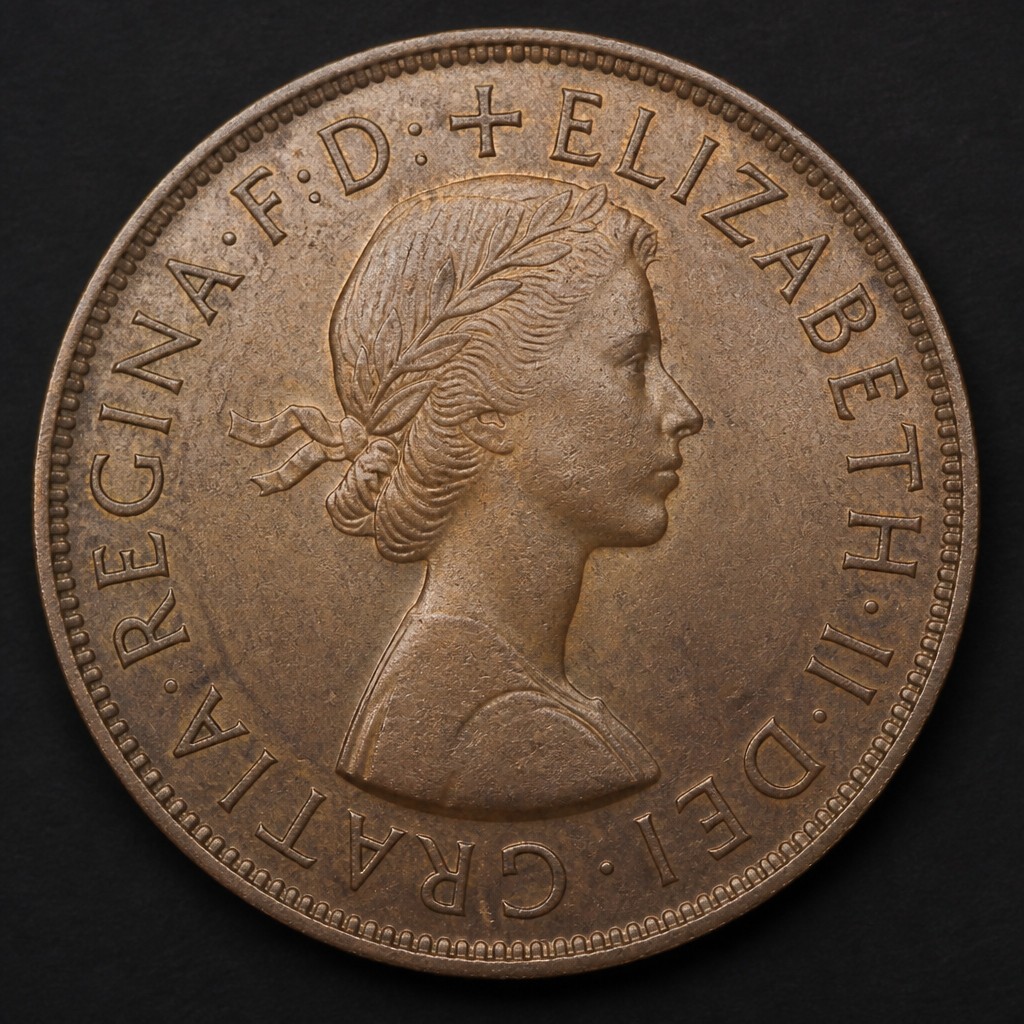
Halfpenny
c. 800s–1969
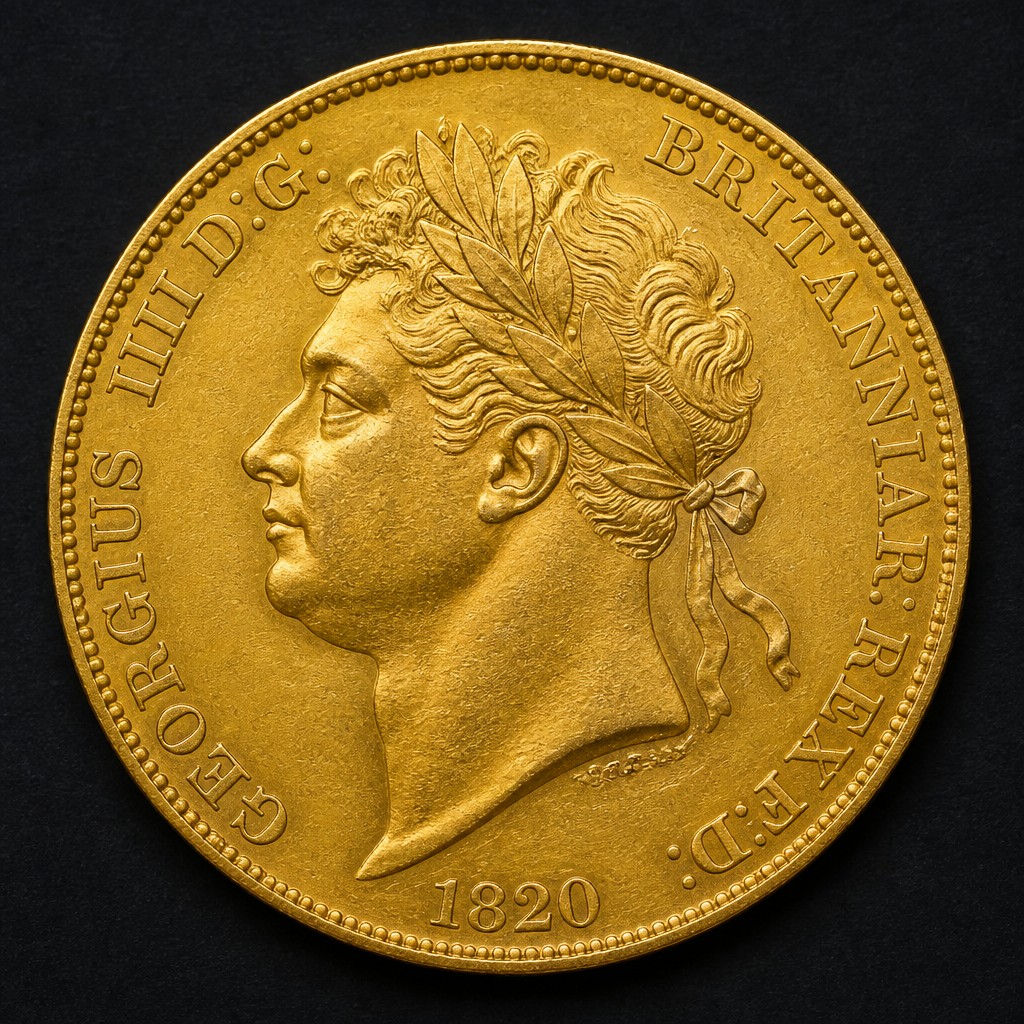
Five Pound Gold (Quintuple Sovereign)
1820–present (intermittent)
Threepence
1547–1970