
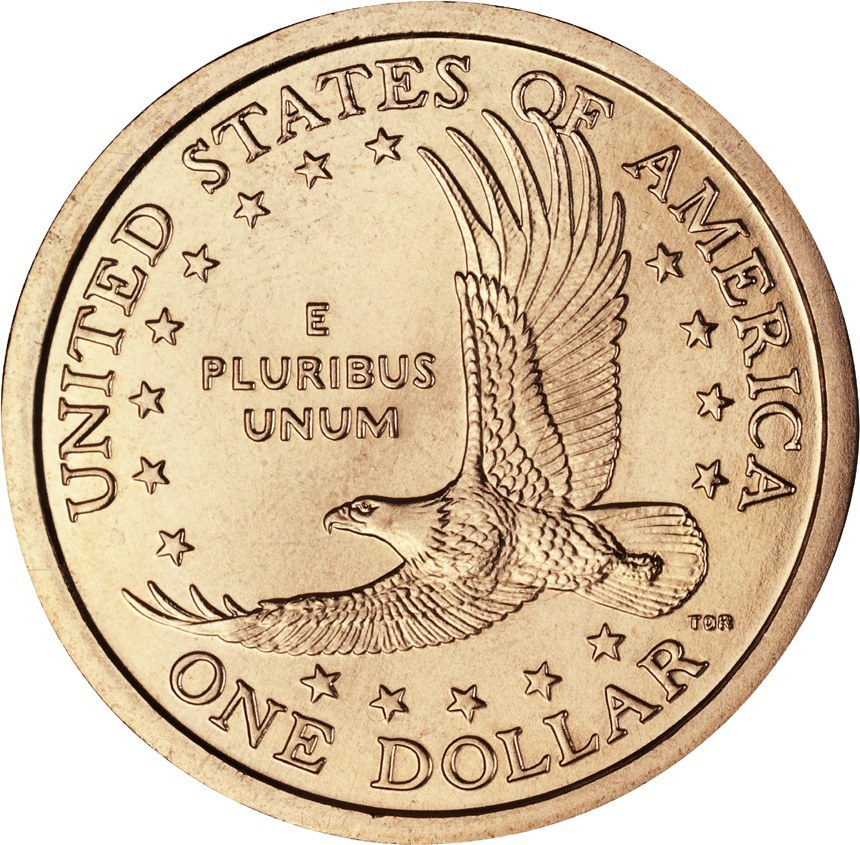
Sacagawea Dollar
U.S. golden-colored dollar coin showing Sacagawea and her infant son on the obverse and a soaring eagle on the reverse, struck 2000–2008.
- Country
- United States
- Denomination
- 1 dollar
- Metal
- Manganese brass
Got a coin like this?
Identify any coin from a photo, free.
Overview
The Sacagawea Dollar is a U.S. one-dollar coin instantly recognizable by its golden color. The obverse portrays Sacagawea, the young Shoshone woman who aided the Lewis and Clark expedition, carrying her infant son Jean Baptiste on her back. The reverse of this type, including the 2003 coin shown here, depicts an eagle in flight ringed by seventeen stars, with the motto E PLURIBUS UNUM.
Despite its gold-like appearance the coin contains no gold. It is struck in manganese brass clad over a pure copper core, giving it a warm golden tone while keeping the same 26.5 mm diameter, 8.1 g weight, and electrical properties as the earlier Susan B. Anthony dollar so that it worked in existing vending machines. The distinctive color and smooth, plain edge were chosen to help the public tell the dollar apart from the quarter at a glance.
History & Background
Congress authorized a new dollar coin in the late 1990s to replace the unpopular Susan B. Anthony dollar, which the public had often confused with the quarter. A design committee selected sculptor Glenna Goodacre's obverse portrait of Sacagawea with her son Jean Baptiste, and Thomas D. Rogers Sr.'s reverse showing a soaring eagle encircled by seventeen stars, one for each state in the Union at the time of the Lewis and Clark expedition. The coins entered circulation in 2000.
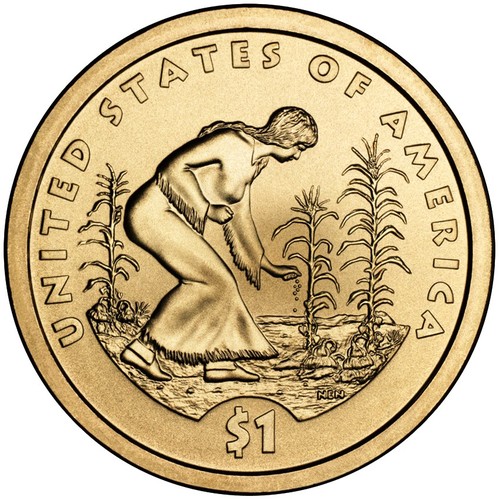
The eagle reverse was used every year from 2000 through 2008. After a heavy first-year release, public demand fell off, and from about 2002 onward mintages dropped sharply, with many dates — including 2003 — struck largely for collectors and coin sets rather than for broad circulation. In 2009 the obverse portrait was retained but the program became the Native American $1 Coin series, which changes the reverse design each year, so the flying-eagle reverse seen on this 2003 piece belongs to the original Sacagawea Dollar type.
How to Identify
The obverse shows Sacagawea in three-quarter view, looking over her shoulder, with her infant son Jean Baptiste peering from a cradleboard on her back. LIBERTY arcs across the top, IN GOD WE TRUST sits to the left, and the date appears at the lower rim — 2003 on the coin pictured. The reverse of this type shows an eagle in flight with wings spread, surrounded by seventeen stars, above UNITED STATES OF AMERICA and ONE DOLLAR, with E PLURIBUS UNUM in the field.
Physically the coin is 26.5 mm across, weighs about 8.1 g, and has a distinctive golden color from its manganese-brass outer layer over a copper core. The edge on 2000–2008 issues is plain (smooth and unlettered); this differs from the later Native American dollars of 2009 onward, which carry incused lettering on the edge. Mint marks — P for Philadelphia, D for Denver, and S for San Francisco proofs — are located on the obverse just below the date.
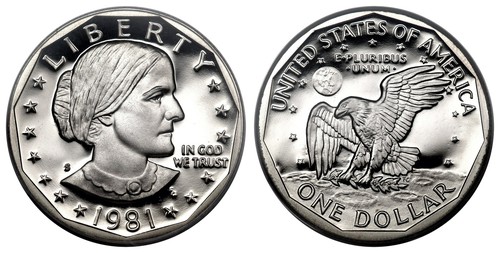
The key look-alike is the Susan B. Anthony dollar, which is the same size and weight but silvery in color with a portrait of Anthony and a reeded edge. The golden color and the Sacagawea portrait separate the two immediately. Later Native American dollars share this obverse, so confirm the type by the flying-eagle reverse and the plain edge.
Value & Collectibility
Most circulated Sacagawea Dollars are worth their face value of one dollar. Enormous numbers were struck in the first year, and the coins were never widely used in everyday commerce, so many survive in high grade; ordinary examples carry little or no premium and can often be obtained at face value from banks.
Lower-mintage collector dates such as 2003, along with San Francisco proof coins and top-grade uncirculated examples, can carry modest premiums above face. A handful of scarce varieties and errors — most famously the 2000 "Cheerios" dollar and certain mule errors — are genuinely valuable, but these are exceptional. Treat any figures as general context: condition, mint mark, whether the coin is a proof, and third-party grading drive whatever premium a given piece may hold.
Frequently asked questions
Is the Sacagawea Dollar made of gold?
No. Its golden color comes from a manganese-brass outer layer bonded to a pure copper core. The coin contains no gold and its metal value is minimal.
Who is the woman and baby on the coin?
The obverse shows Sacagawea, the Shoshone woman who helped guide the Lewis and Clark expedition, carrying her infant son Jean Baptiste on her back.
What is on the back of the 2003 coin?
A soaring eagle surrounded by seventeen stars, with the motto E PLURIBUS UNUM. This flying-eagle reverse was used on every Sacagawea Dollar from 2000 through 2008.
Is my Sacagawea Dollar worth more than a dollar?
Usually not. Most circulated pieces are worth face value. Proofs, high-grade uncirculated coins, low-mintage dates, and genuine rare errors can carry a premium.
How is it different from the Susan B. Anthony dollar?
Both are the same size and weight, but the Sacagawea Dollar is golden with a smooth edge and the Sacagawea portrait, while the Anthony dollar is silvery with a reeded edge.
Sacagawea Dollar guides
In-depth guides for identifying, valuing, and collecting Sacagawea Dollar.
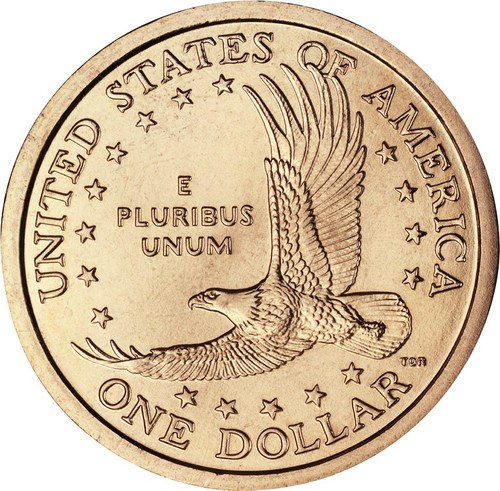
Sacagawea Dollar identified by the community
Real coins identified with Coin Identifier.
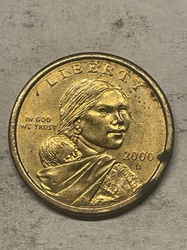
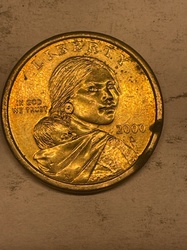
Other coins you may enjoy
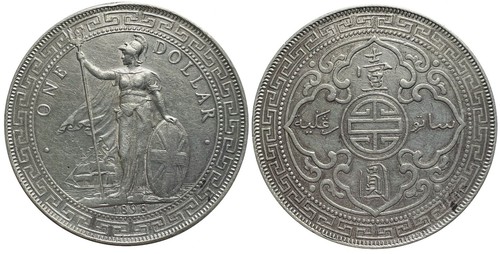
British Trade Dollar
1895–1935
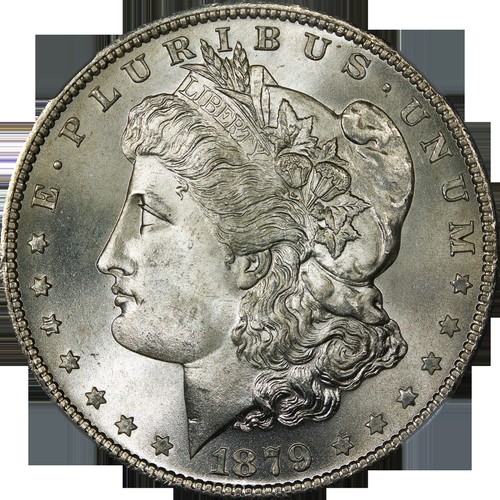
Morgan Dollar
1878–1904, 1921
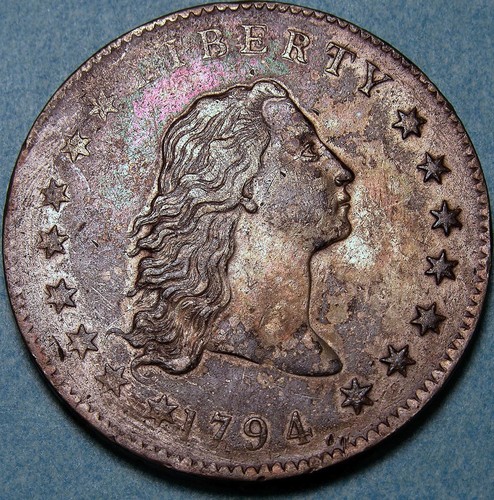
Flowing Hair Dollar
1794–1795
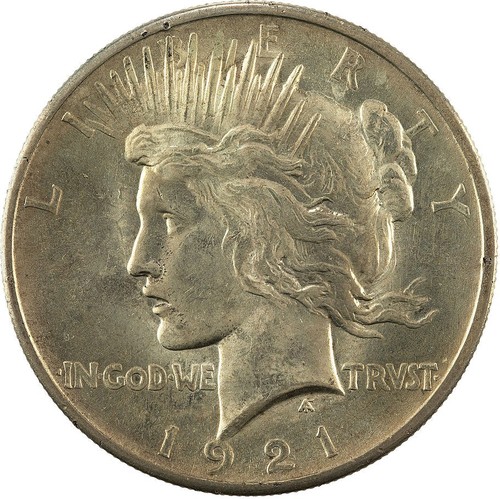
Peace Dollar
1921–1928, 1934–1935
Susan B. Anthony Dollar
1979–1981, 1999
Native American Dollar
2009–present
Native American Dollar - Tallchief
2023
Gobrecht Dollar
1836
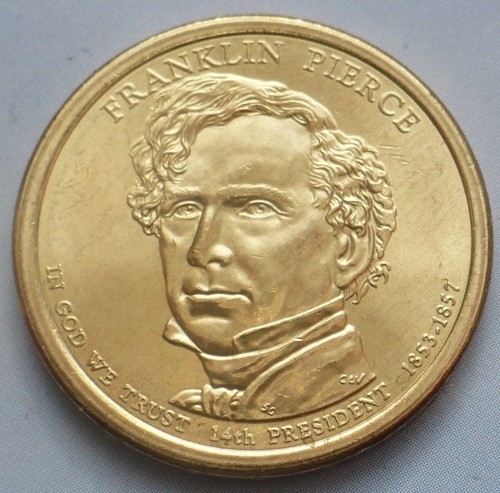
Franklin Pierce Presidential Dollar
2010
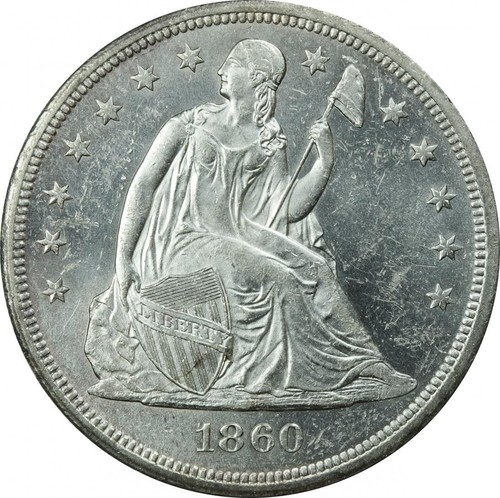
Seated Liberty Dollar
1840-1873
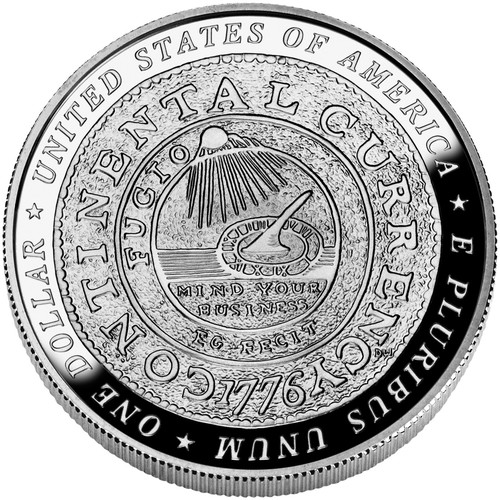
Benjamin Franklin Founding Father Commemorative Silver Dollar
2006
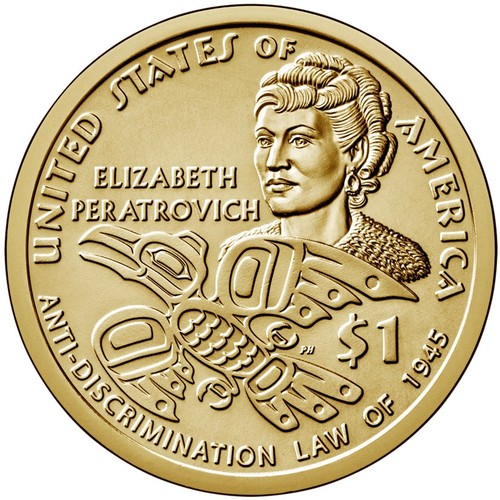
Native American Dollar - Peratrovich
2020