
Native American Dollar
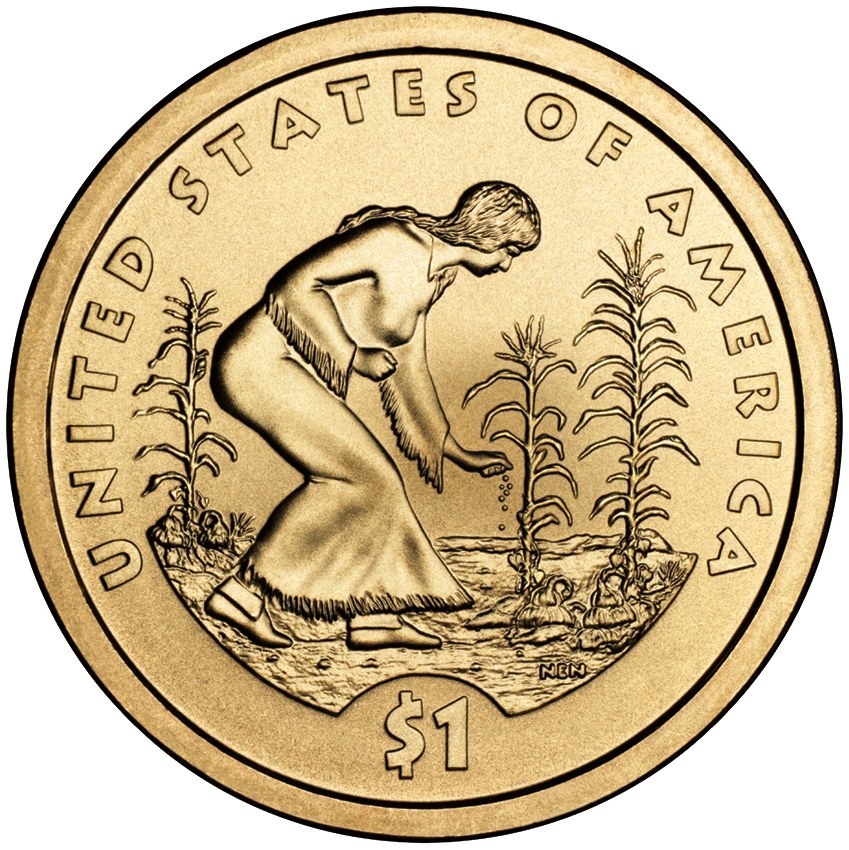
U.S. golden dollar with the Sacagawea obverse and a yearly-changing reverse; the 2009 issue shows Native American agriculture and three corn stalks.
- Country
- United States
- Denomination
- 1 dollar
- Metal
- Manganese brass
Got a coin like this?
Identify any coin from a photo, free.
Overview
The Native American Dollar is a United States one-dollar coin introduced in 2009 that continues the familiar "golden dollar" format of the earlier Sacagawea Dollar. It keeps the same portrait of Sacagawea carrying her infant son Jean Baptiste on the obverse, but pairs it with a reverse design that changes every year to honor a different contribution of Native Americans to the nation's history.
The coin is struck in manganese brass, giving it a distinctive golden color, and measures about 26.5 mm in diameter with a smooth, plain edge. The example shown here is the 2009 issue: the obverse depicts a Native American woman planting seeds beside cornstalks — a reference to the theme of agriculture — while the reverse features three corn stalks with the motto E PLURIBUS UNUM.
History & Background
The golden dollar began with the Sacagawea Dollar of 2000, which replaced the Susan B. Anthony Dollar. In 2007 the Presidential $1 Coin Program shared the same denomination, and the Native American $1 Coin Act of 2007 established a companion series with annually rotating reverse designs celebrating Native American history and culture. That series launched in 2009.
The 2009 reverse, the first in the new series, carries the theme of agriculture — "The Three Sisters" method of planting corn, beans, and squash together. The design shown, with three corn stalks, reflects this inaugural agricultural theme. Each subsequent year has introduced a new reverse (treaties, trade routes, code talkers, and more), while the Sacagawea obverse remains constant. Since 2012 the year, mint mark, and E PLURIBUS UNUM have appeared as incused lettering on the coin's edge rather than on the reverse face.
How to Identify
The obverse shows Sacagawea in three-quarter profile with her infant son on her back, surrounded by the inscriptions LIBERTY and IN GOD WE TRUST. On the 2009 issue specifically, the accompanying reverse depicts a Native American woman planting and tending corn, tied to the agriculture theme.
The reverse of the 2009 coin displays three corn stalks together with the motto E PLURIBUS UNUM. On 2009 and later coins the date and mint mark are located on the edge, not on the front or back, so an examination of the edge lettering helps confirm the year and mint. The coin's golden manganese-brass color, roughly 26.5 mm diameter, ~8.1 g weight, and plain (non-reeded) edge are all key physical diagnostics.
Because the Sacagawea obverse is shared with the 2000–2008 Sacagawea Dollars, the reverse design and the edge lettering are what identify a coin as part of the Native American series and pin down its year and theme.
Value & Collectibility
Native American Dollars are modern circulating and collector coins produced in large quantities, so ordinary examples pulled from change or bank rolls are generally worth their one-dollar face value. Uncirculated coins and those from official Mint rolls, bags, or proof sets carry a modest premium over face.
Condition, mint mark, and whether a coin is a business strike versus a proof or satin-finish collector issue drive most of the value differences. Certain error coins — notably missing edge lettering or major die errors — can attract stronger collector interest. Treat any specific figures as general context; for a precise valuation, condition and variety should be assessed against current market guides or by a reputable dealer or grading service.
Frequently asked questions
Is the Native American Dollar made of gold?
No. Despite its golden color, the coin contains no gold. It is struck in manganese brass (a copper alloy with manganese, zinc, and nickel) clad over a copper core, which gives it the golden appearance.
How is it different from the Sacagawea Dollar?
It uses the same Sacagawea obverse but is part of a series begun in 2009 with a reverse design that changes every year to honor Native American history. The 2009 reverse shows three corn stalks for the agriculture theme.
Where is the date on my 2009 dollar?
On 2009 and later coins the date and mint mark are on the edge of the coin as incused lettering, not on the obverse or reverse face. Look along the rim to read the year and mint mark.
What does the 2009 reverse design mean?
The three corn stalks represent agriculture — specifically the "Three Sisters" tradition of planting corn, beans, and squash together, the inaugural theme of the Native American $1 Coin series.
Is my Native American Dollar worth more than a dollar?
Most circulated examples are worth face value. Uncirculated coins, proofs, and certain error coins (such as missing edge lettering) can be worth a premium, depending on condition and variety.
Native American Dollar guides
In-depth guides for identifying, valuing, and collecting Native American Dollar.
Other coins you may enjoy
British Trade Dollar
1895–1935
Morgan Dollar
1878–1904, 1921
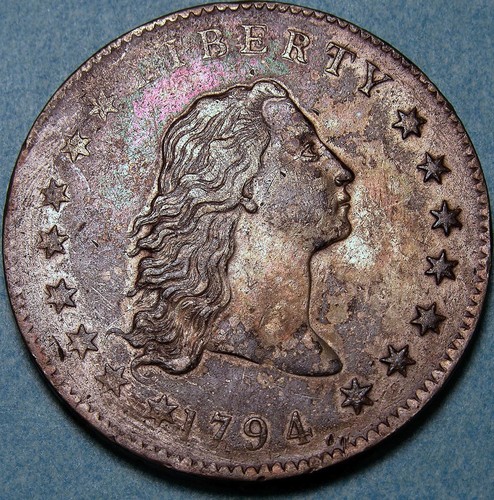
Flowing Hair Dollar
1794–1795
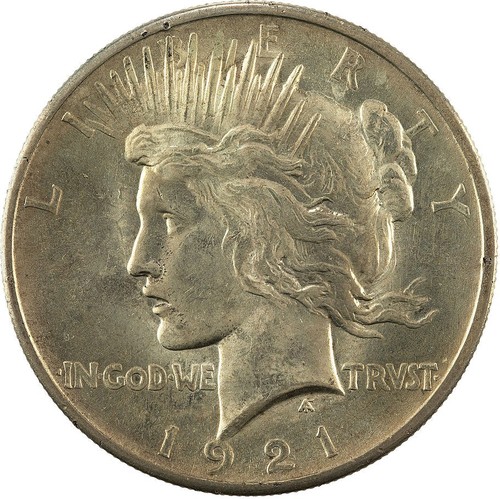
Peace Dollar
1921–1928, 1934–1935
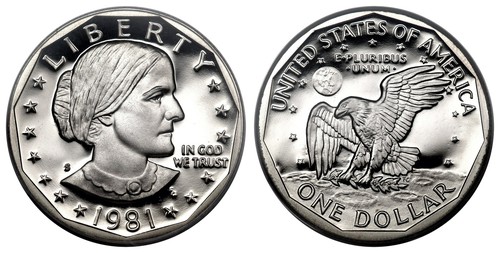
Susan B. Anthony Dollar
1979–1981, 1999
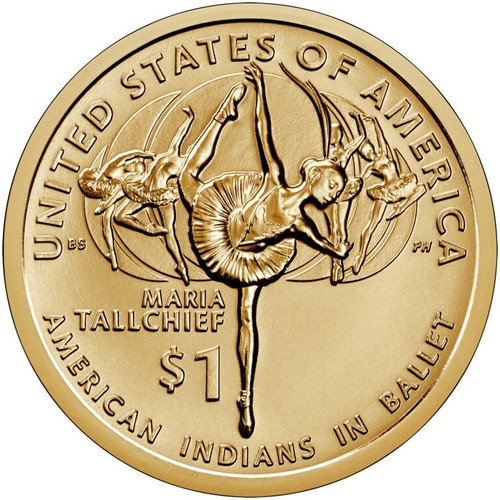
Native American Dollar - Tallchief
2023
Gobrecht Dollar
1836
Franklin Pierce Presidential Dollar
2010
Seated Liberty Dollar
1840-1873
Sacagawea Dollar
2000–2008
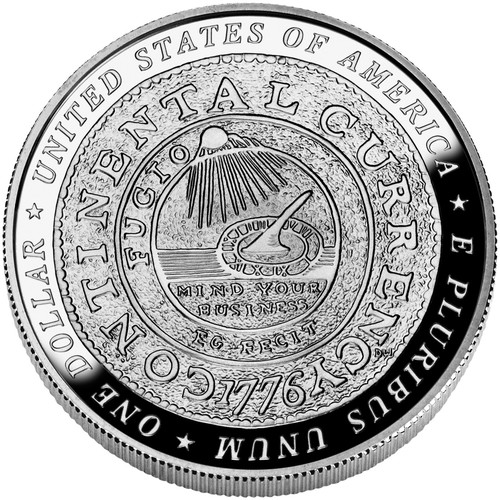
Benjamin Franklin Founding Father Commemorative Silver Dollar
2006
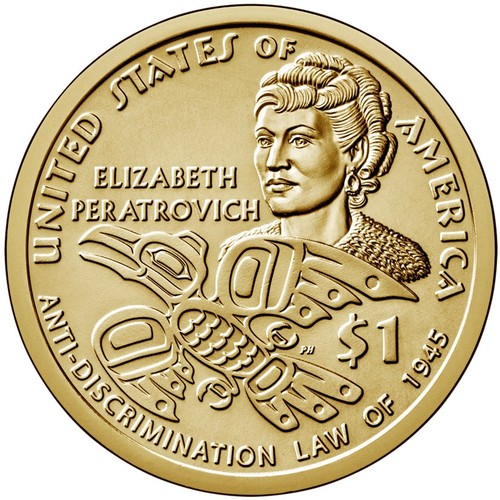
Native American Dollar - Peratrovich
2020