
Coin Encyclopedia
Search and identify coins from around the world — with country, denomination, metal, mint, history, and how to tell them apart.
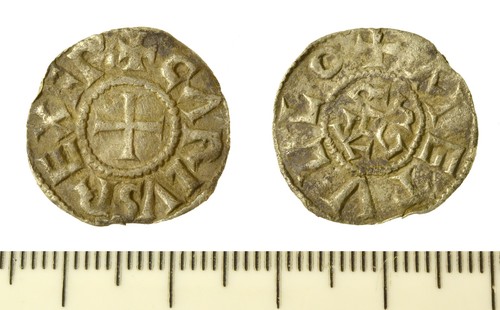
Denier of Charles the Bald
A small hammered silver denier of the Carolingian king Charles the Bald (r. 840–877), pairing a cross or monogram design with a ruler's profile.
Medieval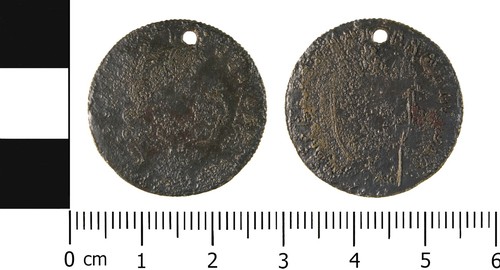
Imitation Guinea Gaming Piece
A brass or bronze token imitating a George III spade guinea, made for card games and gaming tables rather than as legal-tender money.
British Isles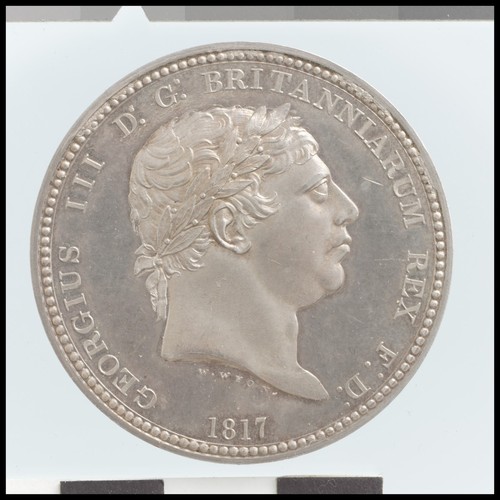
Three Graces Pattern Crown
A celebrated 1817 silver pattern crown of George III, engraved by William Wyon and never issued for circulation — a prized masterpiece of British coinage.
Pattern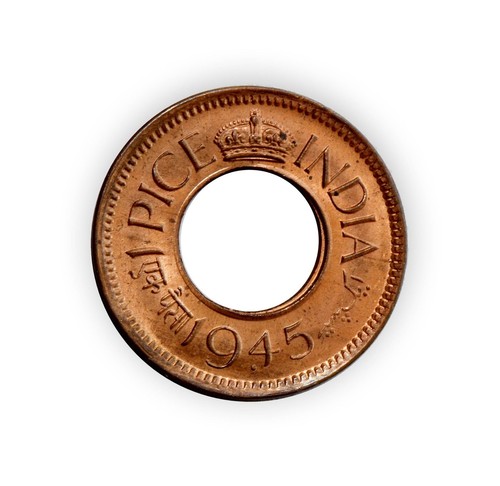
British India One Pice
A small holed copper-bronze One Pice of British India under George VI, dated 1945, its obverse crowned and lettered INDIA and PICE around a central hole.
British India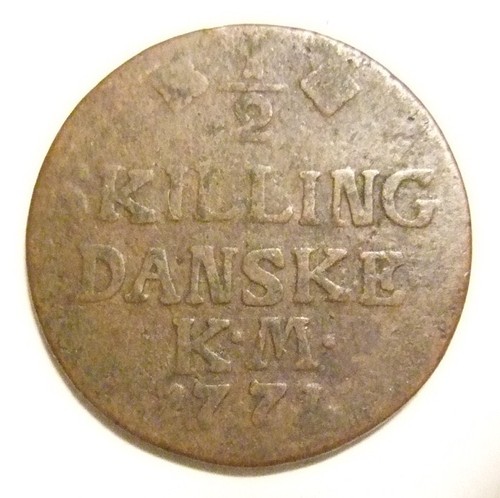
½ Skilling
A small copper Danish half skilling of 1771, showing a royal crown over the king's cipher and the value ½ SKILLING DANMARK K:M on the reverse.
Early Modern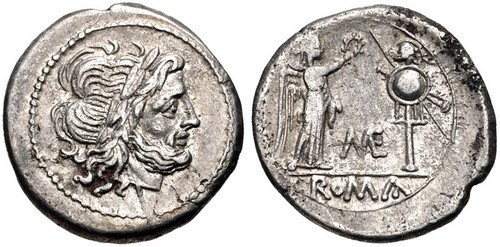
Roman Victoriatus
Silver Roman Republican victoriatus of the late 3rd–2nd century BC, with the laureate head of Jupiter and a Victory crowning a trophy above ROMA.
Ancient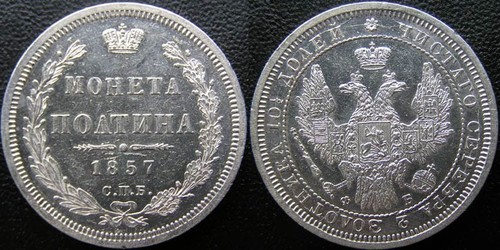
Poltina (½ Rouble)
Silver half-rouble of Imperial Russia dated 1857, marked ПОЛТИНА on one side and bearing the crowned double-headed eagle of the Romanov empire.
Modern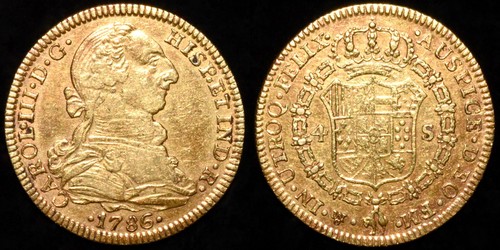
4 Escudos
Spanish Bourbon gold 4 Escudos of the 1780s, with an armored royal bust facing right and a crowned coat of arms on the reverse.
Early Modern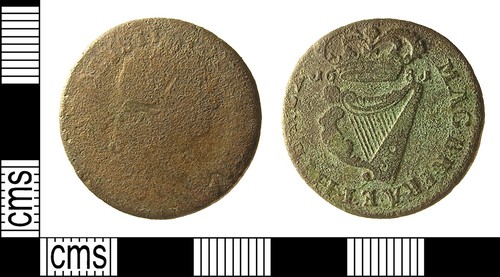
Irish Halfpenny of Charles II
A milled copper halfpenny struck for Ireland under Charles II, with his right-facing laureate bust and a crowned Irish harp on the reverse.
Milled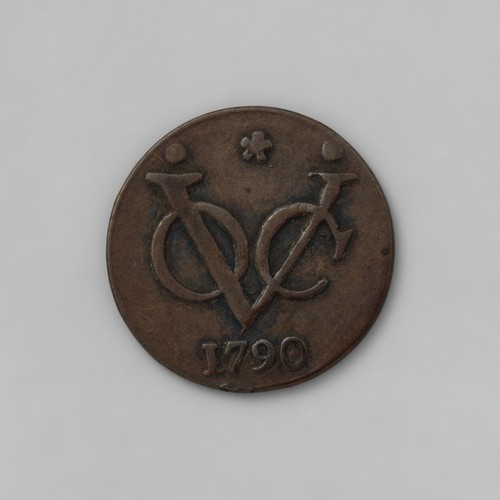
Duit (VOC)
A small copper duit struck for the Dutch East India Company (VOC), showing the crowned VOC monogram and the date 1790 on the obverse.
Early Modern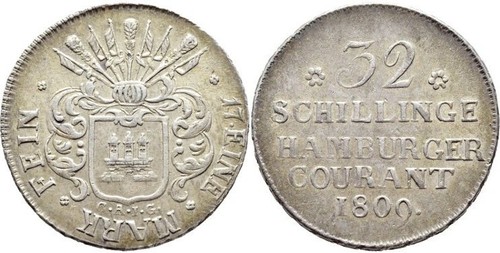
Hamburg 32 Schilling
A 1800 silver 32 Schilling of the Free City of Hamburg, with the city coat of arms and a 'HAMBURGER COURANT' reverse.
German States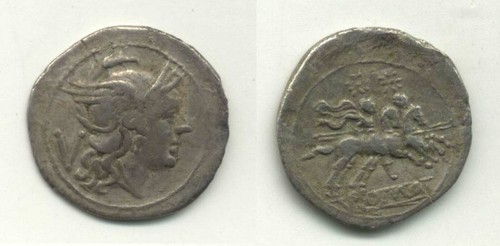
Roman Quinarius
A small Roman silver quinarius, half the value of a denarius, here with a helmeted head of Roma and a prancing horse on the reverse.
Ancient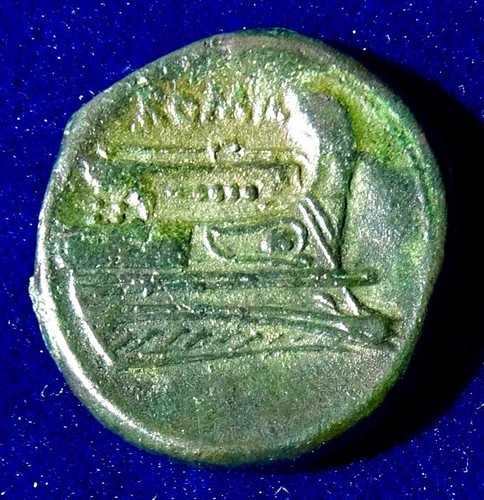
Roman Republic Semuncia
Smallest Roman Republican bronze denomination, worth half an uncia, struck around 217-215 BC with a Mercury head and a galley prow.
Ancient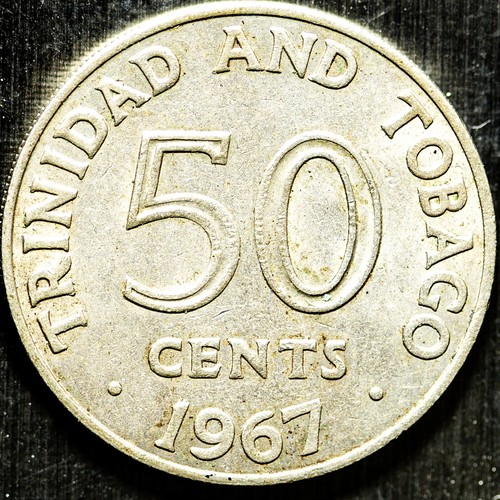
Trinidad and Tobago 50 Cents
A large copper-nickel Caribbean circulation coin; the 1967 example carries the national coat of arms and country name on the obverse and the 50-cent value on the reverse.
Circulation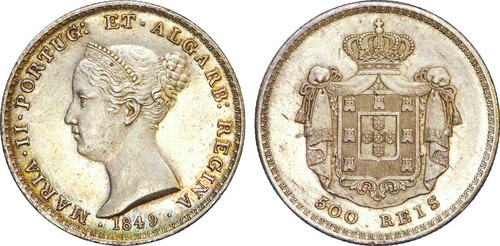
500 Reis
A Portuguese silver 500 Reis of Queen Maria II, with her left-facing draped bust on the obverse and a crowned coat of arms on the reverse.
Modern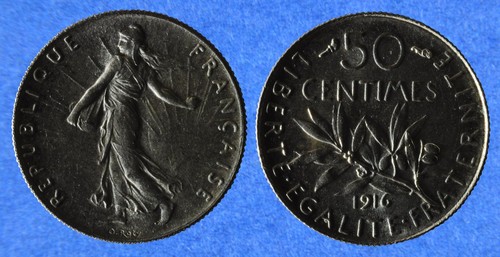
French Semeuse 50 Centimes
A small French silver coin showing the striding Semeuse (Sower) with a liberty cap; the reverse frames the value 50 CENTIMES in an oak-and-olive wreath.
Circulation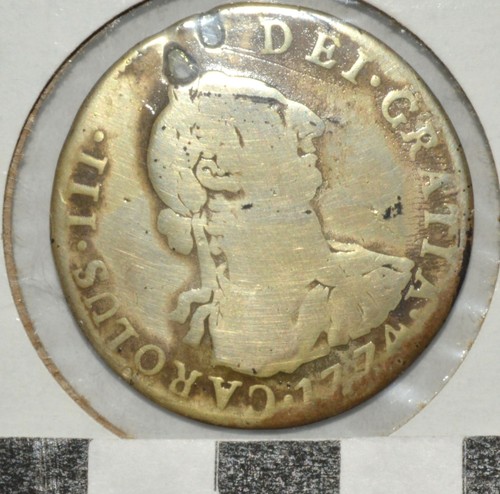
Spanish Colonial 4 Reales
A large silver colonial coin worth half a Spanish dollar, struck for Spain's American empire and bearing the crowned Spanish royal arms.
Colonial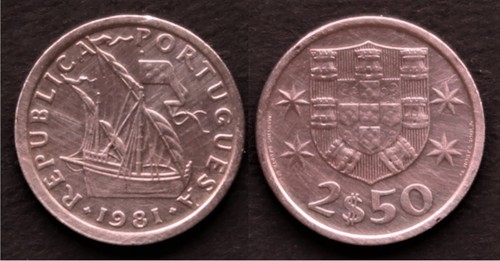
2.5 Escudos
A copper-nickel 2.5 Escudos of the Portuguese Republic, showing a sailing caravel on the obverse and the national shield with the value 2$50.
Modern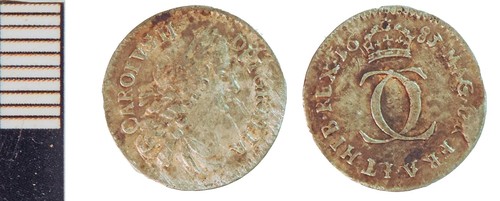
Charles II Twopence
A small milled twopence of Charles II, showing the king's profile bust on the obverse and a crowned mark of value on the reverse.
Milled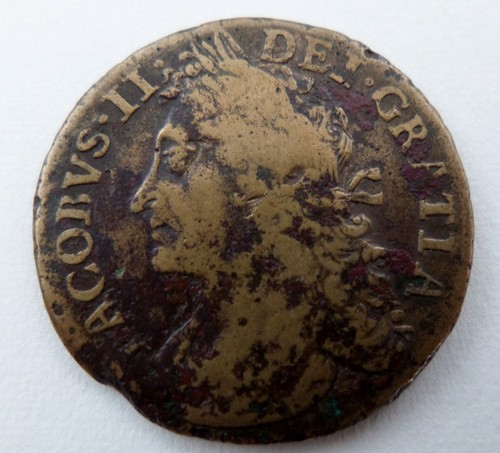
Irish Gun Money Halfcrown (30 Pence)
Emergency base-metal halfcrown struck for James II in Ireland during 1689–1690, valued at 30 pence and carrying his portrait and, on many issues, the month of striking.
Emergency Coinage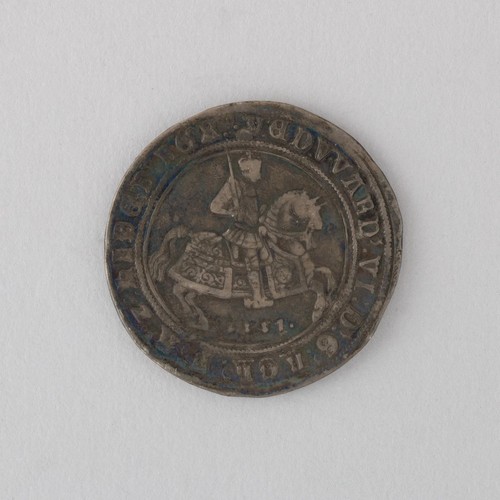
Edward VI Crown
Hammered English silver crown of Edward VI (1547-1553), the first English crown coin and among the earliest English coins to carry a date.
Hammered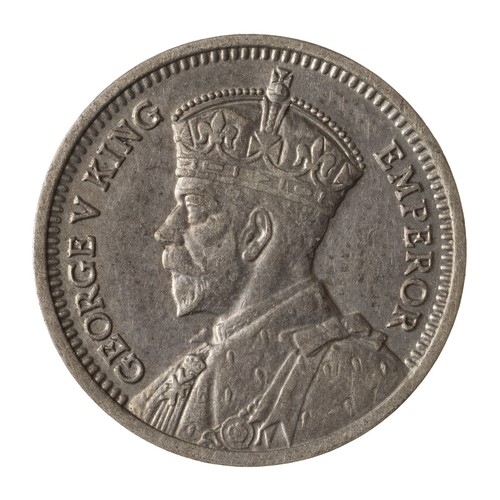
New Zealand Threepence
New Zealand's small silver threepence; this 1933 example carries the crowned bust of King George V with GEORGIVS V and his royal titles.
New Zealand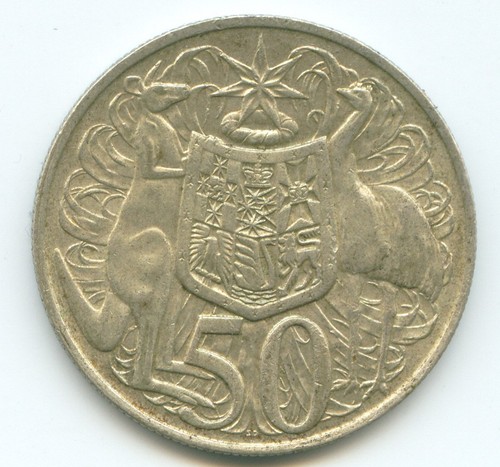
Australian Fifty Cents
Australia's 50 cent coin bearing the national coat of arms. The 1966 round issue shown here was struck in silver; later 12-sided coins are cupronickel.
Australian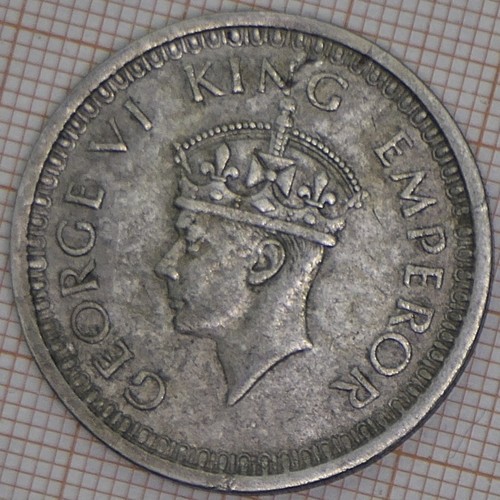
Victoria One Rupee
Silver 1-rupee coin of British India bearing Queen Victoria's crowned bust, struck from 1862 to 1901 under Crown rule.
British India