
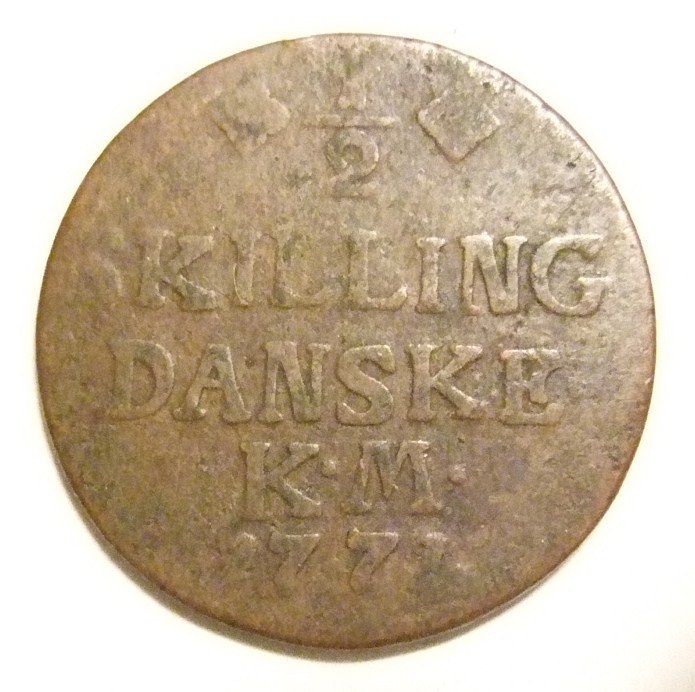
½ Skilling
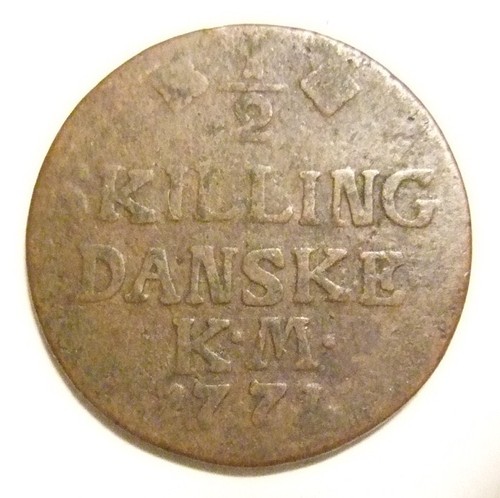
A small copper Danish half skilling of 1771, showing a royal crown over the king's cipher and the value ½ SKILLING DANMARK K:M on the reverse.
- Country
- Denmark
- Denomination
- ½ Skilling
- Metal
- Copper
Got a coin like this?
Identify any coin from a photo, free.
Overview
The ½ Skilling is a small copper coin of the Kingdom of Denmark, the observed example dated 1771. The skilling was the everyday minor unit of Danish money in this period, and a half skilling stood at the very bottom of the denominational ladder, so this was true small change meant for the smallest daily purchases.
The design is plain and functional. The obverse is dominated by a large royal crown above the reigning king's cipher, while the reverse states the value directly as ½ SKILLING together with the wording DANMARK and the letters K:M, above the date. There is no portrait; the crown and the written value do the work of identifying the piece.
Because it is a base-metal copper coin of a common type, the ½ Skilling is widely collected today as an affordable and tangible example of eighteenth-century Danish coinage from the reign of Christian VII.
History & Background
The 1771 date places this ½ Skilling in the reign of King Christian VII, who ruled Denmark from 1766 to 1808. Small copper skilling and half-skilling coins were struck to supply the low-value pocket money that the silver rigsdaler system could not conveniently provide, and pieces of this type were produced at the Danish royal mints, including Copenhagen and Altona.
Copper coinage of this era was often kept in production over several years using a single fixed date, so 1771-dated small change of this design is understood to have been struck for a period after that year as well. The letters K:M on the reverse stand for the royal mint (Kongelig Mønt), marking the coin as an official state issue rather than a private or provincial token.
As a humble circulating coin, the ½ Skilling was made in quantity and handled heavily, which is why surviving examples are common but frequently well worn. It survives today as a straightforward artifact of Denmark's late-eighteenth-century monetary system.
How to Identify
The obverse shows a large royal crown with the king's cipher below it. On the observed coin the mark beneath the crown reads as VI; this is the crowned royal monogram of the reigning king, and the crown-over-cipher layout with no portrait is the key obverse cue for this type.
The reverse carries the value spelled out as ½ SKILLING, with the word DANMARK and the letters K:M, above the year 1771. Reading the denomination directly off the coin, together with the K:M mint lettering and the date, is the surest way to confirm the piece. The letters K:M identify the royal mint.
This is a small, thin copper coin, on the order of roughly two centimeters across, with the warm brown to dark tone typical of circulated copper. Confirm the identification by matching all cues together: the crowned cipher on the obverse, and the ½ SKILLING / DANMARK / K:M legend with the 1771 date on the reverse.
Value & Collectibility
The 1771 ½ Skilling is a common base-metal coin, so most examples carry modest collector value. Heavily worn or corroded pieces trade for only a small amount, while cleaner coins with sharp detail and even, original surfaces command a higher premium relative to worn ones.
Condition and surface quality drive most of the price spread. Copper of this age is prone to corrosion, pitting, and old cleaning, so problem-free examples with a pleasing natural tone are worth noticeably more than damaged ones. Distinct die varieties or legend errors, which exist among Danish skilling coinage of this period, can also affect what a specialist will pay.
Treat any figures as general context rather than fixed quotes, since prices depend on grade, eye appeal, variety, and current collector demand. For a small, widely available copper coin like this, originality and preservation matter more than rarity for the typical example.
Frequently asked questions
What do the letters K:M on the reverse mean?
They stand for the royal mint (Kongelig Mønt), marking the coin as an official state issue of Denmark rather than a private token. The letters appear next to the value and date on the reverse.
Which king issued the 1771 ½ Skilling?
The 1771 date falls in the reign of King Christian VII, who ruled Denmark from 1766 to 1808. The crowned cipher on the obverse is his royal monogram.
Is the ½ Skilling made of silver?
No. It is a copper coin. As a low-value piece of small change, it was struck in base metal, which gives it a brown to dark tone rather than the pale look of silver.
What is shown on the obverse?
A large royal crown above the king's cipher, with no portrait. On the observed coin the mark below the crown reads as VI, the crowned royal monogram.
Is the 1771 ½ Skilling valuable?
It is a common coin, so most examples are inexpensive. Value depends mainly on condition, with clean, well-preserved copper worth more than worn or corroded pieces.
½ Skilling guides
In-depth guides for identifying, valuing, and collecting ½ Skilling.
Other coins you may enjoy
Scudo (Philip V)
c. 1701–1708
Rijksdaalder van Leicester
1580s-1590s
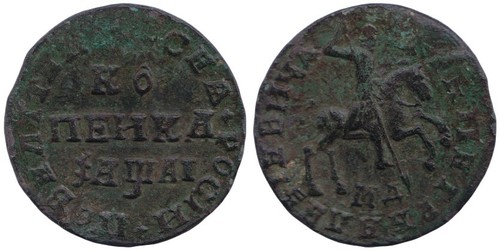
Kopek (Peter I)
c. 1704–1718 (observed 1711)
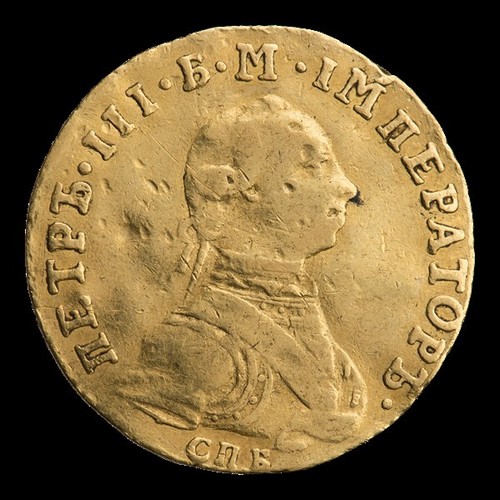
Imperial Chervonets
1762
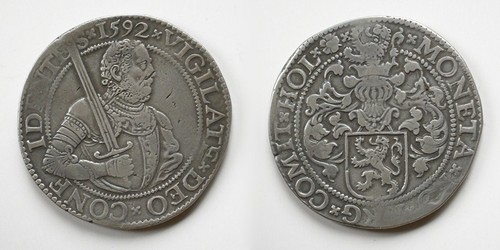
Prinsendaalder (Rijksdaalder)
1592
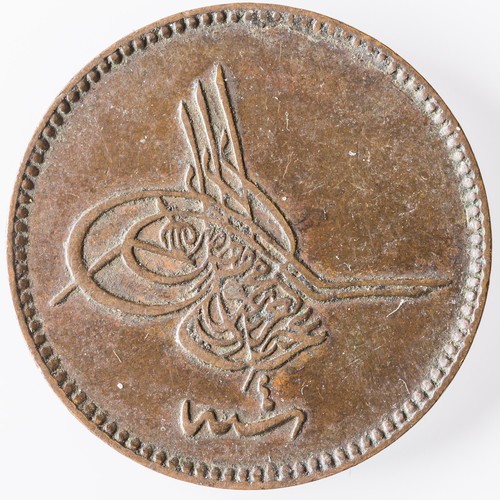
10 Para
AH 1280 (1863-1864 CE)
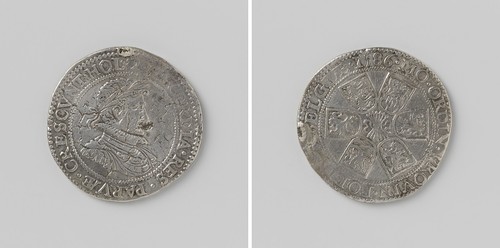
Halve Rijksdaalder van Leicester
1580s-1590s
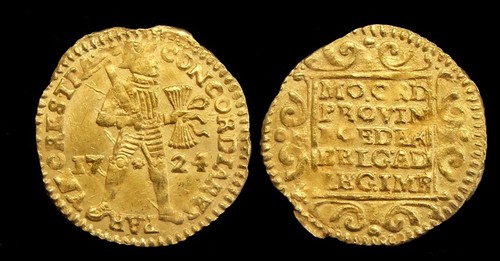
Gouden Dukaat
1724
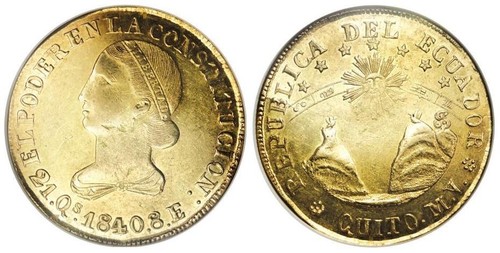
Escudo (Joanna and Charles V, contemporary copy)
1516-1558
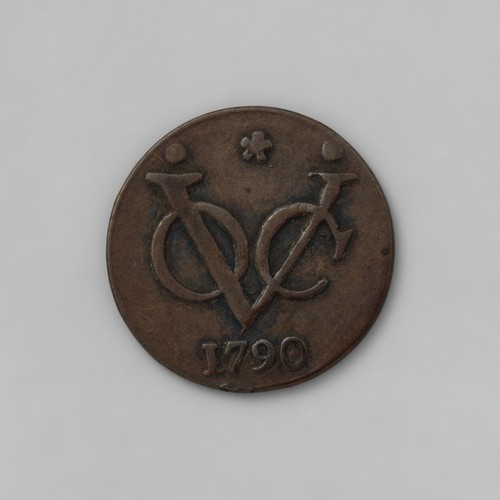
Duit (VOC)
1790
4 Escudos
1780s
Tymf
1663