
How to Identify the ½ Skilling
A collector's guide to confirming the 1771 Danish ½ Skilling by its crowned cipher, ½ SKILLING DANMARK K:M reverse, small copper format, and date.
Read the full ½ Skilling encyclopedia entry →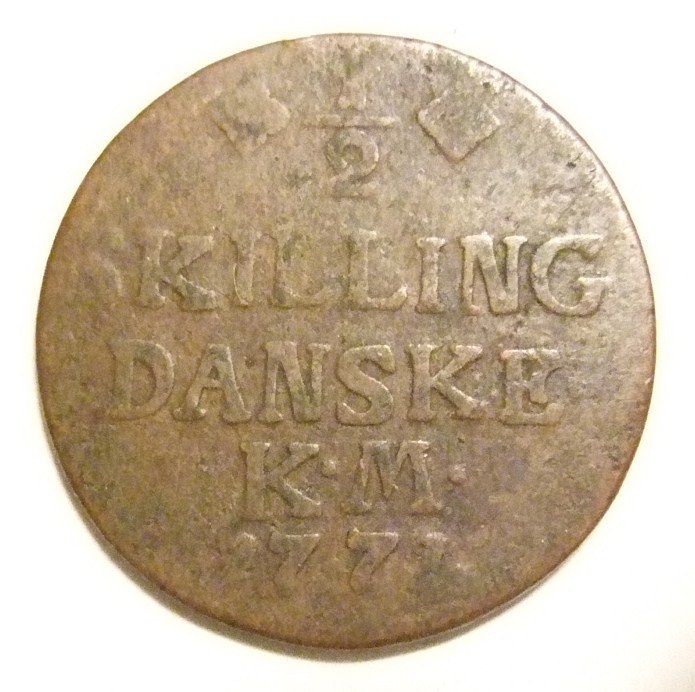
Read the Reverse Legend and Date
Start with the reverse, which is the most reliable part of this coin. A genuine piece states the value spelled out as ½ SKILLING, together with the word DANMARK and the letters K:M, above the date 1771. Reading the denomination directly, rather than guessing from size, is the surest first step. The K:M lettering marks the royal mint and confirms an official Danish issue.
Confirm the Crowned Obverse
Turn to the obverse, which should show a large royal crown above the king's cipher and no portrait. On the observed coin the mark beneath the crown reads as VI, the crowned royal monogram of the reigning king, Christian VII. Matching the crown-over-cipher obverse with the ½ SKILLING reverse is the core of the identification; if the coin carries a bust or a different value, it is a different type.
Check Size and Metal
This is a small, thin copper coin, roughly two centimeters across and light in hand. Genuine copper of this age shows a warm brown to dark tone and often some honest wear. A coin that is bright silvery, unusually heavy, or magnetic does not fit the copper half skilling and should be treated with suspicion.
Distinguish It From Related Denominations and Dates
Denmark struck a matching 1 Skilling of similar design and date, so always read the value: this coin says ½ SKILLING, while its larger relative reads 1 SKILLING and is a bigger, heavier copper piece. Copper coinage of this era was also kept in production using a fixed date, and different mints and die varieties exist, so confirm both the exact ½ SKILLING denomination and the 1771 date rather than assuming from the design alone.
Authentication Cautions
As a common, low-value copper coin, the ½ Skilling is rarely counterfeited outright, so the main issues are corrosion, harsh cleaning, and misattribution rather than forgery. Weigh and measure the coin, look for natural copper surfaces rather than artificial coloring, and be cautious of pieces where corrosion has obscured the legend. When a variety or an unusual legend reading is involved, compare the coin against trusted reference images before concluding.
Frequently asked questions
What is the quickest way to confirm this coin?
Read the reverse. A genuine piece states the value as ½ SKILLING with the word DANMARK, the letters K:M, and the date 1771. That legend, paired with the crowned obverse, confirms the type.
How do I tell the ½ Skilling from the 1 Skilling?
Read the stated value. This coin says ½ SKILLING and is small and light, while the 1 Skilling reads 1 SKILLING and is a noticeably larger, heavier copper coin of similar design.
What should the metal look like?
It should be copper, showing a warm brown to dark tone and often light wear. A bright silvery, unusually heavy, or magnetic coin does not match the copper half skilling.
Is it worth authenticating?
Usually not, since it is a common, inexpensive copper coin rarely worth faking. Focus instead on confirming the value and date, checking for corrosion or cleaning, and assessing condition, which drives most of the value.